
Chef Juliette
Bavaroise
Bavaroise turns the ribbon stage into a drink: yolks and sugar, boiling tea and milk, and Kirsch whisked into a light crown of foam. Keep the whisk moving, and the café comes home.
A cooking platform built around craft, culture, and the stories behind what we eat.
Created by Chef Juliette
Based on No. 2936, Iced Coffee, from Le Guide Culinaire (1907) by Auguste Escoffier
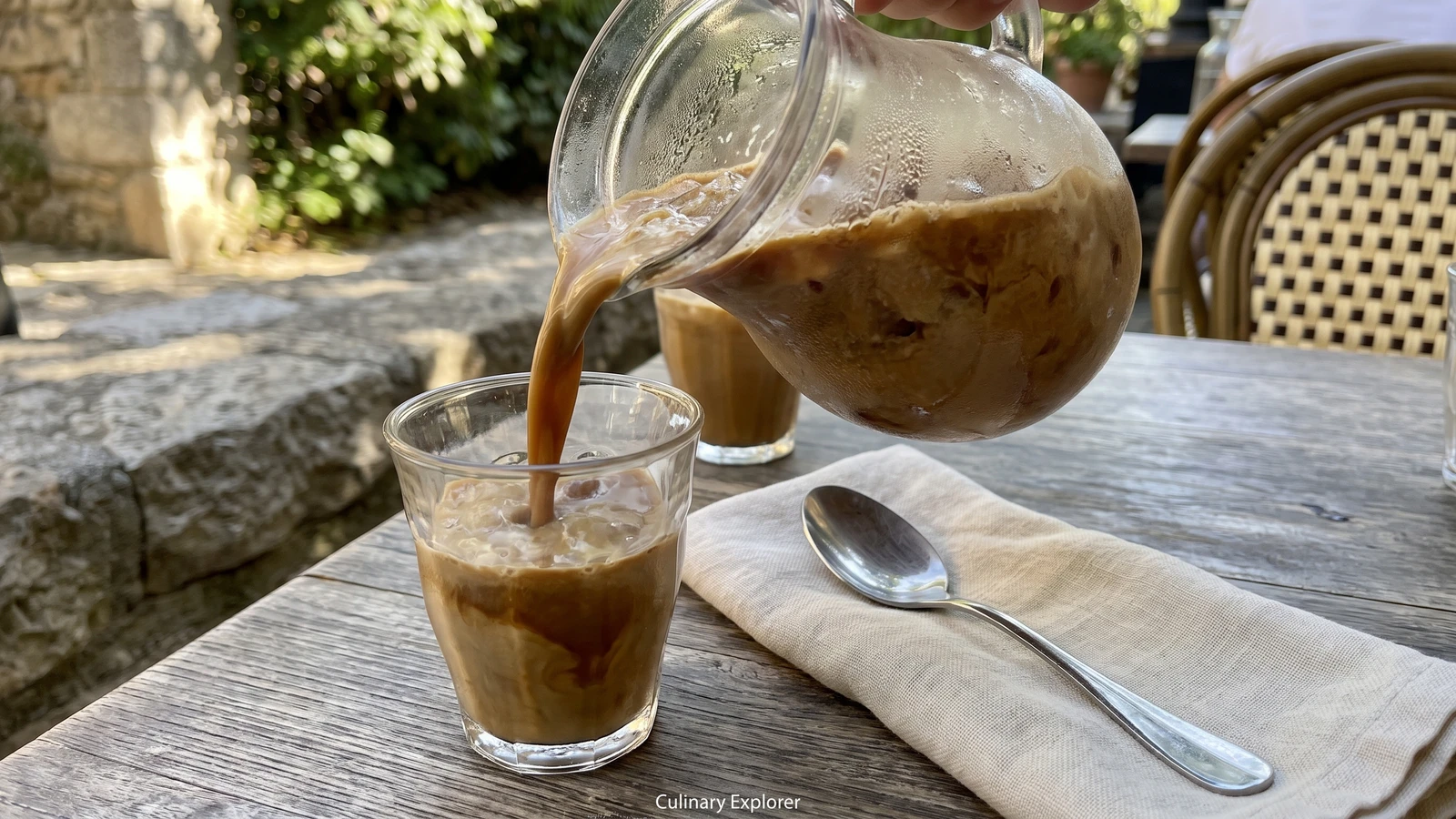
Café glacé is coffee taught by texture: dark, sweet, vanilla-softened, and churned only until it moves like loose snow. Stop before ice cream, pour into cold cups, and take it outside.
Café glacé teaches the narrow border between a drink and a frozen dessert. The coffee must be startlingly strong and sweet before the dairy arrives, because cold mutes both bitterness and sugar; then the mixture is churned only until fine crystals give it body. It should pour, not stand in a scoop.
The book's formula assumed a large service bowl, loaf sugar to be pounded, and a hand-cranked freezer turned by someone who could watch it continuously. I have cut every quantity exactly in half for eight small cups, replaced loaf sugar with the same white sugar already granulated, and given the turning to a countertop machine. Pounding and cranking were brigade scaffolding. The fierce brew, the vanilla infused in boiled milk, and the almost-liquid freeze are the dish. One cook, one stove, one evening, and the proportions remain untouched.
Done properly, café glacé is dark café-au-lait brown, fragrant with vanilla, rich with cream, and threaded with crystals too fine to crunch. The one step that decides the whole cup is the last one: stop churning while it still pours.
Café glacé belongs to the Parisian café and grand dining-room repertoire, where sweetened coffee could arrive cold as a drink or frozen as a dessert course. This formula occupies the border deliberately: milk, cream, and vanilla soften a fiercely concentrated brew, but the freezer is stopped while the mixture remains almost liquid. It should not be confused with glace au café, coffee ice cream, whose firm, scoopable body is precisely what this preparation refuses.
Quantity
2⅓ cups plus 2 teaspoons (570 ml / 587 g)
Quantity
¼ bean (about 1 inch / 2.5 cm)
split lengthwise
Quantity
About 1¾ cups (420 ml / 142 g)
medium grind
Quantity
1¾ cups plus 1 teaspoon (425 ml / 425 g)
Quantity
1⅓ cups plus 1 tablespoon (335 ml / 284 g)
Quantity
1 cup plus 3 tablespoons (285 ml / 283 g)
| Ingredient | Quantity |
|---|---|
| whole milk | 2⅓ cups plus 2 teaspoons (570 ml / 587 g) |
| vanilla beansplit lengthwise | ¼ bean (about 1 inch / 2.5 cm) |
| freshly ground coffeemedium grind | About 1¾ cups (420 ml / 142 g) |
| boiling water | 1¾ cups plus 1 teaspoon (425 ml / 425 g) |
| white granulated sugar | 1⅓ cups plus 1 tablespoon (335 ml / 284 g) |
| very cold heavy cream | 1 cup plus 3 tablespoons (285 ml / 283 g) |
Put the milk and split vanilla bean in a heavy-bottomed saucepan. Bring the milk slowly to a full boil over medium heat, stirring along the bottom so it cannot catch. The instant it rises, remove it from the heat, cover, and infuse for 20 minutes. Remove the vanilla, transfer the milk to a shallow container, and chill it to 40°F (4°C) or colder, at least 2 hours. If a skin forms, whisk it back in or strain it away; the milk beneath is unharmed.
Set a large coffee filter or a damp muslin-lined sieve over a heatproof jug and add the ground coffee. Pour over the boiling water gradually, beginning with just enough to wet every ground, then continuing in a thin, steady stream. Let the coffee drain under its own weight and never squeeze the grounds, which forces bitterness and sediment into the cup. The small yield and startling strength are deliberate; milk, cream, sugar, and cold will soften it.
Put the sugar in a heatproof mixing bowl and pour the hot coffee over it. Stir until the grains disappear, then leave the sweetened coffee to cool. The sugar must dissolve while the coffee is warm because it controls both sweetness and the soft freeze. If crystals remain after cooling, set the bowl over barely simmering water and stir just until clear, then cool it again. Ça se rattrape.
Once the sweetened coffee has reached room temperature, chill it thoroughly. Whisk in the very cold vanilla milk, followed by the cream, mixing only until uniform rather than beating in air. The base must be refrigerator-cold before churning; if it feels merely cool, give it another hour. A warm base freezes coarsely and exhausts the machine before the proper texture appears.
Pour the base into a fully frozen countertop ice cream machine and churn for 10 to 18 minutes, stopping when fine crystals give the mixture the body of loose snow but it still runs freely from a spoon. The high sugar content makes the freezing look slow. That is exactly right. Do not wait for a scoopable texture. If it goes too far, let it soften in the refrigerator for 10 minutes and whisk until pourable again, without diluting it. Without a machine, freeze the base in a shallow metal pan and whisk from the edges toward the centre every 15 minutes until evenly slushy.
Chill the serving cups for at least 30 minutes. Give the café glacé one gentle stir, then pour it immediately into the cold cups while the crystals remain suspended and the surface flows in a thick ribbon. Serve at once. À table!
1 serving (about 165g)
Culinary guides, cultural storytelling, and the editorial depth that makes cooking meaningful.
Discover Culinary ExplorerChef Juliette
Bavaroise turns the ribbon stage into a drink: yolks and sugar, boiling tea and milk, and Kirsch whisked into a light crown of foam. Keep the whisk moving, and the café comes home.

Chef Juliette
Bischoff turns Champagne, tilleul, citrus, and brandy into pale-gold granité, coarse enough to sparkle under the spoon. The scraping makes the texture, and the timer becomes your smallest member of the brigade.
Chef Juliette
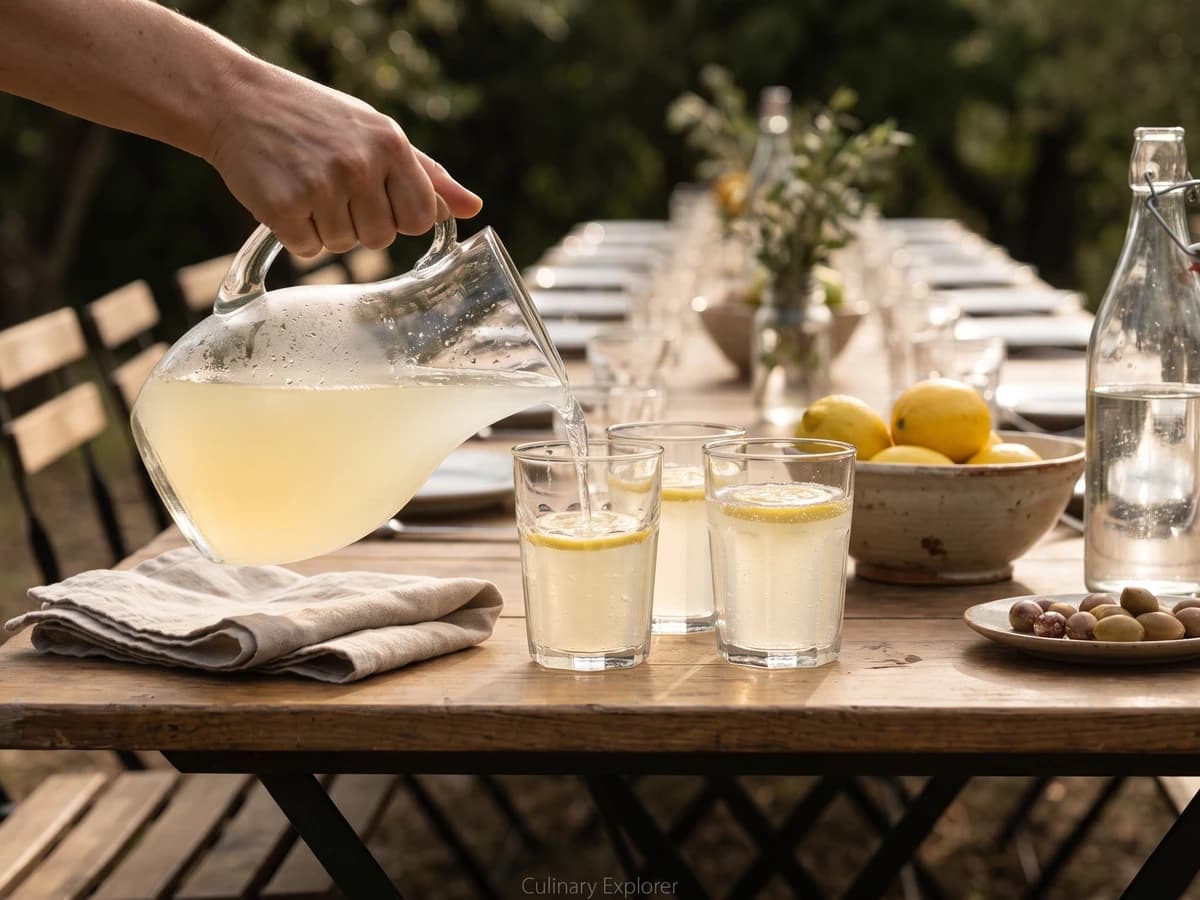
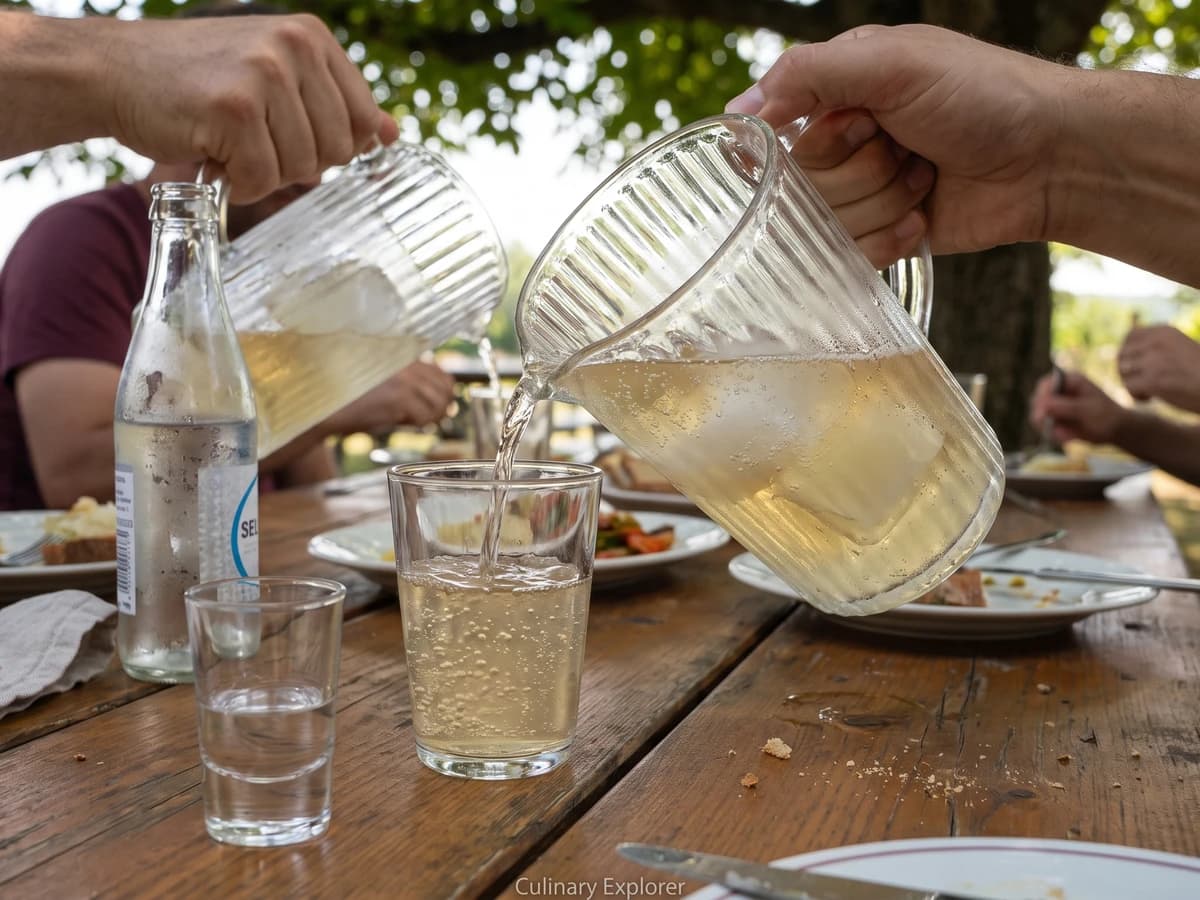
Zest brings perfume, juice brings acid, and three cool hours join them: a clear, lively French limonade finished with seltzer for the picnic table in the shade.
Chef Juliette
Eau d’Ananas captures pineapple by infusion, not crushing: boiling syrup draws out its perfume, fine straining keeps the drink clear, and cold seltzer with Kirsch lets it finish feather-light.