
Chef Juliette
Bavaroise
Bavaroise turns the ribbon stage into a drink: yolks and sugar, boiling tea and milk, and Kirsch whisked into a light crown of foam. Keep the whisk moving, and the café comes home.
A cooking platform built around craft, culture, and the stories behind what we eat.
Created by Chef Juliette
Based on No. 2935, Bischoff, from Le Guide Culinaire (1907) by Auguste Escoffier
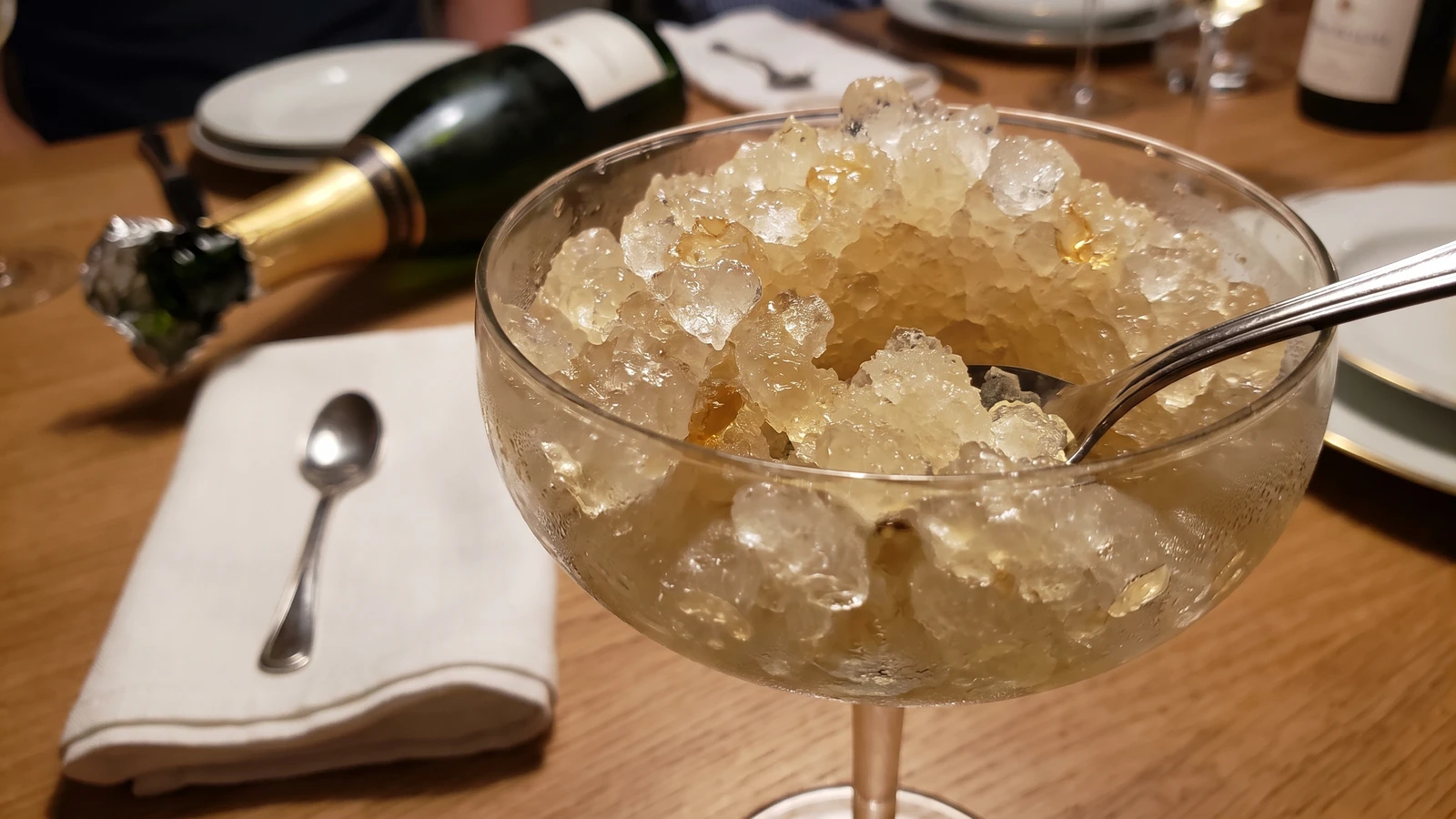
Bischoff turns Champagne, tilleul, citrus, and brandy into pale-gold granité, coarse enough to sparkle under the spoon. The scraping makes the texture, and the timer becomes your smallest member of the brigade.
Bischoff, granité de Champagne au tilleul (Champagne granité with lime-flower tea and brandy), teaches one true thing: scraping the ice is not maintenance, it is the dish. Leave the mixture undisturbed and you get a fragrant golden block. Rake it as the edges set and you build granité, coarse crystals that loosen under the spoon and melt into Champagne, citrus, and brandy.
The source formula assumes a Baumé hydrometer, a freezing pail, and spare hands. Its sherry glass of tilleul and four liqueur glasses of brandy become 60 ml and 120 ml; its 18° density target becomes a weighed quantity of 32° Baumé syrup, and a shallow metal pan replaces the freezing pail. Those conversions remove brigade scaffolding without touching the method. The full Champagne bottle stays because it gives a celebration batch with the original proportions intact. One cook, one stove, one evening.
The finished Bischoff should be pale straw-gold, floral before it is citrusy, with translucent crystals softened at the last moment by cold brandy. Set a timer before the pan enters the freezer. The one-hour maceration builds the perfume, but the repeated scraping decides whether you have Bischoff or an ice brick.
The name Bischoff comes through the German-speaking Bischof family of wine punches, citrus-scented cups that crossed readily into Alsace and French formal service. In the French classical canon, Champagne replaced still wine and the punch moved into the frozen repertory as a granité for the celebration table. Tilleul means linden blossom, not citrus lime, and its quiet floral character separates this preparation from a simple frozen Champagne punch.
Quantity
1 bottle (750 ml / about 750 g)
well chilled
Quantity
1 tablespoon (15 ml / 1 g)
Quantity
⅓ cup (80 ml / 80 g)
for the tilleul infusion
Quantity
1 medium (about 180 g)
scrubbed, thinly sliced, and seeded
Quantity
1 medium (about 120 g)
scrubbed, thinly sliced, and seeded
Quantity
about 3½ cups (830 ml / 1.06 kg), made from 4 cups (950 ml / 800 g) granulated sugar and 2 cups plus 1 tablespoon (495 ml / 495 g) water
cooled; reserve any excess for adjustment
Quantity
½ cup (120 ml / about 113 g)
well chilled
| Ingredient | Quantity |
|---|---|
| brut Champagnewell chilled | 1 bottle (750 ml / about 750 g) |
| dried tilleul blossoms | 1 tablespoon (15 ml / 1 g) |
| boiling waterfor the tilleul infusion | ⅓ cup (80 ml / 80 g) |
| orangescrubbed, thinly sliced, and seeded | 1 medium (about 180 g) |
| lemonscrubbed, thinly sliced, and seeded | 1 medium (about 120 g) |
| 32° Baumé syrupcooled; reserve any excess for adjustment | about 3½ cups (830 ml / 1.06 kg), made from 4 cups (950 ml / 800 g) granulated sugar and 2 cups plus 1 tablespoon (495 ml / 495 g) water |
| good aged French brandywell chilled | ½ cup (120 ml / about 113 g) |
Put the 495 ml water in a medium saucepan and add the 800 g sugar. Warm gently, stirring until every crystal dissolves, then bring the syrup just to a simmer and remove it from the heat. Do not reduce it. Cover and cool it completely, setting the pan in cold water if you want to move matters along. This gives about 1 litre of 32° Baumé syrup, slightly more than the Bischoff should require.
Pour the boiling water over the tilleul blossoms and infuse for 5 minutes. Strain without pressing, measure ¼ cup (60 ml / 60 g), and chill it completely. The infusion should smell softly floral, not medicinal; excessive steeping draws a woody bitterness that the cold will not hide.
Pour the cold Champagne into a large nonreactive bowl and add the 60 ml tilleul infusion, orange slices, and lemon slices. Stir in about 3½ cups (830 ml / 1.06 kg) of the cold syrup. If you own a Baumé hydrometer, add syrup until the chilled mixture reads 18°; without one, the measured amount is the honest home equivalent. The mixture will taste sweeter than the finished Bischoff because freezing mutes sweetness.
Cover the bowl and refrigerate for exactly 1 hour. This cold maceration draws perfume from the citrus peel without cooking away the Champagne's freshness. Do not leave the fruit overnight: the white pith eventually turns the mixture bitter. If the hour catches you elsewhere, strain it immediately and return the liquid alone to the refrigerator.
Pass the mixture through a fine sieve into a large shallow metal pan, at least 23 by 33 cm. Let the fruit drain, but do not press it; squeezing extracts the very bitterness the short maceration avoids. The liquid should lie no deeper than about 2 cm so the edges freeze promptly and evenly.
Freeze for 30 minutes, then draw a sturdy fork through the frozen edges and pull the crystals toward the centre. Repeat every 25 to 30 minutes, breaking up every firm patch, until the whole pan holds loose, coarse crystals, about 2½ to 3 hours. If it freezes solid, do not throw it out. Ça se rattrape: leave the pan at room temperature for 8 minutes, then scrape firmly from the edges until the block loosens into crystals. Continue freezing and raking until evenly granular.
Just before serving, drizzle the cold brandy over the granité in three additions, tossing gently with the fork after each one so it perfumes the crystals without dissolving them into a puddle. If the Bischoff becomes too loose, return it to the freezer for 10 to 15 minutes and rake it once more. That small correction restores the texture.
Spoon the Bischoff generously into chilled broad goblets, mounding the crystals without packing them down. The source's bumper is simply a generous glass, and each serving wants a small spoon as much as it wants a stem. Serve at once, while the crystals remain distinct. À table!
1 serving (about 288g)
Culinary guides, cultural storytelling, and the editorial depth that makes cooking meaningful.
Discover Culinary ExplorerChef Juliette
Bavaroise turns the ribbon stage into a drink: yolks and sugar, boiling tea and milk, and Kirsch whisked into a light crown of foam. Keep the whisk moving, and the café comes home.

Chef Juliette
Café glacé is coffee taught by texture: dark, sweet, vanilla-softened, and churned only until it moves like loose snow. Stop before ice cream, pour into cold cups, and take it outside.
Chef Juliette
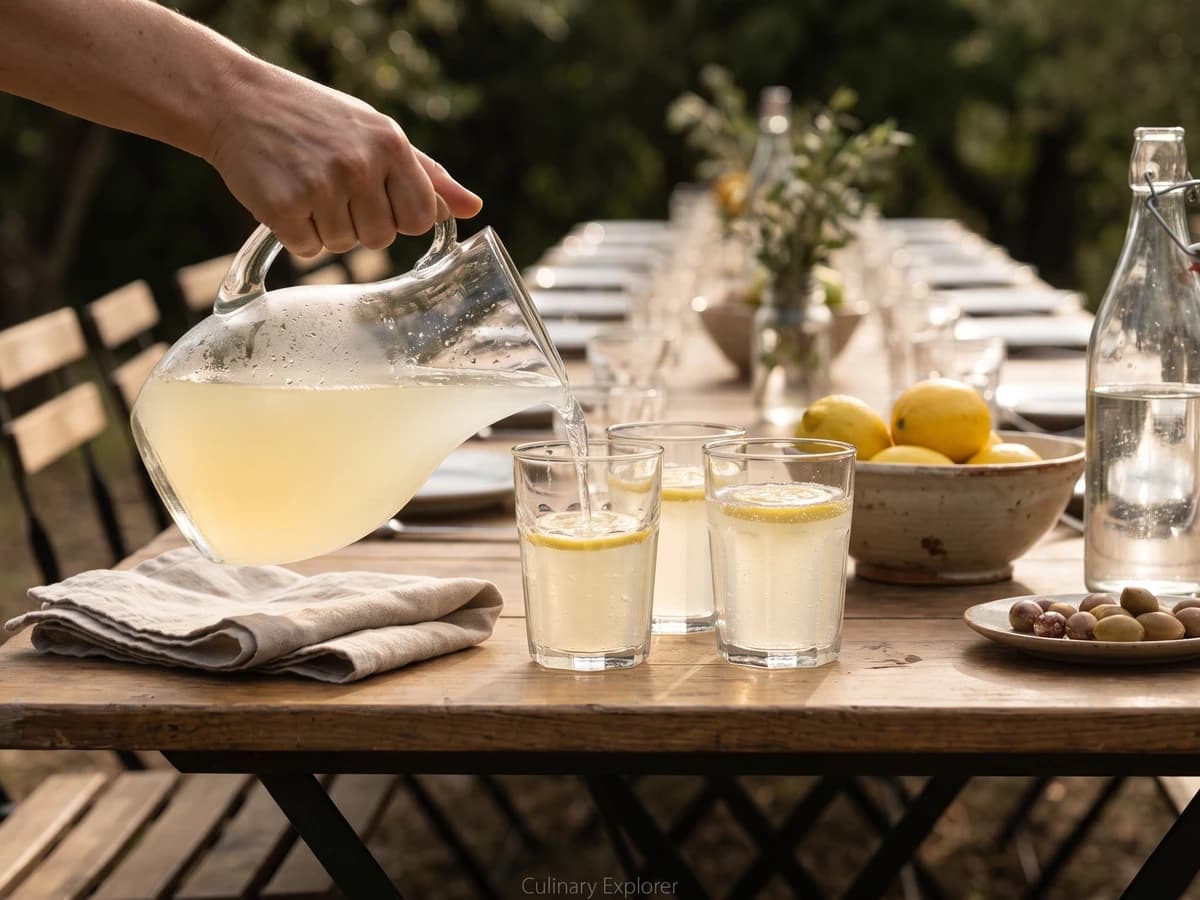
Zest brings perfume, juice brings acid, and three cool hours join them: a clear, lively French limonade finished with seltzer for the picnic table in the shade.
Chef Juliette
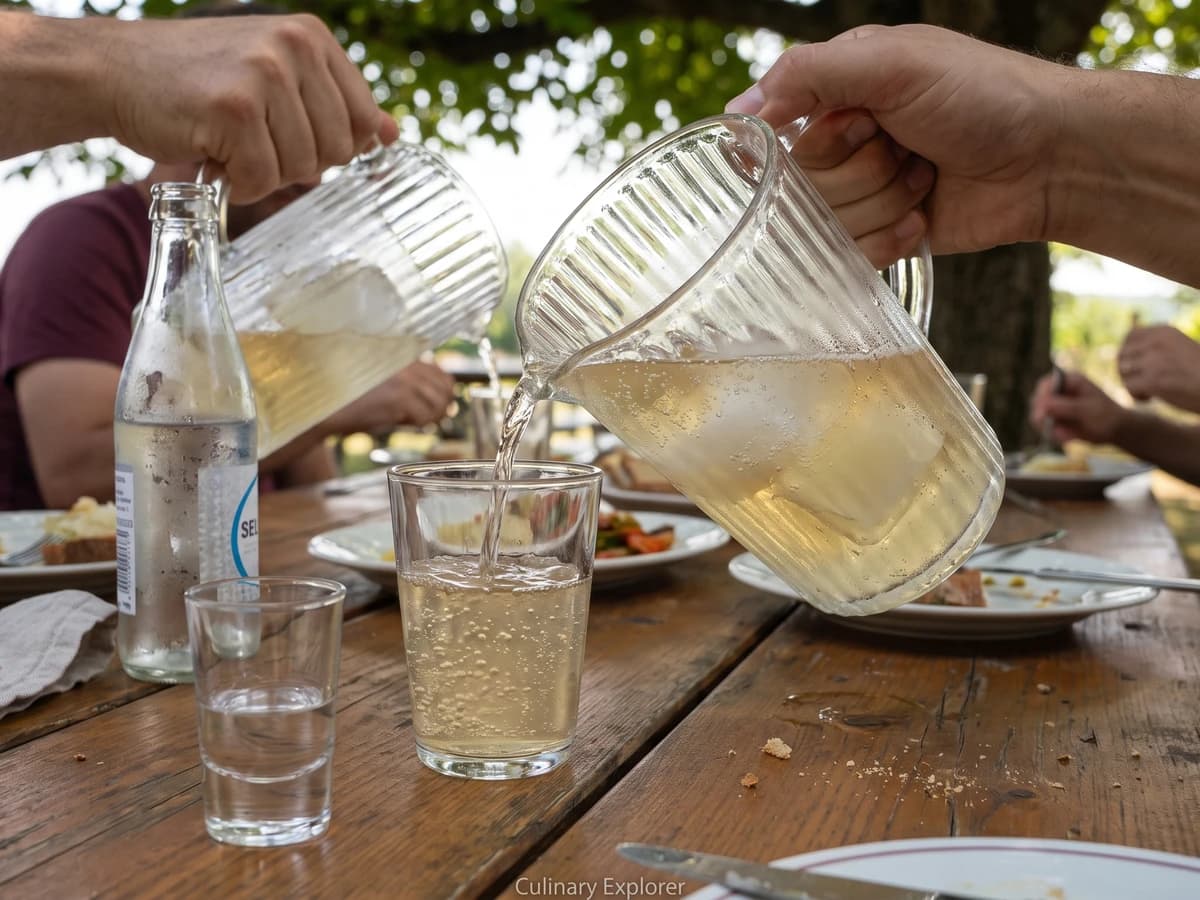
Eau d’Ananas captures pineapple by infusion, not crushing: boiling syrup draws out its perfume, fine straining keeps the drink clear, and cold seltzer with Kirsch lets it finish feather-light.