
Chef Juliette
Bischoff
Bischoff turns Champagne, tilleul, citrus, and brandy into pale-gold granité, coarse enough to sparkle under the spoon. The scraping makes the texture, and the timer becomes your smallest member of the brigade.
A cooking platform built around craft, culture, and the stories behind what we eat.
Created by Chef Juliette
Based on No. 2934, Bavaroise, from Le Guide Culinaire (1907) by Auguste Escoffier
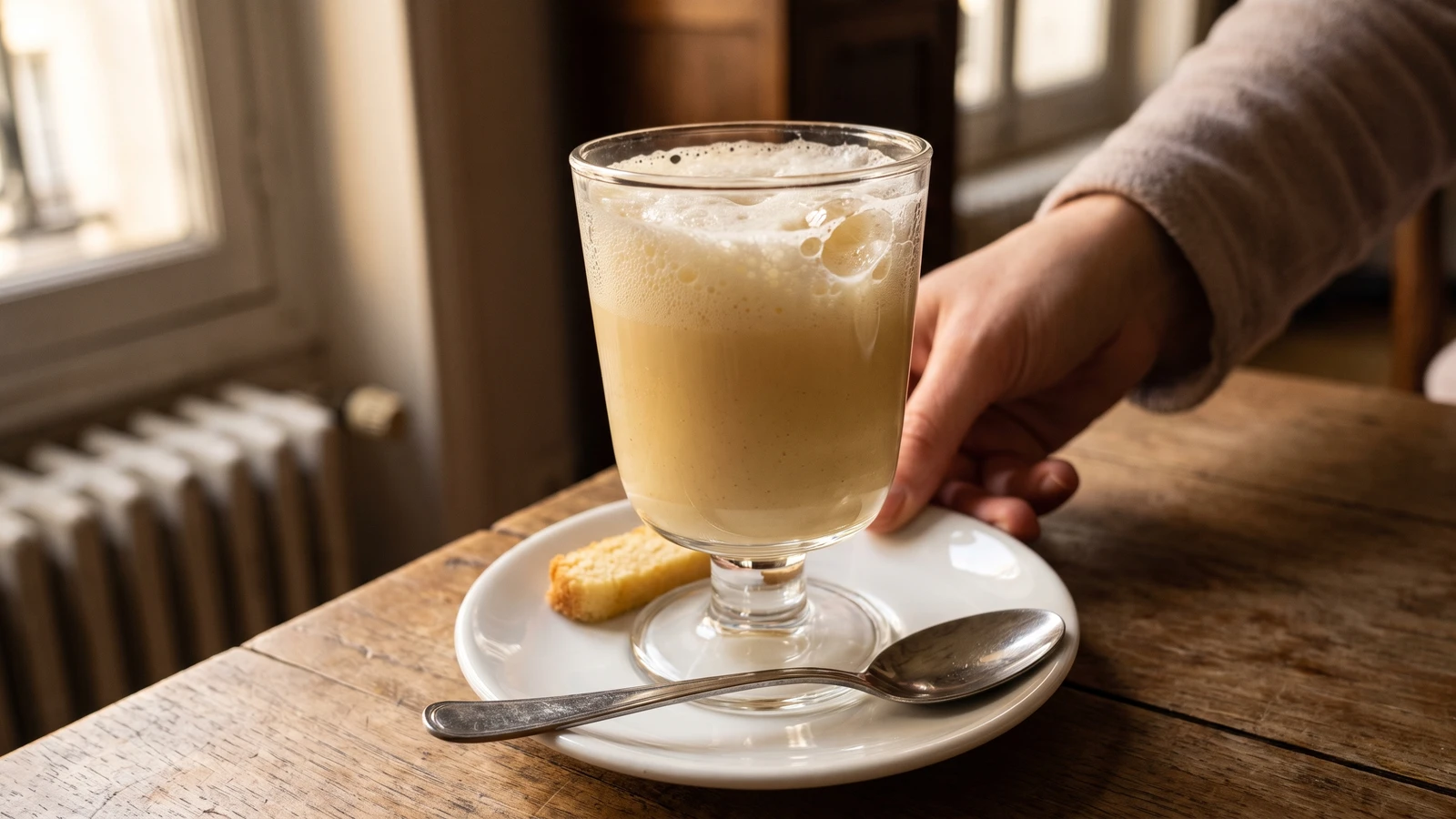
Bavaroise turns the ribbon stage into a drink: yolks and sugar, boiling tea and milk, and Kirsch whisked into a light crown of foam. Keep the whisk moving, and the café comes home.
Bavaroise au Kirsch (a frothy hot tea-and-milk drink) teaches the ribbon stage in its most exposed form. Yolks and sugar must be beaten until pale, thick, and slow to level, because that captured air becomes the body of the drink. The one true thing before you touch a pan is this: once the boiling tea begins to fall, the whisk must not stop.
The source formula assumed a saucier at the whisk, copper under his hand, a brigade-sized batch, and special Bavaroise glasses waiting warm. The honest home equivalent is a stable heatproof bowl, a handheld mixer, and four warmed cups. This batch is halved while every proportion and the order of capillaire syrup, tea, milk, and Kirsch remain intact. The copper and special glasses are scaffolding. The ribbon and the froth are the dish. One cook, one stove, one evening.
The finished Bavaroise is sweet café comfort, ivory-gold beneath a cap of fine bubbles, with black tea under the milk and clean cherry warmth at the finish. Pour the tea in a thread at first and whisk without pause; if a few yolk flecks appear, stop, cool the mixture with a spoonful of milk, strain, and continue more slowly. Ça se rattrape. Serve at once, because foam keeps no appointment.
Despite its name, Bavaroise belongs to the Paris café repertoire: café lore connects the mixture of tea, milk, and syrup with Bavarian visitors, while Parisian service made it a frothy hot drink enriched with yolks and liqueur. Capillaire, a maidenhair-fern syrup once familiar at café counters, supplied its perfume and sweetness before plain syrup became the practical substitute. It is not bavarois, the cold molded cream; this Bavaroise is poured hot and served immediately.
Quantity
4
Quantity
1/2 cup plus 1 tablespoon (135 ml / 113 g)
Quantity
Scant 1/4 cup (57 ml / about 70 g)
Quantity
1 cup plus 3 tablespoons (285 ml / 285 g)
freshly brewed and boiling hot
Quantity
1 cup plus 3 tablespoons (285 ml / 294 g)
boiling hot
Quantity
6 tablespoons plus 1 teaspoon (95 ml / about 90 g)
Quantity
1 tablespoon (15 ml / 15 g)
for rescue
| Ingredient | Quantity |
|---|---|
| large egg yolks | 4 |
| superfine (caster) sugar | 1/2 cup plus 1 tablespoon (135 ml / 113 g) |
| capillaire syrup, or 1:1 simple syrup | Scant 1/4 cup (57 ml / about 70 g) |
| strong black teafreshly brewed and boiling hot | 1 cup plus 3 tablespoons (285 ml / 285 g) |
| whole milkboiling hot | 1 cup plus 3 tablespoons (285 ml / 294 g) |
| Kirsch | 6 tablespoons plus 1 teaspoon (95 ml / about 90 g) |
| cold whole milk (optional)for rescue | 1 tablespoon (15 ml / 15 g) |
| Pâte à Génoise Fine (optional)for serving | 4 small fingers Pâte à Génoise Fine (No. 2376) |
Brew the black tea a shade stronger than you would ordinarily drink it, strain it promptly, and measure exactly 1 cup plus 3 tablespoons (285 ml). Keep it covered in a small pan. Measure the milk into a second pan, set a tall heatproof bowl on a folded damp towel, and warm four heatproof cups with hot water. The towel replaces the steady hand a second cook once supplied; the bowl must not skate while one hand whisks and the other pours.
Beat the yolks and superfine sugar at medium-high speed for 4 to 5 minutes, until the mixture turns very pale, grows thick, and falls from the beaters in a broad ribbon that remains visible for 2 to 3 seconds before leveling. This is the same visual test used in Pâte à Génoise Fine (No. 2376). It will look almost too thick at first. Keep beating; liquid added before the ribbon forms steals the drink's body.
Bring the tea to a brief boil and begin heating the milk alongside it. With the mixer running, beat the capillaire syrup completely into the ribbon. Add the first quarter of the boiling tea one tablespoon at a time, then pour the remainder in a narrow, steady stream while whisking briskly without pause. If a few cooked yolk flecks appear, stop pouring, whisk in the optional cold milk, and strain the mixture into a clean warm bowl before continuing more slowly. Ça se rattrape. Large, firm curds mean the egg base must be started again.
Bring the milk to the point where bubbles climb the edge and the surface begins to swell, then take it straight off the heat. Pour it into the tea mixture in a continuous thin stream while whisking at high speed, working in air until the drink is pale, fluid, and crowned with fine bubbles. Before adding the Kirsch, the mixture should register at least 160°F (71°C). If it falls short, whisk it in a clean saucepan over low heat just until it reaches that temperature, never allowing the yolk mixture to boil.
Take the mixture fully off the heat. Pour in the Kirsch in a narrow stream and whisk for another 15 seconds, just long enough to distribute it and renew the foam; cooking after this point drives away the cherry perfume. Drain the warmed cups and divide the Bavaroise immediately, spooning an equal crown of foam onto each serving. If offered, set a finger of Pâte à Génoise Fine (No. 2376) on each saucer, never in the drink. À table!
1 serving (about 245g)
Culinary guides, cultural storytelling, and the editorial depth that makes cooking meaningful.
Discover Culinary ExplorerChef Juliette
Bischoff turns Champagne, tilleul, citrus, and brandy into pale-gold granité, coarse enough to sparkle under the spoon. The scraping makes the texture, and the timer becomes your smallest member of the brigade.

Chef Juliette
Café glacé is coffee taught by texture: dark, sweet, vanilla-softened, and churned only until it moves like loose snow. Stop before ice cream, pour into cold cups, and take it outside.
Chef Juliette
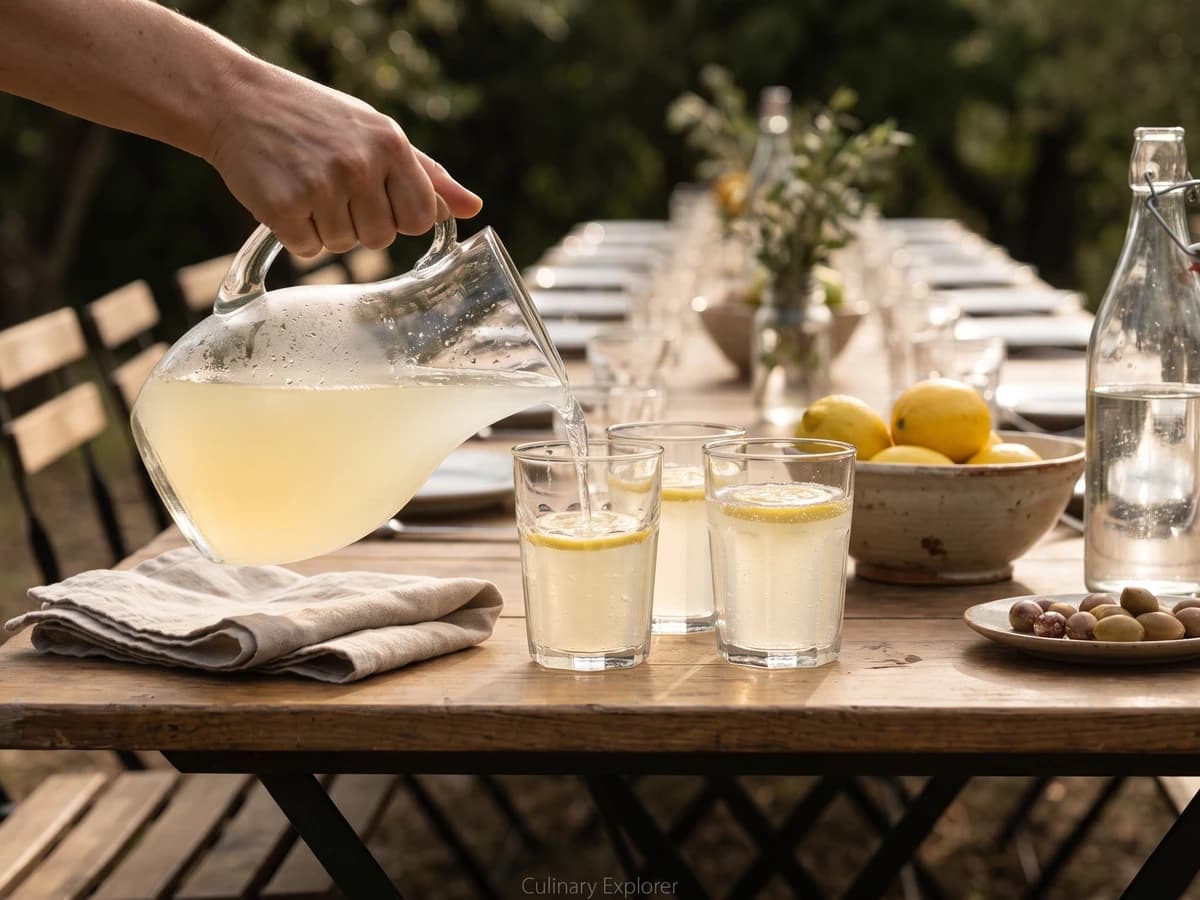
Zest brings perfume, juice brings acid, and three cool hours join them: a clear, lively French limonade finished with seltzer for the picnic table in the shade.
Chef Juliette
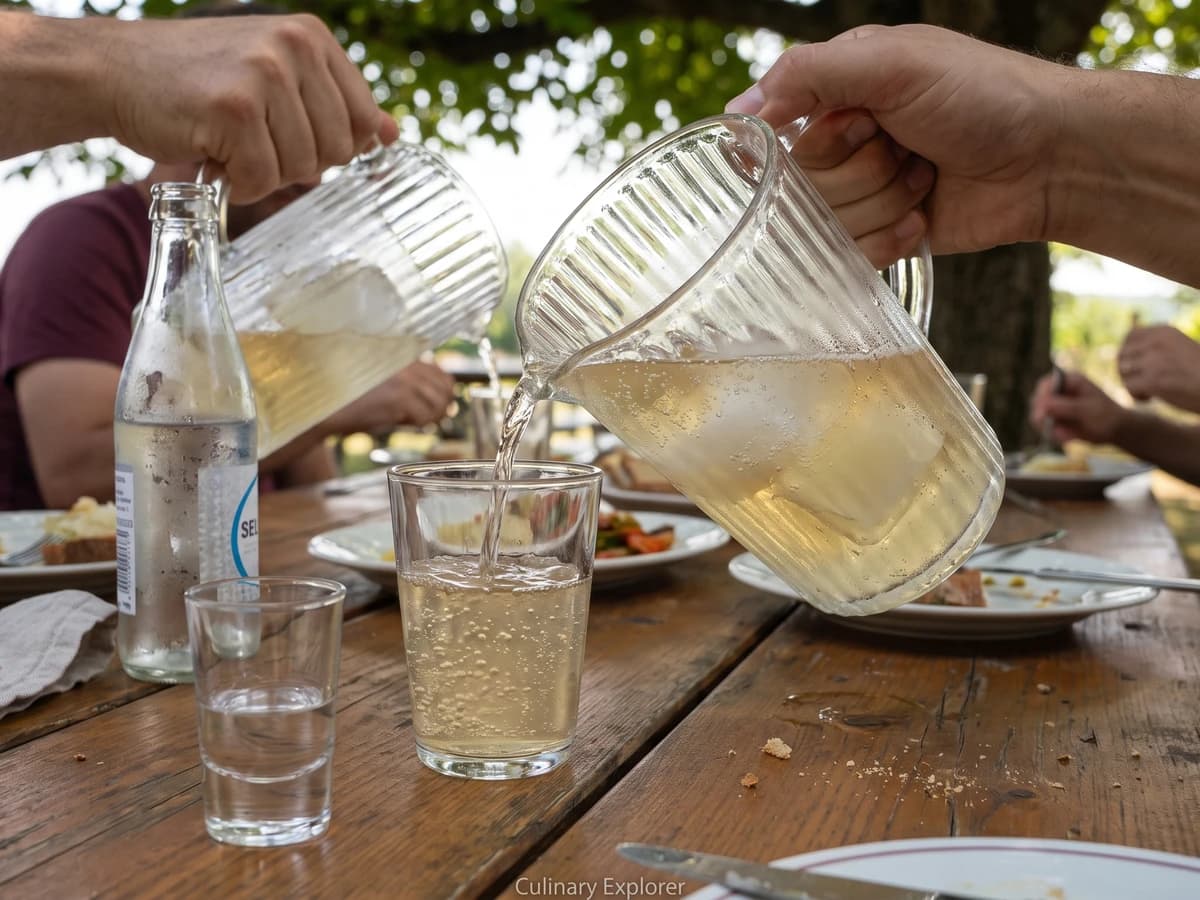
Eau d’Ananas captures pineapple by infusion, not crushing: boiling syrup draws out its perfume, fine straining keeps the drink clear, and cold seltzer with Kirsch lets it finish feather-light.