
Chef Juliette
Bavaroise
Bavaroise turns the ribbon stage into a drink: yolks and sugar, boiling tea and milk, and Kirsch whisked into a light crown of foam. Keep the whisk moving, and the café comes home.
A cooking platform built around craft, culture, and the stories behind what we eat.
Created by Chef Juliette
Based on No. 2938, Pineapple Water, from Le Guide Culinaire (1907) by Auguste Escoffier
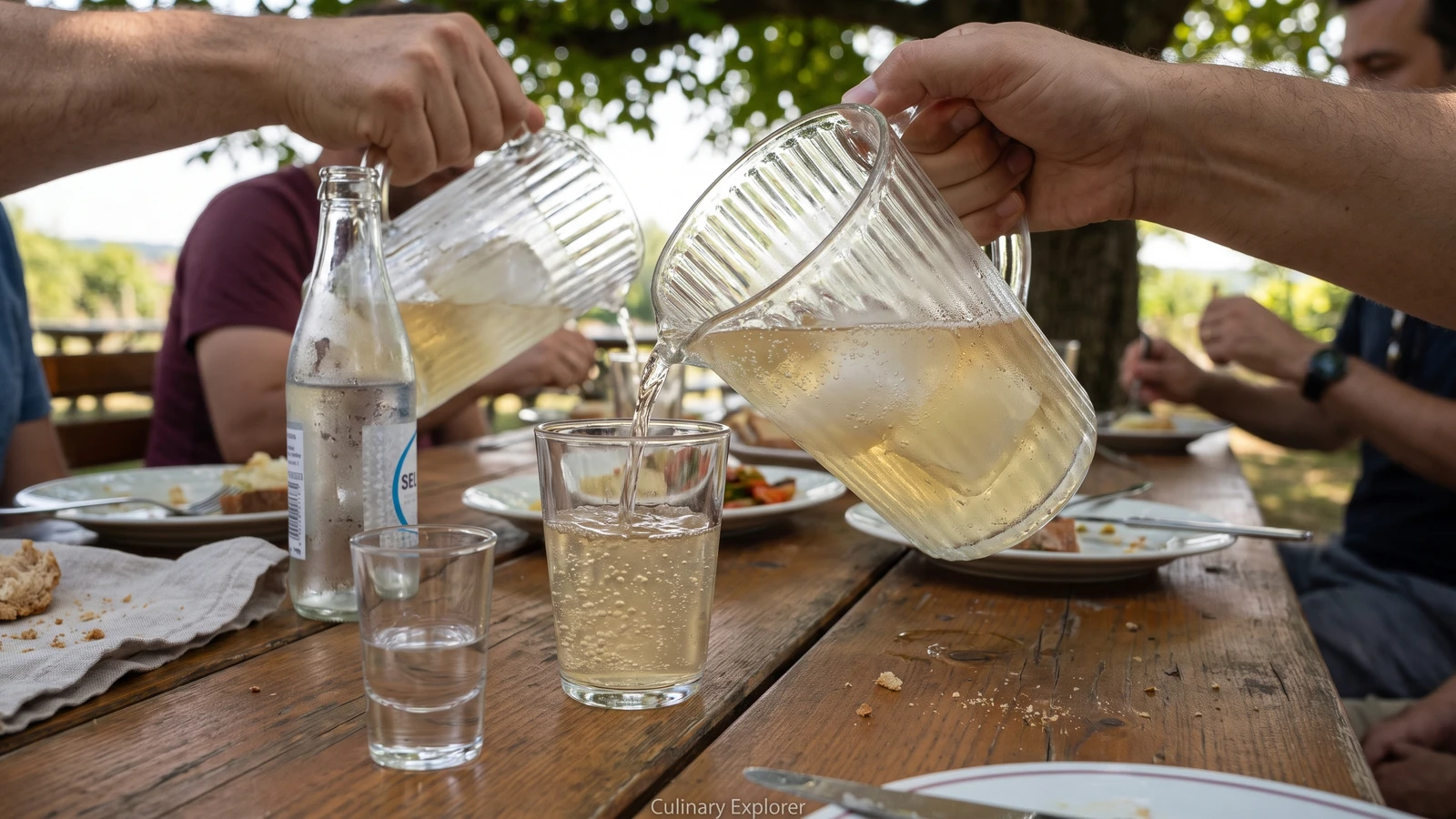
Eau d’Ananas captures pineapple by infusion, not crushing: boiling syrup draws out its perfume, fine straining keeps the drink clear, and cold seltzer with Kirsch lets it finish feather-light.
Eau d’Ananas (pineapple water) teaches infusion à chaud (hot infusion): chopped fruit yields its perfume to boiling syrup, then seltzer carries that perfume lightly rather than burying it in pulp. The drink should be clear, pale gold, and alive with bubbles, with Kirsch arriving as a dry cherry scent at the finish. The one true thing is temperature: the syrup must be fully boiling when it reaches the finely chopped pineapple.
The formula assumed a syrup hydrometer for 20° and 9° Baumé, a woollen filtering bag, a block of service ice, and a pitcher built from 680 g of pineapple. Here the proportions are halved for six glasses; 20° syrup becomes a weighed sugar-and-water ratio, the woollen bag becomes a dampened jelly bag or paper-lined sieve, and the liqueur-glass measure becomes 45 ml. Those instruments are brigade scaffolding and can go. The boiling infusion, full two-hour rest, fine straining, twenty-minute chill with seltzer, and Kirsch added at service are the dish and must stay.
Chop, don't blend. A blender tears the fruit into pulp that no patient straining can make truly clear. Get the cut fine and pour the syrup over it at a full boil; that first meeting decides the Eau d’Ananas.
Eau d’Ananas belongs to the Parisian grand-hotel and bourgeois refreshment table rather than to a single French province, part of a repertoire of chilled fruit drinks served after dinner or outdoors. Pineapple reached these kitchens fresh when possible and preserved when necessary, which is why the classical formula accepts both without ceremony. Despite its spare name, this is not raw fruit left in water: it is a measured hot-syrup infusion, clarified by fine straining, diluted with seltzer, and completed with Kirsch.
Quantity
2 cups (475 ml / 340 g)
finely chopped and well drained if canned
Quantity
1 cup (240 ml / 200 g)
Quantity
1½ cups (355 ml / 355 g)
Quantity
1 large block, about ½ cup displacement (120 ml / 110 g)
Quantity
2½ to 2¾ cups (590 to 650 ml / 590 to 650 g)
Quantity
3 tablespoons (45 ml / 43 g)
| Ingredient | Quantity |
|---|---|
| fresh pineapple or canned pineapple in juicefinely chopped and well drained if canned | 2 cups (475 ml / 340 g) |
| granulated sugar | 1 cup (240 ml / 200 g) |
| water | 1½ cups (355 ml / 355 g) |
| ice | 1 large block, about ½ cup displacement (120 ml / 110 g) |
| very cold seltzer water | 2½ to 2¾ cups (590 to 650 ml / 590 to 650 g) |
| Kirsch | 3 tablespoons (45 ml / 43 g) |
Cut the pineapple into pieces no larger than a pea, catching every drop of juice, and place the fruit and juice in a heatproof nonreactive bowl. Keep the cut fine and even, but do not mash or blend it. Small clean cuts expose plenty of fruit to the syrup without filling the finished drink with pulp.
Combine the sugar and water in a small saucepan. Stir over medium heat only until the sugar dissolves, then bring the syrup to a full rolling boil. As soon as the whole surface boils, take it straight to the pineapple; prolonged boiling evaporates water and makes the syrup heavier than the formula intends.
Pour the boiling syrup evenly over the chopped pineapple, making certain every piece is wetted. Stir once, cover the bowl, and leave it at room temperature for two hours while it cools and infuses. Keep the full time. This quiet extraction is the dish, and cutting it short gives sweetness without enough pineapple perfume.
Set a dampened jelly bag over a clean bowl, or line a fine-mesh sieve with a rinsed paper coffee filter. Pour in the pineapple mixture and let it drain by gravity for 10 to 15 minutes. Do not squeeze the fruit; pressure forces pulp through and clouds the drink. If it has already been pressed, ça se rattrape: let the liquid settle for ten minutes, then pass it through a fresh damp filter without disturbing the sediment.
Place the large block of ice in a 1.5-liter pitcher and pour in the strained infusion. Add 2½ cups of the cold seltzer, then enough of the remainder to bring the contents to about 5¼ cups (1.24 liters), usually another 2 to 4 tablespoons. This is the home equivalent of reducing the syrup to 9° Baumé: the drink remains distinctly sweet and fragrant but no longer feels syrupy. Stir once, cover, and keep cold for twenty minutes.
Immediately before serving, add the Kirsch and turn the liquid over once with a long spoon. Do not beat out the bubbles. If the seltzer has lost some life during holding, add a final small splash from a freshly opened bottle. Pour into chilled tumblers with no garnish to interrupt the clear pineapple perfume. À table!
1 serving (about 230g)
Culinary guides, cultural storytelling, and the editorial depth that makes cooking meaningful.
Discover Culinary ExplorerChef Juliette
Bavaroise turns the ribbon stage into a drink: yolks and sugar, boiling tea and milk, and Kirsch whisked into a light crown of foam. Keep the whisk moving, and the café comes home.

Chef Juliette
Bischoff turns Champagne, tilleul, citrus, and brandy into pale-gold granité, coarse enough to sparkle under the spoon. The scraping makes the texture, and the timer becomes your smallest member of the brigade.

Chef Juliette
Café glacé is coffee taught by texture: dark, sweet, vanilla-softened, and churned only until it moves like loose snow. Stop before ice cream, pour into cold cups, and take it outside.
Chef Juliette
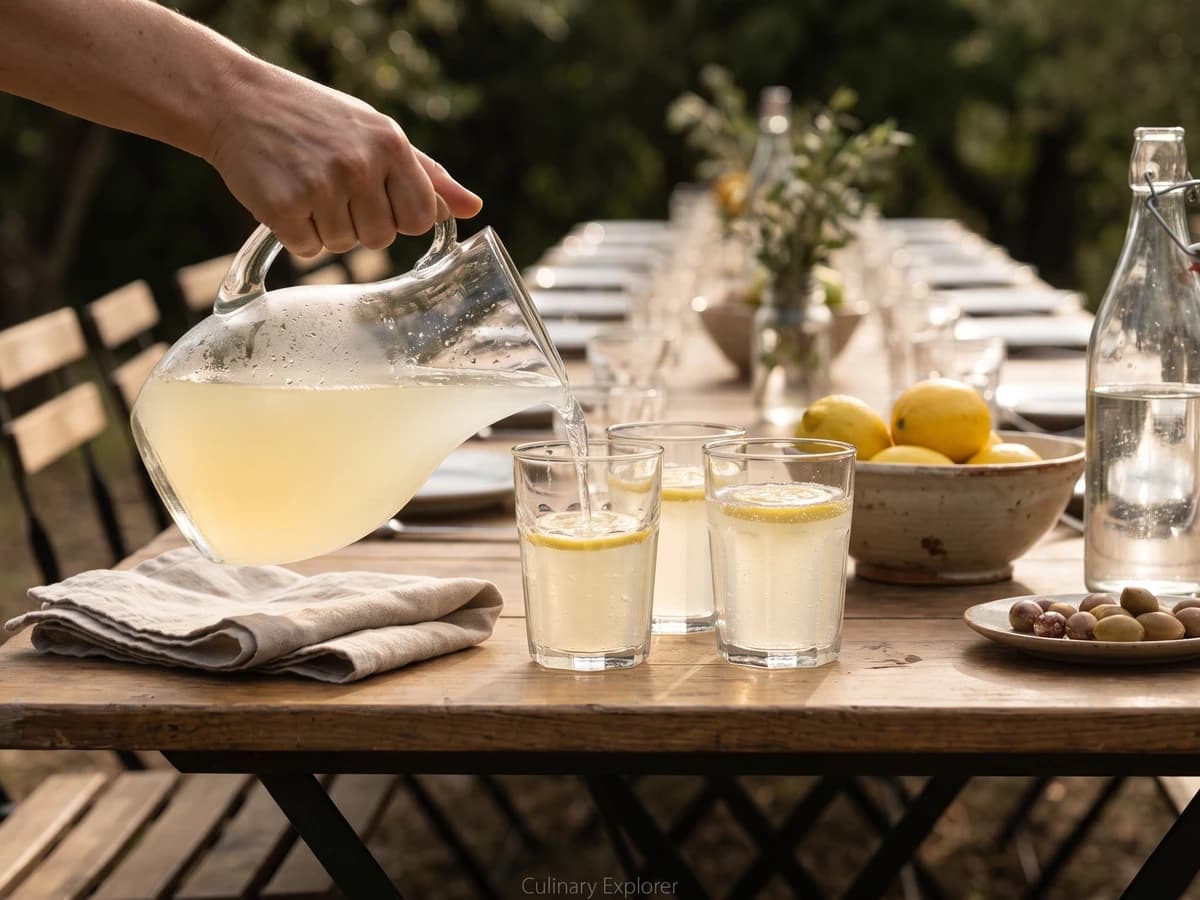
Zest brings perfume, juice brings acid, and three cool hours join them: a clear, lively French limonade finished with seltzer for the picnic table in the shade.