
Chef Juliette
Bavaroise
Bavaroise turns the ribbon stage into a drink: yolks and sugar, boiling tea and milk, and Kirsch whisked into a light crown of foam. Keep the whisk moving, and the café comes home.
A cooking platform built around craft, culture, and the stories behind what we eat.
Created by Chef Juliette
Based on No. 2937, Lemonade, from Le Guide Culinaire (1907) by Auguste Escoffier
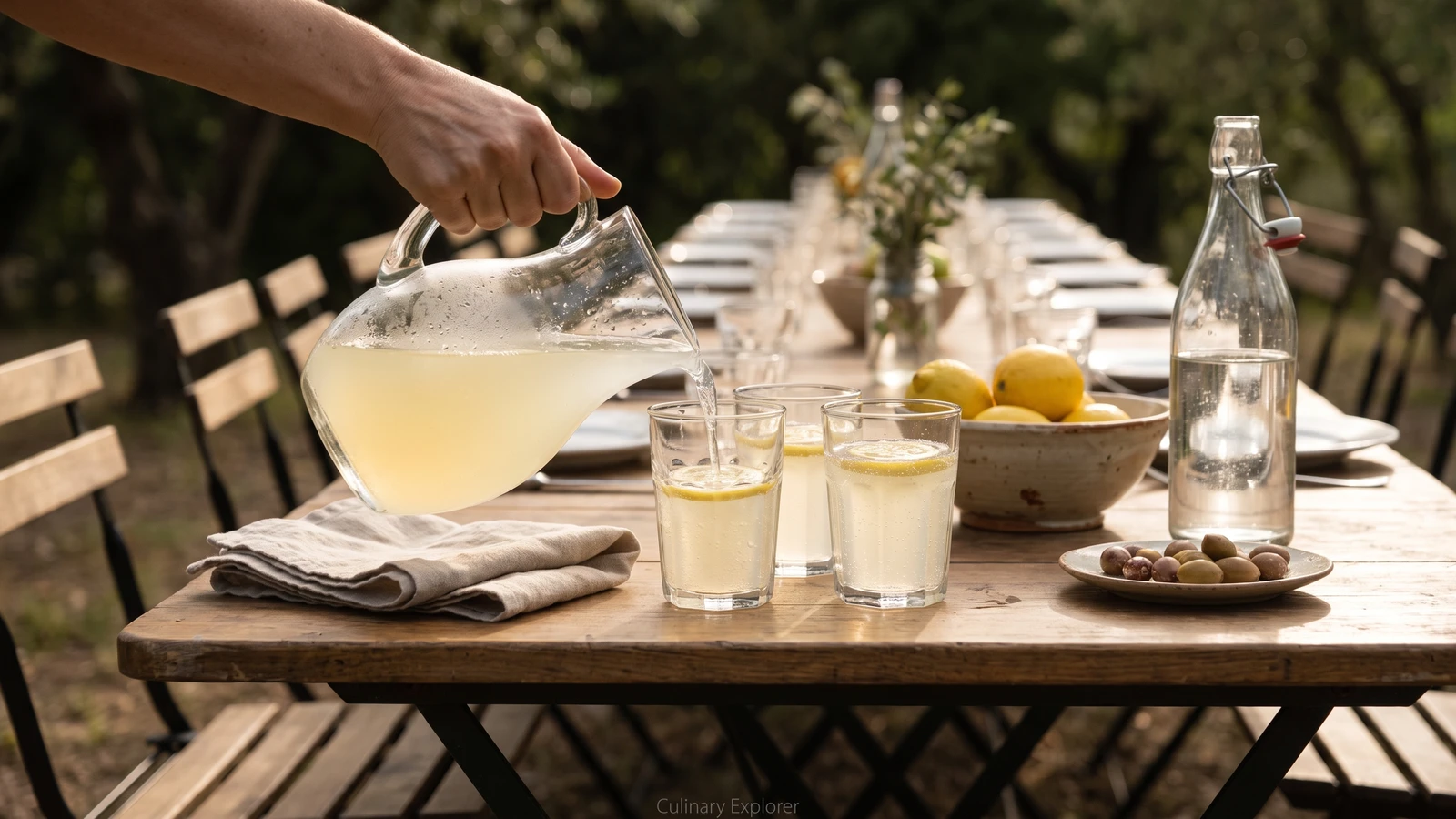
Zest brings perfume, juice brings acid, and three cool hours join them: a clear, lively French limonade finished with seltzer for the picnic table in the shade.
Limonade (French sparkling lemonade) teaches a small but exact lesson: lemon juice supplies the acid, but zest supplies the perfume. Use only the glossy yellow film, because the white pith beneath it brings blunt bitterness. Both go into the cold infusion, and neither can do the other's work.
The book's kitchen assumed loaf sugar, filtered water kept cool, a fine strainer, and a charged syphon waiting for service. Your honest equivalents are fine granulated sugar measured to the same half-pound weight, the refrigerator, a fine-mesh sieve, and a cold one-quart bottle of plain seltzer. The entry already makes a civilized home pitcher, so I haven't cut it into an awkward half-batch. This is one cook, one refrigerator, one afternoon. The loaf shape and dedicated syphon were brigade scaffolding; the three-hour cold steep and last-minute carbonation are the dish, and they stay.
The finished limonade is pale, clear, and fragrant before it even reaches your lips, with bright acidity under a deliberate sweetness and bubbles lifting the lemon across the palate. The step that matters most happens before the steeping begins: take only the yellow zest.
French limonade belongs especially to the Parisian café and limonadier tradition, where sweetened lemon water became a sparkling drink dispensed from bottles and syphons. It is not the same service as citron pressé (lemon pressed to order), which brings lemon juice, sugar, and water separately for the drinker to mix; limonade is infused, strained, sweetened in advance, and commonly carbonated. At French family tables and picnics, the home version keeps the same distinction: perfume drawn from zest, brightness from juice, and bubbles added only at service.
Quantity
4 cups (946 ml / 946 g)
Quantity
1⅛ cups (266 ml by volume / 227 g)
Quantity
2
scrubbed, zest removed without white pith, then juiced
Quantity
4 cups (946 ml / 946 g)
Quantity
1
cut into 8 very thin roundels
| Ingredient | Quantity |
|---|---|
| filtered water | 4 cups (946 ml / 946 g) |
| fine granulated sugar, the modern equivalent of loaf sugar | 1⅛ cups (266 ml by volume / 227 g) |
| medium lemonsscrubbed, zest removed without white pith, then juiced | 2 |
| very cold plain seltzer water | 4 cups (946 ml / 946 g) |
| additional lemoncut into 8 very thin roundels | 1 |
Wash and dry the 2 lemons. With a sharp vegetable peeler, remove the zest, the outermost colored and glossy film of the rind, in very thin strips. Leave every trace of white pith behind. If a strip comes away with white attached, lay it yellow-side down and pare the white away with a small knife. Ça se rattrape now, before that bitterness enters the pitcher. Juice both lemons and discard the seeds.
Combine the filtered water and granulated sugar in a pitcher or lidded bowl holding at least 2½ quarts (2.4 L). Stir steadily until the liquid is clear and no grains remain on the bottom. Cold water asks for patience, not heat. If the last crystals resist, wait five minutes and stir again; heating the mixture would abandon the cold infusion that gives this limonade its clean perfume.
Add all the lemon juice and zest to the sweetened water. Cover and refrigerate for exactly 3 hours, stirring once halfway through. This rest is the foundation of the drink: the juice supplies immediate acidity while the zest slowly perfumes the water. Do not leave the zest overnight, or the clean citrus fragrance can turn woody and bitter.
Pass the infusion through a fine-mesh sieve into a clean, chilled pitcher. Let it drain naturally and discard the zest; pressing or grinding the strips against the mesh only forces harsher rind flavors into the drink. The strained base will taste sweeter and more concentrated than the finished limonade. That is exactly right, because the full measure of seltzer still has to lengthen it.
Immediately before serving, pour the very cold seltzer slowly down the inside of the pitcher so its bubbles survive, then stir once, gently, from bottom to top. Place one thin lemon roundel in each glass and pour. Adding the seltzer earlier is convenient brigade scaffolding with a poor result; by the time the picnic begins, the limonade will be flat. Carbonation at the last moment is the dish. À table!
1 serving (about 280g)
Culinary guides, cultural storytelling, and the editorial depth that makes cooking meaningful.
Discover Culinary ExplorerChef Juliette
Bavaroise turns the ribbon stage into a drink: yolks and sugar, boiling tea and milk, and Kirsch whisked into a light crown of foam. Keep the whisk moving, and the café comes home.

Chef Juliette
Bischoff turns Champagne, tilleul, citrus, and brandy into pale-gold granité, coarse enough to sparkle under the spoon. The scraping makes the texture, and the timer becomes your smallest member of the brigade.

Chef Juliette
Café glacé is coffee taught by texture: dark, sweet, vanilla-softened, and churned only until it moves like loose snow. Stop before ice cream, pour into cold cups, and take it outside.
Chef Juliette
Eau d’Ananas captures pineapple by infusion, not crushing: boiling syrup draws out its perfume, fine straining keeps the drink clear, and cold seltzer with Kirsch lets it finish feather-light.