
Chef Juliette
Bavaroise
Bavaroise turns the ribbon stage into a drink: yolks and sugar, boiling tea and milk, and Kirsch whisked into a light crown of foam. Keep the whisk moving, and the café comes home.
A cooking platform built around craft, culture, and the stories behind what we eat.

Created by Chef Juliette
Based on No. 2950, Wine à la Française, from Le Guide Culinaire (1907) by Auguste Escoffier
Vin à la Française turns a bottle of Bordeaux or red Burgundy into a generous wine cup, sweetened boldly and brightened with lemon, provided every bitter pip is removed before the slices meet the wine.
Vin à la Française (wine in the French manner) teaches control in the smallest possible compass: dissolve the sugar completely, perfume the wine with lemon, and let no pip lend its hard bitterness. Before you touch the serving vessel, slice the lemon and inspect every piece. That discipline is the drink.
The old entry assumes a dining-room salad bowl, a silver spoon, and someone ready to pour. It needs neither saucier nor salamander: a 1.5-liter glass pitcher and a long stainless-steel spoon are the honest home equivalents. The silver is service scaffolding and can go; the full eight ounces of sugar and the order of sugar, water, wine, then lemon are the preparation itself and must stay. I keep the one-bottle quantity because it already makes six small glasses, and I make “a few tablespoonfuls” precise at three tablespoons so the result can be repeated. One cook, one table, one evening.
Expect a garnet-dark wine cup, deliberately sweet, with the fragrance of fresh lemon carried above the fruit and tannin of the wine. This is mixed, not cooked, so no reduction or heat can correct careless preparation. The one step that matters most is the quiet one: inspect every lemon slice and flick out every pip before it meets the pitcher.
Vin à la Française belongs to French dining-room beverage service, not to Bordeaux or Burgundy as a regional specialty; à la française names the manner of mixing and serving the wine, not its appellation. The choice between Bordeaux and red Burgundy shows that the formula rests on dissolved sugar and lemon rather than one vineyard tradition. Its bowl-and-spoon service passed naturally from formal tables to garden dinners and picnics, where a one-bottle batch still pours neatly for a small company.
Quantity
1⅛ cups (270 ml / 227 g)
Quantity
3 tablespoons (45 ml / 45 g)
Quantity
1 bottle (750 ml / about 745 g)
Quantity
½ lemon (about 50 g)
cut into 6 paper-thin slices with every pip removed
| Ingredient | Quantity |
|---|---|
| granulated sugar | 1⅛ cups (270 ml / 227 g) |
| warm water | 3 tablespoons (45 ml / 45 g) |
| excellent dry Bordeaux or red Burgundy | 1 bottle (750 ml / about 745 g) |
| medium lemoncut into 6 paper-thin slices with every pip removed | ½ lemon (about 50 g) |
Lay the lemon half cut-side down and slice it crosswise into six paper-thin half-moons. Hold every slice to the light and flick out each pip with the point of a small knife, including any pale fragments hiding near the centre. Keep the peel and pith intact, but leave not one pip behind; a few are enough to turn the wine bitter, and that bitterness cannot be stirred away later.
Put the sugar in a 1.5-liter glass or glazed ceramic pitcher. Sprinkle the warm water evenly over it and stir until every grain is moistened. The mixture will resemble a thick white paste rather than a finished syrup. That is exactly right; the wine supplies the remaining liquid.
Pour in about 1 cup (240 ml) of the measured wine and stir firmly around the bottom until the sugar loosens. Add the remaining wine in two additions, stirring after each, until the liquid is clear and no crystals scrape beneath the spoon. If grains remain, let the pitcher stand for five minutes and stir again. Ça se rattrape. Do not heat the wine, which would flatten its fragrance.
Slip the six seeded lemon slices into the wine and stir the whole preparation well for about thirty seconds. Move the spoon from the bottom upward so nothing remains settled, but do not crush the slices; their peel should perfume the wine gently, not be bruised into it.
Serve the Vin à la Française cool in six small glasses, placing one lemon slice in each. Pour directly from the pitcher and leave the ice elsewhere, because melting ice quietly changes the proportions. The wine should be clear, garnet-dark, boldly sweet, and bright at the finish. À table!
1 serving (about 178g)
Culinary guides, cultural storytelling, and the editorial depth that makes cooking meaningful.
Discover Culinary ExplorerChef Juliette
Bavaroise turns the ribbon stage into a drink: yolks and sugar, boiling tea and milk, and Kirsch whisked into a light crown of foam. Keep the whisk moving, and the café comes home.

Chef Juliette
Bischoff turns Champagne, tilleul, citrus, and brandy into pale-gold granité, coarse enough to sparkle under the spoon. The scraping makes the texture, and the timer becomes your smallest member of the brigade.

Chef Juliette
Café glacé is coffee taught by texture: dark, sweet, vanilla-softened, and churned only until it moves like loose snow. Stop before ice cream, pour into cold cups, and take it outside.
Chef Juliette
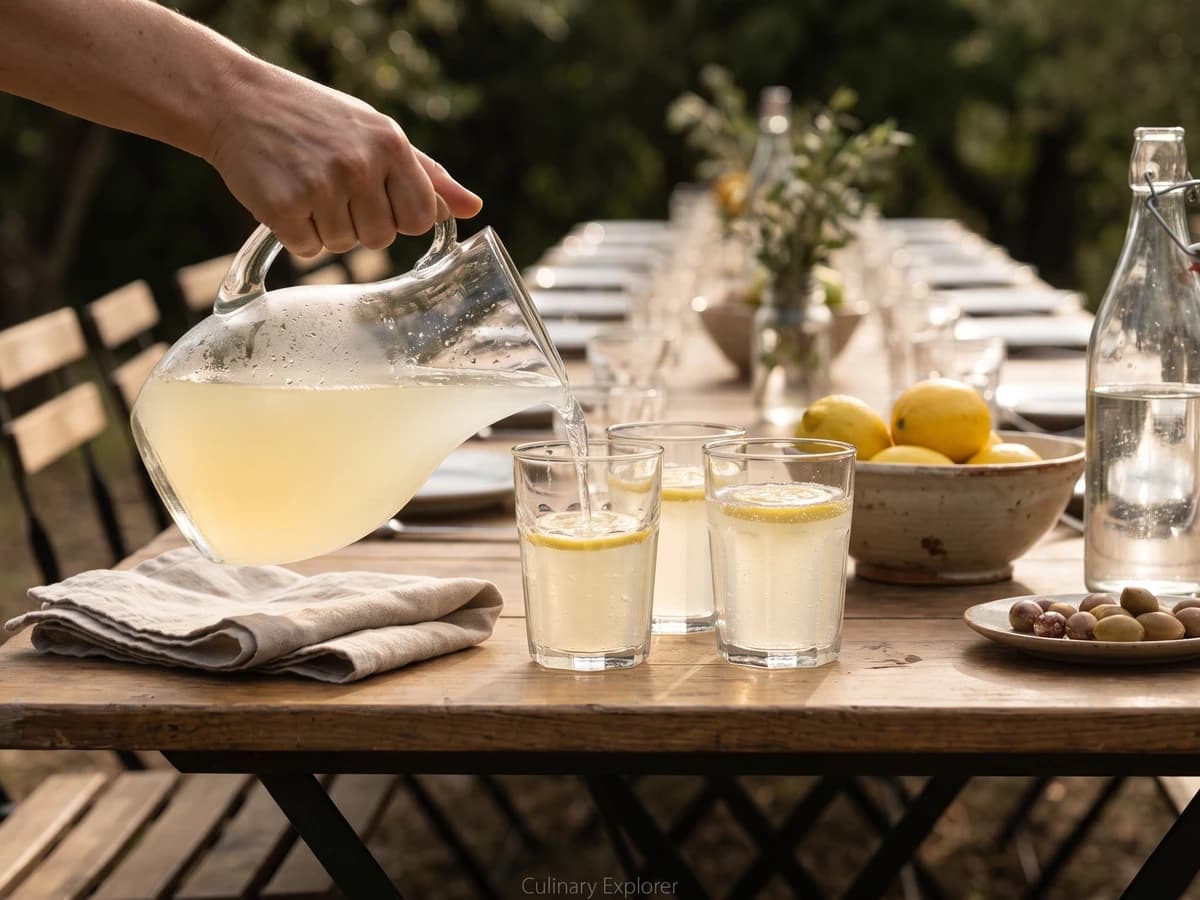
Zest brings perfume, juice brings acid, and three cool hours join them: a clear, lively French limonade finished with seltzer for the picnic table in the shade.