
Chef Juliette
Smelt (Éperlans)
Tiny éperlans, lightly floured and fried until their tails stand crisp, arrive in a generous heap on a napkin with fried parsley and grooved lemon, a weeknight lesson in heat and restraint.
A cooking platform built around craft, culture, and the stories behind what we eat.
Created by Chef Juliette
Based on No. 295, Lobster Cream, from Le Guide Culinaire (1907) by Auguste Escoffier
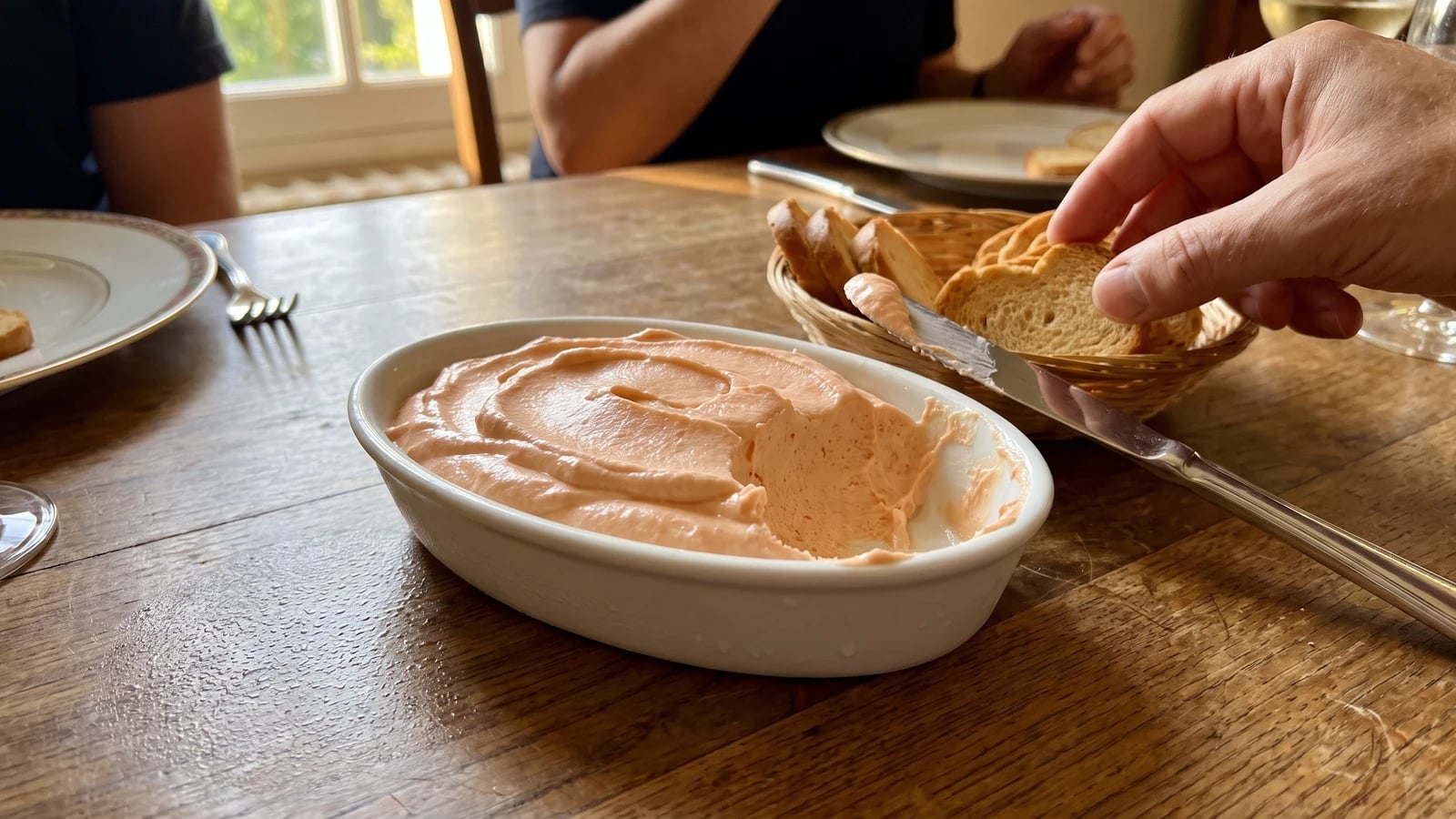
Crème de homard turns cooked lobster trimmings and coral into a silken chilled spread, dense with butter yet lifted by whipped cream, proof that pounding and sieving are the heart of refinement.
Crème de homard (lobster cream) teaches the discipline of texture: pounding makes the lobster fine, but only the sieve makes it silk. Before you touch the lobster, know the one true thing here. The sieve is not fuss, it is the dish; whipped cream can lighten a perfectly smooth base, but it cannot hide shell, membrane, or coarse fibres.
The entry assumed a cold-kitchen cook with a heavy mortar, a fine tamis, and trimmings, spawn, and coral left from dressing whole lobsters. It calls for neither the saucier's stockpot nor a salamander. For one cook, one stove, one evening, a mini processor replaces the mortar and a sturdy fine-mesh sieve replaces the tamis. The four-ounce lobster formula is already a sensible home batch, so its stated proportions remain intact. Only the final whisked cream, which the entry leaves to a trained cook's eye, is fixed at three tablespoons for a repeatable result.
Keep the lobster paste cool, the butter soft but never oily, and the final cream at soft peaks. If the mixture threatens to turn greasy, stop and cool it; ça se rattrape. The finished Crème de homard should be pale coral, satin-smooth, and rich enough for the thinnest piece of toast. The decisive step remains the sieve: press every spoonful through, then scrape the silk from underneath.
Crème de homard belongs to the classical Parisian garde-manger, the cold kitchen, where trimmings from whole lobsters were pounded, sieved, and served among refined cold hors d'oeuvres. Its lobster points toward the Atlantic and Channel fisheries of Brittany and Normandy, but the preparation is a codified cold-kitchen method rather than a regional fisherman's dip. The words spawn and coral refer to the lobster's eggs and roe, prized for their natural colour and concentrated marine richness.
Quantity
¾ cup lightly packed (180 ml / 113 g)
chilled, with every fragment of shell and cartilage removed
Quantity
3 tablespoons (45 ml / 45 g)
cool
Quantity
¼ cup (60 ml / 57 g)
softened but not oily
Quantity
3 tablespoons (45 ml / 45 g)
very cold
| Ingredient | Quantity |
|---|---|
| fully cooked lobster trimmings, spawn, and coralchilled, with every fragment of shell and cartilage removed | ¾ cup lightly packed (180 ml / 113 g) |
| fresh heavy cream, for poundingcool | 3 tablespoons (45 ml / 45 g) |
| unsalted buttersoftened but not oily | ¼ cup (60 ml / 57 g) |
| fresh heavy cream, for whippingvery cold | 3 tablespoons (45 ml / 45 g) |
Measure the lobster only after removing every shard of shell, strip of cartilage, and tough membrane. Spread it on a plate and pass your fingertips through it twice; the sieve refines flesh, but it shouldn't be asked to catch carelessness. Keep the lobster cold. Let the butter soften until a finger leaves a clean dent while its surface remains matte, about 15 to 20 minutes in a temperate kitchen.
Put the lobster, spawn, and coral in a mini processor and pulse until finely minced, scraping the bowl several times. Process until it begins to gather into a paste, then add the cool cream one spoonful at a time. Add the softened butter in four portions, working each one completely into the lobster before the next. The base should be thick, cohesive, and naturally coral-coloured. If the bowl feels warm or the butter begins to shine, stop and chill everything for 10 minutes before continuing; melted butter makes a greasy cream.
Set a sturdy fine-mesh sieve over a chilled bowl. Press the lobster mixture through in heaped teaspoonfuls with a flexible spatula or the back of a spoon, working firmly across the mesh rather than simply pushing downward. Scrape the smooth paste from the underside after every few spoonfuls and discard the fibrous residue. The processor is the home replacement for brigade pounding and can be changed freely; this sieving cannot. It is what turns a lobster butter into Crème de homard.
Reserve 1 teaspoon of the very cold cream, then whisk the rest in a narrow chilled bowl until it forms soft peaks that bend at their tips. This small quantity whips most easily when the bowl is tilted. Stop before it becomes stiff. If it turns grainy, whisk in the reserved teaspoon drop by drop until the cream is smooth again. Ça se rattrape.
The sieved lobster base should be cool and pliable, not hard from the refrigerator. Fold in one-third of the whipped cream rather firmly to loosen the butter-rich paste, then fold in the remainder with broad, gentle turns. Stop as soon as no white streaks remain and the mixture holds a soft ridge. If tiny butter flecks appear, the base is too cold; leave it for 3 minutes, then smooth it gently. If it becomes glossy and greasy, set the bowl over ice and fold slowly until its satin texture returns.
Spoon the Crème de homard into a shallow serving dish, leaving generous waves from the spoon rather than fussing over the surface. Cover directly and chill for at least 2 hours so the butter sets the body and the lobster flavour settles through the cream. Take it from the cold 10 minutes before serving, when it will spread without losing its shape, and offer thin crisp toast alongside. À table!
1 serving (about 33g)
Culinary guides, cultural storytelling, and the editorial depth that makes cooking meaningful.
Discover Culinary ExplorerChef Juliette
Tiny éperlans, lightly floured and fried until their tails stand crisp, arrive in a generous heap on a napkin with fried parsley and grooved lemon, a weeknight lesson in heat and restraint.

Chef Juliette
Brandade de Morue turns salt cod, warm olive oil, and milk into a pale, silky emulsion: keep everything warm and add the oil slowly, then crown the generous dome with butter-fried bread.

Chef Juliette
Salt cod worked warm with cream, one patient spoonful at a time, until the rough flakes become a glossy Nîmes paste, domed generously and ringed with butter-fried croutons for the table.

Chef Juliette
Wine-poached char packed in its earthenware crock beneath butter gold: a make-ahead first course that turns careful cooling, thorough boning, and one unbroken seal into quiet abundance.