
Chef Juliette
Bavaroise
Bavaroise turns the ribbon stage into a drink: yolks and sugar, boiling tea and milk, and Kirsch whisked into a light crown of foam. Keep the whisk moving, and the café comes home.
A cooking platform built around craft, culture, and the stories behind what we eat.
Created by Chef Juliette
Based on No. 2948, Hot Wine, from Le Guide Culinaire (1907) by Auguste Escoffier
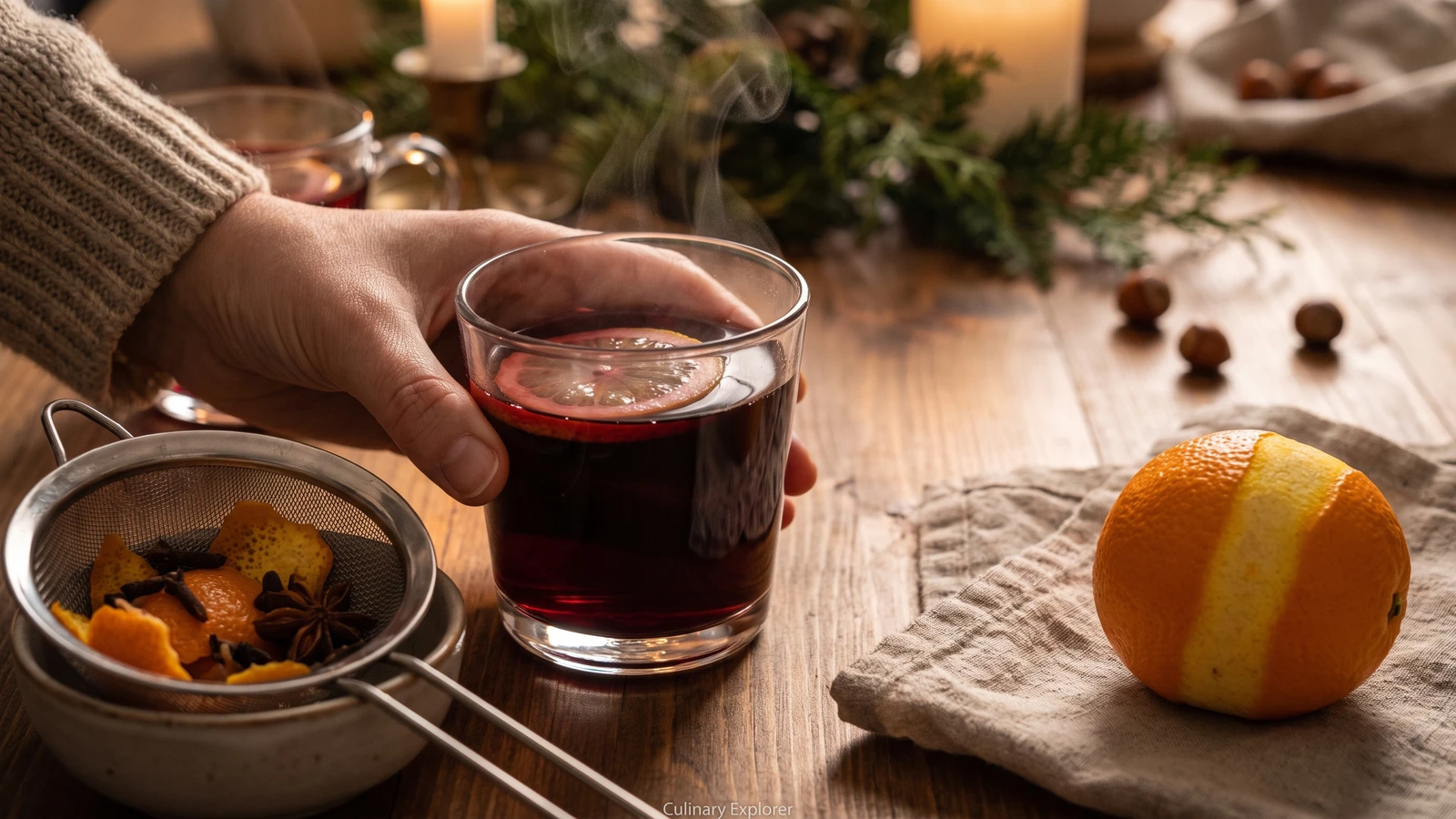
Vin chaud teaches the discipline of gentle heat: red wine and loaf sugar perfumed with orange, cinnamon, mace, and clove, stopped at the first fine froth so the wine stays full.
Vin chaud (hot wine) teaches restraint. Wine can carry sugar, citrus, and spice beautifully, but it must never simmer; once boiled, its perfume flees and the drink turns thin. The fine froth across the surface is the signal to stop, not an invitation to cook further.
The original formula assumed a small lined copper basin and loaf sugar kept in a professional pantry. Those are scaffolding. A heavy stainless saucepan replaces the maintained copper safely, while equal-weight granulated white sugar or sugar cubes replace the solid loaf. The one-bottle batch already suits four glasses, so its full ten ounces of sugar, its aromatics, and their sequence remain untouched. One cook, one stove, one evening.
Dissolve the sugar before adding the zest and spices, then stay beside the pan. Your whole success lies in the final minute: lift the vin chaud at the first fine froth, before a simmering bubble breaks.
Vin chaud belongs to winter tables throughout France, with an especially public life at the Christmas markets of Alsace, where spiced wine is served by the cup between the stalls. Household preparations passed easily into cafés and the classical repertoire because they required no rare cellar bottle, only ordinary red wine, sugar, citrus zest, whole spice, and attentive heat. Despite its English name, hot wine is not boiled wine; the French method preserves its body by stopping before the simmer.
Quantity
1 bottle, 3⅛ cups (750 ml / about 745 g)
Quantity
1 cup plus 6 tablespoons plus 2 teaspoons (335 ml / 284 g)
Quantity
Zest of 1 orange
removed in broad strips without white pith
Quantity
1 small piece, about 1 inch (2.5 cm)
Quantity
1 small blade
Quantity
1
Quantity
4 paper-thin slices
| Ingredient | Quantity |
|---|---|
| red wine | 1 bottle, 3⅛ cups (750 ml / about 745 g) |
| granulated white sugar, or an equal weight of white sugar cubes | 1 cup plus 6 tablespoons plus 2 teaspoons (335 ml / 284 g) |
| orange zestremoved in broad strips without white pith | Zest of 1 orange |
| cinnamon stick | 1 small piece, about 1 inch (2.5 cm) |
| mace | 1 small blade |
| whole clove | 1 |
| lemon | 4 paper-thin slices |
Remove the orange zest in broad strips with a vegetable peeler. Zest means only the glossy colored skin; leave the bitter white pith on the fruit. Cut four paper-thin lemon slices and set them aside for the glasses.
Put the sugar in a heavy 2-quart (2-liter) stainless saucepan and pour the wine over it, exactly in that order. Set the pan over low heat and stir gently until the sugar disappears completely and no grit remains beneath the spoon. Keep the heat low during this stage. Dissolving first is part of the method, not brigade ceremony.
Add the orange zest, cinnamon, mace, and single clove once the sugar has dissolved. Continue heating gently, stirring once or twice so the aromatics move through the wine. Use whole spices as written; ground spice would cloud the drink and pass through the strainer.
Raise the heat only to medium-low and watch the surface without leaving the stove. Remove the pan the moment a thin, fine froth covers the wine, before simmering bubbles begin to rise and break. This is the one true thing: boiling drives away the wine's perfume and leaves it tasting thin. If the first bubble does break, lift the pan immediately and strain the wine into a heatproof jug to arrest the cooking. Ça se rattrape when caught at once; a sustained simmer cannot be put back into the bottle.
Pass the vin chaud through a fine-mesh strainer into a heatproof jug without pressing the zest or spices. Place one thin lemon slice in each heatproof glass and pour immediately. The drink should be wine-dark, fragrant, and full on the tongue, with sweetness first and spice following quietly. À table!
1 serving (about 245g)
Culinary guides, cultural storytelling, and the editorial depth that makes cooking meaningful.
Discover Culinary ExplorerChef Juliette
Bavaroise turns the ribbon stage into a drink: yolks and sugar, boiling tea and milk, and Kirsch whisked into a light crown of foam. Keep the whisk moving, and the café comes home.

Chef Juliette
Bischoff turns Champagne, tilleul, citrus, and brandy into pale-gold granité, coarse enough to sparkle under the spoon. The scraping makes the texture, and the timer becomes your smallest member of the brigade.

Chef Juliette
Café glacé is coffee taught by texture: dark, sweet, vanilla-softened, and churned only until it moves like loose snow. Stop before ice cream, pour into cold cups, and take it outside.
Chef Juliette
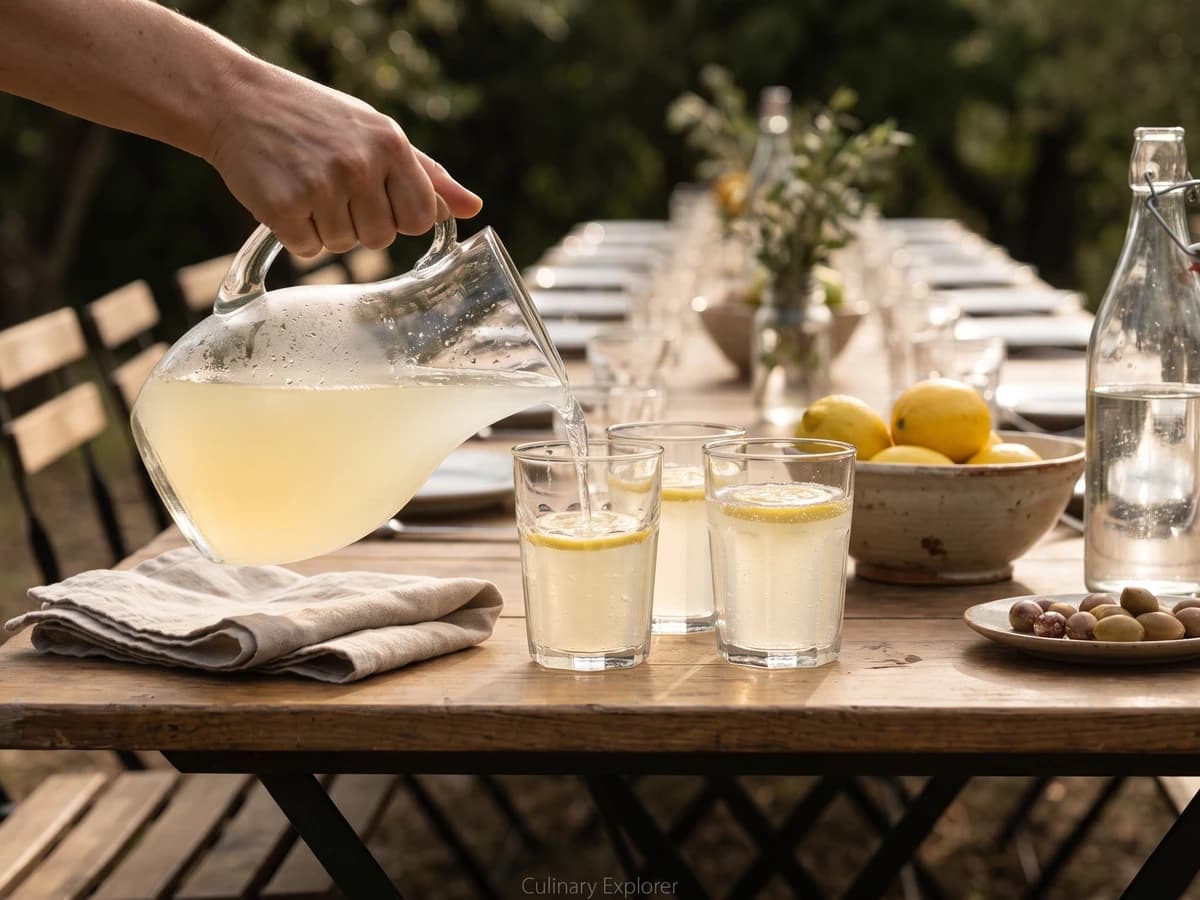
Zest brings perfume, juice brings acid, and three cool hours join them: a clear, lively French limonade finished with seltzer for the picnic table in the shade.