
Chef Juliette
Bavaroise
Bavaroise turns the ribbon stage into a drink: yolks and sugar, boiling tea and milk, and Kirsch whisked into a light crown of foam. Keep the whisk moving, and the café comes home.
A cooking platform built around craft, culture, and the stories behind what we eat.
Created by Chef Juliette
Based on No. 2946, Punch Marquise, from Le Guide Culinaire (1907) by Auguste Escoffier
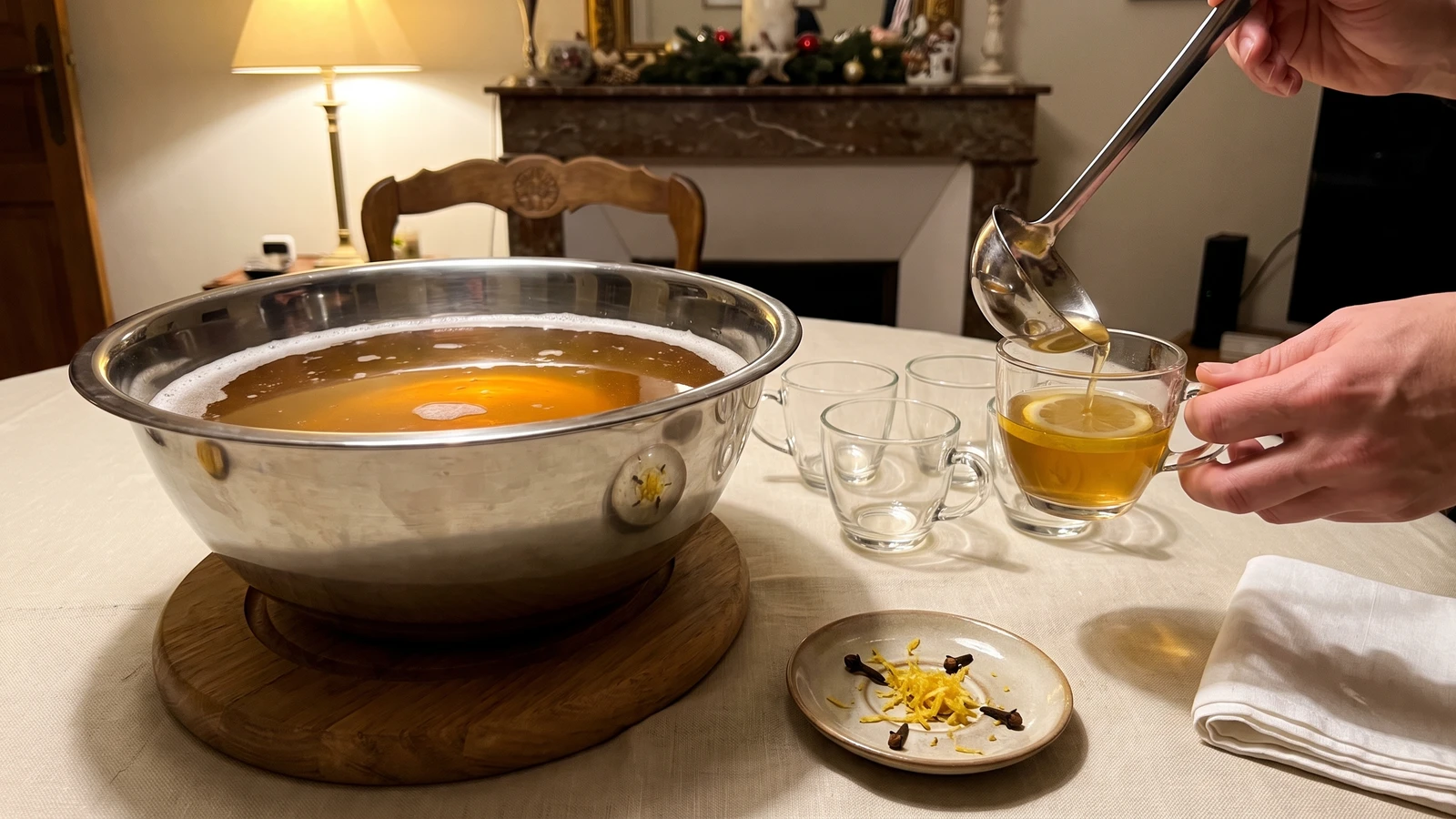
Sweet Sauternes, sugar, and clove-pinned lemon zest meet the flame in Punch Marquise, a holiday bowl governed by one sign: stop heating the instant thin white froth covers the wine.
Punch Marquise (hot Sauternes punch) teaches the discipline of stopping at the right instant. Sugar dissolves, the clove-pinned lemon zest perfumes the wine, and then a thin white froth veils the surface. That froth is your command to lift the pan. A boil does not deepen this punch; it sends away the wine's perfume and alcohol.
The original recipe assumed a small copper saucepan, loaf sugar ready in the kitchen, a punch bowl meant to take a flame, and practiced hands serving a larger company. At home, granulated sugar replaces loaf sugar by the same weight, stainless steel gives steady nonreactive heat, and a covered metal bowl makes the flambé manageable. The quantity is halved for four small cups. The sugar's shape and the larger service are brigade scaffolding, so they can go. The clove-pinned zest, the white-froth stop, and the burnt-brandy flambé are the dish, so they stay. One cook, one stove, one evening.
At the table, the Punch Marquise is luminous gold, fragrant with lemon and one restrained note of clove, while the brief burn rounds the brandy's raw edge. Watch the surface rather than the clock. The white froth is the one true signal, and you must believe it when it appears.
Punch Marquise belongs to the French grand-service table rather than to one regional household tradition; its clearest geographical anchor is Sauternes, south of Bordeaux, whose sweet botrytized wine gives the bowl its honeyed body. Its tableside flame carried the preparation naturally into Christmas and special-occasion service, where it could be poured and shared at once. It is not a heavily spiced vin chaud: one clove held by lemon zest is the entire aromatic register, and the wine never simmers.
Quantity
2 cups plus 1 tablespoon (500 ml / about 520 g)
at room temperature
Quantity
1/2 cup (120 ml / 100 g)
Quantity
1
remove one wide strip of zest from half; cut the other half into 4 thin rounds
Quantity
1
for pinning the zest
Quantity
1/2 cup plus 1 teaspoon (125 ml / about 120 g)
| Ingredient | Quantity |
|---|---|
| Sauternesat room temperature | 2 cups plus 1 tablespoon (500 ml / about 520 g) |
| granulated sugar | 1/2 cup (120 ml / 100 g) |
| medium unwaxed lemonremove one wide strip of zest from half; cut the other half into 4 thin rounds | 1 |
| small whole clovefor pinning the zest | 1 |
| brandy, 40% alcohol by volume | 1/2 cup plus 1 teaspoon (125 ml / about 120 g) |
Set a 2-quart (2-liter) stainless-steel bowl on a heavy trivet in a cleared area away from cabinets, curtains, and drafts. Keep a metal lid or rimmed baking sheet beside it, ready to cover the bowl. Measure the brandy into a covered heatproof jug, place the jug in a bowl of hot tap water well away from the stove, and put the bottle away. Have four heatproof punch glasses and a long-handled ladle ready.
With a vegetable peeler, remove one broad strip of zest from half the lemon, taking only the outermost colored, glossy skin and leaving the bitter white pith behind. Curl the zest around the clove and push the clove through the overlapping ends to pin them together. If the strip tears, overlap two shorter pieces and pin those; the wine will take the same perfume. Cut the unpeeled half into four very thin rounds, remove the seeds, and reserve them.
Combine the Sauternes, sugar, and clove-pinned zest in a 1 to 1.5-quart (1 to 1.5-liter) stainless-steel saucepan. Set it over low heat and stir gently until every grain of sugar has dissolved, about 3 minutes. Keep the wine calm. You are dissolving, not reducing, and a reduction would make this sweet wine heavy.
Raise the heat to medium-low and stay beside the pan. The instant a thin white froth spreads across most of the surface, remove the saucepan from the heat. Do not wait for a simmer. If active bubbles begin breaking around the edge, lift the pan at once and set it on a cool trivet for 30 seconds. Ça se rattrape when caught quickly; do not return it to the heat trying to recreate the froth, or you will drive away more of the wine.
Turn off every burner and the extractor, then move the saucepan to the cleared serving area. Lift out the zest and clove, allowing them to drip without squeezing, and pour the hot wine into the metal bowl. Remove the covered brandy jug from its water bath, dry its outside completely, uncover it, and pour the brandy into the punch. Put the jug aside before reaching for the lighter.
Flambé, ignite the warmed spirit, by touching a long match or long-necked lighter to the surface at the bowl's rim. Keep your face and sleeves back. Let the low flame burn itself out, and never stir or carry the bowl while it is lit. If the flame rises unexpectedly, cover the bowl immediately with the waiting lid. If the brandy will not catch after two attempts, do not add more alcohol or keep leaning over it with matches; serve the punch as it is. It will taste slightly stronger and sharper, but it is not lost.
Once the flame is completely gone, stir the Punch Marquise once with the ladle. Place one thin lemon round in each heatproof glass and ladle in the punch, dividing it evenly. Serve at once, while the wine is bright and the delicate trace of froth still marks the rim. À table!
1 serving (about 150g)
Culinary guides, cultural storytelling, and the editorial depth that makes cooking meaningful.
Discover Culinary ExplorerChef Juliette
Bavaroise turns the ribbon stage into a drink: yolks and sugar, boiling tea and milk, and Kirsch whisked into a light crown of foam. Keep the whisk moving, and the café comes home.

Chef Juliette
Bischoff turns Champagne, tilleul, citrus, and brandy into pale-gold granité, coarse enough to sparkle under the spoon. The scraping makes the texture, and the timer becomes your smallest member of the brigade.

Chef Juliette
Café glacé is coffee taught by texture: dark, sweet, vanilla-softened, and churned only until it moves like loose snow. Stop before ice cream, pour into cold cups, and take it outside.
Chef Juliette
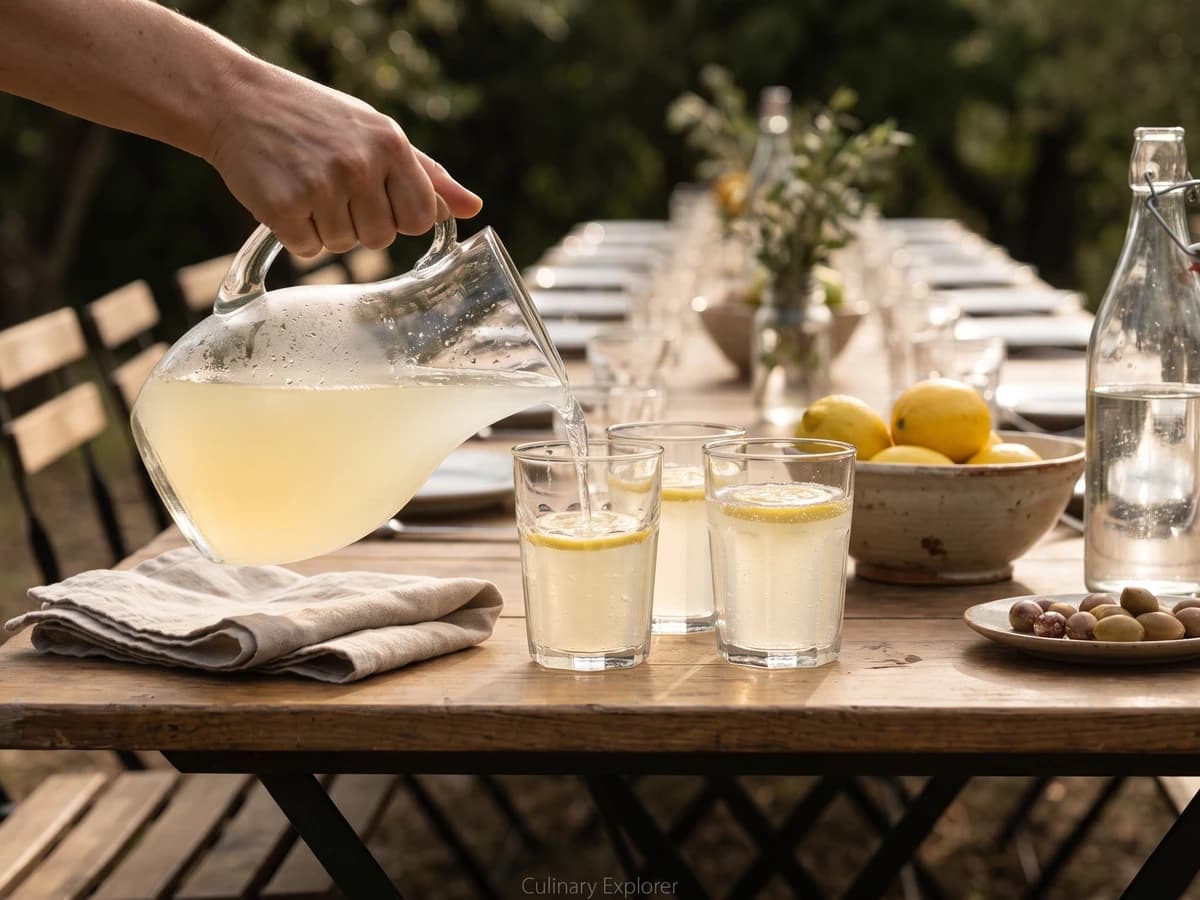
Zest brings perfume, juice brings acid, and three cool hours join them: a clear, lively French limonade finished with seltzer for the picnic table in the shade.