
Chef Juliette
Bavaroise
Bavaroise turns the ribbon stage into a drink: yolks and sugar, boiling tea and milk, and Kirsch whisked into a light crown of foam. Keep the whisk moving, and the café comes home.
A cooking platform built around craft, culture, and the stories behind what we eat.
Created by Chef Juliette
Based on No. 2945, Punch with Rum, from Le Guide Culinaire (1907) by Auguste Escoffier
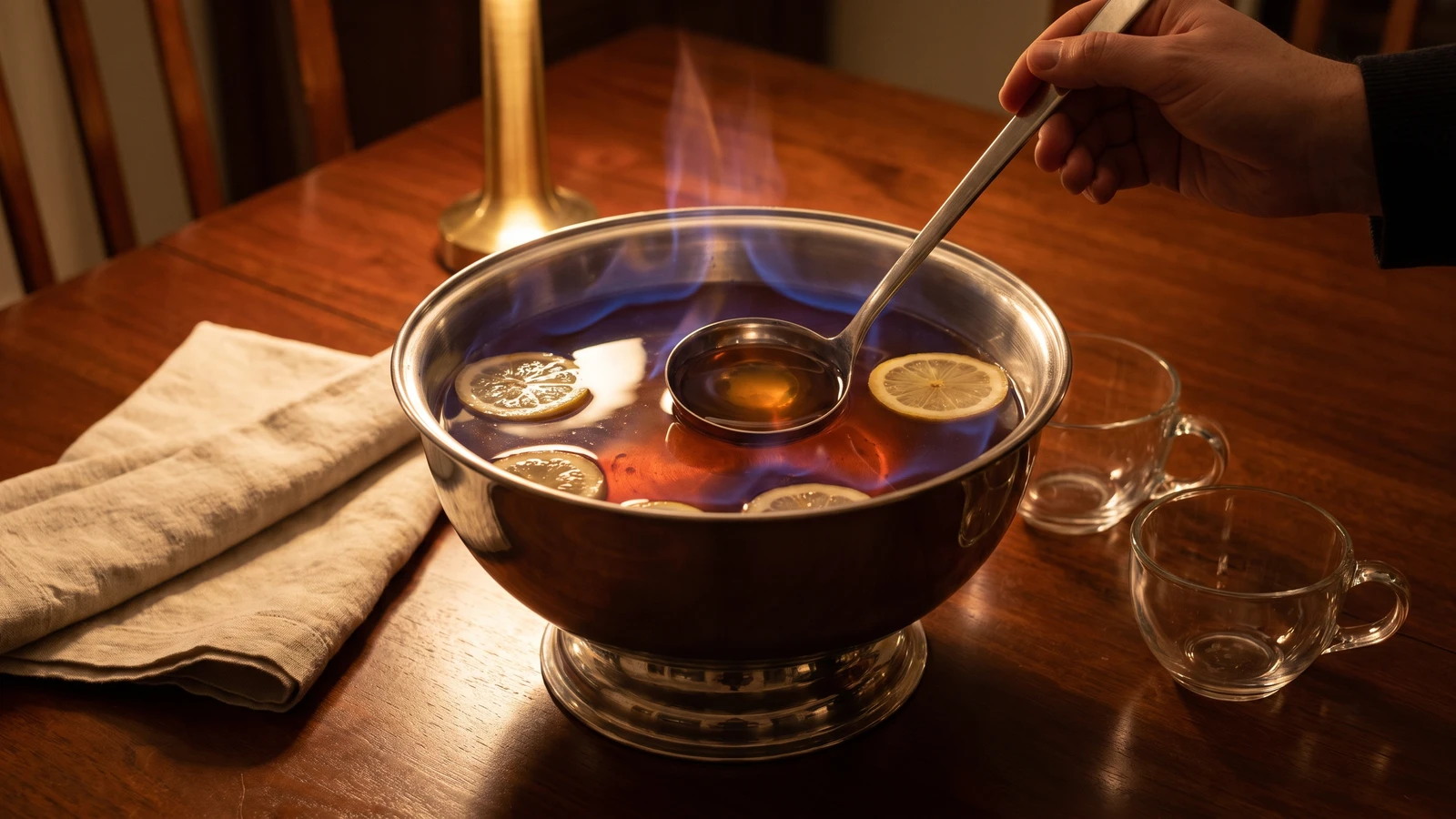
Strong black tea, loaf sugar, lemon, and rum meet the flame in Punch au Rhum, a generous holiday bowl whose governing rule is simple: let the blue flame finish its own work.
Punch au Rhum teaches control. Flamber, to set alight, is not decoration laid over the drink; it is the final technique, softening the rum's volatile edge while the tea and lemon keep all that sugar upright. The one true thing to know is this: let the flame die on its own. Blow it out and the punch stays raw with spirit.
The original quantity assumed a large punch bowl, a roomful of guests, and enough hands to manage flame and service together. This version halves that brigade measure for six small cups. Granulated white sugar replaces loaf sugar because its shape no longer matters once dissolved, and 54% to 57% ABV rum makes the prescribed flame reliable at home. The large volume was scaffolding. The proportion of tea, sugar, rum, and lemon, followed by the self-extinguishing flame, is the dish itself and stays intact. One cook, one stove, one evening.
When it is right, the punch is deep amber, fragrant with lemon peel and rum, sweet but held firm by strong black tea. Before you begin, clear the serving place, set a metal cover beside the bowl, and commit to leaving the flame alone until its work is finished.
Punch au Rhum has no single French province as its home; it entered the French canon through Atlantic ports and Parisian service, where tea, sugar, citrus, and rum from the colonial trade met in a communal bowl. Grand kitchens formalized the hot, flamed service, then households adopted it for holiday tables and large celebrations. The flame tempers the most volatile rum aroma and keeps the bowl hot, but it does not remove most of the alcohol.
Quantity
1 tablespoon plus 1 teaspoon (20 ml / 7 g), or 4 black tea bags
Quantity
2 cups (500 ml / 500 g)
Quantity
1 cup plus 2 tablespoons (270 ml / 225 g)
Quantity
1
cut crosswise into 9 very thin rounds
Quantity
1½ cups (375 ml / about 345 g)
at room temperature
| Ingredient | Quantity |
|---|---|
| plain loose-leaf black tea | 1 tablespoon plus 1 teaspoon (20 ml / 7 g), or 4 black tea bags |
| freshly boiled water | 2 cups (500 ml / 500 g) |
| granulated white sugar, the home equivalent of loaf sugar | 1 cup plus 2 tablespoons (270 ml / 225 g) |
| large unwaxed lemoncut crosswise into 9 very thin rounds | 1 |
| dark or amber rum, 54% to 57% ABVat room temperature | 1½ cups (375 ml / about 345 g) |
Set a 1.5-litre flameproof metal punch bowl on a stable heatproof surface where it will be served. Do not use an ordinary glass bowl, and never plan to carry the punch once lit. Clear away bottles, paper, curtains, loose sleeves, and anything else that can catch; turn off the stove and extractor fan, tie back long hair, and place a close-fitting metal lid or baking sheet beside the bowl. Rinse the bowl and six heatproof glasses with hot water, then dry them completely.
Pour the freshly boiled water over the black tea, cover, and infuse for 4 minutes. Strain it directly over the sugar in the warmed punch bowl, then stir until the liquid is perfectly clear and no crystals remain. Strong tea is necessary here: it gives the sweet punch its backbone, but a long infusion turns tannic, so remove the leaves on time.
Check that the sweet tea is still between 80°C and 85°C. If it has cooled below that, return only the tea and sugar mixture to the saucepan and warm it gently before pouring it back into the bowl. Ça se rattrape, but correct the temperature before alcohol enters the picture. Add 3 lemon rounds, pour in the room-temperature rum, and stir once with the long ladle. Cap the rum bottle and move it well away.
With every burner off, hold a long-reach lighter just above the punch's surface until the rum catches. Keep your face and hands back. The flame should be low and blue, and it can be difficult to see in bright light. Let it burn undisturbed until it dies on its own, usually within 45 to 90 seconds; never blow, stir, carry the bowl, or add more rum while any flame may remain.
Once the flame is completely gone, wait 30 seconds and stir the punch gently with the long metal ladle. Place one reserved lemon round in each warmed glass, ladle in the punch, and serve immediately in small portions. It remains an alcoholic drink after flaming. À table!
1 serving (about 160g)
Culinary guides, cultural storytelling, and the editorial depth that makes cooking meaningful.
Discover Culinary ExplorerChef Juliette
Bavaroise turns the ribbon stage into a drink: yolks and sugar, boiling tea and milk, and Kirsch whisked into a light crown of foam. Keep the whisk moving, and the café comes home.

Chef Juliette
Bischoff turns Champagne, tilleul, citrus, and brandy into pale-gold granité, coarse enough to sparkle under the spoon. The scraping makes the texture, and the timer becomes your smallest member of the brigade.

Chef Juliette
Café glacé is coffee taught by texture: dark, sweet, vanilla-softened, and churned only until it moves like loose snow. Stop before ice cream, pour into cold cups, and take it outside.
Chef Juliette
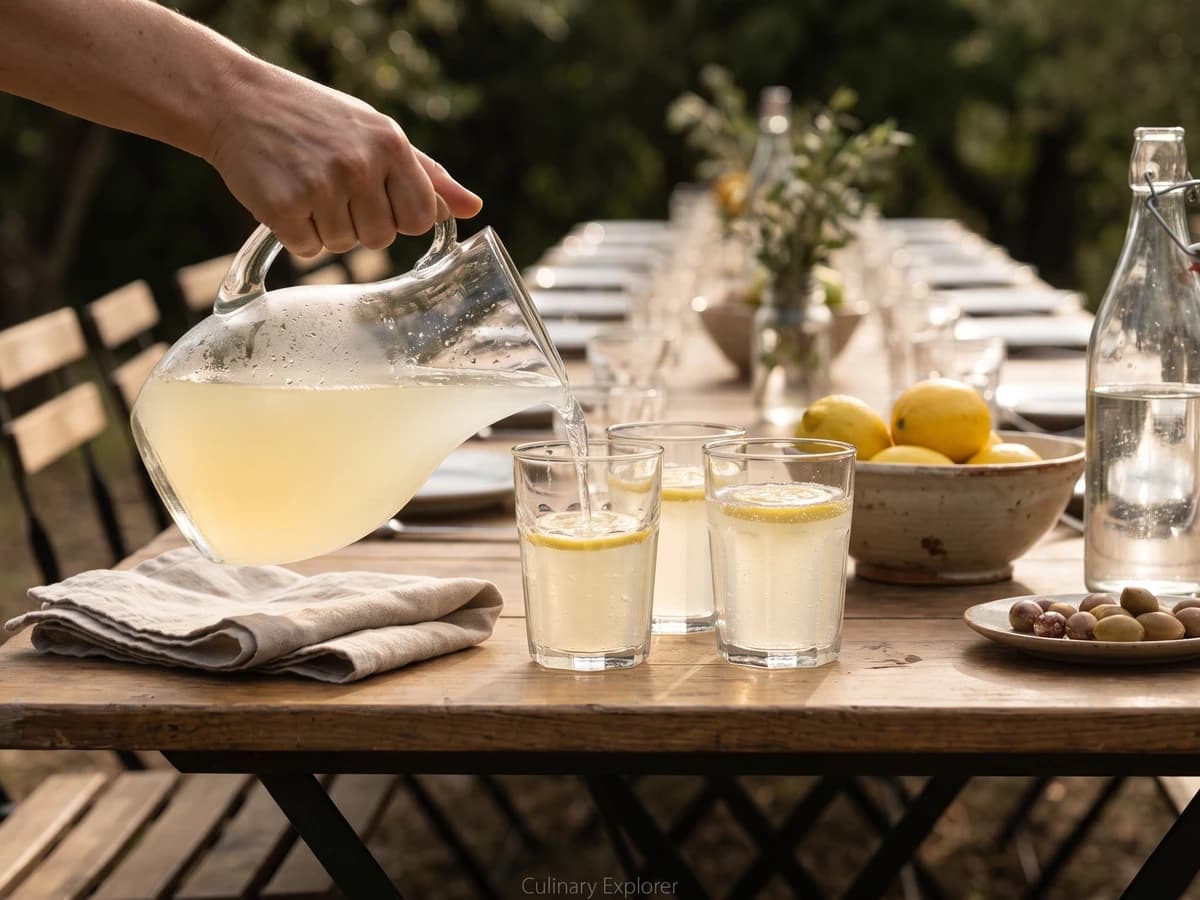
Zest brings perfume, juice brings acid, and three cool hours join them: a clear, lively French limonade finished with seltzer for the picnic table in the shade.