
Chef Juliette
Bavaroise
Bavaroise turns the ribbon stage into a drink: yolks and sugar, boiling tea and milk, and Kirsch whisked into a light crown of foam. Keep the whisk moving, and the café comes home.
A cooking platform built around craft, culture, and the stories behind what we eat.
Created by Chef Juliette
Based on No. 2943, Orangeade, from Le Guide Culinaire (1907) by Auguste Escoffier
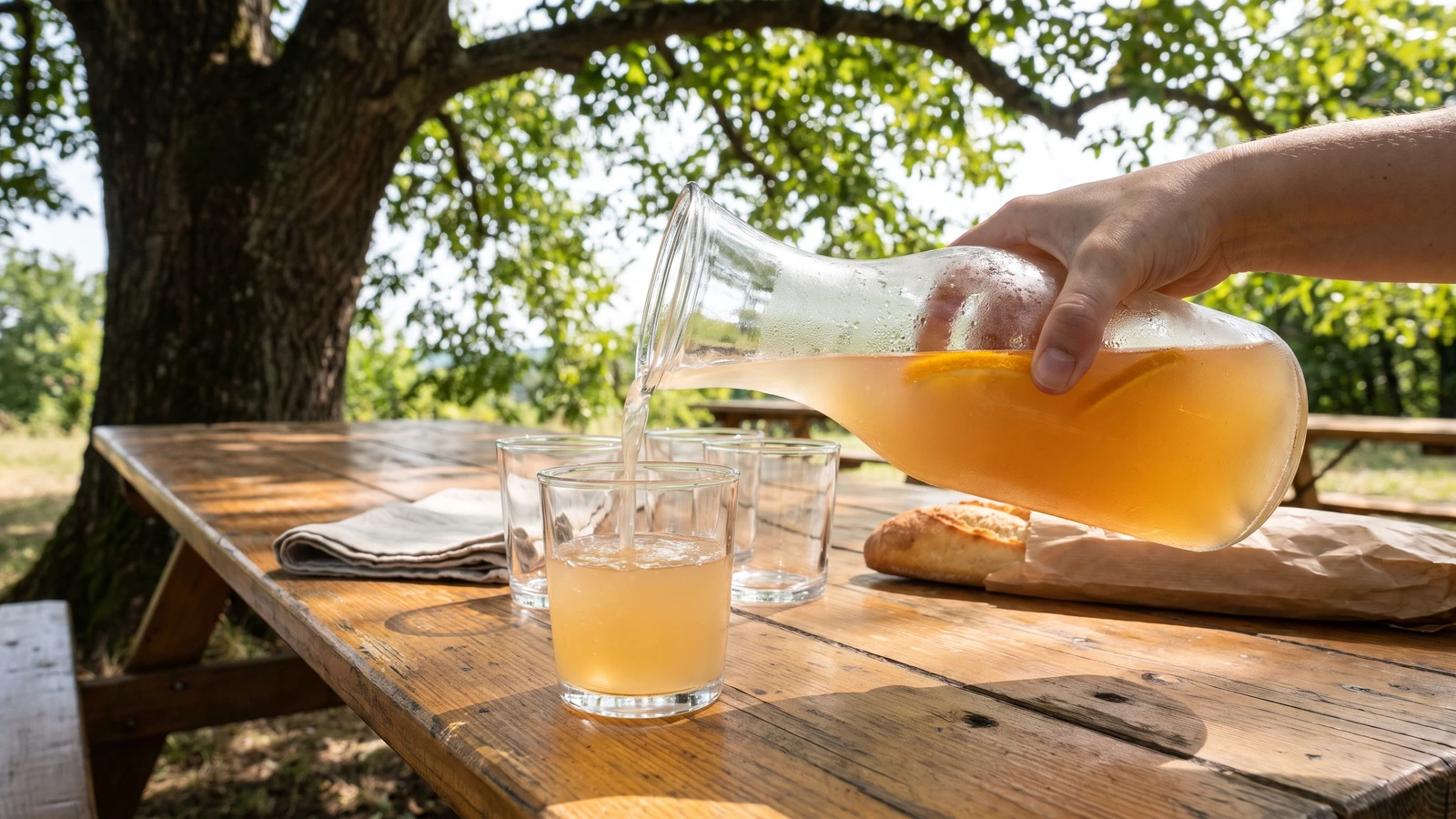
Orangeade draws perfume from zest, sweetness from a light syrup, and backbone from half a lemon: a cold French picnic pitcher, fragrant and brisk, with thin orange slices in every glass.
Orangeade (French orange refresher) teaches balance. Orange supplies perfume and sweetness, but once water and sugar stretch it into a pitcher, it needs the juice of half a lemon for a brisk line. That half lemon is the spine. Omit it and the drink lands flat and cloying.
The source entry assumes the lemonade method is already known and a service pantry is preparing large pitchers. At home, a kettle, a heatproof jug, and a fine sieve do the work perfectly. Only the batch size and straining cloth change; the sequence and flavorings do not. The large service quantity is scaffolding. The covered zest infusion, fresh orange juice, measured half lemon, and thin slices in the glasses are the dish. One cook, one stove, one evening.
Add the juices only after the infusion has cooled, preserving the fresh perfume that heat would chase away. The step that decides the glass is the final balance: stir in the measured half lemon, wait one minute, then taste. Orange should speak first, with lemon holding it upright.
Orangeade belongs to the Parisian café, confectioner's shop, and domestic refreshment table, where it traveled from large service pitchers into household jugs and picnic bottles. Unlike plain orange juice, the classical preparation follows lemonade's grammar: citrus zest is infused under cover with sugar and water, then fresh juice supplies brightness. The half lemon is deliberate rather than decorative, correcting the sweetness of orange without turning the drink into lemonade.
Quantity
2 large (about 16 oz / 450 g total), yielding about ¾ cup (180 ml / 185 g) juice
4 very thin slices reserved, zest pared from the remaining rind, then juiced
Quantity
½ medium (about 1¼ oz / 35 g), yielding 1 tablespoon (15 ml / 15 g) juice
juiced
Quantity
½ cup plus 1½ tablespoons (140 ml / 120 g)
Quantity
4¼ cups (1 liter / 1 kilogram)
brought just to the boil
| Ingredient | Quantity |
|---|---|
| large unwaxed oranges4 very thin slices reserved, zest pared from the remaining rind, then juiced | 2 large (about 16 oz / 450 g total), yielding about ¾ cup (180 ml / 185 g) juice |
| medium lemonjuiced | ½ medium (about 1¼ oz / 35 g), yielding 1 tablespoon (15 ml / 15 g) juice |
| granulated sugar | ½ cup plus 1½ tablespoons (140 ml / 120 g) |
| waterbrought just to the boil | 4¼ cups (1 liter / 1 kilogram) |
Wash and dry the citrus. Cut four very thin rounds from the middle of one orange and keep them covered in the cold. With a sharp vegetable peeler, pare the zest from the remaining orange rind in broad, thin strips. Zest means only the outermost colored, glossy film, never the bitter white pith. If a strip carries white underneath, lay it colored side down and shave the pith away with a paring knife. Ça se rattrape, but do it now, before bitterness reaches the pitcher. Juice the oranges and the half lemon separately, cover, and chill.
Put the orange zest and sugar in a heatproof jug or bowl holding at least 1½ quarts (1.5 liters). Pour over the just-boiled water and stir until the sugar has completely dissolved. Cover at once and leave until no warmer than room temperature, 60 to 90 minutes. The cover holds the orange oils inside the vessel, where they belong. If the infusion begins to taste bitter before it cools, strain out the zest immediately and continue cooling it under cover.
Stir the fresh orange juice into the cooled infusion, followed by the juice of half a lemon. Wait one minute and taste. It should taste unmistakably of orange, fragrant and lightly sweet, while the lemon supplies structure without announcing itself. Don't omit that half lemon. Orange alone becomes broad and cloying once diluted; the acid gives the whole pitcher a spine.
Pass the Orangeade through a fine-mesh sieve into a clean pitcher. Let it drain naturally rather than crushing the zest against the mesh, which can press out bitterness. Cover and chill for at least 45 minutes. Taste only when cold, since temperature changes how strongly sweetness registers; if it still seems too concentrated, loosen it with a tablespoon or two of cold water rather than burying the orange under more lemon.
Slip one reserved orange slice into each cold glass. Stir the pitcher, divide the Orangeade among the glasses, and serve immediately while the citrus perfume is lively. For a picnic, carry the drink and slices separately, then add the slices when the glasses are poured so their rind never has time to turn the drink bitter. À table!
1 serving (about 275g)
Culinary guides, cultural storytelling, and the editorial depth that makes cooking meaningful.
Discover Culinary ExplorerChef Juliette
Bavaroise turns the ribbon stage into a drink: yolks and sugar, boiling tea and milk, and Kirsch whisked into a light crown of foam. Keep the whisk moving, and the café comes home.

Chef Juliette
Bischoff turns Champagne, tilleul, citrus, and brandy into pale-gold granité, coarse enough to sparkle under the spoon. The scraping makes the texture, and the timer becomes your smallest member of the brigade.

Chef Juliette
Café glacé is coffee taught by texture: dark, sweet, vanilla-softened, and churned only until it moves like loose snow. Stop before ice cream, pour into cold cups, and take it outside.
Chef Juliette
Zest brings perfume, juice brings acid, and three cool hours join them: a clear, lively French limonade finished with seltzer for the picnic table in the shade.