
Chef Juliette
Bavaroise
Bavaroise turns the ribbon stage into a drink: yolks and sugar, boiling tea and milk, and Kirsch whisked into a light crown of foam. Keep the whisk moving, and the café comes home.
A cooking platform built around craft, culture, and the stories behind what we eat.
Created by Chef Juliette
Based on No. 2941, Melonade, from Le Guide Culinaire (1907) by Auguste Escoffier
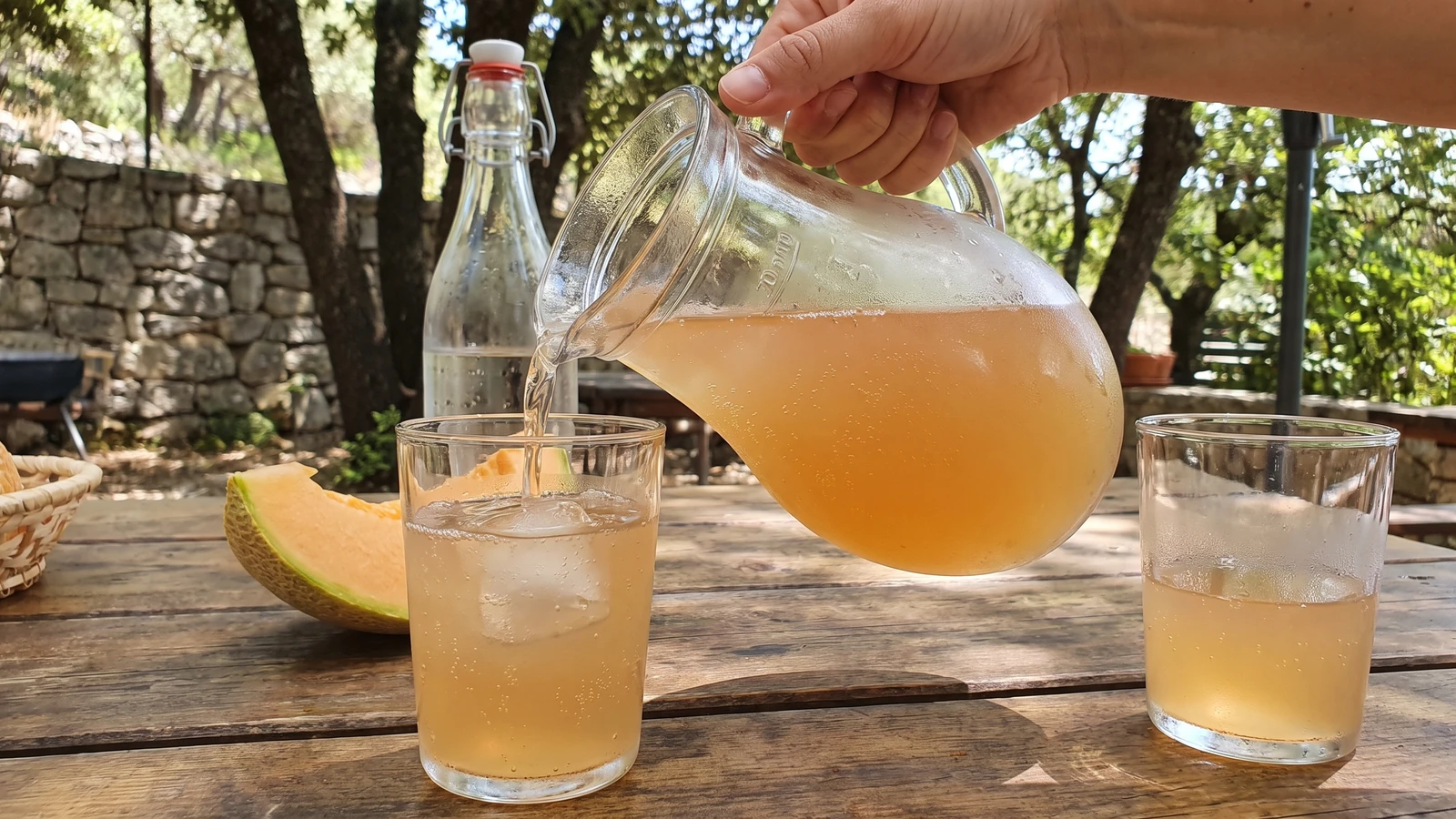
Melonade captures ripe melon in hot syrup, then wakes it with cold seltzer and a last breath of orange-flower water, a make-ahead refresher whose finest perfume arrives only at the table.
Melonade (sparkling melon refresher) teaches a quiet rule of cold drinks: extract the fruit while the syrup is hot, but protect the perfume once everything is cold. Before heating anything, know the one true thing that decides this drink. Orange-flower water goes in at the last possible moment because its fragrance flees under heat and fades while standing.
The original recipe assumed a sugar boiler with a saccharometer, a woollen filtering bag, and service ice clean enough to drop directly into the pitcher. For six generous glasses, 250 grams of sugar dissolved in 420 grams of water closely reproduces the required 20° Baumé syrup; damp muslin replaces the woollen bag, and measured seltzer brings the strained drink near the final 9° without a special instrument. Those tools were brigade scaffolding, and they can go. The two-hour infusion, careful straining, final twenty-minute chill, and last-second floral finish are the dish, and they stay. One cook, one stove, one evening.
The finished Melonade should be translucent peach-gold, lightly sparkling, and fragrant without tasting like perfume. Its sweetness arrives first, then clears cleanly as the seltzer crosses the tongue. Give the infusion its full two hours, but guard the orange-flower water until the pitcher is ready to pour.
Melonade belongs naturally to the summer refreshment table of Provence and the Mediterranean South, where fragrant melons and orange-flower water share the warm-weather larder. In the classical beverage repertoire, the household drink passed through confectioner's discipline: syrup was measured in degrees Baumé, fruit pulp filtered through cloth, and the final preparation corrected with charged water. Despite its placement among lemonades in many collections, this formula contains no lemon; melon supplies the fruit, while seltzer and the late floral finish provide lift.
Quantity
About 3 cups (720 ml / 454 g)
seeded, peeled, and cut into chunks
Quantity
1¼ cups (300 ml / 250 g)
Quantity
1¾ cups (420 ml / 420 g)
Quantity
1 cube, about ¼ cup (60 ml / 60 g)
Quantity
2½ cups (600 ml / 600 g), plus up to ½ cup (120 ml / 120 g) as needed
Quantity
2 tablespoons (30 ml / 30 g)
| Ingredient | Quantity |
|---|---|
| just-ripe aromatic muskmelon pulpseeded, peeled, and cut into chunks | About 3 cups (720 ml / 454 g) |
| granulated sugar | 1¼ cups (300 ml / 250 g) |
| filtered water | 1¾ cups (420 ml / 420 g) |
| large clear ice cube made from filtered water | 1 cube, about ¼ cup (60 ml / 60 g) |
| very cold plain seltzer water | 2½ cups (600 ml / 600 g), plus up to ½ cup (120 ml / 120 g) as needed |
| food-grade orange-flower water | 2 tablespoons (30 ml / 30 g) |
Weigh the melon after removing its rind and seeds. Rub the pulp through a fine-mesh sieve into a large heatproof bowl, pressing with a flexible spatula until only coarse fibres remain. This first sieving follows the original method and gives the hot syrup intimate contact with the fruit without whipping air into it.
Combine the sugar and filtered water in a medium saucepan. Heat gently, stirring only until the sugar dissolves, then bring the syrup to a full boil and remove it from the heat at once. This measured ratio is the home equivalent of syrup at 20° Baumé. Do not reduce it into a thick syrup; if it boiled hard for several minutes and has tightened, ça se rattrape: stir in 1 tablespoon (15 ml / 15 g) filtered water and bring it just back to the boil.
Immediately pour the boiling syrup over the sieved melon and stir slowly until the pulp is evenly dispersed. Cover the bowl and let it cool for about 30 minutes, then refrigerate it for the remainder of a full two-hour infusion. The hot syrup draws out the melon's fragrance; the uninterrupted two hours are the foundation of the drink, not waiting time to be cut short.
Dampen a square of clean muslin or tightly woven cheesecloth with cold water, squeeze it nearly dry, and use it to line a fine-mesh sieve set over a cold pitcher. Pour in the infused melon mixture and let it drain under its own weight, pressing very gently only at the end. Wringing the cloth forces fine pulp through and clouds the drink. If that happens, ça se rattrape: rinse the cloth, fold it into a double layer, and pass the liquid through once more.
Add the large ice cube to the pitcher, then pour in 2½ cups (600 ml / 600 g) of cold seltzer slowly down the side so its bubbles remain lively. Stir once or twice. A syrup hydrometer would place the drink near the required 9° Baumé; without one, taste it well chilled. It should feel lightly rounded on the tongue but finish clean, not syrupy. If it remains heavy, add more seltzer a few tablespoons at a time, up to ½ cup (120 ml / 120 g). Refrigerate for exactly 20 minutes.
Only when the glasses are ready, add the orange-flower water and fold it through with one gentle turn of a long spoon. Do not add it to the hot infusion or during the long chill; its volatile perfume is the final lift, and warmth sends it away. Pour the Melonade immediately into cold tumblers, dividing the remaining ice as it falls. À table!
1 serving (about 250g)
Culinary guides, cultural storytelling, and the editorial depth that makes cooking meaningful.
Discover Culinary ExplorerChef Juliette
Bavaroise turns the ribbon stage into a drink: yolks and sugar, boiling tea and milk, and Kirsch whisked into a light crown of foam. Keep the whisk moving, and the café comes home.

Chef Juliette
Bischoff turns Champagne, tilleul, citrus, and brandy into pale-gold granité, coarse enough to sparkle under the spoon. The scraping makes the texture, and the timer becomes your smallest member of the brigade.

Chef Juliette
Café glacé is coffee taught by texture: dark, sweet, vanilla-softened, and churned only until it moves like loose snow. Stop before ice cream, pour into cold cups, and take it outside.
Chef Juliette
Zest brings perfume, juice brings acid, and three cool hours join them: a clear, lively French limonade finished with seltzer for the picnic table in the shade.