
Chef Juliette
Bavaroise
Bavaroise turns the ribbon stage into a drink: yolks and sugar, boiling tea and milk, and Kirsch whisked into a light crown of foam. Keep the whisk moving, and the café comes home.
A cooking platform built around craft, culture, and the stories behind what we eat.
Created by Chef Juliette
Based on No. 2939, Cherry Water, from Le Guide Culinaire (1907) by Auguste Escoffier
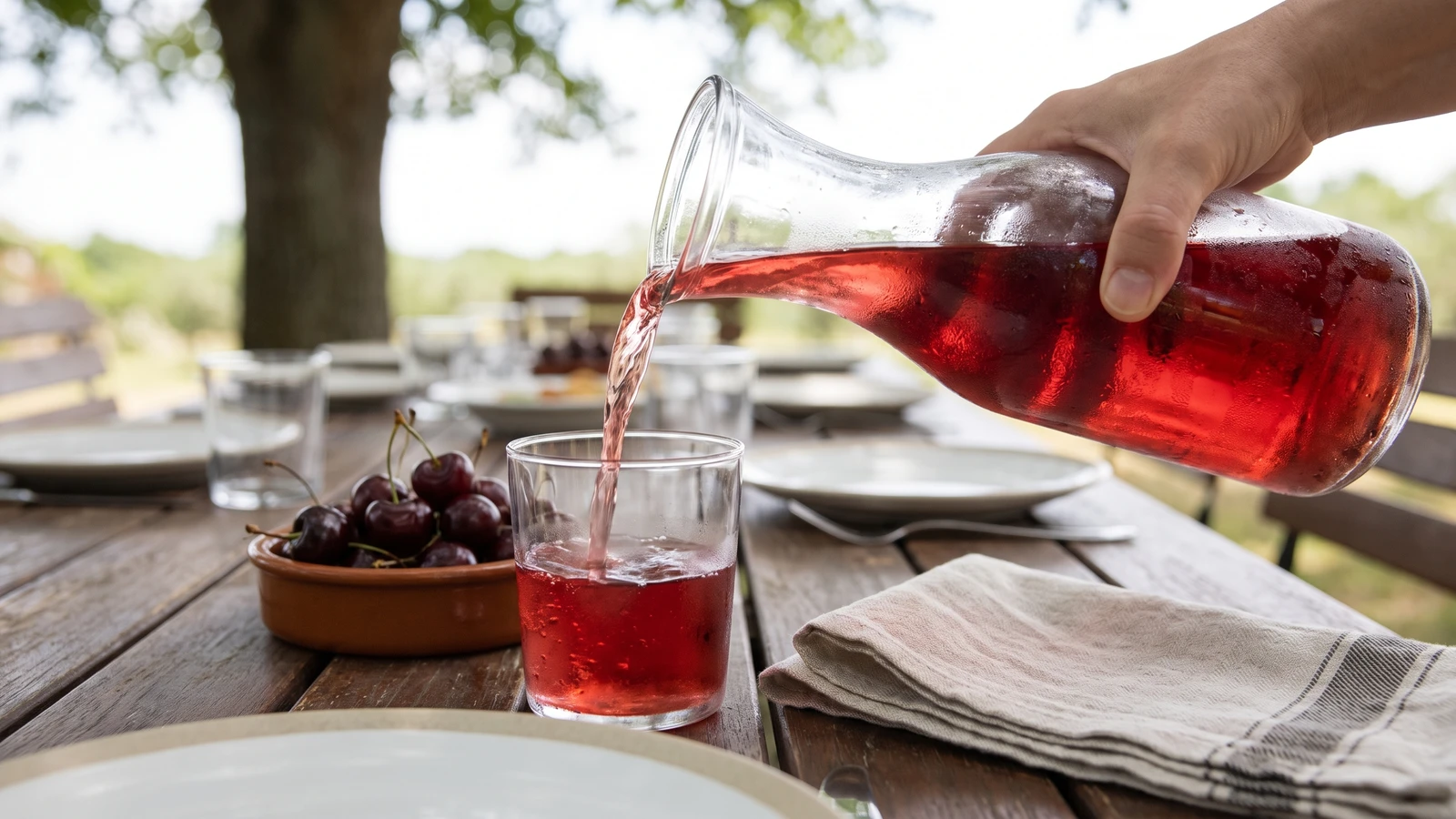
Ripe cherries pressed through a sieve, rested for a measured noyau perfume, then clarified, sweetened, chilled, and finished with kirsch: a ruby refresher whose delicacy depends on patient straining.
Eau de Cerises (Cherry Water) teaches extraction by restraint. The one true thing to know before you touch the cherries is that their flesh gives the color, but parfum de noyau (cherry-stone perfume) gives the drink its dry almond edge. Too little and it tastes merely sweet; too much and the cherry disappears.
The book crushed the stones in a mortar, sent the purée through woollen cloth, and judged its sweetness with a saccharometer. A home kitchen needs neither the risk nor all that apparatus: cracked cherry kernels can release cyanogenic compounds unpredictably, so measured culinary almond extract carries the same aromatic intention safely. Damp double muslin replaces wool, the refrigerator replaces a cool room, and the fixed sugar weight makes the meter optional. The book's two pounds of fruit are already a sensible home batch, so I keep its proportions while standardizing its pint and liqueur glasses. One cook, one sieve, one afternoon.
The wool filter and meter were brigade scaffolding; they can go. The sieve, the full hour of maceration, the measured sugar, and the last-minute kirsch are the dish; they stay. Most of all, don't wring the cloth. If the first pass is cloudy, strain it again through clean damp muslin. Ça se rattrape.
Eau de cerises belongs to the French family of eaux de fruits, at home on bourgeois summer tables before grand kitchens formalized the same household practice with cloth filtration and measured sugar density. In the cherry-growing east, especially Alsace and Franche-Comté, kirsch supplied the dry noyau finish that kept the drink from becoming simple sugared juice. The word eau here means a clarified fruit water, not a colorless distillate, and its apparent simplicity hides a precisely balanced drink.
Quantity
2 pounds (about 5¾ cups / 907 g)
weighed whole, stemmed and pitted
Quantity
⅛ teaspoon (0.6 ml / about 0.6 g)
divided
Quantity
2⅓ cups (570 ml / 570 g)
Quantity
¾ cup plus 1½ tablespoons (203 ml / 170 g)
Quantity
1 large cube (¼ cup / 60 ml / 60 g)
Quantity
½ cup (120 ml / about 113 g)
| Ingredient | Quantity |
|---|---|
| very ripe cherriesweighed whole, stemmed and pitted | 2 pounds (about 5¾ cups / 907 g) |
| pure almond extract labeled for culinary usedivided | ⅛ teaspoon (0.6 ml / about 0.6 g) |
| cold filtered water | 2⅓ cups (570 ml / 570 g) |
| granulated sugar | ¾ cup plus 1½ tablespoons (203 ml / 170 g) |
| filtered-water ice cube | 1 large cube (¼ cup / 60 ml / 60 g) |
| kirsch | ½ cup (120 ml / about 113 g) |
Rinse and stem the cherries, then pit them over a nonreactive bowl so every drop of juice is caught. Keep the fruit and juice together. Discard the stones intact; do not crack them. The book drew its noyau aroma from crushed stones, but the cyanogenic compounds inside cherry kernels vary too widely for safe home measurement. Culinary almond extract replaces only that unsafe action, preserving the intended aroma and sequence.
Set a medium-fine sieve over a large bowl and press the cherries through it with a flexible scraper or the back of a wooden spoon. Work patiently until the bowl holds a thick ruby purée and the sieve holds mostly skins and stubborn fibers. Do not use a blender: its speed chops the skins, traps air, and gives the finished water a muddy texture. Sieving is the foundation here.
Stir half the almond extract into the cherry purée, cover, and refrigerate for one full hour. Taste after the hour: the purée should smell distinctly of cherry, followed by a quiet almond note. If the almond leads, add no more extract; the water and sugar still to come will soften it. If it is absent, reserve the remaining extract for the final adjustment. Restraint matters because an over-perfumed drink cannot be strained back into balance.
Stir the cold filtered water into the macerated purée. Wet a jelly bag or two layers of fine muslin with cold filtered water, wring it out, and suspend it over a clean bowl. Pour in the diluted purée and let gravity carry the liquid through for 15 to 20 minutes. Never twist or squeeze the cloth, which forces fine pulp through and clouds the drink. If the liquid remains gritty or opaque, pass it through freshly dampened muslin once more. Ça se rattrape.
Pour about 1 cup of the strained cherry water into a jug, add the sugar, and stir until no crystals remain, then mix it back into the rest. Granulated sugar replaces the book's loaf sugar gram for gram; the shape changed, not its work. Add the large filtered-water ice cube and refrigerate for 20 minutes, stirring once as the ice softens. If you own a refractometer, check before adding kirsch: the book's 9-degree saccharometer mark is roughly 16 degrees Brix. If the reading is high, add filtered water 1 tablespoon at a time; if low, dissolve sugar into a small portion and return it to the bowl.
Remove any unmelted ice and taste the water thoroughly chilled. Add the remaining almond extract drop by drop only if the noyau note is missing; cherry must remain the first aroma. Stir in the kirsch just before serving so its dry fruit perfume stays vivid. Pour into cold small glasses or seal in a chilled bottle for the picnic, keeping it nestled in ice until served. À table!
1 serving (about 175g)
Culinary guides, cultural storytelling, and the editorial depth that makes cooking meaningful.
Discover Culinary ExplorerChef Juliette
Bavaroise turns the ribbon stage into a drink: yolks and sugar, boiling tea and milk, and Kirsch whisked into a light crown of foam. Keep the whisk moving, and the café comes home.

Chef Juliette
Bischoff turns Champagne, tilleul, citrus, and brandy into pale-gold granité, coarse enough to sparkle under the spoon. The scraping makes the texture, and the timer becomes your smallest member of the brigade.

Chef Juliette
Café glacé is coffee taught by texture: dark, sweet, vanilla-softened, and churned only until it moves like loose snow. Stop before ice cream, pour into cold cups, and take it outside.
Chef Juliette
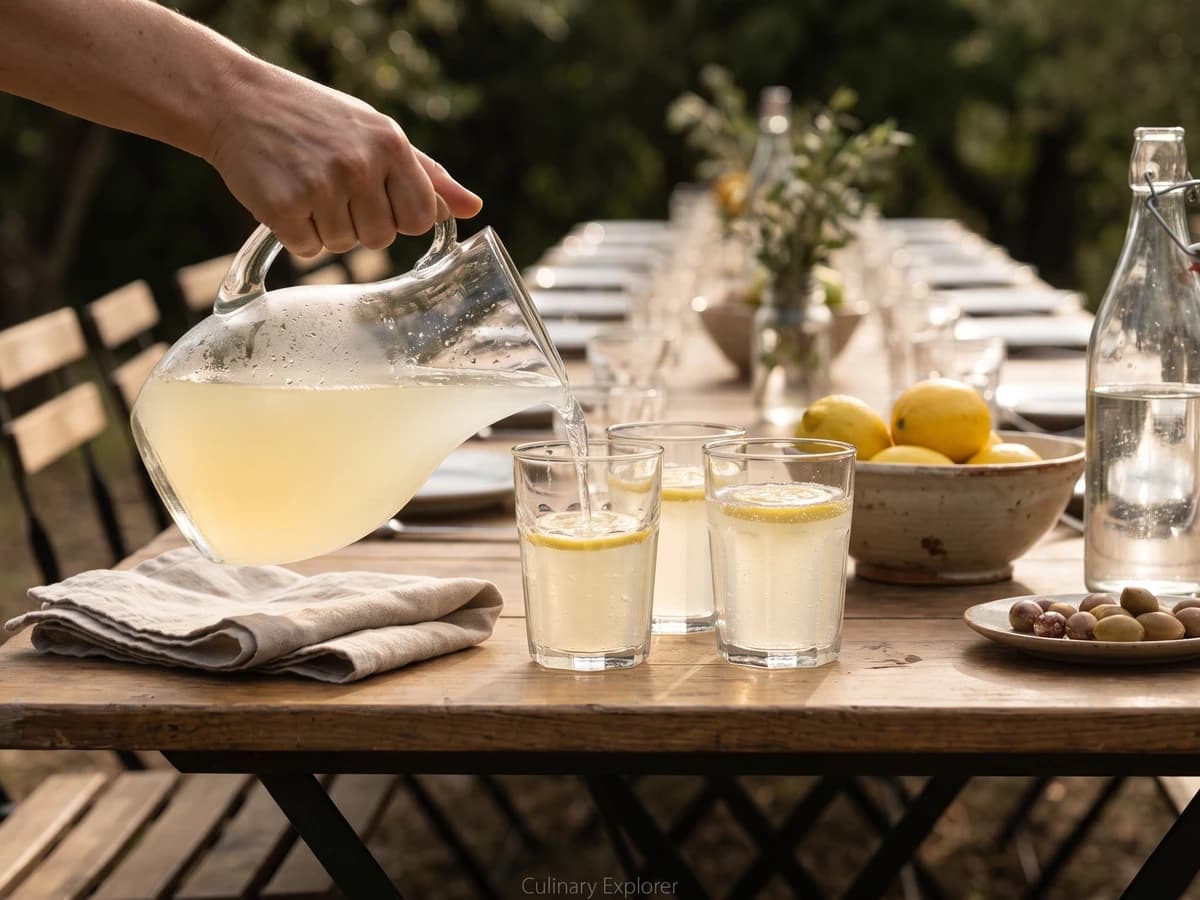
Zest brings perfume, juice brings acid, and three cool hours join them: a clear, lively French limonade finished with seltzer for the picnic table in the shade.