
Chef Juliette
Various Almond Preparations
Five almond preparations, one discipline: remove the skins cleanly, dry every kernel through, then cut, toast, or cloak it in pale caramel without letting its fragrant oils escape.
A cooking platform built around craft, culture, and the stories behind what we eat.
Created by Chef Juliette
Based on No. 2928, Various Sorbets, from Le Guide Culinaire (1907) by Auguste Escoffier
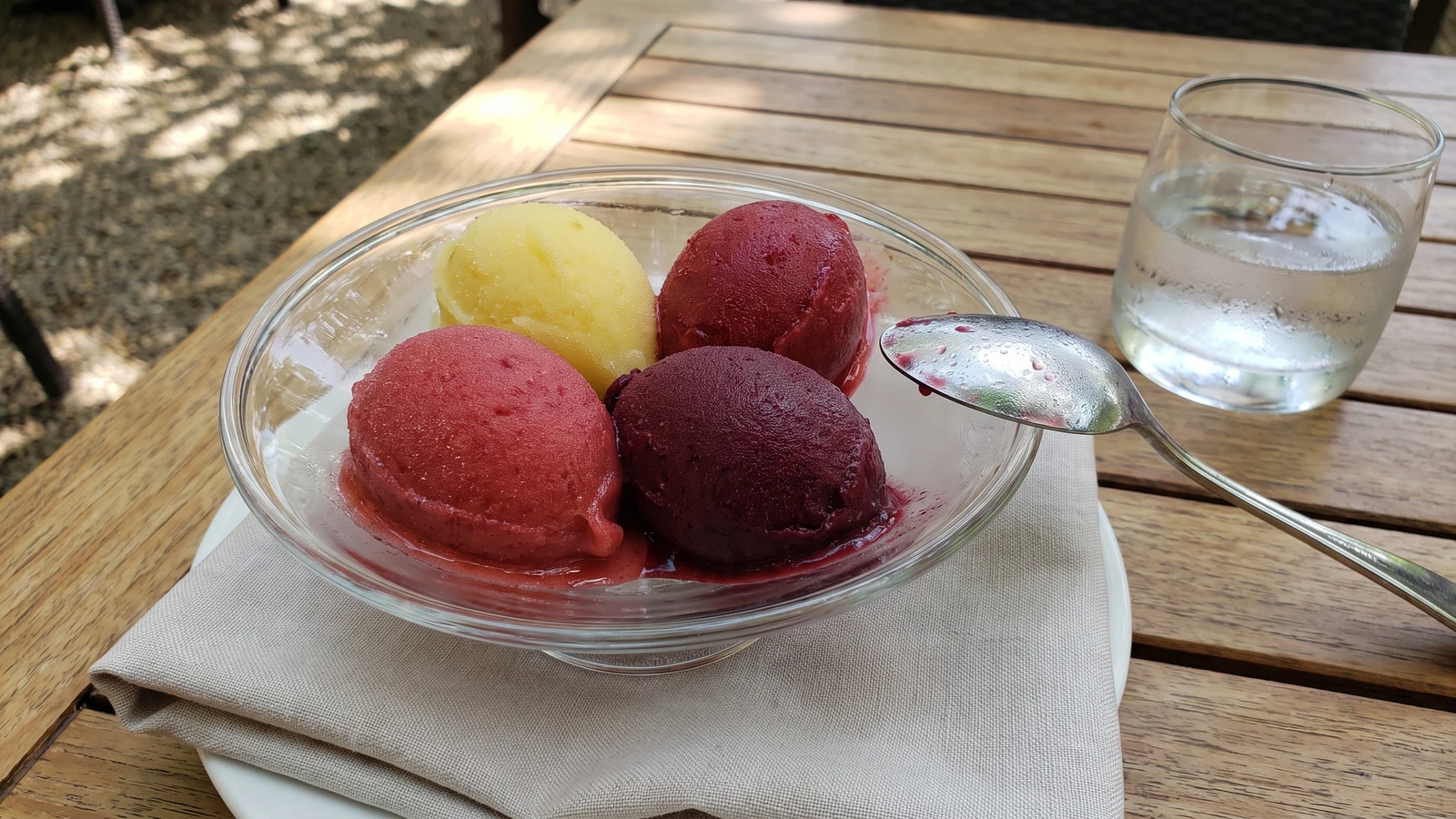
One measured method turns clear pineapple, cherry, berry, wine, or liqueur into a bright, fine-grained sorbet, with sugar and alcohol balanced so every batch freezes cleanly and scoops softly.
Sorbets variés (various fruit, wine, and liqueur sorbets) teach one true thing before you touch a pan: sorbet is a balanced liquid, not fruit purée frozen hard. Clear juice gives the fruit brightness and a fine grain. Purée carries pulp and fibre into the freezer, where both weigh the sorbet down.
The classical kitchen expected a pastry section with measured syrup waiting, a syrup gauge at hand, and several salt-and-ice freezers turning through the day. That was brigade scaffolding. For one cook, one freezer, one evening, a kitchen scale, a cold-saucer test, and a domestic ice-cream machine do the same work. Each batch makes one flavor, and the fruit, wine, and spirit formulas are calibrated separately because alcohol and natural fruit sugar change how water freezes.
The wine method carries one honest change: most of the measured wine is reduced to lower its alcohol, while a smaller portion stays uncooked to restore its perfume. Everything else remains the dish itself, strained juice, measured syrup, deep chilling, and quick freezing. Measure the cold base carefully before churning. That balance decides whether the sorbet scoops like satin or freezes into a brick.
Sorbets variés belong to the classical French dining room and to the Parisian glacier, the specialist ice maker who froze fruit juices, wines, and liqueurs into light, perfumed ices. Wine and liqueur sorbets were not eccentric sidelines: they often appeared as a cold pause between substantial courses before settling comfortably into the dessert service. The preference for strained juice rather than dense purée is technical, since a clear liquid freezes with a finer grain and carries aroma more cleanly.
Quantity
2½ cups (600 ml / about 600 g)
strained until free of pulp
Quantity
¾ cup plus 2 tablespoons (210 ml / 170 g) for pineapple; ¾ cup plus 1 tablespoon (195 ml / 160 g) for cherry; 1 cup minus 1 tablespoon (225 ml / 190 g) for strawberry; 1 cup (240 ml / 200 g) for raspberry; or 1⅛ cups (270 ml / 225 g) for red currant
Quantity
1 cup (240 ml / 240 g)
Quantity
2½ cups (600 ml / about 600 g)
Quantity
½ cup (120 ml / 100 g) for Port, Samos wine, or medium-sweet Marsala; or ¾ cup (180 ml / 150 g) for Johannisberg wine
Quantity
2 cups (480 ml / 480 g) for Port, Samos wine, or medium-sweet Marsala; or 1½ cups (360 ml / 360 g) for Johannisberg wine
Quantity
⅓ cup (80 ml / about 75 g)
Quantity
1⅛ cups (270 ml / 225 g) for rum or kirsch; or 1 cup minus 1 tablespoon (225 ml / 190 g) for Liqueur-Brandy
Quantity
2¾ cups (660 ml / 660 g)
Quantity
Up to ½ cup (120 ml / 120 g)
Quantity
Up to ¼ cup (60 ml / 50 g)
| Ingredient | Quantity |
|---|---|
| clear strained fruit juice, choose pineapple, cherry, strawberry, raspberry, or red currantstrained until free of pulp | 2½ cups (600 ml / about 600 g) |
| granulated sugar for fruit formula | ¾ cup plus 2 tablespoons (210 ml / 170 g) for pineapple; ¾ cup plus 1 tablespoon (195 ml / 160 g) for cherry; 1 cup minus 1 tablespoon (225 ml / 190 g) for strawberry; 1 cup (240 ml / 200 g) for raspberry; or 1⅛ cups (270 ml / 225 g) for red currant |
| water for fruit formula | 1 cup (240 ml / 240 g) |
| wine, choose Port, Samos wine, Marsala, or Johannisberg wine | 2½ cups (600 ml / about 600 g) |
| granulated sugar for wine formula | ½ cup (120 ml / 100 g) for Port, Samos wine, or medium-sweet Marsala; or ¾ cup (180 ml / 150 g) for Johannisberg wine |
| water for wine formula | 2 cups (480 ml / 480 g) for Port, Samos wine, or medium-sweet Marsala; or 1½ cups (360 ml / 360 g) for Johannisberg wine |
| spirit, choose rum, kirsch, or Liqueur-Brandy | ⅓ cup (80 ml / about 75 g) |
| granulated sugar for spirit formula | 1⅛ cups (270 ml / 225 g) for rum or kirsch; or 1 cup minus 1 tablespoon (225 ml / 190 g) for Liqueur-Brandy |
| water for spirit formula | 2¾ cups (660 ml / 660 g) |
| ice-cold water for correcting the base (optional) | Up to ½ cup (120 ml / 120 g) |
| granulated sugar for correcting a brittle sorbet (optional) | Up to ¼ cup (60 ml / 50 g) |
Make one flavor formula per batch. For fruit sorbet, measure 2½ cups (600 ml) of clear juice after straining. A centrifugal juicer works for pineapple and cherries; for strawberries, raspberries, or red currants, crush fresh or thawed fruit and let it drain through a jelly bag or several layers of fine cheesecloth. Press gently, but stop before pulp begins squeezing through. Do not blend the fruit into purée. The juice-first method is what keeps the finished sorbet bright and light.
If making a Port, Samos, or Marsala sorbet, pour 1⅞ cups (450 ml) of the wine into a cool saucepan and reserve ⅔ cup (150 ml). Bring the wine gradually to a gentle uncovered simmer and reduce it to 1 scant cup (225 ml), without flaming it. For Johannisberg, simmer 1¼ cups (300 ml) down to about ¾ cup plus 1 tablespoon (200 ml), reserving the other 1¼ cups (300 ml). Cool completely. This lowers the alcohol enough for a home freezer while the reserved wine keeps the finished perfume alive. For fruit or spirit sorbet, skip this step.
Combine the water and sugar specified for your chosen formula in a saucepan. Warm gently, stirring only until every crystal has dissolved and the syrup looks clear. Do not boil it down, since evaporation changes the ratio you measured. Remove it from the heat and cool completely. Keep rum, kirsch, and Liqueur-Brandy away from the heat; their aroma belongs in the cold base, and heating strong spirit in an open pan is unnecessary.
For fruit sorbet, combine the cold syrup with the strained juice. For wine sorbet, combine the syrup, cooled wine reduction, and reserved uncooked wine. For spirit sorbet, stir the measured rum, kirsch, or Liqueur-Brandy into the cold syrup. Cover and chill for at least 2 hours, until thoroughly cold. Spoon a tablespoon onto a saucer that has been in the freezer and return it there for 10 minutes. The sample should taste bright and slightly sweeter than you want at the table, because deep cold mutes sweetness. If it tastes cloying, add the optional ice-cold water 1 tablespoon (15 ml) at a time. If it tastes sharp and freezes brittle at the edges, dissolve 2 tablespoons (25 g) of the optional sugar in the same weight of hot water, cool it, and whisk it into the base.
Churn the thoroughly chilled base in a frozen domestic ice-cream machine until it has the close, fine texture of soft ice, usually 20 to 30 minutes. If it remains pourable and the machine bowl still carries a hard coat of frost, the base contains too much sugar or alcohol. Ça se rattrape: whisk in ¼ cup (60 ml) of the optional ice-cold water, chill the base again, and rechurn. If the machine bowl has lost its frost, refreeze the bowl instead of diluting the sorbet.
Pack the churned sorbet into a shallow lidded container, smoothing the surface so no loose crystals remain, and freeze for 3 to 4 hours. Let it stand in the refrigerator for 10 to 15 minutes before scooping if it has become very firm. Serve one flavor or several in chilled coupes, with no decoration required. For an outdoor table, bring the container out only when the plates are cleared and return it to the ice between helpings. À table!
1 serving (about 125g)
Culinary guides, cultural storytelling, and the editorial depth that makes cooking meaningful.
Discover Culinary ExplorerChef Juliette
Five almond preparations, one discipline: remove the skins cleanly, dry every kernel through, then cut, toast, or cloak it in pale caramel without letting its fragrant oils escape.

Chef Juliette
A pastry pantry lesson in one tray: filberts warmed only until their red skins release, rubbed clean, cooled, and chopped into a fragrant mise-en-place for cakes, creams, pralines, and petits fours.

Chef Juliette
The smallest pâtisserie discipline decides whether a cake leaves its mould intact: clarified butter in every corner, followed by the lightest veil of dry flour or fécule.

Chef Juliette
Four whites, one spotless bowl, and a patient change of speed: whisk gently until loosened, then briskly to glossy stiffness, with powdered sugar waiting if the foam begins to granulate.