
Chef Juliette
Various Almond Preparations
Five almond preparations, one discipline: remove the skins cleanly, dry every kernel through, then cut, toast, or cloak it in pale caramel without letting its fragrant oils escape.
A cooking platform built around craft, culture, and the stories behind what we eat.
Created by Chef Juliette
Based on No. 2926, Sorbets (Sherbets), from Le Guide Culinaire (1907) by Auguste Escoffier
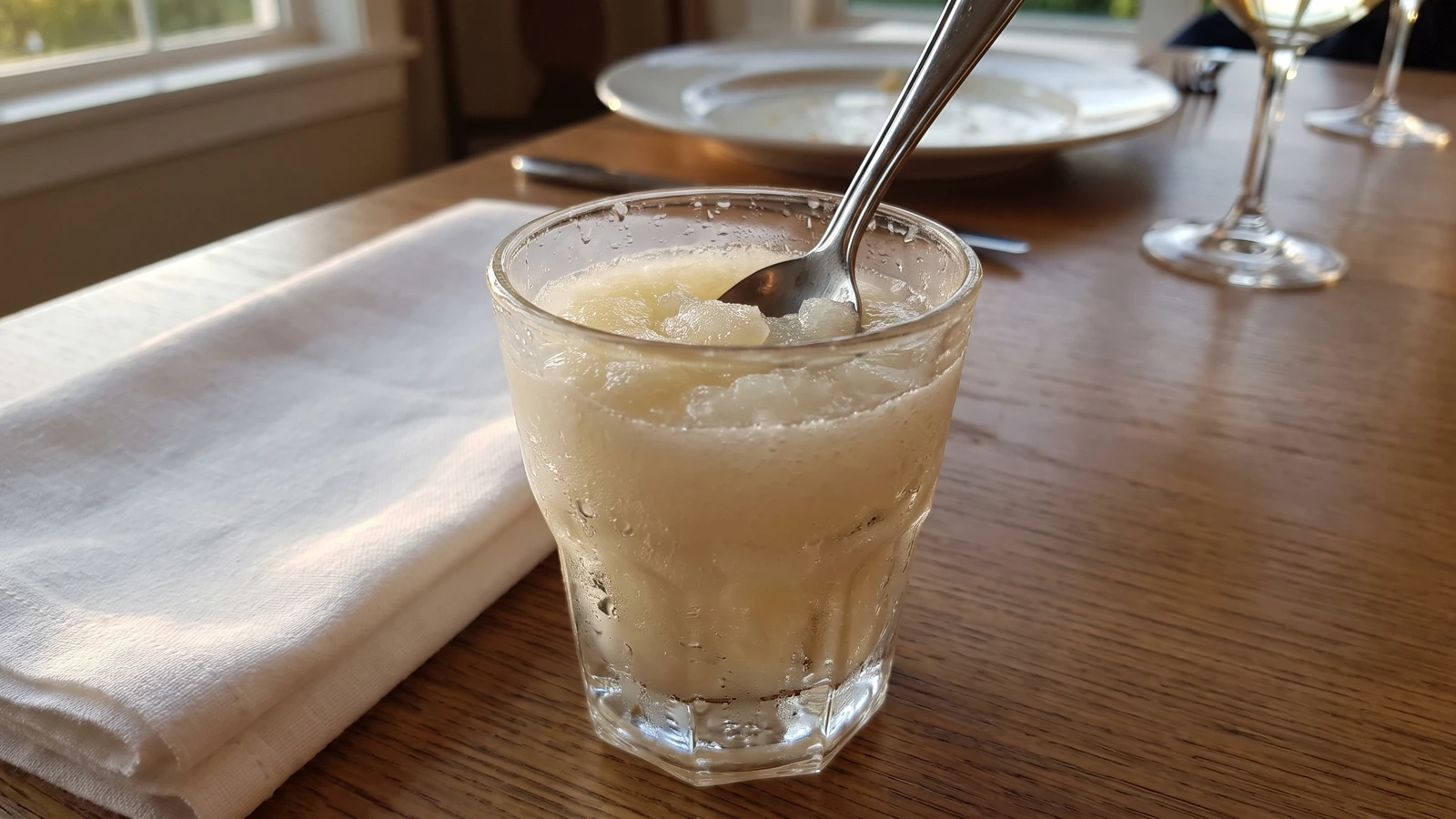
Sorbets are not meant to wait in hard scoops. Churn this lemon ice only to loose crystals, then serve it between courses while it is bright, tart, and nearly fluid.
Sorbets (sherbets) teach one clean lesson: freezing is a degree, not a destination. This preparation should arrive after the entrées and before the roast in loose, glistening crystals, cold enough to wake the mouth and soft enough to drink from the glass if the spoon is neglected. Freeze it solid and you have missed the point.
The classical entry defines a family rather than prescribing one flavor, so lemon supplies the home formula here: clear, tart, and faithful to the sorbet's work at the table. The old service assumed a hand-cranked sorbetière packed with ice and salt, plus enough hands to churn at precisely the right moment. A countertop machine does the same work, while a shallow metal pan and a sturdy whisk make an honest second route. The machine and the ice packing were brigade scaffolding, so they can go. The barely congealed texture is the dish, and it must stay. Six small glasses replace a service quantity meant for a grand dining room. One cook, one stove, one evening.
Stop churning when the mixture resembles wet snow and slumps as soon as it is spooned. That moment decides everything. If dinner delays you and the sorbet hardens, don't discard it. Ça se rattrape, and the method brings it back.
At the formal French table, sorbet occupied a precise pause after the entrées and before the roast, when its cold acidity refreshed the palate for the richer course ahead. It traveled from the confectioner's ice room into the grand kitchen, where fruit juice, wine, or liqueur was churned to a loose grain and served without delay. In this usage, sherbet is an English rendering of sorbet, not the dairy-softened frozen dessert that later acquired the name elsewhere.
Quantity
1 cup (240 ml / 240 g)
Quantity
2/3 cup (160 ml / 135 g)
Quantity
2
zest removed in wide strips
Quantity
3/4 cup (180 ml / 185 g)
strained
| Ingredient | Quantity |
|---|---|
| cold water | 1 cup (240 ml / 240 g) |
| granulated sugar | 2/3 cup (160 ml / 135 g) |
| medium unwaxed lemonszest removed in wide strips | 2 |
| freshly squeezed lemon juicestrained | 3/4 cup (180 ml / 185 g) |
Freeze the bowl of your ice cream machine according to its instructions. Chill a shallow container and six small glasses as well. If you are working without a machine, put a shallow metal pan in the freezer instead. Cold equipment shortens the freezing time and preserves the sorbet's fine grain.
Combine the water, sugar, and lemon zest in a small saucepan. Warm gently, stirring only until the sugar has dissolved and the sirop, the sugar syrup, turns perfectly clear. Let it reach one quiet simmer, then remove it from the heat and steep the zest for 10 minutes. Do not reduce it, because lost water changes how the sorbet freezes. If crystals form around the pan, add 1 tablespoon of water, cover for a minute, and warm gently until they dissolve. Ça se rattrape.
Strain out the zest and cool the sirop rapidly over a bowl of ice water. Stir in the strained lemon juice only when the syrup is cold, which keeps the lemon aroma bright instead of cooking it away. Chill the mixture thoroughly, at least 1 hour. Taste it cold: it should seem slightly sweeter and sharper than you expect, because deeper freezing will quiet both sensations.
Pour the cold mixture into the running ice cream machine and churn for 12 to 18 minutes. Stop when it has the texture of wet snow, with small glistening crystals that heap briefly on a spoon and then slump. Do not wait for firm scoops. The sorbetière is merely the tool; judging this loose texture is the technique.
For the pan method, pour the cold mixture into the chilled metal pan and freeze for about 40 minutes, until ice forms around the edges. Scrape those crystals into the liquid centre and whisk vigorously. Repeat every 20 minutes until the whole mixture is pale, finely crystalline, and barely able to hold a mound, usually 1 1/2 to 2 hours. Large hard flakes mean the intervals were too long; let them soften for 5 minutes, whisk them down, and continue.
Serve the sorbet directly from the machine or give it no more than 20 minutes in the chilled shallow container. If it freezes firm while the table lingers, move it to the refrigerator for 15 to 25 minutes, then beat it firmly with a fork or whisk until the crystals loosen and glisten again. It should yield immediately to a spoon, never resist like a frozen block.
Spoon about 1/3 cup (80 ml) into each chilled glass, leaving the surface naturally rumpled rather than shaping a hard ball. Bring it to the table after the entrées and before the roast, while the texture is loose enough to sip at the edges. Serve at once. À table!
1 serving (about 90g)
Culinary guides, cultural storytelling, and the editorial depth that makes cooking meaningful.
Discover Culinary ExplorerChef Juliette
Five almond preparations, one discipline: remove the skins cleanly, dry every kernel through, then cut, toast, or cloak it in pale caramel without letting its fragrant oils escape.

Chef Juliette
A pastry pantry lesson in one tray: filberts warmed only until their red skins release, rubbed clean, cooled, and chopped into a fragrant mise-en-place for cakes, creams, pralines, and petits fours.

Chef Juliette
The smallest pâtisserie discipline decides whether a cake leaves its mould intact: clarified butter in every corner, followed by the lightest veil of dry flour or fécule.

Chef Juliette
Four whites, one spotless bowl, and a patient change of speed: whisk gently until loosened, then briskly to glossy stiffness, with powdered sugar waiting if the foam begins to granulate.