
Chef Juliette
Various Almond Preparations
Five almond preparations, one discipline: remove the skins cleanly, dry every kernel through, then cut, toast, or cloak it in pale caramel without letting its fragrant oils escape.
A cooking platform built around craft, culture, and the stories behind what we eat.
Created by Chef Juliette
Based on No. 2925, The Moulding of Large and Small Iced Soufflés, from Le Guide Culinaire (1907) by Auguste Escoffier
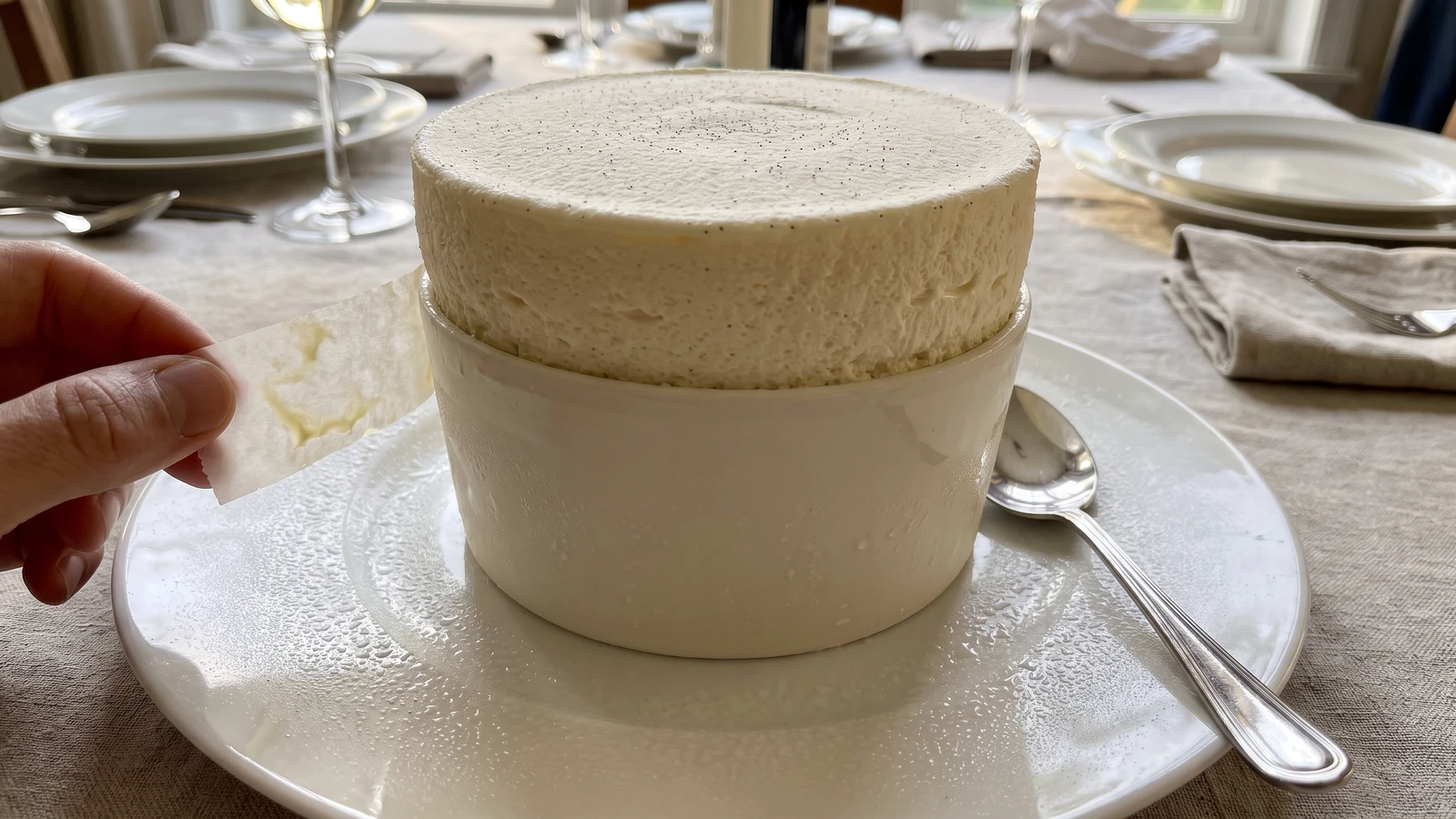
A buttered paper collar makes the frozen mousse stand above its timbale like a hot soufflé, while a vanilla pâte à bombe and softly whipped cream keep every spoonful light.
Moulage des grands et petits soufflés glacés (the moulding of large and small iced soufflés) teaches that the mould can be part of the recipe. The one true thing to know before touching a pan is this: a tight buttered-paper collar, standing two inches proud of the timbale, creates the whole illusion of a Soufflé caught at full rise. Without that collar, you still have fine frozen mousse, but you don't have this dish.
The original method assumed ordinary Soufflé timbales, small cases or silver cassolettes, a very cold professional refrigerator, and carved ice for carrying them to the table. Your equivalents are a straight-sided porcelain dish or ramekins, parchment secured outside the vessel, a level home freezer, and chilled plates. The source gives no fixed flavouring or base ratio because this entry teaches moulding and allows many variations, so a vanilla pâte à bombe and whipped-cream filling supplies one complete home-scale preparation. That is the only addition, made so one cook can carry the method from paper to table tonight.
Silver cassolettes and carved ice can go; they are service scaffolding. The upright collar and immediate freezing must stay, because they are the dish. Fit every collar before cooking the sugar, and make it tight enough to hold the mousse above the rim without leaning.
Soufflé glacé belongs to the French grand-kitchen repertoire of frozen entremets, particularly the formal tables of Paris, where cooks borrowed the silhouette of a hot Soufflé while replacing oven lift with a paper mould and cream-lightened frozen base. Large timbales served the table, while small silver cassolettes made individual portions and were carried on folded napkins or carved ice. Unlike its hot cousin, the iced Soufflé never rises at all; its proud crown is an act of careful moulding.
Quantity
1 tablespoon (15 ml / 14 g)
melted
Quantity
2/3 cup (160 ml / 135 g)
Quantity
1/4 cup (60 ml / 60 g)
Quantity
4 large (about 72 g)
Quantity
1
split and scraped
Quantity
1/8 teaspoon (0.6 ml / 0.8 g)
Quantity
2 cups (475 ml / 455 g)
thoroughly chilled
| Ingredient | Quantity |
|---|---|
| unsalted buttermelted | 1 tablespoon (15 ml / 14 g) |
| granulated sugar | 2/3 cup (160 ml / 135 g) |
| water | 1/4 cup (60 ml / 60 g) |
| pasteurized egg yolks | 4 large (about 72 g) |
| vanilla beansplit and scraped | 1 |
| fine sea salt | 1/8 teaspoon (0.6 ml / 0.8 g) |
| heavy creamthoroughly chilled | 2 cups (475 ml / 455 g) |
Clear a level freezer shelf and set the freezer to 0°F (-18°C) or colder. Choose one straight-sided 1-quart (1 L) Soufflé timbale, or six 6-ounce (180 ml) ramekins or cassolettes. Cut parchment bands long enough to overlap around each vessel and wide enough to stand 1 1/2 to 2 inches (4 to 5 cm) above the rim. Brush the upper outside wall and the paper overlap sparingly with melted butter, wrap the collar tightly, and secure it outside with kitchen twine or tape. The paper must stand perfectly straight, because it creates the apparent rise. If it slips, bind it with a second strip rather than adding more butter.
Put the sugar and water in a small heavy saucepan. Warm gently until the sugar dissolves, then boil without stirring until the syrup reaches 244°F (118°C). If crystals gather around the pan, cover it for one minute so condensation washes them down, then uncover and continue. If the syrup turns grainy, lower the heat until it dissolves again before returning it to the boil. Ça se rattrape, but don't carry crystallized sugar into the yolks.
While the syrup cooks, beat the yolks with the vanilla seeds and salt until pale and slightly thickened. With the mixer running at medium speed, pour the hot syrup in a fine stream down the inside of the bowl, safely clear of the whisk. Increase the speed and beat for 7 to 10 minutes, until the pâte à bombe is voluminous, holds a thick ribbon, and the bowl no longer feels warm. If a few cooked flecks appear, press the mixture through a fine sieve immediately and resume beating. A warm base will melt the cream, so cool it completely before folding.
Reserve 2 tablespoons (30 ml / 29 g) of the cold cream, then whip the remainder in a chilled bowl until it forms soft peaks whose tips bend over. Stop there. Stiff cream folds badly and leaves the Soufflé heavy; if it turns grainy, whisk in the reserved liquid cream by hand until the texture becomes smooth and softly billowing again.
Fold one-third of the whipped cream into the pâte à bombe to lighten it, then fold in the remainder in two additions with broad strokes from the bottom of the bowl. Stop as soon as no white streaks remain. Spoon the mixture into the prepared timbale or cassolettes, carrying it 1 1/2 to 2 inches (4 to 5 cm) above the true rim, and level the crown gently. If a collar bows or leans, straighten and retie it now, before the mixture begins to set.
Set the moulds on a level sheet pan and move them straight into the coldest part of the freezer. Freeze the small Soufflés for at least 5 hours and the large one for at least 8 hours. Once the surface is firm, cover without letting wrapping touch the crown. Immediate, deep freezing keeps the air cells fine; a slow freeze makes the mousse coarse and icy.
Chill the serving platter or individual plates for 20 minutes. Take the Soufflé from the freezer and peel the collar slowly away from the frozen sides. If the paper clings, touch only its outside with a warm, damp cloth for one or two seconds, then continue peeling. Set a large timbale on the chilled platter or place each cassolette on its own plate and serve at once. The carved ice and folded napkin of grand service were scaffolding; the cold platter does the honest work at home. À table!
1 serving (about 123g)
Culinary guides, cultural storytelling, and the editorial depth that makes cooking meaningful.
Discover Culinary ExplorerChef Juliette
Five almond preparations, one discipline: remove the skins cleanly, dry every kernel through, then cut, toast, or cloak it in pale caramel without letting its fragrant oils escape.

Chef Juliette
A pastry pantry lesson in one tray: filberts warmed only until their red skins release, rubbed clean, cooled, and chopped into a fragrant mise-en-place for cakes, creams, pralines, and petits fours.

Chef Juliette
The smallest pâtisserie discipline decides whether a cake leaves its mould intact: clarified butter in every corner, followed by the lightest veil of dry flour or fécule.

Chef Juliette
Four whites, one spotless bowl, and a patient change of speed: whisk gently until loosened, then briskly to glossy stiffness, with powdered sugar waiting if the foam begins to granulate.