
Chef Juliette
Various Almond Preparations
Five almond preparations, one discipline: remove the skins cleanly, dry every kernel through, then cut, toast, or cloak it in pale caramel without letting its fragrant oils escape.
A cooking platform built around craft, culture, and the stories behind what we eat.
Created by Chef Juliette
Based on No. 2922, Pudding Miramar, from Le Guide Culinaire (1907) by Auguste Escoffier
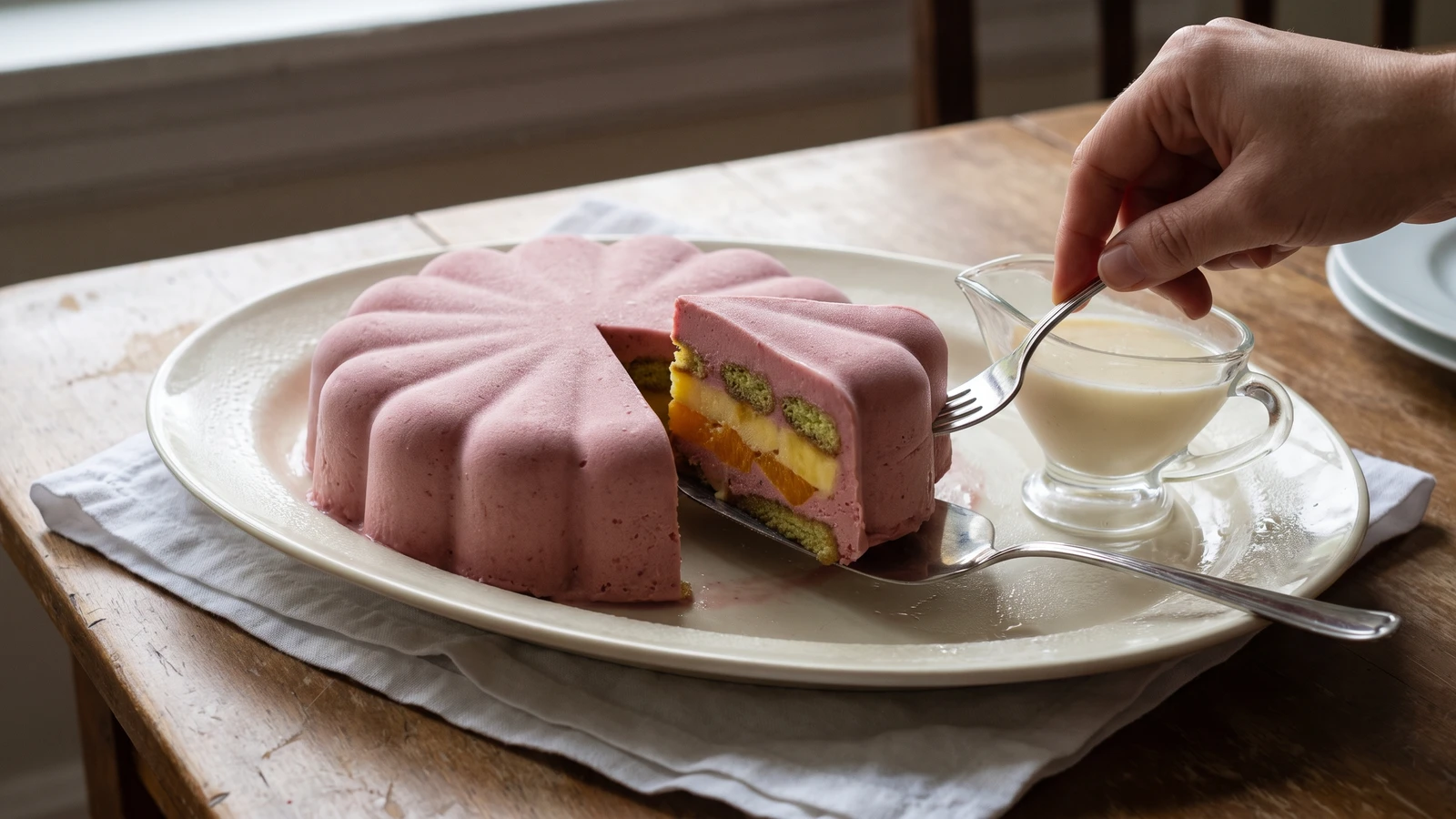
Chartreuse-soaked biscuits and kirsch-bright fruit stripe a pomegranate bombe, frozen in a narrow mould and served with cold vanilla syrup. Its jewel-cut beauty depends on one plain discipline: drain the fruit hard.
Pouding glacé Miramar (frozen pomegranate bombe) teaches the cold kitchen's sternest lesson: control the free water before it reaches the mould. The fruit must taste juicy but go in dry. Loose kirsch and tangerine juice freeze into grit inside a bombe meant to be satin-smooth.
The original assumed an iced, lidded Madeleine-mould, a narrow scallop-shell mould, a prepared bombe mixture, and packed ice ready to set it in two hours. At home, a 1.25-liter metal fluted mould and a domestic freezer do the work, while a fresh pâte à bombe, yolks aerated with hot sugar syrup, gives the pomegranate its creamy body. The lidded mould and packed ice are brigade scaffolding and can go. The Chartreuse-saturated biscuits, kirsch pineapple, raw tangerine, and pomegranate center are the dish and must stay. This makes six generous portions with one cook, one stove, one evening of work; the freezer keeps watch overnight.
When cut, the pale rose bombe should reveal bands of amber biscuit, golden pineapple, and bright tangerine, with cold vanilla syrup passed separately at the table. Before anything touches the frozen mould, drain the pineapple and blot every tangerine suprême. That is the step that decides the texture.
Pouding glacé Miramar belongs to the formal French grand-kitchen dessert table, among named entremets assembled from frozen preparations, fruit, biscuits, and liqueurs for a ceremonial unmoulding. Despite its seaside name, it is not a regional Mediterranean pudding: Alpine Chartreuse and kirsch from the eastern French larder meet pineapple, tangerine, and pomegranate in the cosmopolitan classical pantry. The narrow scallop-shell Madeleine-mould supplied the spectacle, but the true inheritance is the alternation of saturated biscuit and carefully drained fruit around the pomegranate bombe.
Quantity
10 (about 3 oz / 85 g)
Quantity
3 tablespoons (45 ml / 43 g)
Quantity
1 cup (240 ml / 140 g)
peeled and cut into very thin slices
Quantity
3 tablespoons (45 ml / 42 g)
Quantity
2 medium, yielding about 3/4 cup (180 ml / 130 g)
cut into membrane-free sections with all seeds removed
Quantity
1 1/2 cups (355 ml / 365 g)
Quantity
1/2 cup (120 ml / 100 g)
Quantity
2 tablespoons (30 ml / 30 g)
Quantity
3
Quantity
1 cup (240 ml / 230 g)
Quantity
2 tablespoons (30 ml / 28 g)
Quantity
1/2 cup (120 ml / 120 g)
Quantity
1/2 cup (120 ml / 100 g)
Quantity
1
split lengthwise
| Ingredient | Quantity |
|---|---|
| crisp ladyfinger biscuits | 10 (about 3 oz / 85 g) |
| green Chartreuse | 3 tablespoons (45 ml / 43 g) |
| fresh pineapplepeeled and cut into very thin slices | 1 cup (240 ml / 140 g) |
| kirsch for the pineapple | 3 tablespoons (45 ml / 42 g) |
| tangerinescut into membrane-free sections with all seeds removed | 2 medium, yielding about 3/4 cup (180 ml / 130 g) |
| pure unsweetened pomegranate juice | 1 1/2 cups (355 ml / 365 g) |
| granulated sugar for the pâte à bombe | 1/2 cup (120 ml / 100 g) |
| water for the pâte à bombe | 2 tablespoons (30 ml / 30 g) |
| large egg yolks | 3 |
| cold heavy cream | 1 cup (240 ml / 230 g) |
| kirsch for the pâte à bombe | 2 tablespoons (30 ml / 28 g) |
| water for the vanilla syrup | 1/2 cup (120 ml / 120 g) |
| granulated sugar for the vanilla syrup | 1/2 cup (120 ml / 100 g) |
| vanilla beansplit lengthwise | 1 |
Set the empty metal mould in the freezer. Scrape the vanilla seeds into a small saucepan, then add the pod, the water, and the sugar reserved for the syrup. Bring to a gentle simmer, stirring only until the sugar dissolves, and cook for 2 minutes. Remove from the heat, cover, and cool completely before chilling. Leave the vanilla pod in until serving, then strain the syrup into a small cold jug.
Pour the pomegranate juice into a wide saucepan and simmer steadily until reduced to exactly 3/4 cup (180 ml), about 12 to 18 minutes. It should taste vivid and tart but still pour freely, not resemble jam. If it reduces below the mark, add enough cold water to restore 3/4 cup; ça se rattrape. Transfer it to a shallow bowl and chill until thoroughly cold.
Toss the thin pineapple slices with the kirsch and leave them for 20 minutes. Meanwhile, cut the peeled tangerines into suprêmes, membrane-free segments, removing every seed without crushing the flesh. Drain the pineapple in a sieve for 10 minutes, then blot it firmly between clean towels; blot the tangerine sections separately. Both fruits must feel moist but show no liquid on the surface. If they still glisten, move them to fresh towels and chill for another 10 minutes. Loose syrup freezes into grit, and no amount of pretty moulding disguises it.
Put the sugar and water for the pâte à bombe in a small saucepan and heat without stirring. When the syrup reaches 230°F (110°C), begin beating the yolks at medium speed until pale and foamy. At 244°F (118°C), remove the syrup from the heat and pour it in a thin stream down the inside of the bowl, never directly onto the moving beaters. Beat at high speed for 6 to 8 minutes, until the mixture is thick, pale, and cool enough that the bowl no longer feels warm. It should fall from the whisk in a broad ribbon. If it remains thin after cooling, set the bowl over barely simmering water and whisk until the ribbon forms, then beat it cold again. Ça se rattrape.
Whisk the cold pomegranate reduction and the kirsch into the pâte à bombe until evenly rose-colored. In a separate cold bowl, whip the heavy cream to soft peaks that bend at the tip. Fold one-third of the cream into the pomegranate base to lighten it, then fold in the remainder with broad strokes, turning the bowl as you work. If the first cream melts into a thin pink liquid, stop because the base is too warm. Chill it over ice until cool and slightly thickened, then continue folding.
Brush both sides of each ladyfinger repeatedly with Chartreuse until saturated but still firm enough to lift. Spread two spoonfuls of the bombe mixture in a paper-thin layer inside the frozen mould to hold the pattern. Arrange the biscuits against the bottom and sides, alternating them with the drained pineapple slices and raw tangerine suprêmes, with the neatest faces against the metal. Trim biscuits only where the ends require it. If a piece slips, hold it with another dab of bombe and return the mould to the freezer for 10 minutes before continuing.
Spoon the remaining pomegranate bombe into the lined mould, working it carefully around the fruit so no hollow pockets remain. Tap the mould twice against a folded towel, level the top, and press a round of baking parchment directly onto the surface. Close it tightly with a lid or foil and freeze for at least 6 hours, preferably overnight, until firm through the center.
Set a clean folded linen napkin on a chilled oval platter. Dip the closed mould in warm water for 5 to 8 seconds, wipe it dry, remove the covering, and invert it decisively onto the napkin. If it refuses to release, wrap the mould briefly in a warm towel or dip it for another 3 seconds; do not tug at the biscuits. If the surface softens too far, return the unmoulded pudding to the freezer for 10 minutes. Slice with a knife dipped in warm water and wiped dry between cuts, passing the cold vanilla syrup separately. À table!
1 serving (about 200g)
Culinary guides, cultural storytelling, and the editorial depth that makes cooking meaningful.
Discover Culinary ExplorerChef Juliette
Five almond preparations, one discipline: remove the skins cleanly, dry every kernel through, then cut, toast, or cloak it in pale caramel without letting its fragrant oils escape.

Chef Juliette
A pastry pantry lesson in one tray: filberts warmed only until their red skins release, rubbed clean, cooled, and chopped into a fragrant mise-en-place for cakes, creams, pralines, and petits fours.

Chef Juliette
The smallest pâtisserie discipline decides whether a cake leaves its mould intact: clarified butter in every corner, followed by the lightest veil of dry flour or fécule.

Chef Juliette
Four whites, one spotless bowl, and a patient change of speed: whisk gently until loosened, then briskly to glossy stiffness, with powdered sugar waiting if the foam begins to granulate.