
Chef Juliette
Preparation for Iced Fruit Mousses
Mousses glacées aux fruits teach the no-churn grammar of frozen dessert: one part cold syrup, one part pure fruit, two parts very stiff Chantilly, folded lightly and frozen before the air can fall.
A cooking platform built around craft, culture, and the stories behind what we eat.
Created by Chef Juliette
Based on No. 2919, Iced Puddings, from Le Guide Culinaire (1907) by Auguste Escoffier
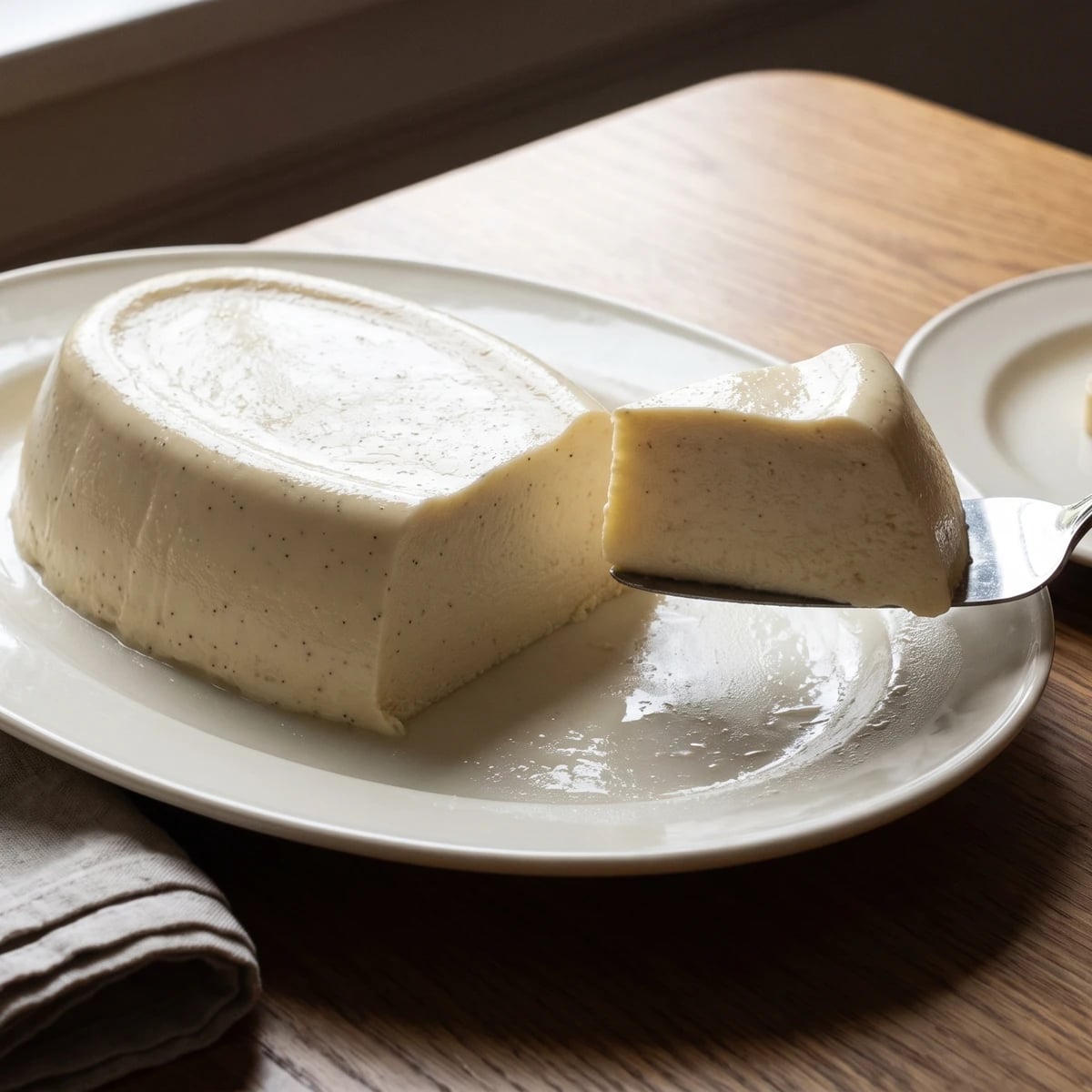
Pouding glacé is a frozen entremet, not ice cream: vanilla crème anglaise collée, folded with whipped cream and set in a mold. Master its custard and a whole family of no-churn desserts follows.
Pouding glacé (iced custard pudding) teaches the difference between an ice and an iced entremet. Its body comes from crème anglaise collée, English custard set with gelatin, then lightened with softly whipped cream and frozen in a mold. No churning is needed because custard, gelatin, and incorporated air already provide the structure. One truth before you touch the pan: crème anglaise must thicken over gentle heat and never boil.
The source defines a family rather than prescribing one flavor, so vanilla keeps its required structure in plain view: milk-and-yolk custard, gelatin, and real cream. The grand kitchen expected large molds packed in salted ice and enough hands to mind the custard and freezing mixture at once. This home version uses a 1 L metal mold and an ordinary freezer. Salted ice and brigade quantities are scaffolding and can go. The crème anglaise collée and softly whipped cream are the dish, and they stay.
After a short temper at the table, the pouding glacé cuts into pale ivory slices with a cool, satiny crumb and a slow perfume of vanilla. The decisive step comes before the freezer: stop cooking the custard the moment it nappes the spoon, glossy and entirely free of curds.
The pouding glacé belongs to the Parisian grand-kitchen repertory of molded entremets, where pouding named a form and manner of service rather than the steamed British pudding the borrowed word suggests. It passed to the bourgeois table as domestic cold storage replaced molds packed in salted ice, but its usual foundation remained crème anglaise collée, the same gelatin-set custard used for bavarois. The source makes the useful correction plainly: these preparations are not ices at all, and churning would misunderstand their structure.
Quantity
2 cups (500 ml / 515 g)
Quantity
1
split lengthwise and scraped
Quantity
5 large (about 90 g)
Quantity
¾ cup (180 ml / 150 g)
Quantity
2¼ teaspoons (11 ml / 7 g)
Quantity
3 tablespoons (45 ml / 45 g)
Quantity
1¼ cups (300 ml / 300 g)
well chilled
Quantity
⅛ teaspoon (0.6 ml / 0.8 g)
| Ingredient | Quantity |
|---|---|
| whole milk | 2 cups (500 ml / 515 g) |
| vanilla beansplit lengthwise and scraped | 1 |
| large egg yolks | 5 large (about 90 g) |
| granulated sugar | ¾ cup (180 ml / 150 g) |
| powdered gelatin | 2¼ teaspoons (11 ml / 7 g) |
| cold water | 3 tablespoons (45 ml / 45 g) |
| heavy cream, at least 35% fatwell chilled | 1¼ cups (300 ml / 300 g) |
| fine sea salt | ⅛ teaspoon (0.6 ml / 0.8 g) |
Place a clean 1 L metal mold or loaf tin in the freezer. Sprinkle the powdered gelatin evenly over the cold water in a small bowl and leave it undisturbed for 5 to 10 minutes, until every granule has swollen and no dry patches remain. This blooming lets the gelatin dissolve smoothly instead of forming rubbery specks.
Put the milk, vanilla seeds, vanilla pod, and salt in a heavy saucepan. Heat gently until small bubbles gather around the edge, then remove the pan from the heat, cover, and infuse for 10 minutes. Lift out the pod and warm the milk again just until hot; it must not boil.
Whisk the yolks and sugar together until smooth and slightly pale. Pour in one-third of the hot milk while whisking, then whisk this tempered mixture back into the saucepan. Cook over low heat, stirring constantly with a flexible spatula and reaching into every corner, until the crème anglaise reaches 82 to 84°C and nappes, coating the back of a spoon in an even film. Do not let it simmer. If you catch a few fine curds, remove the pan immediately, stir in 1 tablespoon of the measured cold cream, then blend briefly and strain. Ça se rattrape.
Remove the custard from the heat and add the bloomed gelatin. Stir until it has dissolved completely, then strain the crème anglaise collée through a fine sieve into a bowl. Set that bowl over ice water and stir until the custard cools to about 24°C and begins to gain the body of light cream. If it sets into lumps before the cream is ready, place the bowl over barely warm water and stir just until fluid, then cool it again. Ça se rattrape.
Whip the remaining cold cream to soft peaks that bend at their tips. Fold one-third into the custard to loosen it, then fold in the rest with broad strokes, turning the bowl as you work. Stop as soon as no white streaks remain. The custard must be cool but still fluid here; warm custard melts the whipped cream, while fully set custard leaves gelatinous flecks.
Pour the mixture into the chilled mold and tap it once against a folded towel to release large air pockets without knocking out all the lightness. Smooth the top, cover tightly, and freeze on a level shelf for at least 8 hours. No churning. The crème anglaise collée is carrying the structure.
Transfer the pouding glacé to the refrigerator for 20 minutes before serving. Dip the outside of the mold in warm water for 5 to 8 seconds, dry it, and invert it onto a chilled platter. If it refuses to release, wrap the mold briefly in a warm towel rather than soaking it longer. Cut with a knife dipped in hot water and wiped dry between slices. Serve when the center is firm but no longer stony. À table!
1 serving (about 130g)
Culinary guides, cultural storytelling, and the editorial depth that makes cooking meaningful.
Discover Culinary Explorer
Chef Juliette
Mousses glacées aux fruits teach the no-churn grammar of frozen dessert: one part cold syrup, one part pure fruit, two parts very stiff Chantilly, folded lightly and frozen before the air can fall.

Chef Juliette
A stone-cold crème anglaise, real cream, and patient whisking over ice become a pale, airy frozen mousse, proof that temperature, not force, is what lets this classical dessert hold its lift.

Chef Juliette
Mousse glacée teaches the cold dessert canon in one bowl: cook a smooth crème anglaise, fold it with softly whipped cream, choose your perfume, and freeze it without churning.

Chef Juliette
Parfait turns syrup-cooked yolks, whipped cream, and rum into a pale frozen mousse with a close, silken crumb. Cool the yolk base completely before folding, and the dessert keeps every bit of its lift.