Chef Juliette
Preparation for Iced Fruit Mousses
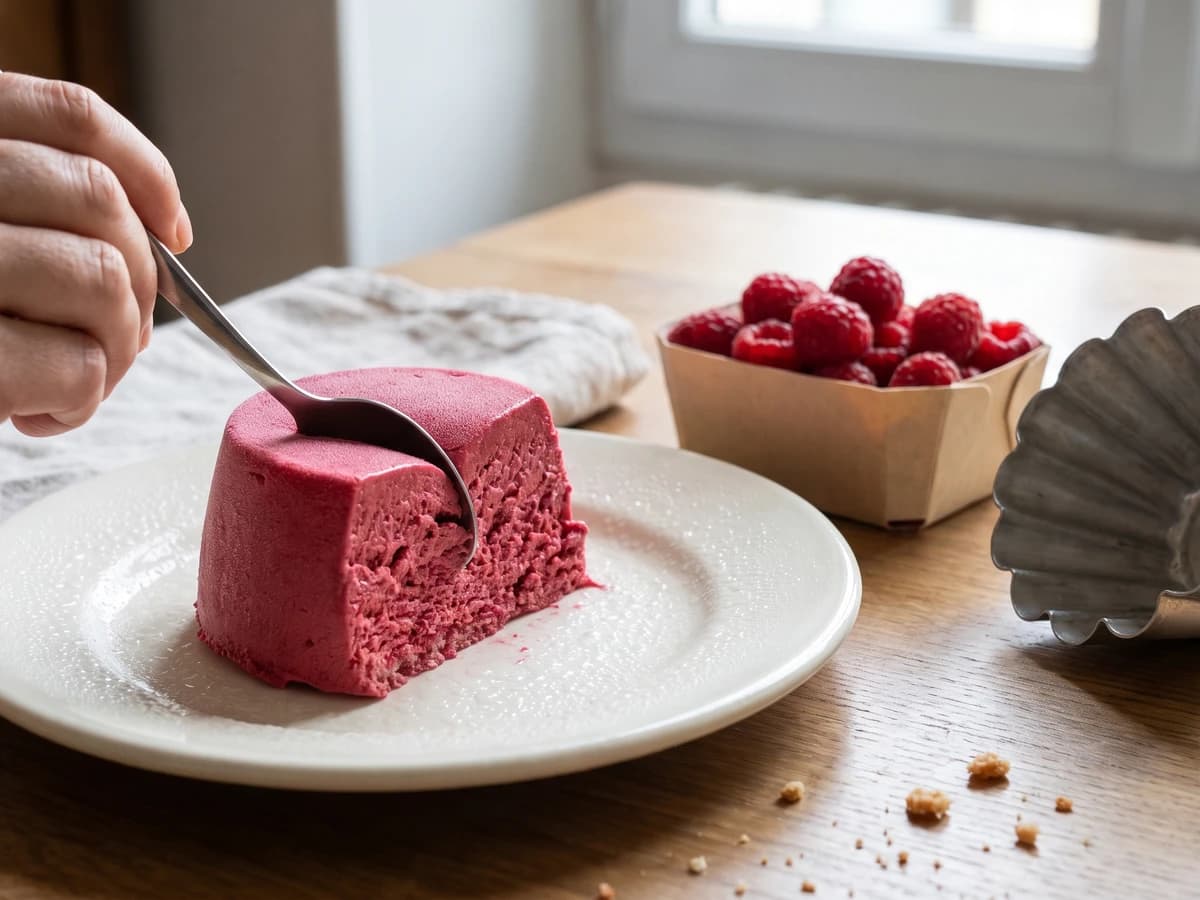
Mousses glacées aux fruits teach the no-churn grammar of frozen dessert: one part cold syrup, one part pure fruit, two parts very stiff Chantilly, folded lightly and frozen before the air can fall.
A cooking platform built around craft, culture, and the stories behind what we eat.
Created by Chef Juliette
Based on No. 2917, Various Iced Mousses, from Le Guide Culinaire (1907) by Auguste Escoffier
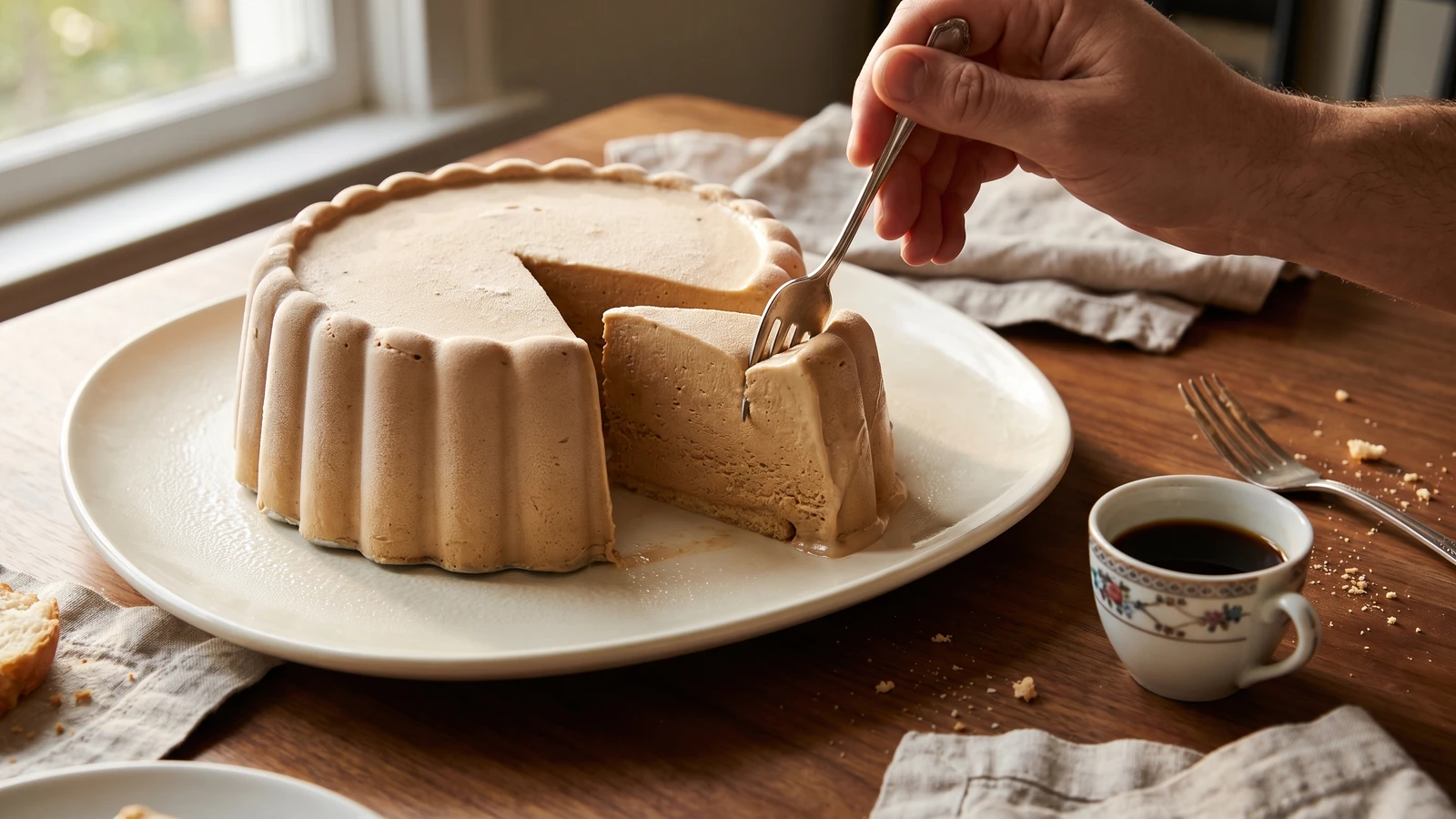
Mousse glacée teaches the cold dessert canon in one bowl: cook a smooth crème anglaise, fold it with softly whipped cream, choose your perfume, and freeze it without churning.
Mousses glacées variées (various iced mousses) teach a whole branch of the cold dessert canon from one bowl. The one true thing to know before touching a pan is this: the crème anglaise, the stirred custard, must thicken without ever boiling. Lose that silk and the freezer magnifies every grain; keep it smooth, and the folded cream gives you a slice that yields like velvet.
The original procedure assumed a pâtissier tending several infused bases, brigade-sized moulds sealed and buried in salted ice, and enough hands to prepare a roll-call of flavors at once. Your honest equivalent is one 1½-liter metal mould, one chosen flavor per batch, and an ordinary freezer. The packing of salted ice and the parade of separate pans were service scaffolding, so they can go. The infused custard, softly whipped cream, careful fold, and unmoving freeze are the dish, so they stay. One cook, one stove, one evening.
Choose coffee, chocolate, tea, kirsch, fresh fruit, walnuts, vanilla, violets, or another flavor from the list, then follow the same grammar. Infuse ingredients that surrender their flavor to milk; cool concentrated fruit before adding it; stir alcohol in only after the custard is cold. The step that matters most is the crème anglaise: pull it from the heat at the first clean nappe, when it coats the spoon and a finger drawn through leaves a clear path.
Mousses glacées belong to the Parisian grand-kitchen repertoire of moulded cold sweets, where a pâtissier packed lidded moulds in salted ice and built lightness before freezing rather than through churning. The classical vocabulary used mousses for moulded preparations both savory and sweet, so this dessert is not simply an ordinary chocolate mousse put in the freezer; its custard and folded cream are designed to set in one large mould for several people. From grand service it passed naturally to the bourgeois dinner table, carrying whatever the cupboard or season offered: liqueurs, coffee and tea, fresh fruit, walnuts, vanilla, and violets.
Quantity
1½ cups (360 ml / 370 g)
Quantity
6 (about ½ cup / 108 g)
Quantity
½ cup (120 ml / 100 g) for violet, or ⅔ cup (160 ml / 135 g) for every other flavor
Quantity
⅛ teaspoon (0.6 ml / 0.8 g)
Quantity
1½ cups (360 ml / 355 g)
Quantity
2 tablespoons (30 ml / 30 g)
Quantity
3 tablespoons (45 ml / about 43 g)
Quantity
¼ cup (60 ml / 30 g)
coarsely crushed
Quantity
⅔ cup (160 ml / 115 g)
finely chopped
Quantity
2 tablespoons (30 ml / 10 g)
Quantity
1 cup (240 ml / 250 g), reduced to ½ cup (120 ml / 120 g)
strained
Quantity
2 medium oranges or 3 medium tangerines
finely zested
Quantity
½ cup (120 ml / 125 g), reduced to ¼ cup (60 ml / 65 g)
Quantity
1 cup (240 ml / 120 g)
Quantity
1
Quantity
¼ cup (60 ml / 75 g)
Quantity
2 tablespoons (30 ml / 20 g)
lightly crushed
| Ingredient | Quantity |
|---|---|
| whole milk | 1½ cups (360 ml / 370 g) |
| large egg yolks | 6 (about ½ cup / 108 g) |
| caster sugar | ½ cup (120 ml / 100 g) for violet, or ⅔ cup (160 ml / 135 g) for every other flavor |
| fine sea salt | ⅛ teaspoon (0.6 ml / 0.8 g) |
| cold heavy cream, at least 35% fat | 1½ cups (360 ml / 355 g) |
| additional cold heavy cream for rescuing the custard (optional) | 2 tablespoons (30 ml / 30 g) |
| anisette, kirsch, maraschino, or dark rum, choose one (optional) | 3 tablespoons (45 ml / about 43 g) |
| whole coffee beans (optional)coarsely crushed | ¼ cup (60 ml / 30 g) |
| dark chocolate, 60 to 70% cocoa (optional)finely chopped | ⅔ cup (160 ml / 115 g) |
| loose black tea (optional) | 2 tablespoons (30 ml / 10 g) |
| apricot, strawberry, or peach purée, choose one (optional)strained | 1 cup (240 ml / 250 g), reduced to ½ cup (120 ml / 120 g) |
| oranges or tangerines (optional)finely zested | 2 medium oranges or 3 medium tangerines |
| strained orange or tangerine juice (optional) | ½ cup (120 ml / 125 g), reduced to ¼ cup (60 ml / 65 g) |
| freshly shelled walnut kernels (optional) | 1 cup (240 ml / 120 g) |
| vanilla bean (optional) | 1 |
| sirop de violette (violet syrup) (optional) | ¼ cup (60 ml / 75 g) |
| crystallized violets (optional)lightly crushed | 2 tablespoons (30 ml / 20 g) |
Choose exactly one flavor for the batch and chill a 1½-liter metal mould or loaf pan. Coffee, tea, vanilla, walnuts, and citrus zest begin in the milk. Heat the milk until it trembles at the edge, then remove it from the heat. Cover crushed coffee beans for 20 minutes, black tea for 5 minutes, a split and scraped vanilla bean for 20 minutes, or citrus zest for 15 minutes. Strain, then restore the milk to 1½ cups (360 ml) with fresh milk. For walnut, blanch the kernels for 1 minute, rub away as much bitter skin as you comfortably can, blend them with ½ cup (120 ml) of the milk, stir in the remainder, and cover for 15 minutes without straining. Reduce fruit purée or citrus juice now, then cool it completely. Chocolate, violet syrup, and liqueurs wait.
Whisk the yolks with the sugar and salt just until smooth, using the lower sugar quantity only for the violet variation. Bring the prepared milk back to the edge of a simmer, pour one-third into the yolks while whisking, then return everything to the saucepan. Stir constantly over gentle heat, reaching into every corner, until the crème anglaise reaches 82°C and makes a nappe, a coating on the spoon through which a drawn finger leaves a clean path. Never let it boil. If tiny curds appear, remove the pan immediately, add the optional cold cream, blend until smooth, and pass it through the fine sieve. Ça se rattrape while the curds are small; after a hard boil, begin the custard again. For chocolate mousse, strain the hot custard directly over the chopped chocolate, leave it for 1 minute, then whisk from the center outward until dark and glossy.
Set the bowl of custard over an ice bath and stir until it falls below 20°C, then cover and chill for about 30 minutes, until cold but still fluid. Coffee, tea, walnut, vanilla, and chocolate are already flavored. For apricot, strawberry, or peach, whisk in the cold reduced purée. For orange or tangerine, whisk in the cold reduced juice. Add sirop de violette to the violet base. Stir anisette, kirsch, maraschino, or rum into the cold custard only now; added hot, alcohol loses its perfume. If citrus was added while the custard was warm and it feathers, chill it at once, blend briefly, and fine-strain it before continuing.
Whip the cold heavy cream until it forms soft peaks that bend over as soon as the whisk is lifted. Stop there. Stiff cream breaks into little fatty grains when folded and leaves the mousse heavy. If you go a little too far, whisk in a spoonful of the chilled custard until the cream relaxes and turns supple again.
Whisk one-third of the whipped cream into the custard to lighten it. Add the remaining cream in two portions, folding from the bottom of the bowl and turning the bowl as you work. Stop as soon as the color is even; a few fine white traces are safer than another dozen turns. The trapped air is the mousse's structure, so every unnecessary stroke makes the frozen result denser.
Spoon the mousse into the chilled mould, pressing gently into the corners without flattening it, then tap the mould once to release any large hollow pockets. Level the top, cover directly with parchment or reusable wrap, and close with a lid or foil. Freeze without churning for at least 6 hours, preferably overnight, until firm through the center.
Move the mousse to the refrigerator for 15 minutes before serving. Dip only the outside of the mould in warm water for 5 seconds, dry it, and invert onto a cold platter. If it refuses to release, repeat for another 3 seconds rather than melting the edges. Slice with a knife dipped in hot water and wiped dry between cuts. Scatter the optional crushed violets over the violet version; the other flavors need no decoration. À table!
1 serving (about 120g)
Culinary guides, cultural storytelling, and the editorial depth that makes cooking meaningful.
Discover Culinary ExplorerChef Juliette
Mousses glacées aux fruits teach the no-churn grammar of frozen dessert: one part cold syrup, one part pure fruit, two parts very stiff Chantilly, folded lightly and frozen before the air can fall.

Chef Juliette
A stone-cold crème anglaise, real cream, and patient whisking over ice become a pale, airy frozen mousse, proof that temperature, not force, is what lets this classical dessert hold its lift.

Chef Juliette
Parfait turns syrup-cooked yolks, whipped cream, and rum into a pale frozen mousse with a close, silken crumb. Cool the yolk base completely before folding, and the dessert keeps every bit of its lift.

Chef Juliette
Pouding glacé is a frozen entremet, not ice cream: vanilla crème anglaise collée, folded with whipped cream and set in a mold. Master its custard and a whole family of no-churn desserts follows.