
Chef Juliette
Smelt (Éperlans)
Tiny éperlans, lightly floured and fried until their tails stand crisp, arrive in a generous heap on a napkin with fried parsley and grooved lemon, a weeknight lesson in heat and restraint.
A cooking platform built around craft, culture, and the stories behind what we eat.
Created by Chef Juliette
Based on No. 291, Smoked Salmon Butter, from Le Guide Culinaire (1907) by Auguste Escoffier
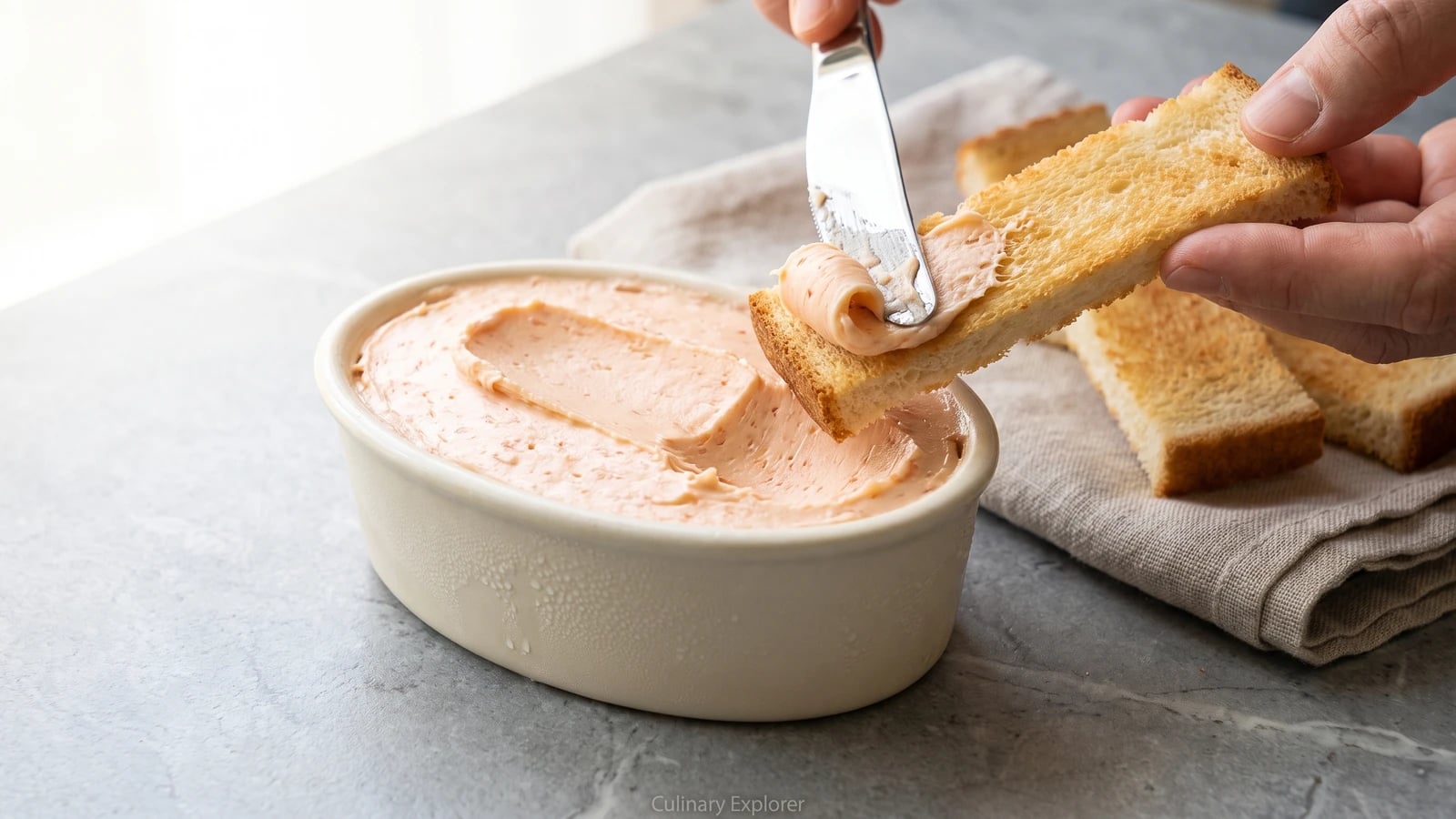
Beurre de saumon fumé is smoked salmon and butter in exact balance, pounded then sieved to a rose-colored silk that spreads cleanly on toast without letting the smoke turn sharp.
Beurre de saumon fumé (smoked salmon butter) teaches the strictest rule of a beurre composé, a flavored butter: balance comes from weight, texture from temperature. There is no pan to touch. Before the blade moves, know this: the salmon and butter must be equal by weight, and the butter must be cool and pliable, never hard and never greasy.
The original assumes none of the usual grand-kitchen apparatus, no saucier, no stockpot kept at the fire, no salamander. It assumes a mortar, a strong arm, and a fine sieve. A small food processor honestly replaces the pounding labor for one cook, while the sieve stays because it isn't brigade scaffolding. It is the dish. The book's four ounces of salmon and four ounces of butter already make a sensible home batch, so I keep that measure exactly rather than inflating it for service. One cook, one stove, one evening.
The finished beurre de saumon fumé should be pale rose, satin-smooth, and clean on the tongue, with butter rounding the smoke rather than muffling it. We don't apologize for butter; here it is half the recipe and exactly the point. The final passage through the sieve is the step that matters most, so don't let the processor flatter you into skipping it.
Beurre de saumon fumé is not a regional salmon specialty; its real home is the Parisian garde-manger, among the beurres composés prepared for hors-d'oeuvre and cold buffet service. The formula traveled readily to the bourgeois apéritif because a mortar and sieve could give a small household batch the same fine finish. It is often confused with salmon rillettes, but the classical preparation is equal weights of smoked salmon and butter, sieved to silk, with neither cream nor loose flakes.
Quantity
¾ cup loosely packed (113 g / 4 oz)
chilled and coarsely chopped
Quantity
½ cup (113 g / 4 oz)
cool-pliable and cut into 8 pieces
| Ingredient | Quantity |
|---|---|
| cold-smoked salmonchilled and coarsely chopped | ¾ cup loosely packed (113 g / 4 oz) |
| unsalted buttercool-pliable and cut into 8 pieces | ½ cup (113 g / 4 oz) |
Let the butter stand until it reaches 65 to 68°F (18 to 20°C). It should yield under a fingertip while remaining cool, opaque, and free of any oily shine. Keep the salmon chilled and blot away surface moisture before chopping it. Warm butter makes a greasy spread, while hard butter leaves pale flecks that the sieve must fight.
Put the chopped salmon in a 2 to 3-cup mini food processor, the home equivalent of pounding it in a mortar. Pulse several times, then process while stopping frequently to scrape the bowl, until the fish becomes a cohesive paste with no visible strips. Use no liquid. In a mortar, work small portions with the pestle until each is equally fine.
Add the butter one or two pieces at a time, processing just until each addition disappears before adding the next. Stop as soon as the mixture is evenly pale rose and completely blended. If an oily sheen appears, the butter has become too warm. Stop and chill the bowl for 10 minutes, then work it briefly again. Ça se rattrape. If distinct butter flecks remain, let the mixture stand for 5 minutes before processing once more.
Set a fine-mesh sieve over a clean bowl. Working in small portions, rub the salmon butter firmly through the mesh with a flexible scraper, then scrape every ribbon from the underside of the sieve into the bowl. Continue until only a few tough threads remain above the mesh. This passage removes the salmon's fibers and gives the beurre de saumon fumé its defining silk. The processor saves labor; the sieve preserves the technique.
Pack the sieved butter into a 1-cup crock, pressing out air pockets, and cover its surface directly. Chill for at least 2 hours so it settles into a close, spreadable texture. Take it from the refrigerator 15 to 20 minutes before serving. If it remains hard, give it another few minutes rather than warming it; one hot patch will turn greasy before the rest softens. Serve on thin toast or crisp baguette slices. À table!
1 serving (about 28g)
Culinary guides, cultural storytelling, and the editorial depth that makes cooking meaningful.
Discover Culinary ExplorerChef Juliette
Tiny éperlans, lightly floured and fried until their tails stand crisp, arrive in a generous heap on a napkin with fried parsley and grooved lemon, a weeknight lesson in heat and restraint.

Chef Juliette
Brandade de Morue turns salt cod, warm olive oil, and milk into a pale, silky emulsion: keep everything warm and add the oil slowly, then crown the generous dome with butter-fried bread.

Chef Juliette
Salt cod worked warm with cream, one patient spoonful at a time, until the rough flakes become a glossy Nîmes paste, domed generously and ringed with butter-fried croutons for the table.

Chef Juliette
Wine-poached char packed in its earthenware crock beneath butter gold: a make-ahead first course that turns careful cooling, thorough boning, and one unbroken seal into quiet abundance.