
Chef Juliette
Smelt (Éperlans)
Tiny éperlans, lightly floured and fried until their tails stand crisp, arrive in a generous heap on a napkin with fried parsley and grooved lemon, a weeknight lesson in heat and restraint.
A cooking platform built around craft, culture, and the stories behind what we eat.
Created by Chef Juliette
Based on No. 290, Horse-radish Butter, from Le Guide Culinaire (1907) by Auguste Escoffier
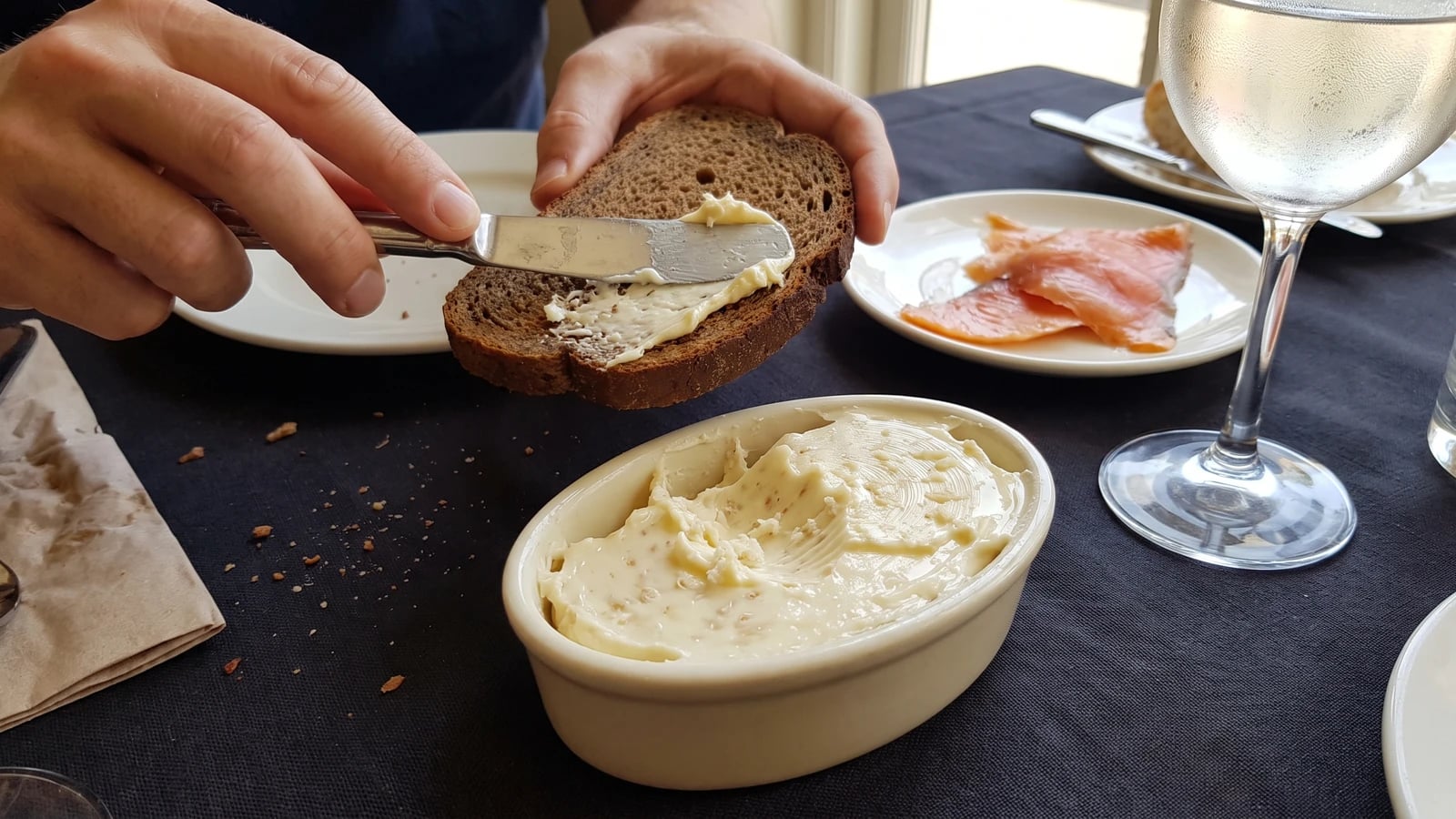
Beurre de raifort turns two ingredients into a clean, bracing spread: fresh horseradish pounded into real butter, then sieved smooth for smoked fish, cold beef, and a dinner-party table.
Beurre de raifort (horseradish butter) teaches that texture controls heat. Before touching a pan, know this: you don't need one, and the sieve does as much flavor work as the grater. It removes the root's wiry fibers and distributes its raw bite evenly, so every mouthful is clean and bracing rather than a sudden blast.
The entry assumed a heavy mortar, a fine sieve, and a practiced kitchen hand. At home, a sturdy bowl and flat wooden spoon do the pounding, while an ordinary fine-mesh sieve finishes the work. The book's four ounces of butter to two ounces of root already make a sensible home batch, so neither the quantity nor the exact two-to-one ratio has changed. The dedicated hand and heavy mortar are brigade scaffolding; thorough pounding and sieving are the dish and must stay. One cook, one stove, one evening.
The finished beurre de raifort should be pale ivory, finely flecked, and smooth enough to drag across rye bread without catching a fiber. Keep the butter pliable but cool, grate the root at the last moment, and give the sieving your full attention. That final passage through the mesh decides the dish.
Raifort belongs most naturally to Alsace and the northeastern French table, where its sharp root cuts through smoked fish, boiled meats, and rich charcuterie. Classical kitchens carried that appetite into the family of beurres composés, pounding flavorings into butter and passing them through a sieve for a fine, even finish. Beurre de raifort is sometimes confused with sauce raifort, but this preparation remains the plainer and more concentrated union of butter and root alone.
Quantity
½ cup (120 ml / 113 g)
pliable but cool
Quantity
about ½ cup loosely packed (120 ml / 57 g)
peeled and finely grated immediately before use
| Ingredient | Quantity |
|---|---|
| unsalted butterpliable but cool | ½ cup (120 ml / 113 g) |
| fresh horseradish rootpeeled and finely grated immediately before use | about ½ cup loosely packed (120 ml / 57 g) |
Put the butter in a sturdy bowl. It should yield easily beneath a wooden spoon but retain its matte surface, ideally around 18 to 20°C (65 to 68°F). If it is firm enough to crack, leave it briefly at room temperature; if it looks shiny or oily, chill it for 5 minutes before continuing.
Peel only as much horseradish root as you need, then grate it finely and weigh out 57 g (2 oz). Work immediately, because the clean heat begins fading as soon as the cut root meets the air. Keep the room ventilated and turn your face aside when lifting the grater; fresh raifort can make the eyes water with admirable efficiency.
Smear the butter firmly against the side of the bowl until smooth, then add the grated raifort in three additions. Pound and press after each addition until no wet clumps remain and the flecks look evenly dispersed. If the butter softens into a greasy paste, stop and chill the bowl for 5 to 10 minutes. Ça se rattrape: once the butter is pliable rather than oily, continue pounding.
Set a fine-mesh sieve over a clean bowl. Working in small portions, rub the butter firmly through the mesh with a flexible scraper or the back of a spoon, then scrape the smooth beurre de raifort from the underside. Discard the dry fibers left behind. If the mixture is too cold to pass, let it stand for 2 or 3 minutes, but never warm it over heat. This sieving is not decoration; it tames the root and gives the butter its clean, even bite.
Pack the beurre de raifort into a small covered crock or shape it into a log in parchment. Chill for at least 30 minutes so it firms and the flavor settles through the butter. Let it stand at room temperature for 10 minutes before serving with smoked fish, cold beef, radishes, or rye bread. Spread it generously. À table!
1 serving (about 19g)
Culinary guides, cultural storytelling, and the editorial depth that makes cooking meaningful.
Discover Culinary ExplorerChef Juliette
Tiny éperlans, lightly floured and fried until their tails stand crisp, arrive in a generous heap on a napkin with fried parsley and grooved lemon, a weeknight lesson in heat and restraint.

Chef Juliette
Brandade de Morue turns salt cod, warm olive oil, and milk into a pale, silky emulsion: keep everything warm and add the oil slowly, then crown the generous dome with butter-fried bread.

Chef Juliette
Salt cod worked warm with cream, one patient spoonful at a time, until the rough flakes become a glossy Nîmes paste, domed generously and ringed with butter-fried croutons for the table.

Chef Juliette
Wine-poached char packed in its earthenware crock beneath butter gold: a make-ahead first course that turns careful cooling, thorough boning, and one unbroken seal into quiet abundance.