
Chef Juliette
Various Almond Preparations
Five almond preparations, one discipline: remove the skins cleanly, dry every kernel through, then cut, toast, or cloak it in pale caramel without letting its fragrant oils escape.
A cooking platform built around craft, culture, and the stories behind what we eat.
Created by Chef Juliette
Based on No. 2880, Bombe Mogador, from Le Guide Culinaire (1907) by Auguste Escoffier
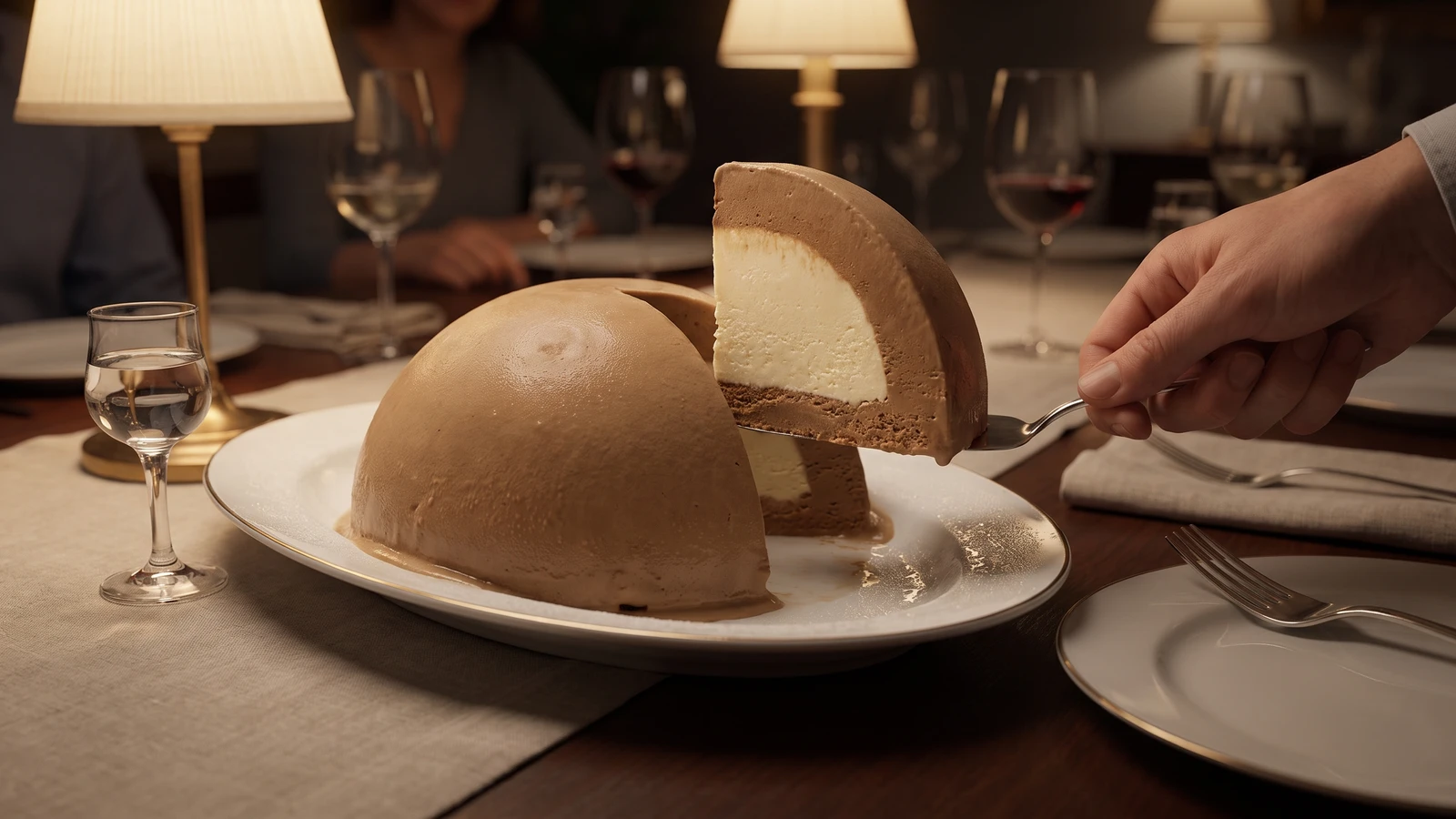
Coffee ice forms the dark, firm shell; Kirsch pâte à bombe fills it with pale, aromatic creaminess. The lesson is clean contrast, careful sweetness, and the patience to freeze each layer before the next.
Bombe Mogador (coffee ice enclosing Kirsch pâte à bombe) teaches contrast without confusion. Coffee must stay dark and bitter-edged, Kirsch clear and aromatic, and each must remain visible in the cut. The one true thing to know before touching a pan is this: the coffee shell must freeze firm before the filling goes in. A soft shell slides under the mousse, and no decorative bravery can put it back.
The book's brief instruction assumed a glacier with coffee ice already churned, Kirsch Bombe-preparation waiting, metal moulds kept against broken ice, and several hands free to coat them in stages. At home, an ice cream machine, a chilled 1.5-litre metal bowl, and short rests in the freezer do the same work. The separate glacier and bed of broken ice are brigade scaffolding and can go; chemiser, clothing the mould, and the pâte à bombe emulsion must stay because they are the dish. One cook, one stove, one evening of work, then the freezer carries it to tomorrow.
When cut, the Bombe Mogador should show a walnut-brown coffee shell around a pale, creamy centre, with Kirsch arriving cleanly after the first bitterness of coffee. Cold quiets sweetness and aroma, so taste the filling before it chills: it should seem slightly sweeter and more assertive than you want at the table, never sugary or fiery. Freeze the coffee clothing until hard; that pause decides the bombe.
Bombe glacée belongs to the Parisian grand-kitchen and confectioner's repertoire, where moulded ices allowed the glacier to pair sharply different flavours in a single clean cut. Mogador is the former European name of Essaouira on Morocco's Atlantic coast, but here it serves as an evocative French menu title; the prescribed coffee shell and Kirsch centre are not a Moroccan regional dessert. The bombe moved readily from formal dining rooms to home freezers because its apparent architecture is simply patient layering in a cold mould.
Quantity
1¼ cups (300 ml / 310 g)
for the coffee ice
Quantity
1 cup (240 ml / 235 g)
for the coffee ice
Quantity
3 tablespoons (45 ml / 18 g)
Quantity
½ cup plus 1 tablespoon (135 ml / 110 g)
divided, for the coffee ice
Quantity
5
for the coffee ice
Quantity
⅛ teaspoon (0.6 ml / 0.8 g)
for the coffee ice
Quantity
6
for the Kirsch Bombe-preparation
Quantity
⅔ cup (160 ml / 135 g)
for the Kirsch Bombe-preparation
Quantity
¼ cup (60 ml / 60 g)
Quantity
¼ cup (60 ml / 56 g)
Quantity
1½ cups (360 ml / 350 g)
for the Kirsch Bombe-preparation
Quantity
1 pinch
for the Kirsch Bombe-preparation
Quantity
1 technique reference (No. 916)
consulted only for clothing the mould; no aspic enters the dessert
| Ingredient | Quantity |
|---|---|
| whole milkfor the coffee ice | 1¼ cups (300 ml / 310 g) |
| heavy creamfor the coffee ice | 1 cup (240 ml / 235 g) |
| instant espresso powder | 3 tablespoons (45 ml / 18 g) |
| granulated sugardivided, for the coffee ice | ½ cup plus 1 tablespoon (135 ml / 110 g) |
| large egg yolksfor the coffee ice | 5 |
| fine sea saltfor the coffee ice | ⅛ teaspoon (0.6 ml / 0.8 g) |
| large pasteurized egg yolksfor the Kirsch Bombe-preparation | 6 |
| granulated sugarfor the Kirsch Bombe-preparation | ⅔ cup (160 ml / 135 g) |
| water | ¼ cup (60 ml / 60 g) |
| dry Kirsch | ¼ cup (60 ml / 56 g) |
| cold heavy creamfor the Kirsch Bombe-preparation | 1½ cups (360 ml / 350 g) |
| fine sea saltfor the Kirsch Bombe-preparation | 1 pinch |
| Another Method of Preparing Aspics de Filets de Solesconsulted only for clothing the mould; no aspic enters the dessert | 1 technique reference (No. 916) |
Combine the milk, cream, espresso powder, salt, and half the coffee-ice sugar in a saucepan. Bring it just below a simmer, stirring until the coffee dissolves. Whisk the five yolks with the remaining sugar until smooth, then slowly whisk in one-third of the hot dairy. Return everything to the saucepan and cook over gentle heat, stirring constantly, until the crème anglaise, a stirred custard, reaches 82 to 84°C and coats a spoon so a finger drawn through it leaves a clean path. Never let it boil. If the first fine curds appear, take it off the heat, strain immediately into a cold bowl, and blend briefly until smooth. Ça se rattrape. Distinct scrambled curds mean the custard must be made again.
Set the bowl of crème anglaise over ice and stir until cold, then cover and refrigerate for at least 3 hours. Churn it in the ice cream machine until thick and softly mounded. Chill the empty bombe mould at the same time. Reserve about 1 cup (240 ml) of the coffee ice in a shallow covered container for sealing the bombe, keeping it frozen but still spreadable.
The source directs the cook to the mould-coating motion explained in Another Method of Preparing Aspics de Filets de Soles (No. 916). Borrow the method, never the fish preparation: chemiser, or clothe, the chilled mould by pressing the remaining soft coffee ice against the bottom and sides in an even layer 1 to 1.5 cm thick. Work with the back of a cold spoon, turning the mould as you go. Freeze for 15 minutes, repair any thin patches, then freeze for at least 45 minutes, until the shell feels hard throughout.
Put the sugar and water for the Kirsch Bombe-preparation in a small saucepan. Heat gently until the sugar dissolves, then boil without stirring until the syrup reaches 118°C. If crystals gather on the sides, cover the pan for 30 seconds so condensation washes them down. If the syrup seizes completely, add 1 tablespoon of water and melt it again over gentle heat. Patience, not force.
Begin whisking the six pasteurized yolks in a stand mixer at medium speed. With the mixer running, pour the 118°C syrup in a thin, steady stream between the whisk and the side of the bowl, keeping it off the moving wires. Increase the speed and whisk for 7 to 10 minutes, until the pâte à bombe, the hot-syrup yolk emulsion, is very pale, thick enough to fall in ribbons, and cooled below 25°C. If it remains warm, set the bowl over cold water and continue whisking. Warm pâte à bombe melts whipped cream and leaves the filling dense.
Whisk the Kirsch and pinch of salt gradually into the cooled pâte à bombe. In a separate cold bowl, whip the cream to soft peaks; it should bend from the whisk, not stand stiffly. Fold one-third into the yolk mixture to lighten it, then fold in the rest with broad strokes until no white streaks remain. Taste before it chills. The Kirsch Bombe-preparation should be clearly aromatic and slightly sweeter than the finished dessert ought to be, because the freezer will quiet it. Do not chase a faint aroma with extra Kirsch; too much alcohol prevents a firm freeze.
Check that the coffee shell is hard before filling. Spoon in the Kirsch Bombe-preparation, pressing it gently toward the sides to prevent hidden air pockets, and stop about 1 cm below the rim. Let the reserved coffee ice soften just enough to spread, then cover the filling completely, making a level coffee base. Cover the surface and freeze for at least 6 hours, preferably overnight.
Chill the serving platter. Wrap the outside of the mould for 5 seconds with a towel dipped in warm water and wrung dry, then invert it onto the platter. If the bombe refuses to release, repeat for 3 seconds at a time. Never soak the mould, because the coffee shell melts first. If an edge softens, return the unmoulded bombe to the freezer for 15 minutes. Let it stand for 8 minutes before cutting with a knife dipped in hot water and wiped dry between slices. Serve without garnish, so coffee and Kirsch remain the whole argument. À table!
1 serving (about 180g)
Culinary guides, cultural storytelling, and the editorial depth that makes cooking meaningful.
Discover Culinary ExplorerChef Juliette
Five almond preparations, one discipline: remove the skins cleanly, dry every kernel through, then cut, toast, or cloak it in pale caramel without letting its fragrant oils escape.

Chef Juliette
A pastry pantry lesson in one tray: filberts warmed only until their red skins release, rubbed clean, cooled, and chopped into a fragrant mise-en-place for cakes, creams, pralines, and petits fours.

Chef Juliette
The smallest pâtisserie discipline decides whether a cake leaves its mould intact: clarified butter in every corner, followed by the lightest veil of dry flour or fécule.

Chef Juliette
Four whites, one spotless bowl, and a patient change of speed: whisk gently until loosened, then briskly to glossy stiffness, with powdered sugar waiting if the foam begins to granulate.