
Chef Juliette
Smelt (Éperlans)
Tiny éperlans, lightly floured and fried until their tails stand crisp, arrive in a generous heap on a napkin with fried parsley and grooved lemon, a weeknight lesson in heat and restraint.
A cooking platform built around craft, culture, and the stories behind what we eat.
Created by Chef Juliette
Based on No. 284, Curry Butter, from Le Guide Culinaire (1907) by Auguste Escoffier
Beurre au curry turns two ingredients into a decided, aromatic spread: soft butter carries every note of the powder, while patient tasting, not a rigid spoonful, sets the proper strength.
Beurre au curry (curry butter) teaches a discipline more valuable than measurement: when an ingredient varies, the cook tastes. The one true thing to know before touching a pan is that this preparation needs no pan at all. Curry powder has no fixed strength or balance, so the spoon cannot decide the butter. Your palate must.
No saucier, permanent stockpot, or salamander hides behind the source entry. It assumes only a bowl, four ounces of softened butter, and a cook familiar enough with the house curry powder to judge a decided taste. That four-ounce batch stays intact, translated to 113 grams because it is already right for a home table. The only scaffolding added is a starting range and a short pause for tasting, useful when the tin in your cupboard is new to you. One cook, one stove, one evening, and the stove can remain cold.
The mixing itself is the dish and must stay: softened butter, never melted, worked thoroughly with curry powder added in stages. Let the seasoning open in the fat before making the final judgment. That pause is the step that matters most.
Beurre au curry belongs to the Paris-centered classical family of beurres composés, seasoned butters kept ready for canapés and for finishing grilled fish, shellfish, poultry, and vegetables. Curry powder entered French professional pantries through maritime trade and neighboring British practice, then French cooks absorbed it into their own grammar of sauces and compound butters. It does not claim to reproduce a regional Indian masala; its classical purpose is the marriage of a variable aromatic blend with butter, judged by taste rather than a fixed formula.
Quantity
1/2 cup (8 tablespoons / 120 ml / 113 g)
softened to 18 to 20°C (65 to 68°F), not melted
Quantity
1 to 2 teaspoons (5 to 10 ml / 2 to 4 g), plus more only if needed
added gradually
Quantity
Up to 2 tablespoons (30 ml / 28 g)
softened, for correcting over-seasoning
| Ingredient | Quantity |
|---|---|
| unsalted buttersoftened to 18 to 20°C (65 to 68°F), not melted | 1/2 cup (8 tablespoons / 120 ml / 113 g) |
| fragrant curry powderadded gradually | 1 to 2 teaspoons (5 to 10 ml / 2 to 4 g), plus more only if needed |
| additional unsalted butter (optional)softened, for correcting over-seasoning | Up to 2 tablespoons (30 ml / 28 g) |
Put the butter in a medium bowl. It should yield readily beneath a spatula and hold a smooth furrow, yet remain matte rather than glossy. If it is hard, cut it into small pieces and wait; uneven microwave heat melts the outside while leaving a cold core. If it becomes oily or partly liquid, chill the bowl for 5 minutes, then work it until smooth again. Ça se rattrape.
Add 1 teaspoon (5 ml / about 2 g) curry powder. Press the butter firmly against the bowl with a flexible spatula or wooden spoon, then fold it back over itself. Continue smearing and folding until the colour is even and no dry pockets or dark streaks remain. Do not whip in air; this is a beurre composé, a seasoned butter, and it should remain dense and spreadable.
Leave the butter at room temperature for 10 minutes so the curry perfume can open in the fat, then taste a small dab. Add more powder in 1/4-teaspoon (1.25 ml / about 0.5 g) increments, mixing completely and tasting after each addition. A decided taste means the curry announces itself clearly before the richness of the butter returns; it does not mean bitterness or raw spice dominates. If you overshoot, beat in the optional softened butter 1 tablespoon (15 ml / 14 g) at a time until the balance returns. Ça se rattrape.
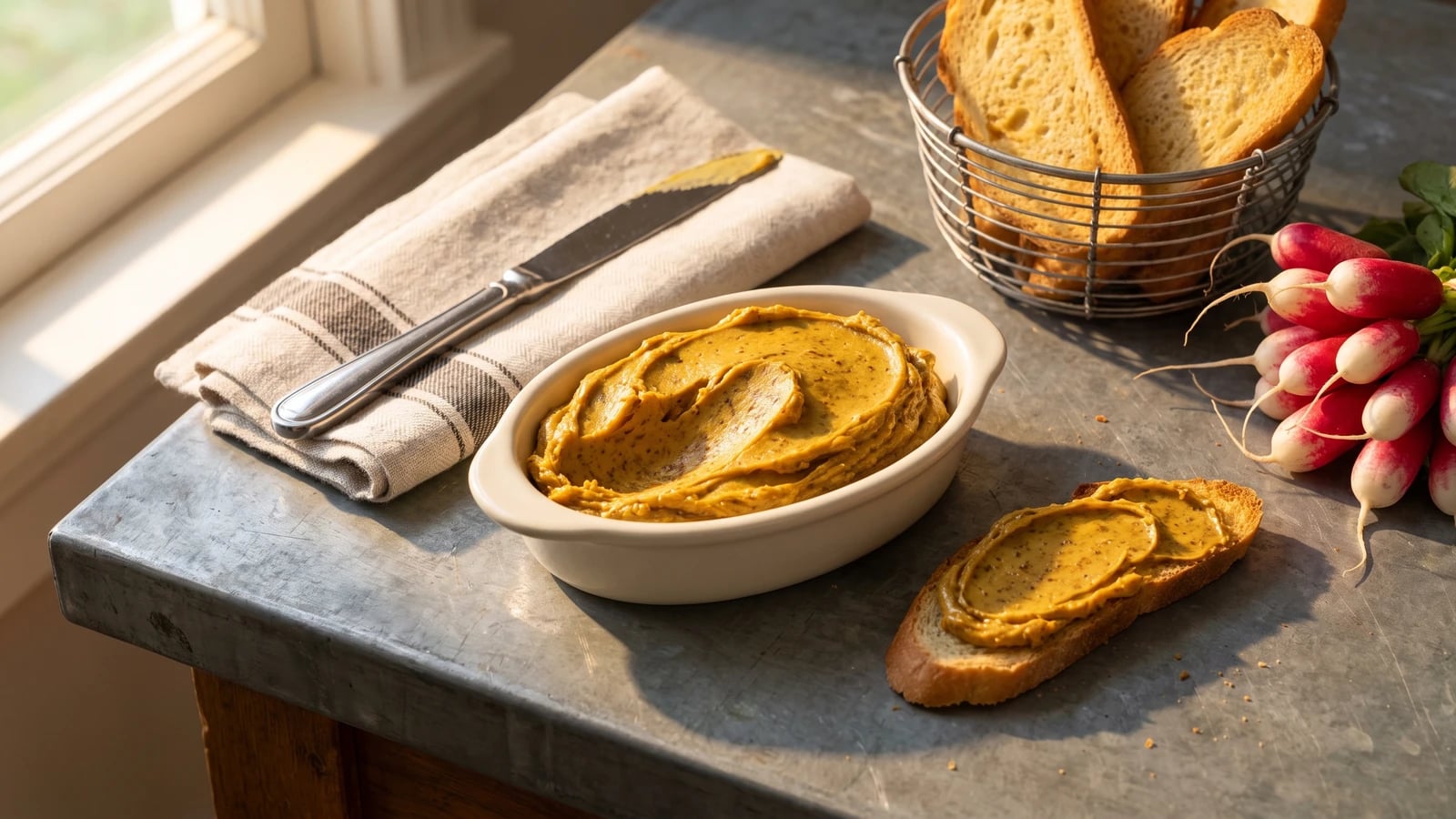
Scrape the beurre au curry into a small butter crock or ramekin and leave a generous spoon-marked surface. Serve it soft with baguette toasts, radishes, or crisp raw vegetables, or let a small piece melt over grilled fish, shellfish, or chicken. If it has been chilled, bring it out 20 to 30 minutes before serving so it spreads without tearing the bread. À table!
1 serving (about 15g)
Culinary guides, cultural storytelling, and the editorial depth that makes cooking meaningful.
Discover Culinary ExplorerChef Juliette
Tiny éperlans, lightly floured and fried until their tails stand crisp, arrive in a generous heap on a napkin with fried parsley and grooved lemon, a weeknight lesson in heat and restraint.

Chef Juliette
Brandade de Morue turns salt cod, warm olive oil, and milk into a pale, silky emulsion: keep everything warm and add the oil slowly, then crown the generous dome with butter-fried bread.

Chef Juliette
Salt cod worked warm with cream, one patient spoonful at a time, until the rough flakes become a glossy Nîmes paste, domed generously and ringed with butter-fried croutons for the table.

Chef Juliette
Wine-poached char packed in its earthenware crock beneath butter gold: a make-ahead first course that turns careful cooling, thorough boning, and one unbroken seal into quiet abundance.