
Chef Juliette
Smelt (Éperlans)
Tiny éperlans, lightly floured and fried until their tails stand crisp, arrive in a generous heap on a napkin with fried parsley and grooved lemon, a weeknight lesson in heat and restraint.
A cooking platform built around craft, culture, and the stories behind what we eat.
Created by Chef Juliette
Based on No. 283, Shrimp Butter, from Le Guide Culinaire (1907) by Auguste Escoffier
Whole shell-on shrimp, equal butter, and two patient passes make a rose-pink beurre de crevettes with remarkable delicacy: a small classical preparation whose silk depends entirely on the second straining.
Beurre de crevettes (shrimp butter) teaches a precise lesson: refinement comes from removal, not addition. Whole cooked shrimp and an equal weight of butter are pounded together, then passed first through a fine sieve and again through muslin. The first pass catches the shell. The second removes the memory of it. That double pass is the dish.
The original kitchen assumed a commis with a heavy mortar, a fine tamis, and enough practiced muscle to push every useful trace through cloth. At home, a two-cup processor replaces the long pounding, a fine stainless-steel sieve replaces the tamis, and food-safe butter muslin handles the final polishing. The source quantity is already right for a home table, so its four ounces of shrimp and four ounces of butter remain untouched. We change the labor, not the intent. One cook, one stove, one evening.
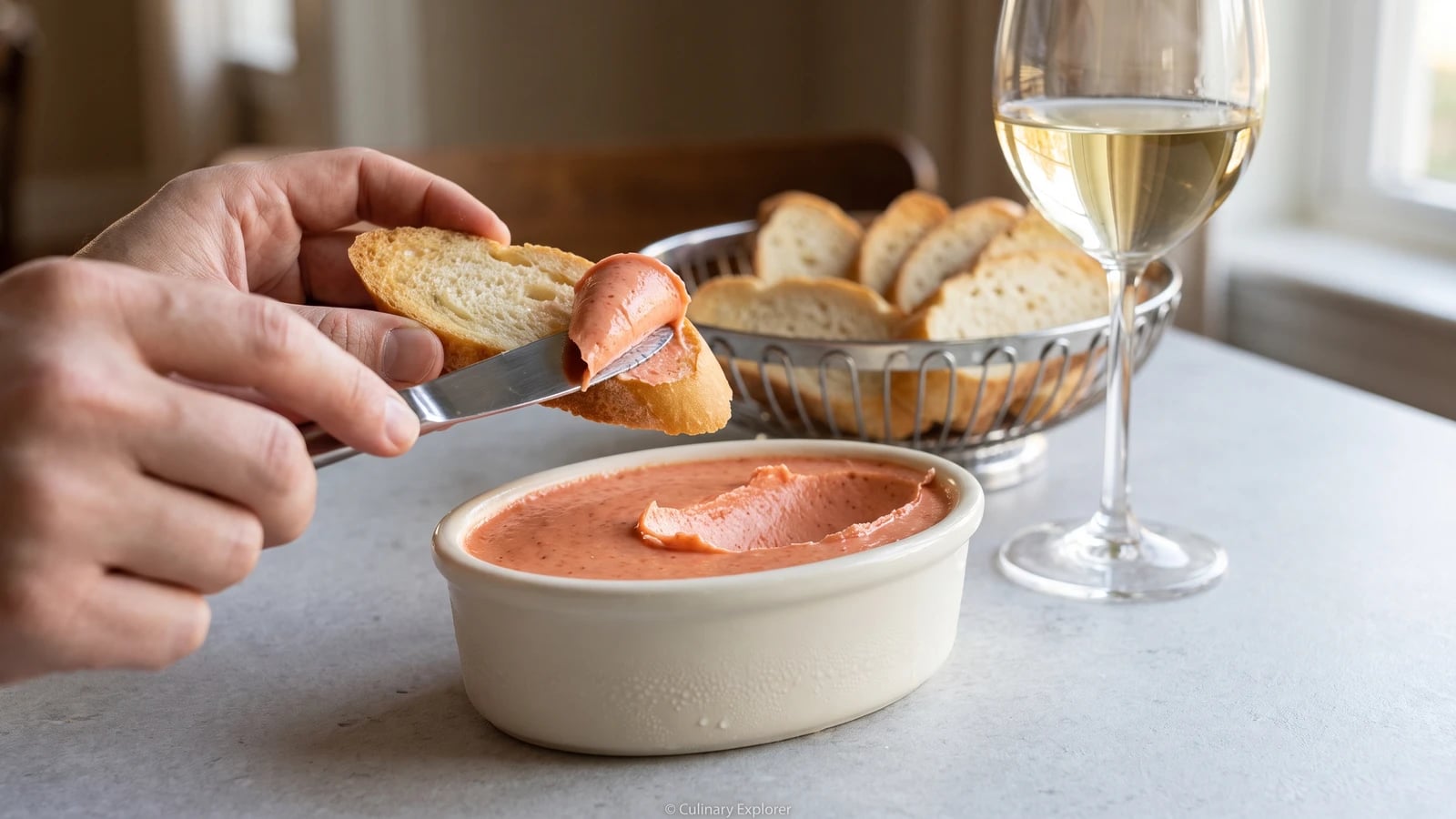
Finished properly, the butter is a quiet rose-coral, tasting first of sweet shrimp and then of fresh butter, with no grit between the two. Keep the mixture at the texture of beurre en pommade, butter softened to a smooth cream, while it meets the muslin. Too cold and it won't pass; melted and it turns oily. The final muslin pass is the one step that matters most.
Beurre de crevettes grows from the Channel-coast larder, particularly Normandy's use of tiny cooked crevettes grises, brown shrimp whose shells carry much of their rose color and marine sweetness. Parisian classical kitchens brought the preparation into the family of beurres composés, compound butters used for canapés and for finishing fish and shellfish preparations. Shelled tails are easier to work, but the whole-shrimp method is finer because the shell's flavor and pigment are captured before every coarse trace is removed.
Quantity
about 1 packed cup (4 oz / 113 g)
thawed if frozen, long feelers trimmed, and dried very well
Quantity
½ cup (4 oz / 113 g)
softened until pliable but not melted
| Ingredient | Quantity |
|---|---|
| small cooked shell-on shrimp, preferably head-onthawed if frozen, long feelers trimmed, and dried very well | about 1 packed cup (4 oz / 113 g) |
| unsalted buttersoftened until pliable but not melted | ½ cup (4 oz / 113 g) |
Use cooked shrimp, not raw. Leave the heads and shells in place, trimming only any long feelers that could wind around the processor blade. Press the shrimp thoroughly between clean towels, including around the heads; excess water makes the finished butter loose and dulls its flavor. The butter is ready when a finger leaves an easy dent but the surface remains opaque, with no melted shine.
Put the whole shrimp and softened butter into a two-cup processor. Pulse several times to break the shells, scrape the bowl, then process in short bursts until the mixture becomes a thick coral paste with no recognizable pieces of flesh. If using a mortar, crack the shrimp thoroughly first, then pound in the butter a little at a time. If the processor warms the butter until it looks shiny or greasy, stop and chill the bowl for 5 minutes before continuing. Do not add water or oil. Ça se rattrape.
Set a fine-mesh sieve over a clean bowl. Add the shrimp paste a tablespoon at a time and rub it firmly through with a flexible spatula, scraping the rose-colored butter from the underside after each addition. Continue until the sieve holds only dry-looking shell grit and coarse fibers, then discard that residue. Take your time here. A hurried pass leaves good flavor behind with the shells.
Rinse the butter muslin first in hot water and then in cold water, wring it completely dry, and stretch it tightly over the cleaned sieve. If the strained paste has firmed, set its bowl over barely warm water, about 30°C / 86°F, for a few seconds and stir until it reaches beurre en pommade: creamy, opaque, and easily spread, never liquid. Press it through the muslin in small amounts, scraping the perfectly smooth butter from beneath into a chilled bowl. If it refuses to pass, it is too cold; warm it briefly and try again. If clear yellow butter beads around the edges, it is too warm; scrape everything back into the bowl, chill for 5 to 10 minutes, beat until smooth, and resume. Ça se rattrape.
Pack the beurre de crevettes into a small ramekin, pressing out air pockets and smoothing the top, or shape it into a short parchment-wrapped log. Cover and chill for at least 2 hours. Let it stand for 10 to 15 minutes before serving, just until a knife draws through without cracking the surface. Spread it generously on thin baguette toasts or plain toast points. À table!
1 serving (about 19g)
Culinary guides, cultural storytelling, and the editorial depth that makes cooking meaningful.
Discover Culinary ExplorerChef Juliette
Tiny éperlans, lightly floured and fried until their tails stand crisp, arrive in a generous heap on a napkin with fried parsley and grooved lemon, a weeknight lesson in heat and restraint.

Chef Juliette
Brandade de Morue turns salt cod, warm olive oil, and milk into a pale, silky emulsion: keep everything warm and add the oil slowly, then crown the generous dome with butter-fried bread.

Chef Juliette
Salt cod worked warm with cream, one patient spoonful at a time, until the rough flakes become a glossy Nîmes paste, domed generously and ringed with butter-fried croutons for the table.

Chef Juliette
Wine-poached char packed in its earthenware crock beneath butter gold: a make-ahead first course that turns careful cooling, thorough boning, and one unbroken seal into quiet abundance.