
Chef Juliette
Coupes d’Antigny
Coupes d’Antigny layers wild strawberry ice, fresh cream, vanilla-poached peach, and spun sugar into one cold lesson in timing: soften the ice carefully, then spin the brittle veil only when the table is ready.
A cooking platform built around craft, culture, and the stories behind what we eat.
Created by Chef Juliette
Based on No. 2818, Preparation for Iced Biscuits, from Le Guide Culinaire (1907) by Auguste Escoffier
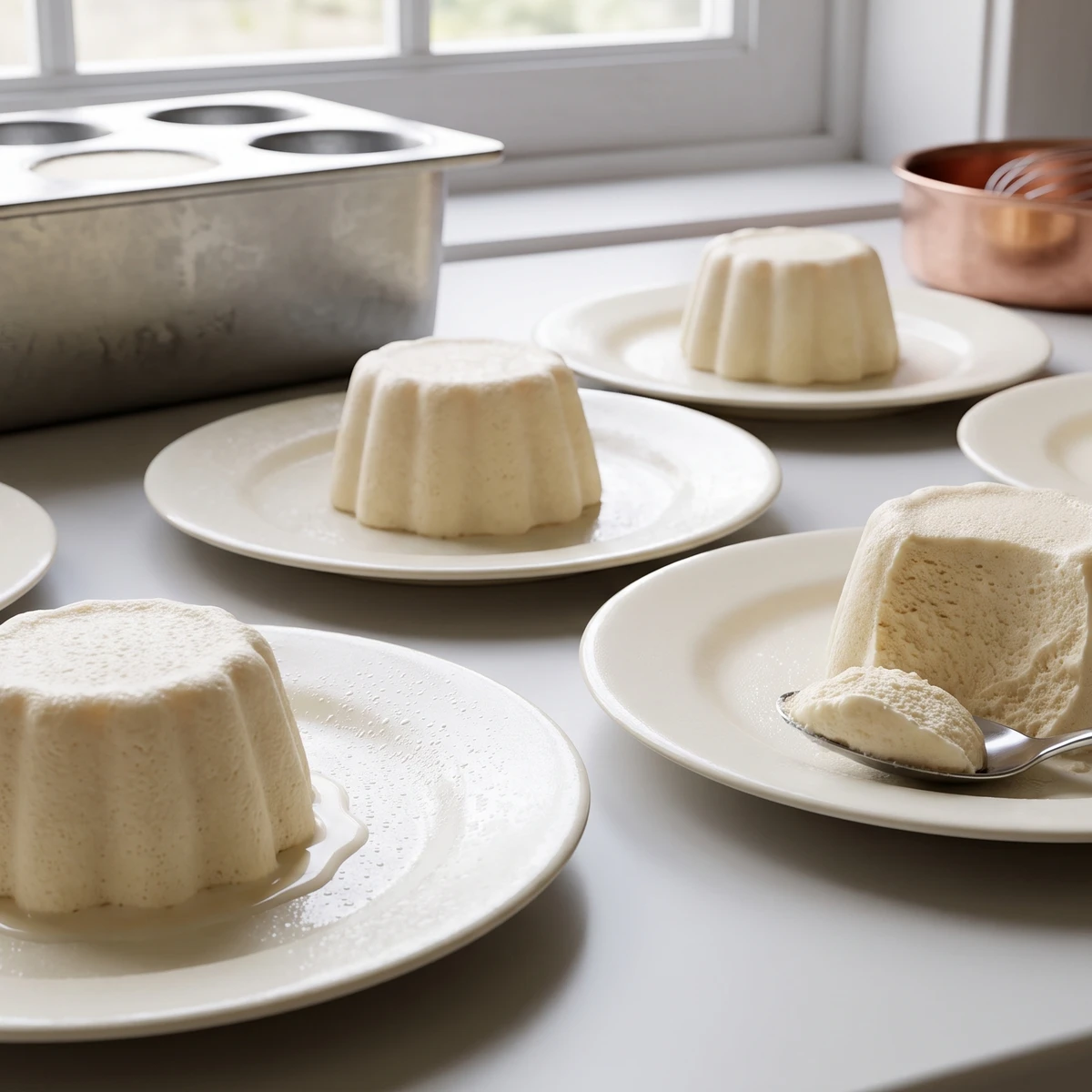
Yolks and sugar rise to a firm ribbon, then cool under the whisk before prepared meringue and cream enter. Keep that base cold, and the freezer preserves every pocket of air.
Préparation pour biscuits glacés (frozen biscuit base) teaches temperature control. The yolks and sugar must reach a firm ribbon over the bain-marie, but the mixture must then be whisked completely cold before the meringue and cream enter. Fold them into warmth and the cream melts out, taking the dessert's lightness with it.
The source assumed a copper basin, enough hands to whisk without pause, prepared Meringue à l’Italienne (No. 2383), and a professional freezing cabinet full of molds. For one cook, one stove, one evening, a stainless-steel bowl, an electric hand mixer, an ice-water bath, and six small molds do the same work. I have reduced the brigade formula to one quarter of its original quantity while keeping every ratio intact. Copper and scale were scaffolding; the ribbon, the cold whisking, and the finished meringue are the dish.
The Pâte à Génoise Fine (No. 2376) supplies the proper test: the mixture must fall from the whisk in a broad ribbon that remains visible before slowly leveling. Once that ribbon is made, keep whisking until both bowl and mixture feel truly cool. Clear space for the ice-water bath before you begin, because that cooling is the step that decides the biscuit glacé.
Biscuit glacé belongs to the Parisian repertoire of entremets glacés, where pastry kitchens used biscuit for an aerated egg preparation as readily as for a baked cake. Despite the English resemblance, this is not a cookie covered with icing, but a molded frozen dessert whose cooked yolk ribbon, meringue, and whipped cream supply enough air to freeze without churning. It traveled readily from staffed kitchens to the home freezer because the equipment changed while its central discipline, cooling before folding, did not.
Quantity
3
Quantity
½ cup (120 ml / 113 g)
Quantity
½ cup (120 ml / 57 g) Meringue à l’Italienne (No. 2383)
completely cool
Quantity
½ cup (120 ml / 120 g)
cold, at least 35% fat
| Ingredient | Quantity |
|---|---|
| large egg yolks | 3 |
| superfine caster sugar | ½ cup (120 ml / 113 g) |
| prepared Meringue à l’Italiennecompletely cool | ½ cup (120 ml / 57 g) Meringue à l’Italienne (No. 2383) |
| heavy whipping creamcold, at least 35% fat | ½ cup (120 ml / 120 g) |
Place six ½-cup (120 ml) molds in the freezer. Have the prepared Meringue à l’Italienne (No. 2383) completely cool and ready to fold. Whisk the cold cream in a chilled bowl until it holds supple medium peaks, then refrigerate it; stiff cream folds in as lumps and costs you volume.
Bring 1 inch (2.5 cm) of water to the barest simmer in a saucepan. Combine the yolks and sugar in a stainless-steel bowl and whisk immediately, then set the bowl over the bain-marie without letting its base touch the water. Whisk continuously with an electric hand mixer until the mixture is pale, very firm, and reaches 160°F (71°C), about 7 to 10 minutes. Use the standard from Pâte à Génoise Fine (No. 2376): when the whisk is lifted, the mixture must fall in a broad ribbon that rests on the surface for several seconds. If egg begins setting around the rim, lift the bowl off the heat and whisk hard; a few flecks can be strained out, but large curds mean the heat went too far.
Remove the bowl from the bain-marie and set it over a larger bowl of ice water. Keep whisking until the ribbon is cool to the touch and no warmer than 70°F (21°C), about 5 to 8 minutes. The mixture should remain thick enough to mound softly. If the bowl still holds warmth, refresh the ice and continue; warm at this point, the cream melts out.
Fold one quarter of the Meringue à l’Italienne (No. 2383) into the cold yolk ribbon to loosen it, then fold in the remainder with broad strokes from the bottom of the bowl. Add the whipped cream in two portions, turning the bowl as you cut down through the center and sweep upward. Stop as soon as the white streaks disappear. If the mixture loosens and turns glossy because residual warmth has softened the cream, set it over ice for 3 to 5 minutes, then give it two or three gentle folds. It will freeze a little denser, but ça se rattrape.
Divide the mixture among the cold molds, filling them nearly to the rim. Tap each mold once to settle any large hollow pockets, level the tops, and cover closely. Freeze without churning for at least 6 hours, or overnight, until firm throughout. The ribbon, meringue, and cream have already built the fine air cells the dessert needs.
Wrap each mold briefly in a warm, damp towel, invert it onto a chilled plate, and lift straight upward. If it clings, warm the outside for another two seconds rather than forcing the edges. Serve immediately while the biscuit glacé is firm at the center and just softening around its fluted sides. À table!
1 serving (about 57g)
Culinary guides, cultural storytelling, and the editorial depth that makes cooking meaningful.
Discover Culinary Explorer
Chef Juliette
Coupes d’Antigny layers wild strawberry ice, fresh cream, vanilla-poached peach, and spun sugar into one cold lesson in timing: soften the ice carefully, then spin the brittle veil only when the table is ready.

Chef Juliette
Coupes Clo-clo marry vanilla ice, maraschino-soaked marrons glacés, and strawberry Chantilly in a festive glass: cold against cream, cherry perfume against chestnut, softness against a firm piped ridge.

Chef Juliette
Coupes Dame Blanche set a vanilla-poached peach over snowy almond-milk ice, hiding Bar-le-Duc currant jam beneath its dome and circling it with a bright piped cord of lemon ice.

Chef Juliette
Coupes Denise set coffee-dark Moka ice against rum bonbons and softly drooping Chantilly, proving that a composed frozen dessert depends less on ornament than on temperature, proportion, and the confidence to use a spoon.