
Chef Juliette
Flan aux Carottes
A pale short-paste shell holds silken, lightly sweet carrot purée beneath neat glazed half-discs, their butter syrup catching the light: a classical tart poised between vegetable course and sweet.
A cooking platform built around craft, culture, and the stories behind what we eat.
Created by Chef Juliette
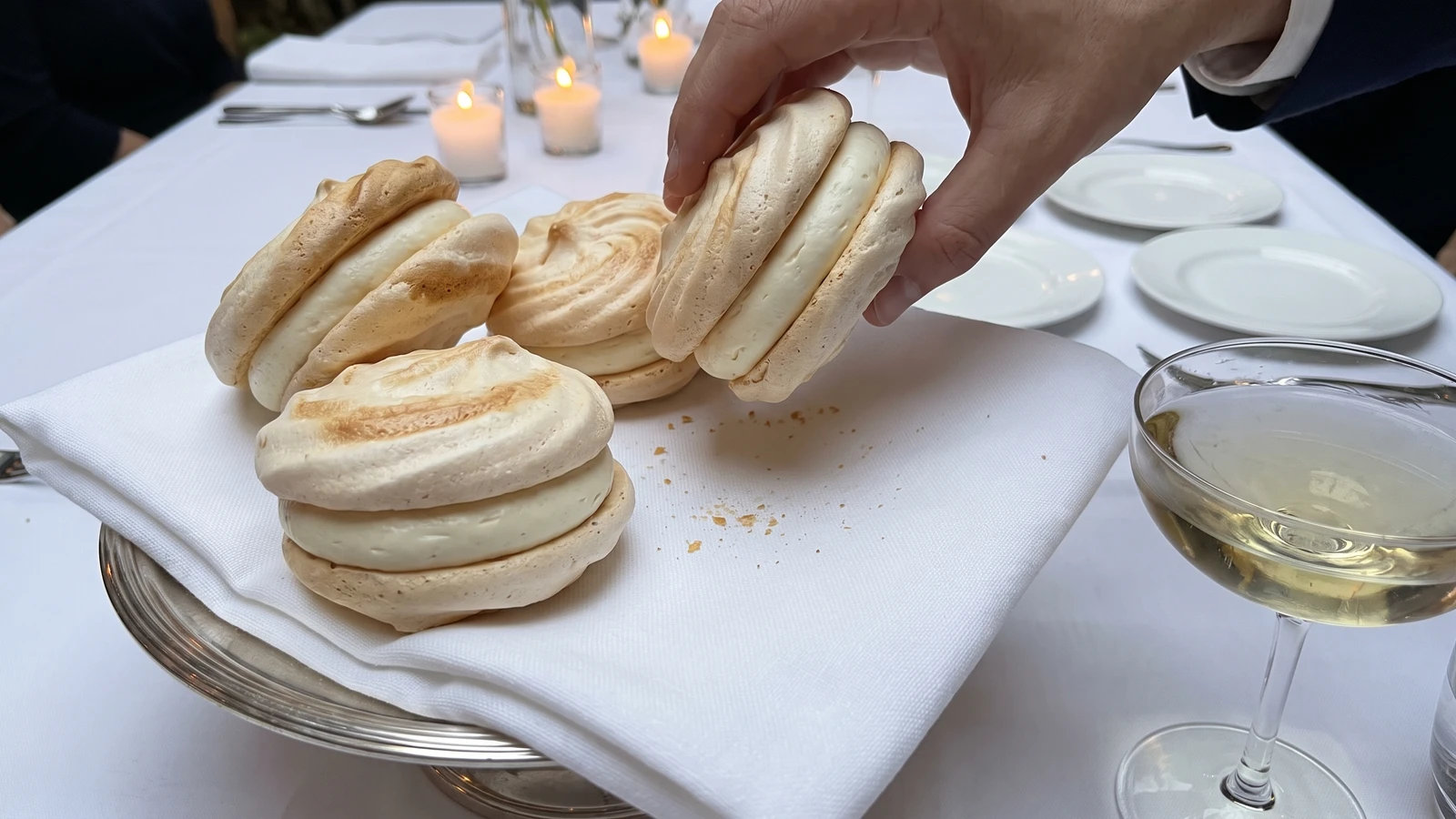
Based on No. 2731, Garnished Meringues, from Le Guide Culinaire (1907) by Auguste Escoffier
Two crisp shells, one firm heart of vanilla Chantilly, and the discipline to join them only at the last moment: meringues garnies make timing, not ornament, the lesson.
Meringues garnies teach restraint through timing: crisp shells joined with a cold, stiff filling, never early, because moisture is the one thing meringue cannot forgive. Fill them too soon and the sugar draws in the cream's water; fill them at the last moment and the shell breaks cleanly under the teeth before yielding to Chantilly. The one true thing to know before lifting a whisk is simple: the filling waits for the shells, never the reverse.
The book's kitchen assumed trays of Ordinary Meringue (No. 2382) in a dry cupboard, Chantilly or a house ice already made, and someone free to couple each shell when dessert was called. At home, eight finished shells, a chilled bowl, and an electric hand mixer give four generous portions. The brigade quantity and attendant are scaffolding; the dry shell, stiff filling, and last-minute joining are the dish. One cook, one stove, one evening.
Vanilla Chantilly is the main route here, with the book's frozen filling kept as an honest alternative. Whip only until the cream holds a firm, smooth peak, then stop; if it goes grainy, ça se rattrape with a little cold cream. Match the shells before filling them, and don't join a single pair until the platter and guests are ready.
Meringues garnies belong to Parisian pâtisserie and the grand French dessert table, where plain baked shells were kept as a dry house component and filled only when the platter was called. They passed naturally into bourgeois dining rooms because the technical work could be completed ahead, leaving only Chantilly or a frozen ice to join the shells at the last moment. The folded napkin was part of formal service, while the word garnies referred to the filling itself, not a scatter of fruit or ornamental flowers.
Quantity
8 shells from Ordinary Meringue (No. 2382), each about 3 inches (7.5 cm) wide
Quantity
1/2 cup (120 ml / 120 g)
divide, reserving 2 teaspoons for adjusting the Chantilly
Quantity
1 tablespoon (15 ml / 8 g)
sifted
Quantity
1/2 teaspoon (2.5 ml / 2 g)
Quantity
1 cup (240 ml / about 220 g)
use in place of the Chantilly
| Ingredient | Quantity |
|---|---|
| dry, fully cooled meringue shells | 8 shells from Ordinary Meringue (No. 2382), each about 3 inches (7.5 cm) wide |
| cold heavy creamdivide, reserving 2 teaspoons for adjusting the Chantilly | 1/2 cup (120 ml / 120 g) |
| confectioners' sugarsifted | 1 tablespoon (15 ml / 8 g) |
| pure vanilla extract | 1/2 teaspoon (2.5 ml / 2 g) |
| firm ice cream or sorbet (optional)use in place of the Chantilly | 1 cup (240 ml / about 220 g) |
Inspect the shells from Ordinary Meringue (No. 2382). They must be completely cool, dry, and crisp before filling. If their surfaces feel tacky, dry them in a 200°F (95°C) oven for 10 to 15 minutes, then cool them completely on a rack. Ça se rattrape. Pair the shells by diameter and depth so each couple sits neatly without pressure.
Chill a narrow mixing bowl and the mixer beaters for 10 minutes. Cold tools keep the cream's fat firm enough to hold air, which gives Chantilly its close, stable body. Fold a clean, unscented linen napkin on the serving platter now; once the meringues are joined, they should go directly to the table.
Reserve 2 teaspoons of the measured cream. Put the remainder in the chilled bowl with the confectioners' sugar and vanilla, then whisk at medium speed until soft ridges form. Add the reserved cream and continue slowly until the Chantilly holds a firm, smooth peak. Stop there. If it begins to look grainy, stop the mixer and fold in the reserved cream by hand instead; ça se rattrape. Once yellow flecks and liquid separate, it has gone to butter and must be begun again.
If using the book's ice alternative, skip the Chantilly and let the ice cream or sorbet soften only until a small scoop can pass through it, about 3 to 5 minutes. It should remain firm and matte, never glossy or melting. If it softens too far, return it to the freezer for 10 minutes before assembling.
Turn four matched shells flat-side up. Spoon or pipe about 1/4 cup (60 ml) of firm Chantilly onto each, keeping the filling just inside the edge, or add the same amount of firm ice. Set the matching shells on top and press only until the filling reaches the rim. If a shell cracks, don't discard it: use a dab of Chantilly as mortar and place the damaged side downward against the napkin.
Arrange the four couples in a loose cluster on the folded napkin, keeping them in a single layer so the shells aren't crushed. Serve Chantilly-filled meringues within 10 minutes and ice-filled ones immediately. Waiting is the only enemy left. À table!
1 serving (about 59g)
Culinary guides, cultural storytelling, and the editorial depth that makes cooking meaningful.
Discover Culinary ExplorerChef Juliette
A pale short-paste shell holds silken, lightly sweet carrot purée beneath neat glazed half-discs, their butter syrup catching the light: a classical tart poised between vegetable course and sweet.
Chef Juliette
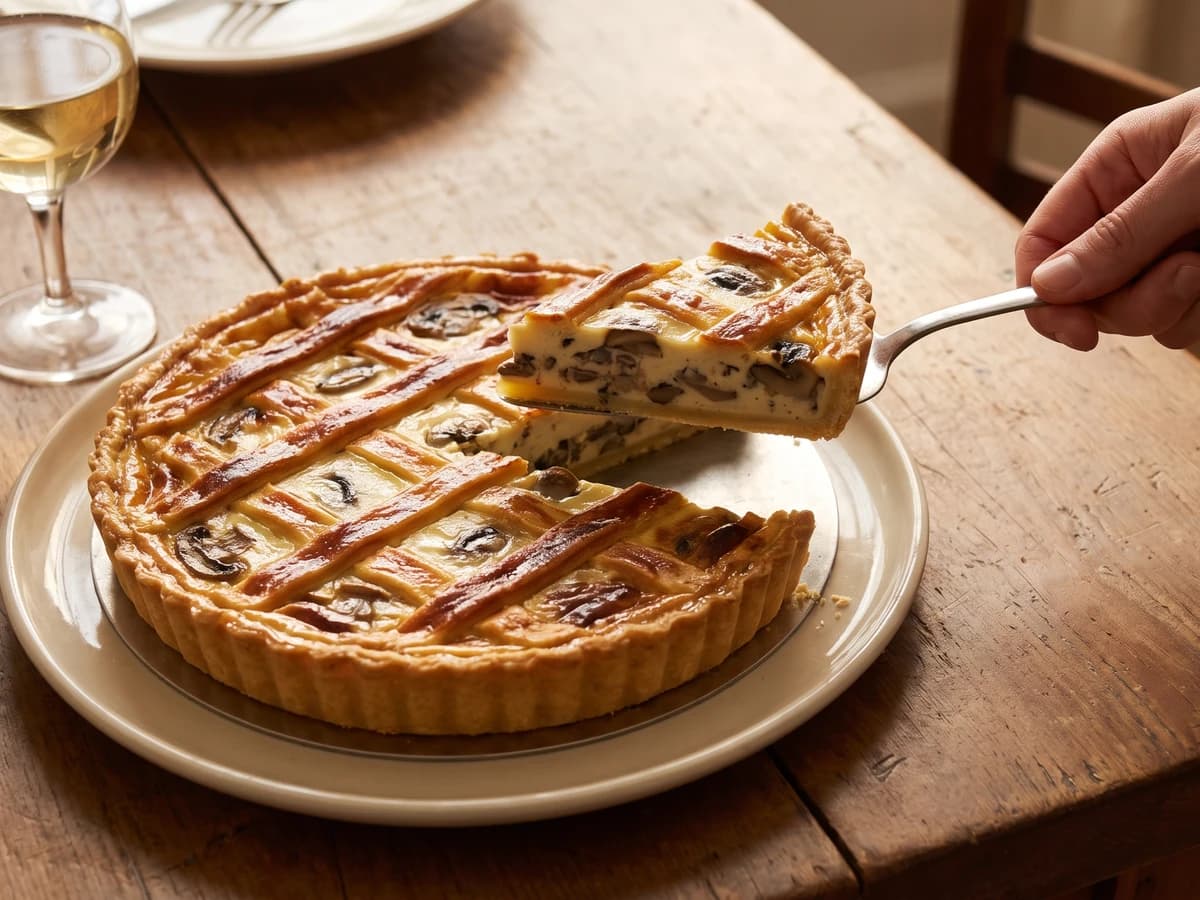
A hot mushroom flan under a butter-gold lattice, with cream reduced close around barely opened caps and a crisp short-paste base protected by one discipline: cool the filling completely.

Chef Juliette
Four little mushroom flans, latticed and gilded, baked hard and fast until butter-gold: a classical garnish scaled to the meat it accompanies and served before its crispness has time to fade.
Chef Juliette
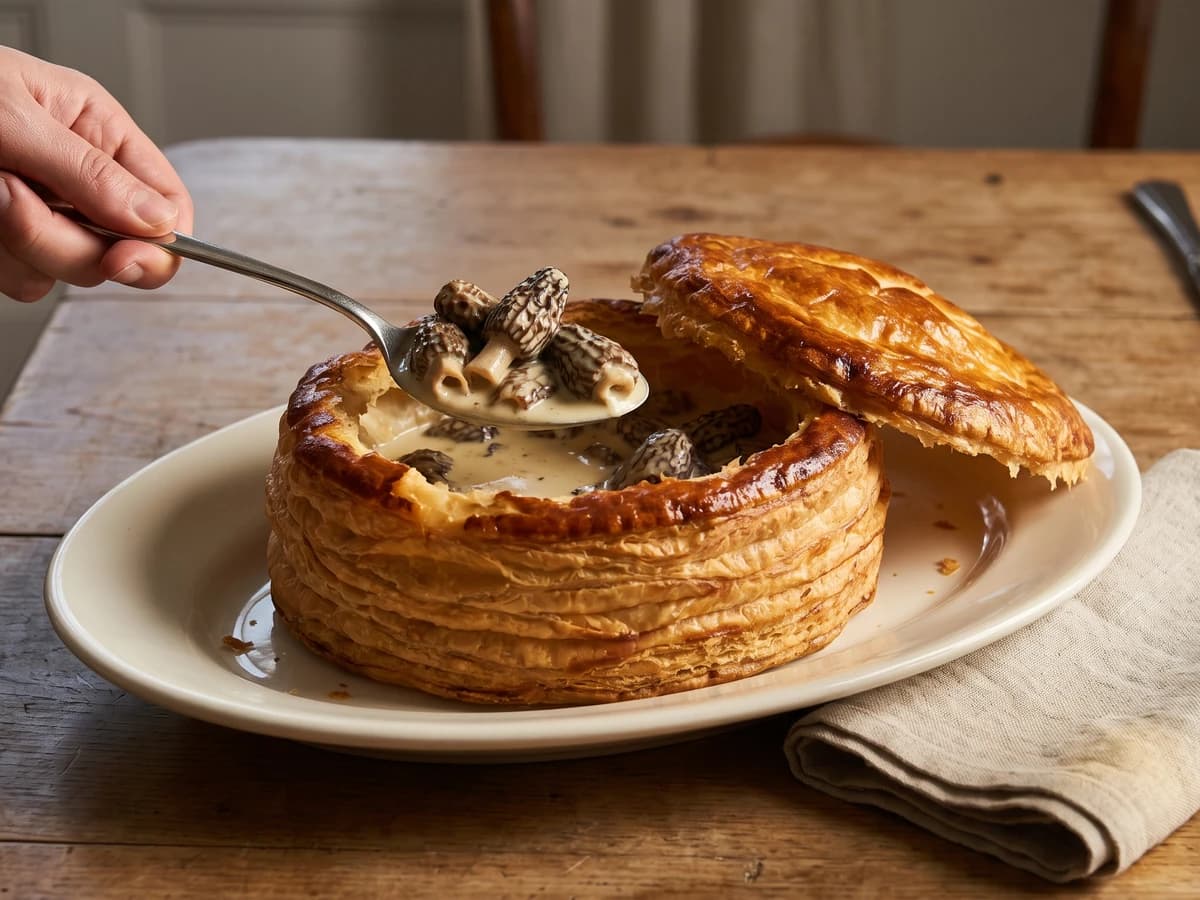
Morels surrender their liquor, then take it back as a glossy cream-and-butter sauce inside burnished puff pastry. The lesson is simple and absolute: reduce with patience, then heat gently and never boil.