
Chef Juliette
Flan aux Carottes
A pale short-paste shell holds silken, lightly sweet carrot purée beneath neat glazed half-discs, their butter syrup catching the light: a classical tart poised between vegetable course and sweet.
A cooking platform built around craft, culture, and the stories behind what we eat.
Created by Chef Juliette
Based on No. 2671, Cerises à la Dubarry, from Le Guide Culinaire (1907) by Auguste Escoffier
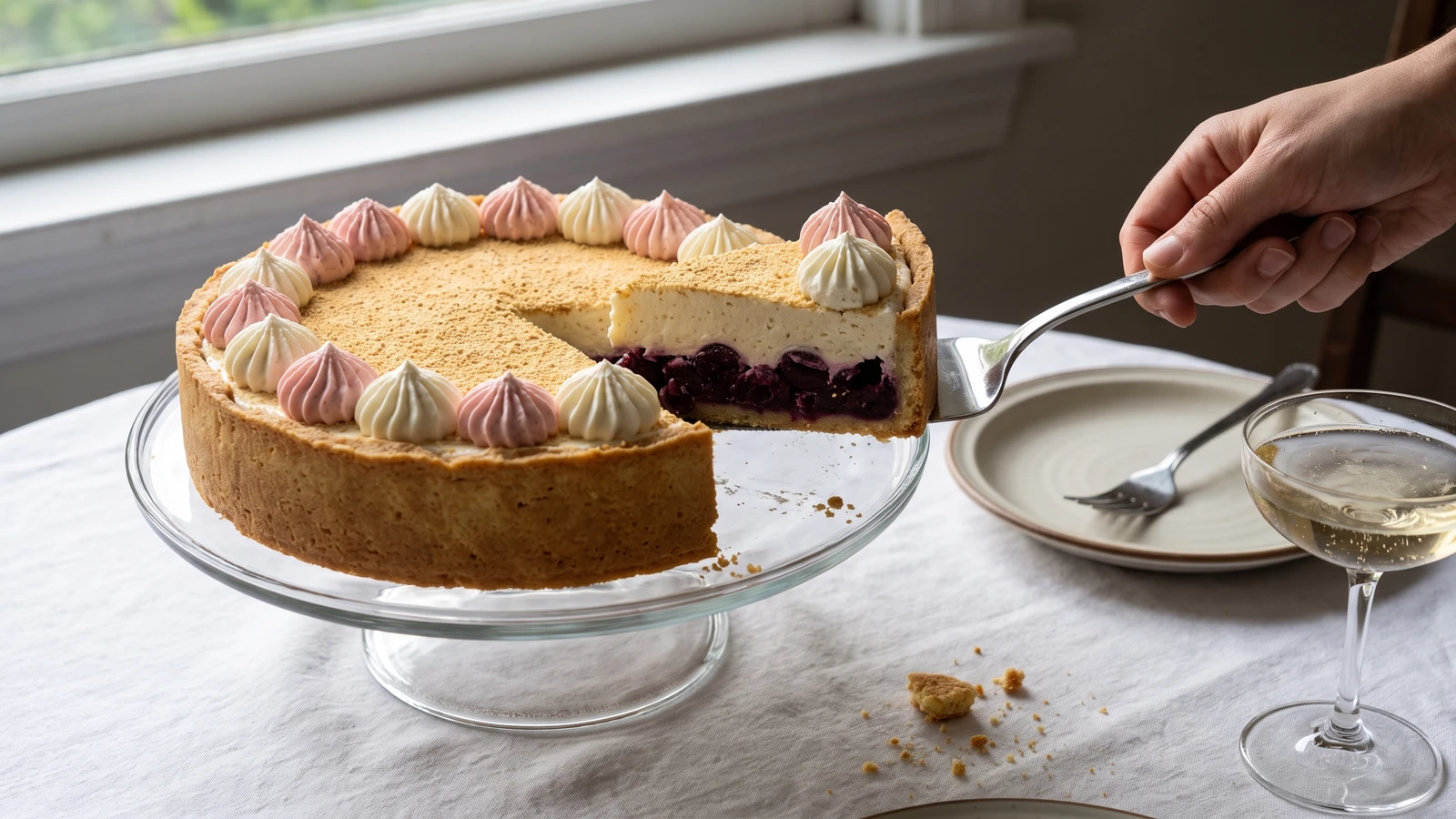
Cerises à la Dubarry teaches the architecture of a cold-finished fruit flawn: crisp short paste, cherries baked shoulder to shoulder, then pralined Chantilly and macaroon crumbs applied only when the tart is fully cold.
Cerises à la Dubarry (cherry flawn with pralined whipped cream) teaches a small pastry law with large consequences: short paste must be pricked before fruit covers it. Trapped air lifts the base into blisters, disturbs the close bed of cherries, and leaves the cold cream trying to conceal a fault it cannot mend. Pricking is not busywork. It is the foundation.
The original formula assumed a pâtisserie station where short paste, praline powder, macaroon crumbs, and separate bowls of white and pink Chantilly already waited, plus a flawn ring set on its own round baking sheet. Those ready bowls were brigade scaffolding. Here, one 8-inch straight-sided tart ring on an ordinary flat sheet and one batch of cream divided after whipping do the same work. The display-piece quantity becomes eight generous slices because a home table needs one tart, while the source sequence remains untouched.
When the Cerises is right, the shell cuts cleanly beneath a close layer of garnet cherries, the nutty Chantilly holds a cool soft curve, and macaroon powder clings to the top and sides. Let the baked flawn become completely cold before cream touches it. Before all of that, prick the base evenly right to the angle of the ring; that is the step to guard.
Cerises à la Dubarry belongs to the Parisian grand-kitchen repertoire of fruit entremets, where a flan ring carried a baked fruit base from the pâtisserie station to the dining room beneath a cold ornamental finish. Its method moved naturally to bourgeois tables because the structure is domestic at heart: short paste, summer cherries, whipped cream, and almond confectionery. The name corrects a useful misconception: Dubarry usually signals cauliflower in the savory canon, but this sweet is a named cherry entremet, not a regional cauliflower preparation.
Quantity
1½ cups (360 ml / 180 g)
Quantity
⅓ cup (80 ml / 40 g)
sifted
Quantity
¼ teaspoon (1.25 ml / 1.5 g)
Quantity
½ cup (120 ml / 113 g)
diced
Quantity
1
Quantity
1 to 2 tablespoons (15 to 30 ml / 15 to 30 g)
Quantity
2 tablespoons (30 ml / 15 g)
sifted
Quantity
4 cups (960 ml / 600 g)
stemmed, pitted, and dried
Quantity
2 cups (480 ml / 480 g)
very cold
Quantity
⅓ cup (80 ml / 40 g)
sifted
Quantity
1 teaspoon (5 ml / 5 g)
Quantity
½ cup (120 ml / 60 g) Pralin (No. 2352)
Quantity
1 cup (240 ml / 60 g)
Quantity
1 tiny drop
| Ingredient | Quantity |
|---|---|
| plain flour | 1½ cups (360 ml / 180 g) |
| icing sugar for the short pastesifted | ⅓ cup (80 ml / 40 g) |
| fine sea salt | ¼ teaspoon (1.25 ml / 1.5 g) |
| cold unsalted butterdiced | ½ cup (120 ml / 113 g) |
| large egg yolk | 1 |
| ice water | 1 to 2 tablespoons (15 to 30 ml / 15 to 30 g) |
| icing sugar for the pastry basesifted | 2 tablespoons (30 ml / 15 g) |
| firm fresh cherriesstemmed, pitted, and dried | 4 cups (960 ml / 600 g) |
| heavy cream, at least 35 percent fatvery cold | 2 cups (480 ml / 480 g) |
| icing sugar for the Chantillysifted | ⅓ cup (80 ml / 40 g) |
| pure vanilla extract | 1 teaspoon (5 ml / 5 g) |
| Pralin, nougat-powder form | ½ cup (120 ml / 60 g) Pralin (No. 2352) |
| fine crumbs from crisp, unfilled almond macaroons | 1 cup (240 ml / 60 g) |
| pink gel food coloring | 1 tiny drop |
Combine the flour, icing sugar, and salt. Rub in the cold butter with your fingertips until the mixture resembles coarse crumbs with no large lumps remaining. Add the yolk and 1 tablespoon of ice water, then press the mixture together without kneading; add the remaining water a teaspoon at a time only if dry flour remains. If the dough feels sticky, don't add more flour. Flatten it into a disk and chill it for 1 hour, and the butter will firm while the flour hydrates. This pâte brisée sucrée, sweet short paste, must remain tender, so a light hand matters more than perfect smoothness.
Set an 8-inch (20 cm) tart ring on a parchment-lined flat baking sheet. Roll the cold dough between two sheets of parchment to a circle about ⅛ inch (3 mm) thick, then line the ring without stretching it and press the dough firmly into the base angle. Trim the rim level. Piquer, prick, the entire base with a fork at ½-inch (1 cm) intervals, reaching close to the ring without piercing the sides. Chill the lined ring for 20 minutes while the oven heats to 375°F (190°C), with a rack in the lower third.
Sprinkle the 2 tablespoons of icing sugar evenly over the chilled base. Arrange the dry, pitted cherries in one close layer, pressing them snugly against one another without crushing them. Start around the outside and work inward so the fruit holds itself in place. Don't sugar the cherries in a bowl or leave them waiting after pitting; either treatment draws out juice before the pastry can set.
Bake for 15 minutes at 375°F (190°C), then reduce the oven to 350°F (180°C) and continue for 20 to 25 minutes. The rim should be deep butter-gold, the visible paste dry, and the cherries softened but still distinct, with their juices concentrated in small garnet pockets. If a pastry blister appears at the edge during the first 10 minutes, pierce it from the side with a skewer and press it down gently with the back of a spoon. Ça se rattrape. If the rim colors before the base is done, shield only the rim with foil and give the flawn another 5 minutes. Cool it in the ring for 20 minutes, remove the ring, then cool completely on a rack for at least 1½ hours.
Rub the macaroon crumbs through a medium sieve so they become an even powder, crushing any larger pieces that remain. The original pastry station kept this powder ready by the boxful; a handful of crisp almond macaroons gives the home cook exactly what this tart needs. Keep the powder dry until the cream has been spread.
Set aside 2 tablespoons of the measured cold cream for rescue. Whip the remaining cream with the icing sugar and vanilla until it forms soft-to-medium peaks that hold a curve without looking grainy. Transfer 1½ cups (360 ml) of plain Chantilly to a cold bowl for the decoration. Fold the Pralin (No. 2352) gently into the larger portion until evenly streaked and then uniform. If the pralined Chantilly loosens, chill it for 10 minutes and whisk briefly by hand. If any portion becomes grainy from overwhipping, fold in the reserved liquid cream a teaspoon at a time until smooth again.
Confirm that the cherry flawn is completely cold. Spread the pralined Chantilly over the cherries in an even layer, filling the spaces without pressing hard, then smooth a thin coating down the outside pastry wall with an offset spatula. Set the flawn over a clean tray and cover the top and sides with the macaroon powder, pressing it lightly against the cream with your palm where needed. Chill for 20 minutes so the mask settles.
Divide the reserved plain Chantilly between two bowls. Leave one white and tint the other pale pink with the smallest drop of gel coloring. Spoon them into piping bags fitted with a medium star tip and pipe alternating white and pink shells or rosettes around the rim, keeping the center simple and generous. Chill until serving, preferably no longer than 6 hours, then let the Cerises stand for 10 minutes before cutting with a thin sharp knife. À table!
1 serving (about 200g)
Culinary guides, cultural storytelling, and the editorial depth that makes cooking meaningful.
Discover Culinary ExplorerChef Juliette
A pale short-paste shell holds silken, lightly sweet carrot purée beneath neat glazed half-discs, their butter syrup catching the light: a classical tart poised between vegetable course and sweet.
Chef Juliette
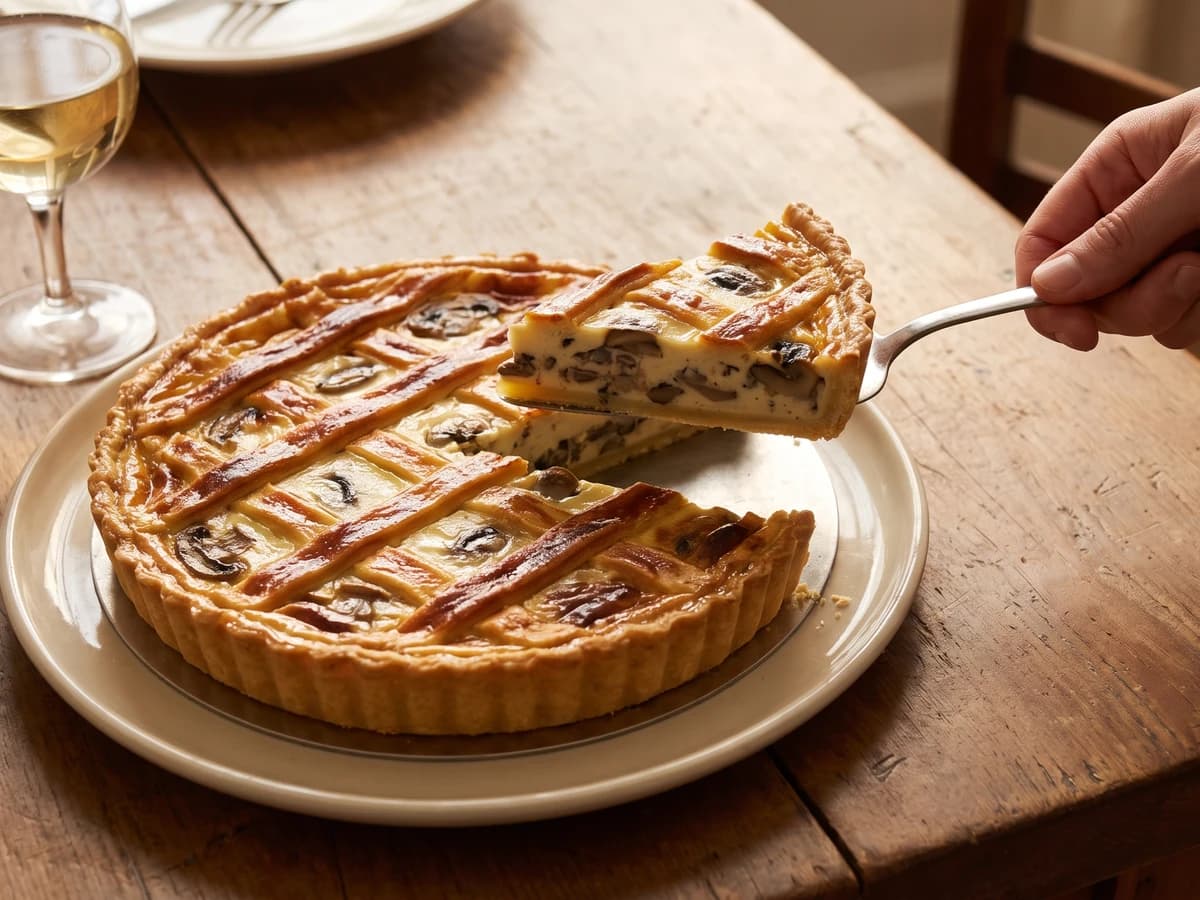
A hot mushroom flan under a butter-gold lattice, with cream reduced close around barely opened caps and a crisp short-paste base protected by one discipline: cool the filling completely.

Chef Juliette
Four little mushroom flans, latticed and gilded, baked hard and fast until butter-gold: a classical garnish scaled to the meat it accompanies and served before its crispness has time to fade.
Chef Juliette
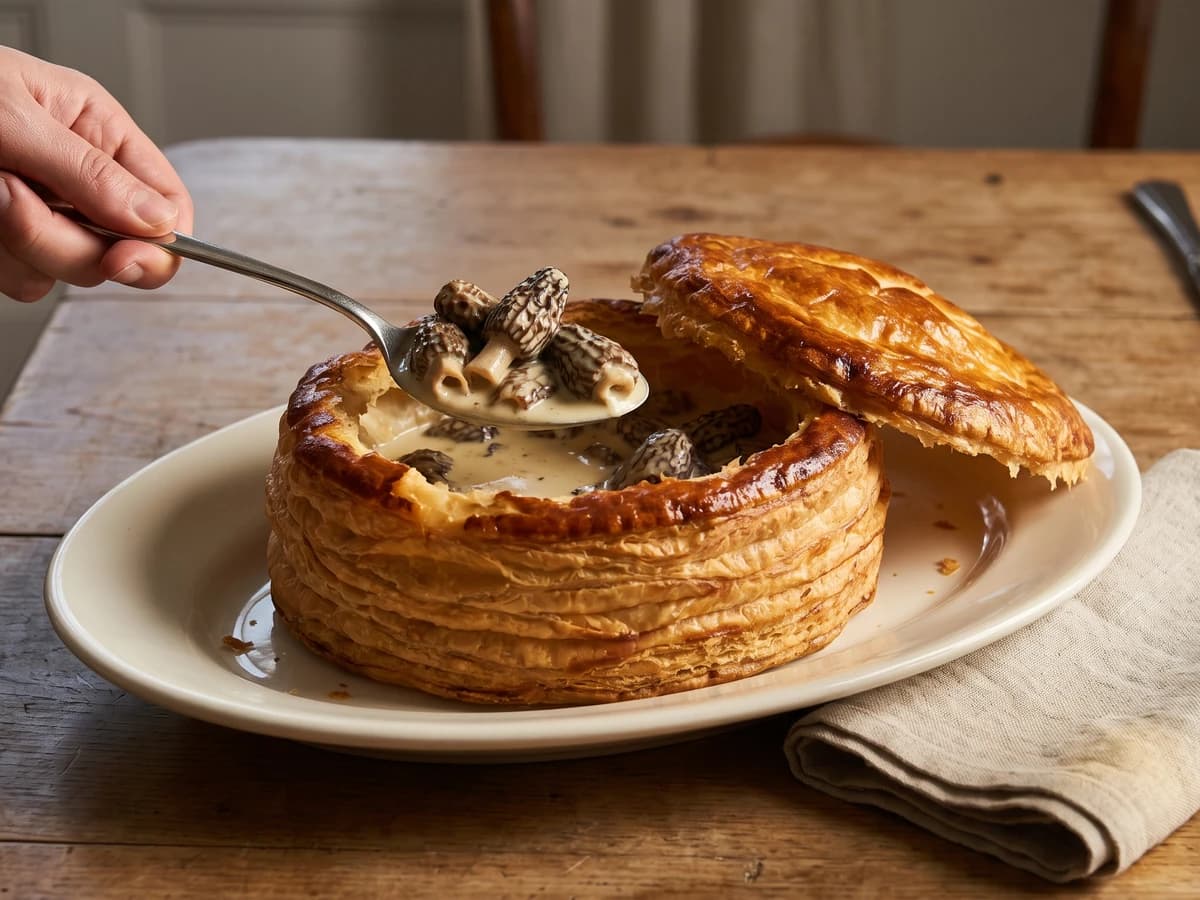
Morels surrender their liquor, then take it back as a glossy cream-and-butter sauce inside burnished puff pastry. The lesson is simple and absolute: reduce with patience, then heat gently and never boil.