
Chef Juliette
Various Almond Preparations
Five almond preparations, one discipline: remove the skins cleanly, dry every kernel through, then cut, toast, or cloak it in pale caramel without letting its fragrant oils escape.
A cooking platform built around craft, culture, and the stories behind what we eat.
Created by Chef Juliette
Based on No. 2635, Charlotte Plombière, from Le Guide Culinaire (1907) by Auguste Escoffier
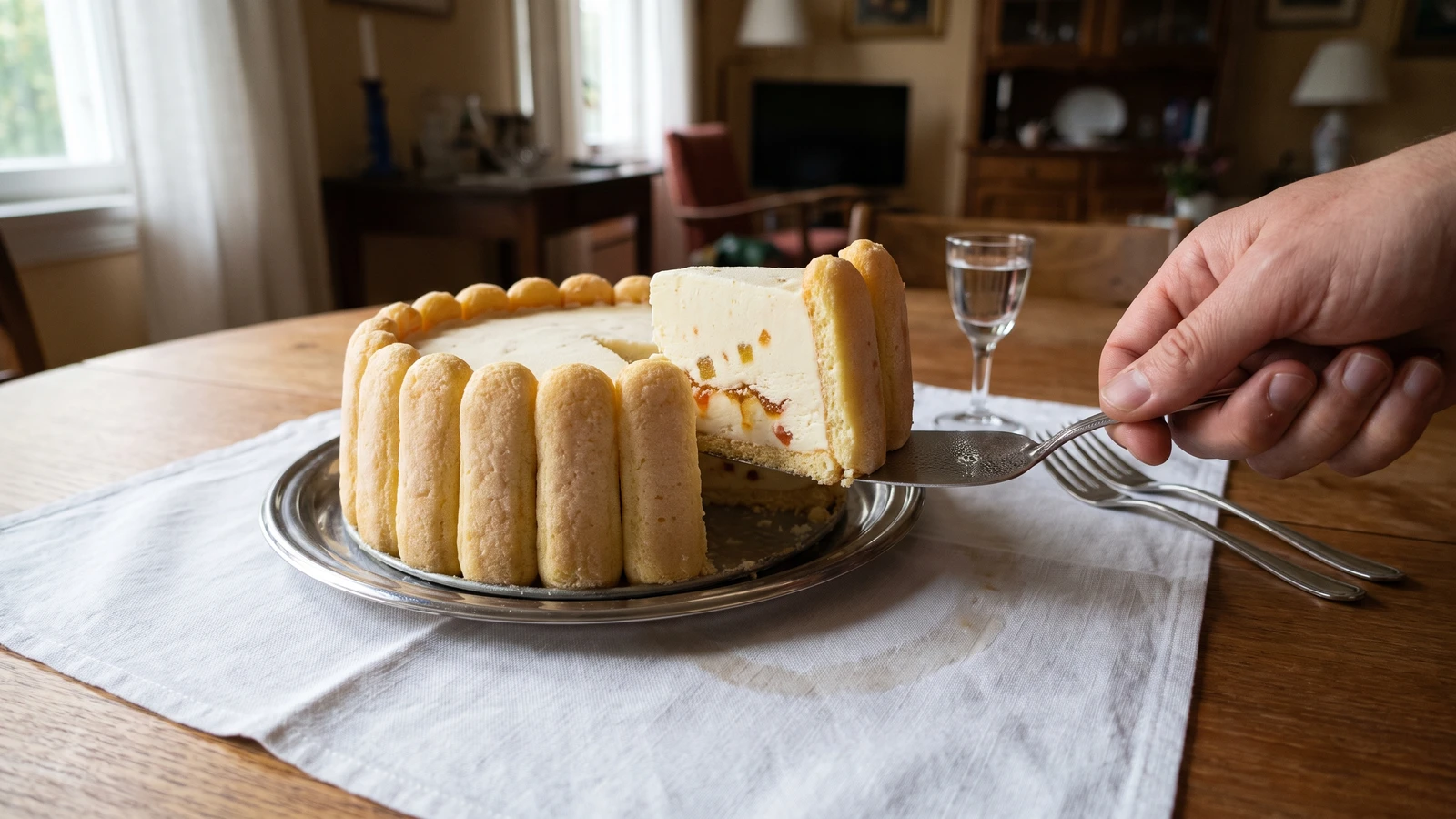
Charlotte Plombière builds a crisp ladyfinger shell around vanilla ice cream, kirsch-soaked candied fruit, and ribbons of apricot jam. Assemble it cold, turn it out cleanly, and serve before the biscuit softens.
Charlotte Plombière (a biscuit-lined mould filled with Plombière ice) teaches the discipline of cold service. The case must be crisp, the ice firm enough to hold its fruit and apricot ribbons, and the whole dessert turned out only when the table is ready. One true thing before you touch the mould: cold buys structure, but time steals the biscuit.
The original entry assumed a pâtissier holding finished Glace Plombière (No. 2795), a shelf of cold charlotte moulds, and hands ready to fill and turn out to order. At home, use one chilled 1-quart mould, one measured batch of the finished ice, and a cleared freezer shelf. The individual service moulds and brigade choreography were scaffolding, so they go; the dry biscuit lining, cold filling, and last-minute unmoulding are the dish, so they stay. One cook, one stove, one evening, and the stove stays cold.
Use boudoirs or gaufrettes (thin crisp wafers), exactly as the entry allows, and never soak them. The moment that matters is the fill: ice that is too hard knocks the case apart, while melting ice soaks it from within. Temper the filling only until a spatula bends it, then fill, turn out upon the napkin, and serve at once.
Charlotte belongs to the Parisian grand-kitchen repertoire of moulded desserts, where the cold biscuit-lined form grew from an older family of bread-lined puddings and passed readily onto bourgeois celebration tables. Glace Plombière (No. 2795) is tied by culinary tradition to Plombières-les-Bains in the Vosges, though claims of a single inventor are less secure than the surviving formula of vanilla ice cream, kirsch-macerated candied fruit, and apricot jam. Pairing the two makes a crisp, freestanding centrepiece, but the instruction to fill it only at service shows that this remains a dessert of timing, not ornament.
Quantity
24 ladyfingers, about 7 oz (200 g), or 20 to 24 gaufrettes, about 4 oz (115 g)
kept dry and trimmed only as needed
Quantity
3 cups (720 ml / 650 g) Glace Plombière (No. 2795)
frozen firm, then tempered until scoopable
| Ingredient | Quantity |
|---|---|
| dry ladyfingers (boudoirs) or flat gaufretteskept dry and trimmed only as needed | 24 ladyfingers, about 7 oz (200 g), or 20 to 24 gaufrettes, about 4 oz (115 g) |
| Glace Plombièrefrozen firm, then tempered until scoopable | 3 cups (720 ml / 650 g) Glace Plombière (No. 2795) |
Clear a level space in the freezer. Chill a 1-quart (1-liter) charlotte mould and the serving platter for 30 minutes, and place the spatula and serving knife in the refrigerator. Keep a clean, dry white napkin ready for the turn-out. Cold tools slow the melting that would otherwise soften the biscuit while you work.
Set aside several biscuits for the base that will rest on the platter after unmoulding. Fit the remaining ladyfingers snugly over the bottom and around the sides of the cold mould, placing their neatest faces against the metal; trim pieces with a serrated knife to close any gaps. If using gaufrettes, overlap their edges slightly so the ice cannot escape between them. Add no syrup or extra kirsch. Moistening the case is not refinement here, it is how a crisp charlotte becomes a wet one.
Ten to fifteen minutes before serving, move the Glace Plombière (No. 2795) from the freezer to the refrigerator. Test it with the cold spatula: the surface should yield under firm pressure while the centre remains frozen. If it is still rigid, give it another two minutes rather than forcing it into the case. If the edges turn glossy or wet, return it to the freezer for 5 to 10 minutes. Ça se rattrape.
Bring the mould and ice together only when the table is ready for dessert. Spoon in one-third of the ice and press it gently against the biscuit lining with the cold spatula, filling the corners without shifting the case. Add the remainder in two passes, working quickly and leaving no large air pockets. Do not stir or beat the filling, since the candied fruit and apricot layers belong to the finished preparation and should remain distinct.
Level the filling at the rim, then cover the exposed face with the reserved biscuits, trimming them into a close, flat base. Press lightly, never hard enough to squeeze melting ice between the seams. If the filling softened while you worked, place the mould in the freezer for no more than 5 minutes while you arrange the napkin; this brief settling is rescue, not permission to assemble the charlotte hours ahead.
Spread the dry white napkin over the chilled platter. Place the platter napkin-side down over the mould, hold both firmly, invert in one confident motion, and lift the mould straight upward. If it clings, wrap the outside with a warm, thoroughly wrung towel for 3 seconds and try again; do not immerse it or the biscuit will slide. If one biscuit remains behind, lift it out and press it neatly into place. Cut immediately with a thin knife warmed and dried between slices. À table!
1 serving (about 142g)
Culinary guides, cultural storytelling, and the editorial depth that makes cooking meaningful.
Discover Culinary ExplorerChef Juliette
Five almond preparations, one discipline: remove the skins cleanly, dry every kernel through, then cut, toast, or cloak it in pale caramel without letting its fragrant oils escape.

Chef Juliette
A pastry pantry lesson in one tray: filberts warmed only until their red skins release, rubbed clean, cooled, and chopped into a fragrant mise-en-place for cakes, creams, pralines, and petits fours.

Chef Juliette
The smallest pâtisserie discipline decides whether a cake leaves its mould intact: clarified butter in every corner, followed by the lightest veil of dry flour or fécule.

Chef Juliette
Four whites, one spotless bowl, and a patient change of speed: whisk gently until loosened, then briskly to glossy stiffness, with powdered sugar waiting if the foam begins to granulate.