Bavarois Diplomate teaches the discipline of the cold-set entremets: vanilla clothing around clean chocolate and strawberry bands, each allowed to take before the next arrives, so every slice keeps its stripes.
Desserts
French
Dinner Party
Celebration
Make Ahead
1 hr 20 min
Active Time
20 min cook•8 hr total
YieldOne 1.25-litre Bavarois, 8 servings
Bavarois Diplomate (layered Bavarian cream) teaches patience made visible. The one true thing to know before touching a pan is this: each layer must set firmly enough to support the next, or chocolate and strawberry bleed together and the promised stripes disappear. The custard is straightforward. The waiting is the dish.
The old entry assumes the pastry equivalent of a saucier and a stockpot never off the fire: three finished Bavarois preparations waiting at once, broken ice beneath the timbale, and spare hands to rock the mould as each coating catches. A salamander has no work here. The entry also gives construction rather than household quantities, so I have scaled its vanilla, chocolate, and strawberry preparations for one 1.25-litre mould. One master crème anglaise, one bowl of whipped cream, and short rests in the freezer replace the brigade. Three separate custards are scaffolding and can go. Clothing the mould and setting every layer must stay, because they are the dish.
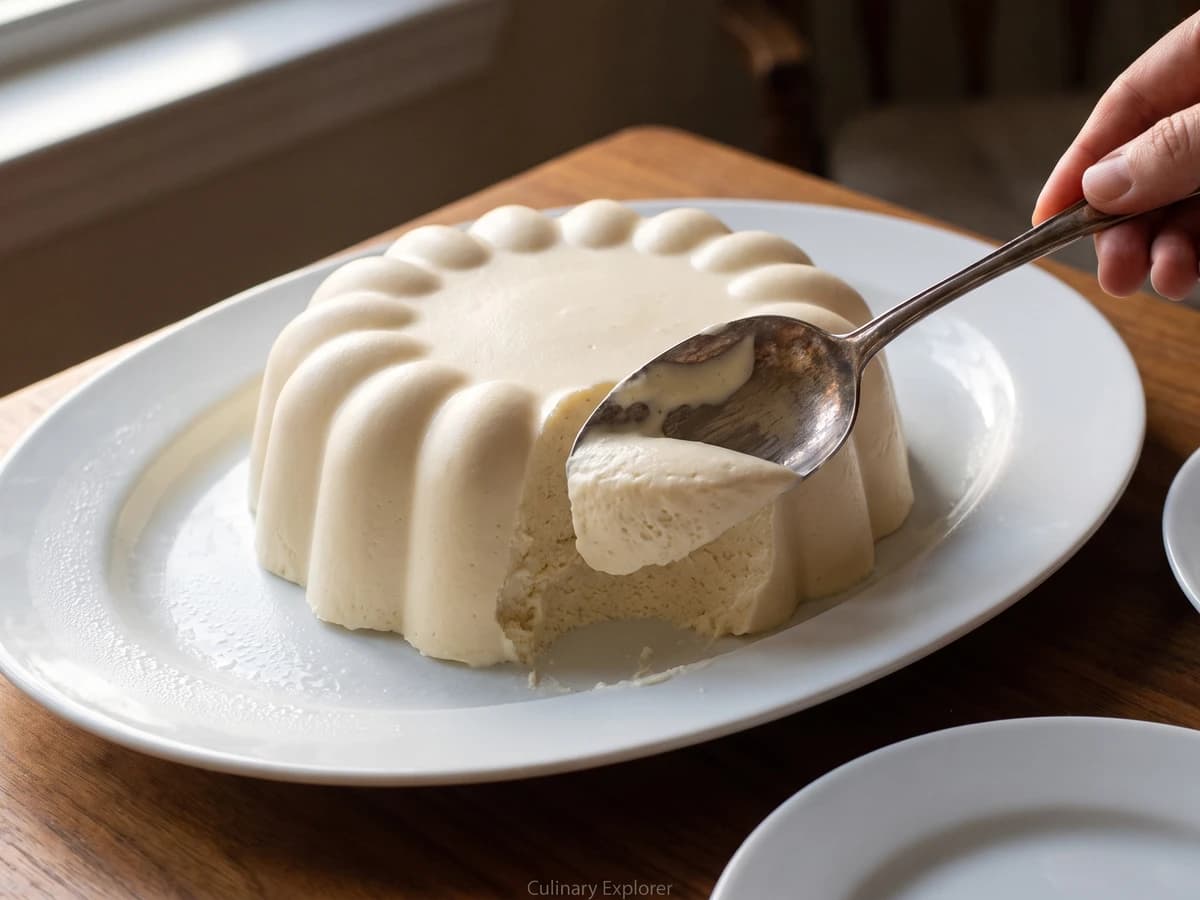
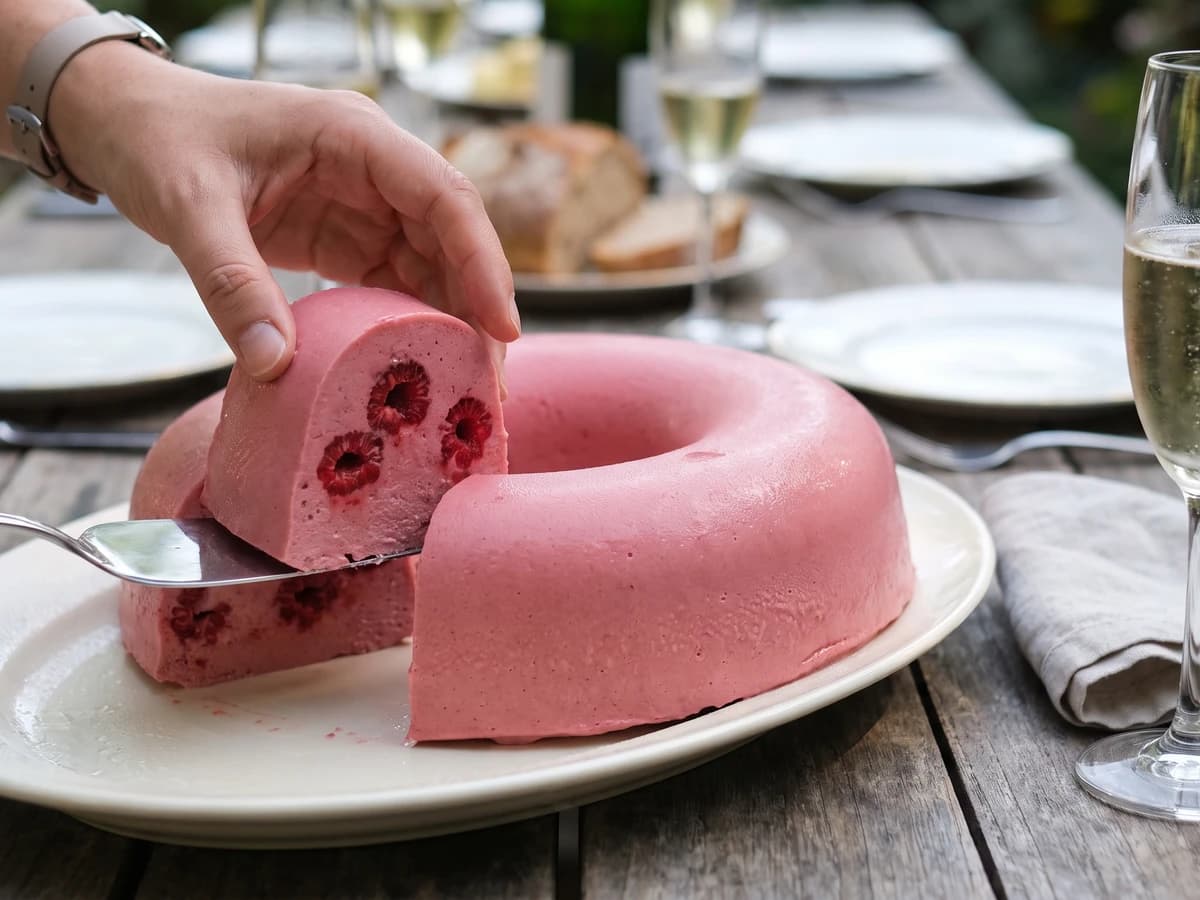
Turned out, the Bavarois should wear a smooth ivory coat. The first slice reveals regular bands of cocoa brown and strawberry rose, cool and tender enough to yield under a spoon without slumping. Judge each layer with your fingertip, not the clock: it should feel firm, leave your finger clean, and remain faintly tacky before the next layer goes on.
Bavarois belongs to the Parisian entremets repertoire, where crème anglaise set with gelatin and lightened with whipped cream became a moulded dessert firm enough to turn out yet tender on the spoon. The name suggests Bavaria, but its precise origin remains debated; within the French canon, the preparation is defined by its cold-set custard and cream rather than a proven Bavarian household lineage. In this canonical entry, Diplomate names a vanilla-clothed timbale filled with regular chocolate and strawberry layers, not the cake-and-custard dessert that also travels under the name diplomate.
The technique, the tradition, and the story behind every dish.
divided into 85 g for the custard and 15 g for the strawberry purée
fine sea salt
Quantity
1/8 teaspoon (0.6 ml / 0.7 g)
powdered gelatin
Quantity
4 teaspoons (20 ml / 12 g)
divided into three equal 4 g portions
cold water
Quantity
1/2 cup (120 ml / 120 g)
divided into three equal 40 ml portions
heavy cream
Quantity
1 1/4 cups (300 ml / 300 g)
very cold
vanilla bean
Quantity
1
split and scraped
dark chocolate, 65 to 70 percent cocoa
Quantity
1/3 cup finely chopped (80 ml / 60 g)
finely chopped
seedless strawberry purée
Quantity
1/3 cup plus 1 tablespoon (95 ml / 100 g)
strained and brought to room temperature
fresh lemon juice
Quantity
1 teaspoon (5 ml / 5 g)
technique reference only
Quantity
1 technique reference: Another Method of Preparing Aspics de Filets de Soles (No. 916), not added to the dessert
Ingredient
Quantity
whole milk
1 cup plus 2 tablespoons (270 ml / 280 g)
large egg yolks
4
granulated sugardivided into 85 g for the custard and 15 g for the strawberry purée
1/2 cup (120 ml / 100 g)
fine sea salt
1/8 teaspoon (0.6 ml / 0.7 g)
powdered gelatindivided into three equal 4 g portions
4 teaspoons (20 ml / 12 g)
cold waterdivided into three equal 40 ml portions
1/2 cup (120 ml / 120 g)
heavy creamvery cold
1 1/4 cups (300 ml / 300 g)
vanilla beansplit and scraped
1
dark chocolate, 65 to 70 percent cocoafinely chopped
1/3 cup finely chopped (80 ml / 60 g)
seedless strawberry puréestrained and brought to room temperature
1/3 cup plus 1 tablespoon (95 ml / 100 g)
fresh lemon juice
1 teaspoon (5 ml / 5 g)
technique reference only
1 technique reference: Another Method of Preparing Aspics de Filets de Soles (No. 916), not added to the dessert
Equipment Needed
•1.25-litre straight-sided metal timbale or charlotte mould
•Digital kitchen scale
•Instant-read thermometer
•Fine-mesh sieve
•Three medium heatproof bowls and three small bowls
•Electric mixer or sturdy balloon whisk
•Flexible silicone spatula
Instructions
1
Ready the cold station
Set a clean, dry 1.25-litre straight-sided metal timbale mould in the freezer for twenty minutes. Do not oil it; grease clouds the vanilla surface and makes the coating slide. Arrange three small bowls for blooming gelatin, three heatproof bowls for the flavored bases, and enough clear freezer space to hold the mould level. Once assembly begins, order matters more than speed.
A smooth metal mould transmits cold quickly and releases cleanly. Deep fluting makes an attractive outline, but it hides the regular layers this particular Bavarois is meant to show.
2
Bloom the gelatin
Put 40 ml of the cold water into each of three small bowls. Sprinkle one 4 g portion of powdered gelatin evenly over each surface and leave them undisturbed for ten minutes, until every grain has swollen and no dry patches remain. Always put water in first and scatter gelatin over it; pouring water onto a mound of powder traps stubborn dry knots.
3
Cook the crème anglaise
Heat the milk with the scraped vanilla pod, but not its seeds, until small bubbles gather around the pan. Remove it from the heat and cover for five minutes, then discard the pod. Whisk the yolks with 85 g of the sugar and the salt just until smooth. Pour in the hot milk gradually while whisking, return everything to the saucepan, and stir constantly over medium-low heat until the crème anglaise coats the spatula and reaches 82 to 84°C. Never let it boil. If it turns faintly grainy, remove it from the heat at once, set the pan in cold water, blend briefly, and strain. Ça se rattrape. Large, firm curds mean the eggs have scrambled and the custard must be remade.
4
Divide and flavor
Strain the hot crème anglaise into a measuring jug, weigh it, and divide it equally among the three heatproof bowls. For the vanilla base, stir in the vanilla seeds and one portion of bloomed gelatin until completely dissolved. For the chocolate base, add the chopped chocolate, wait thirty seconds, stir until glossy, then dissolve in the second gelatin portion. For the strawberry base, dissolve in the final gelatin portion, then stir the strawberry purée with the remaining 15 g sugar and the lemon juice before adding it to the custard. Cool all three bases to 24 to 27°C. If gelatin forms threads because a base cooled too quickly, set the bowl over barely warm water and stir until smooth again.
5
Whip and lighten
Whip the cold cream until it holds soft peaks whose tips bend over. Weigh it into three equal 100 g portions, returning two portions to the refrigerator. Fold the first portion into the vanilla base in three additions, turning the bowl and cutting through the center so the mixture stays light. The base must be cool enough not to melt the cream but still fluid enough to fold cleanly. If it begins setting into small lumps, warm only the outside of the bowl for a few seconds and fold again.
6
Clothe the mould
Use the mould-coating action preserved in Another Method of Preparing Aspics de Filets de Soles (No. 916): spoon the vanilla Bavarois into the chilled mould and rotate it so the preparation coats the bottom and sides evenly. The reference contributes this motion only; none of its savory preparation belongs in the dessert. Use a flexible spatula to bring the coat to an even 6 to 8 mm thickness, then freeze for eight to twelve minutes, only until set. If the vanilla slides toward the bottom, it was too warm. Scrape it back into the bowl, chill it until it mounds softly, and coat again. Ça se rattrape.
7
Finish colored creams
Fold one reserved cream portion into the chocolate base and the other into the strawberry base, using the same three-addition method. Each should hold a soft mound while remaining spreadable. Divide each flavor into two equal portions. Keep them covered at cool room temperature during assembly; refrigeration would set the waiting portions too quickly. If either one firms in its bowl, stand it over lukewarm water for five seconds and fold gently until spreadable again.
8
Build clean layers
Spread one portion of chocolate Bavarois across the vanilla-lined base, keeping the layer level and the sides clean. Freeze for eight to ten minutes, until a fingertip comes away clean but the surface remains slightly tacky. Spoon a strawberry portion close to the surface and spread it gently, then set it in the same way. Repeat with chocolate and finish with strawberry, keeping all four layers as equal in depth as the mould permits. Never pour a loose mixture from height. If color begins to drag into the layer below, stop, lift away the streak with a spoon, and return the mould to the cold before continuing.
9
Chill and unmould
Cover the mould without touching the surface and refrigerate for at least six hours, preferably overnight. To unmould, dip it to just below the rim in warm water for five to eight seconds, dry the outside, invert a chilled serving platter over it, and turn both together. If it does not release, repeat the dip for three seconds rather than forcing it. Return a surface softened by excess warmth to the refrigerator for fifteen minutes. Cut with a thin knife dipped in hot water and wiped between slices. À table!
Chef Tips
•Weigh the gelatin. A little too much gives the Bavarois the bounce of an eraser, while too little lets the stripes slump when cut. Powdered gelatin also avoids the uncertain strengths found among different leaf grades.
•Outside strawberry season, use unsweetened frozen berries picked ripe, thaw them completely, purée, and strain. Weigh 100 g after straining. An honest preserved berry is far better here than a pale fresh one with no perfume.
•The sole aspic cross-reference looks startling beside a dessert. It supplies only the technique called clothing the mould, coating a cold vessel evenly with a setting preparation. No fish, jelly, or savory forcemeat comes near the Bavarois.
•A demi-sec Champagne has enough sweetness to remain lively beside the strawberry and chocolate. Brut turns sharp against a sweet dessert, so save it for the beginning of dinner.
•Do not decorate the top merely from nerves. The smooth vanilla coat and the striped cut face are the presentation, and they have already done the work.
Advance Preparation
•Make and unmould the Bavarois up to 24 hours before serving. Keep it covered in the refrigerator and wait to slice until it reaches the table.
•The strawberry purée can be strained and refrigerated one day ahead. Bring it to room temperature before mixing so it does not seize the gelatin into threads.
•Measure the gelatin portions, chop the chocolate, and chill the mould earlier in the day. Do not make the flavored bases ahead, because once gelatin is added their setting clock has begun.
•Keep leftovers covered and refrigerated for up to two days. Freezing damages the custard's fine texture and can make the fruit layer weep as it thaws.
Frequently Asked Questions
Nutrition Information
1 serving (about 130g)
Calories
280 calories
Total Fat
20 g
Saturated Fat
12 g
Trans Fat
0 g
Unsaturated Fat
7 g
Cholesterol
140 mg
Sodium
65 mg
Total Carbohydrates
20 g
Dietary Fiber
1 g
Sugars
18 g
Protein
5 g
Where cooking meets culture.
Culinary guides, cultural storytelling, and the editorial depth that makes cooking meaningful.