
Chef Juliette
Various Almond Preparations
Five almond preparations, one discipline: remove the skins cleanly, dry every kernel through, then cut, toast, or cloak it in pale caramel without letting its fragrant oils escape.
A cooking platform built around craft, culture, and the stories behind what we eat.
Created by Chef Juliette
Based on No. 2616, The Moulding and Dishing of Bavarois, from Le Guide Culinaire (1907) by Auguste Escoffier
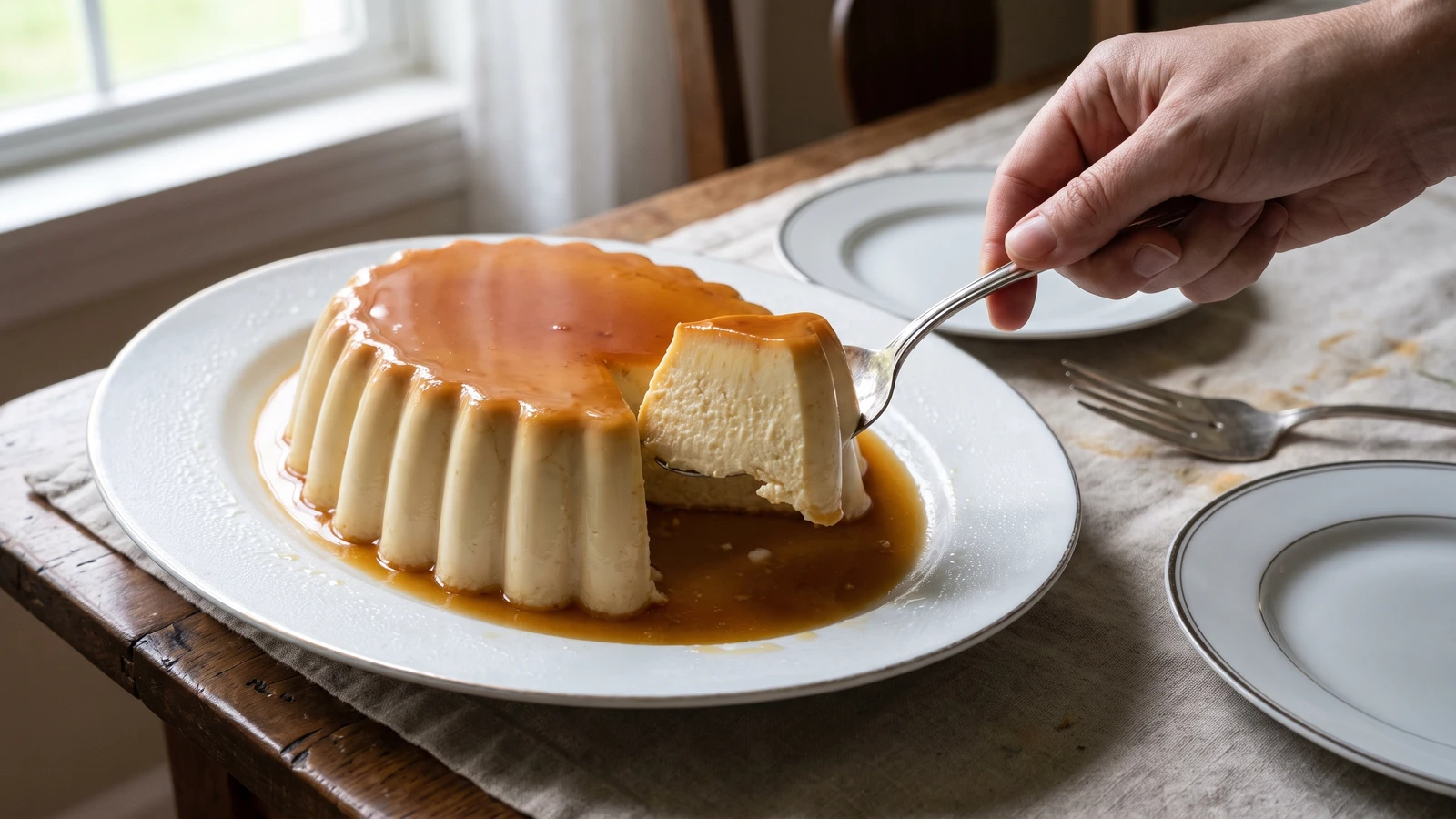
Shape dictates strength: mould a delicate Bavarois firmly enough to stand, or give it a chilled dish and use less gelatine for a softer spoonful, with a clean release and no ceremony wasted.
Moulage et dressage du Bavarois teaches one clean principle: the vessel decides the set. A Bavarois that must stand on a platter needs enough gelatine to carry its own weight; one spooned from a chilled dish can hold far less and will melt more delicately on the tongue. Decide which one you're serving before you touch the preparation, because that choice belongs in the mixture, not at the moment of unmoulding.
The classical entry assumed a fancy central-tube mould, sweet almond oil or freshly cooked caramel, a deep bin of broken ice, and hands ready to dress the result on a napkin-covered dish. Here the quantity is a single 720 ml Bavarois for six, the refrigerator replaces the ice bed, and a chilled bare platter replaces the folded napkin, which is ceremony rather than structure. The tube mould remains useful because it chills evenly; a smooth metal bowl works when that is what your cupboard offers. One cook, one stove, one evening.
The paper cover and ice packing were brigade scaffolding. The careful set and the quick tepid-water release are the dish. Keep the bath brief, wipe the mould dry, and invert with conviction; this is the one step that decides whether those clean ridges arrive at the table.
The name points toward Bavaria, but Bavarois belongs to Parisian pâtisserie practice, and its exact parentage is debated; the word first circulated around milky bavaroise drinks before confectioners applied it to creams set with gelatine, lightened with whipped cream, and cast in decorative moulds. Central-tube moulds and beds of broken ice gave grand kitchens a quick, even set and a sharp release, while a deep silver timbale allowed less gelatine and a more delicate spoonful. It is often confused with mousse, but the calculated gelatine set and the choice between mould and dish are the grammar of Bavarois.
Quantity
3 cups (720 ml / about 720 g)
Cool and fluid; use about 2¼ teaspoons (11 ml / 7 g) powdered gelatine for moulding or 1¼ teaspoons (6 ml / 4 g) for dish service
Quantity
1 teaspoon (5 ml / 4 g)
For an oiled mould
Quantity
⅓ cup (80 ml / 110 g) prepared according to The Cooking of Sugar (No. 2344)
Use instead of oil
Quantity
8 cups (1.9 litres / 1.9 kg)
For unmoulding
Quantity
6 cups (1.4 litres / about 900 g)
For holding a timbale during service
Quantity
1 cup (240 ml / about 120 g)
For piping just before service
Quantity
2 cups (480 ml / about 300 g)
For serving beside the timbale version
| Ingredient | Quantity |
|---|---|
| freshly prepared Bavarois mixtureCool and fluid; use about 2¼ teaspoons (11 ml / 7 g) powdered gelatine for moulding or 1¼ teaspoons (6 ml / 4 g) for dish service | 3 cups (720 ml / about 720 g) |
| food-grade sweet almond oil or refined grapeseed oil (optional)For an oiled mould | 1 teaspoon (5 ml / 4 g) |
| caramel lining (optional)Use instead of oil | ⅓ cup (80 ml / 110 g) prepared according to The Cooking of Sugar (No. 2344) |
| tepid waterFor unmoulding | 8 cups (1.9 litres / 1.9 kg) |
| broken ice (optional)For holding a timbale during service | 6 cups (1.4 litres / about 900 g) |
| prepared Chantilly cream (optional)For piping just before service | 1 cup (240 ml / about 120 g) |
| fresh-fruit Macédoine (mixed fresh fruit) or stewed fruit (optional)For serving beside the timbale version | 2 cups (480 ml / about 300 g) |
Choose the service before making or portioning the Bavarois. For 720 g of mixture intended to stand alone, use about 7 g of ordinary powdered gelatine; for a deep chilled dish, about 4 g gives a softer and more delicate spoonful. The vessel carries the softer preparation, while an unmoulded Bavarois must carry itself. If using leaf gelatine, match the strength specified by its maker and weigh it rather than counting leaves.
Choose oil or caramel, never both. For oil, place the sweet almond oil in a clean, dry 1-quart mould, rotate it to cover every hollow, then wipe it almost entirely away with clean paper; the surface should gleam without holding droplets. Alternatively, while the finished caramel prepared according to The Cooking of Sugar (No. 2344) is still fluid, pour it into a dry metal mould and rotate quickly to leave a thin, even shell. Hold the mould with dry oven gloves and turn it away from your hands, because hot caramel clings. If the caramel stiffens before the mould is covered, return the remainder to its pan and rewarm it just until fluid. Ça se rattrape.
Pour the cool, fluid Bavarois slowly down one side of the prepared mould, stopping about ½ inch below the rim. Tap the mould once against a folded towel to release any large trapped pocket, but don't keep knocking it about; the air folded into the cream is part of its delicacy. Prick visible surface bubbles with the point of a skewer, then cover the opening. A lid or reusable wrap replaces the original round sheet of white paper.
Set the mould level on a steady refrigerator shelf and chill for at least 4 hours, or overnight. The broken-ice bed of the grand kitchen was cold management, not ceremony that must be copied; the refrigerator performs the same work without meltwater creeping into the cream. The Bavarois is ready when its edge feels firm and the centre moves in one small, unified wobble. If it remains too loose, don't freeze it and hope for the best. Chill it longer, and if it still won't support itself, spoon it into chilled dishes and serve it softly set. Ça se rattrape.
Chill the serving platter first. Fill a bowl with tepid water, warm to the hand but never hot, and dip the mould only to just below its rim for 2 to 4 seconds. Wipe the outside completely dry, set the platter over the mould, and invert both in one confident movement. Pause, then lift the mould straight up. If the Bavarois clings, keep it inverted and wrap the mould briefly with a cloth dipped in tepid water, or repeat the bath for 1 second. Don't run a knife down the sides; it scars the surface. A caramel-lined Bavarois usually needs the shorter dip. The folded napkin of formal service can stay in the drawer, because a cold bare platter is steadier and shows the clean release.
For the more delicate dish-set version, omit the oil and caramel. Pour the lower-gelatine Bavarois into a chilled deep silver timbale, stainless-steel bowl, or glass serving dish, cover it, and refrigerate for at least 3 hours. Shortly before serving, nest the dish in broken ice, keeping the ice safely below its rim. Silver was the classical service vessel; a chilled stainless-steel bowl is its honest home equivalent, conducting the cold just as well and asking no polishing brigade.
If using Chantilly cream, pipe it onto the moulded Bavarois immediately before serving with a grooved tip, keeping the decoration generous and simple. With the timbale version, offer stewed fruit or the Macédoine alongside rather than burying the cream beneath it; the source is right to treat fruit as an accompaniment, not the identity of the dish. Bring the Bavarois to the table cold, cut or spoon it generously, and let its texture make the argument. À table!
1 serving (about 120g)
Culinary guides, cultural storytelling, and the editorial depth that makes cooking meaningful.
Discover Culinary ExplorerChef Juliette
Five almond preparations, one discipline: remove the skins cleanly, dry every kernel through, then cut, toast, or cloak it in pale caramel without letting its fragrant oils escape.

Chef Juliette
A pastry pantry lesson in one tray: filberts warmed only until their red skins release, rubbed clean, cooled, and chopped into a fragrant mise-en-place for cakes, creams, pralines, and petits fours.

Chef Juliette
The smallest pâtisserie discipline decides whether a cake leaves its mould intact: clarified butter in every corner, followed by the lightest veil of dry flour or fécule.

Chef Juliette
Four whites, one spotless bowl, and a patient change of speed: whisk gently until loosened, then briskly to glossy stiffness, with powdered sugar waiting if the foam begins to granulate.