
Chef Juliette
Flan aux Carottes
A pale short-paste shell holds silken, lightly sweet carrot purée beneath neat glazed half-discs, their butter syrup catching the light: a classical tart poised between vegetable course and sweet.
A cooking platform built around craft, culture, and the stories behind what we eat.
Created by Chef Juliette
Based on No. 2611, English Tarts, from Le Guide Culinaire (1907) by Auguste Escoffier
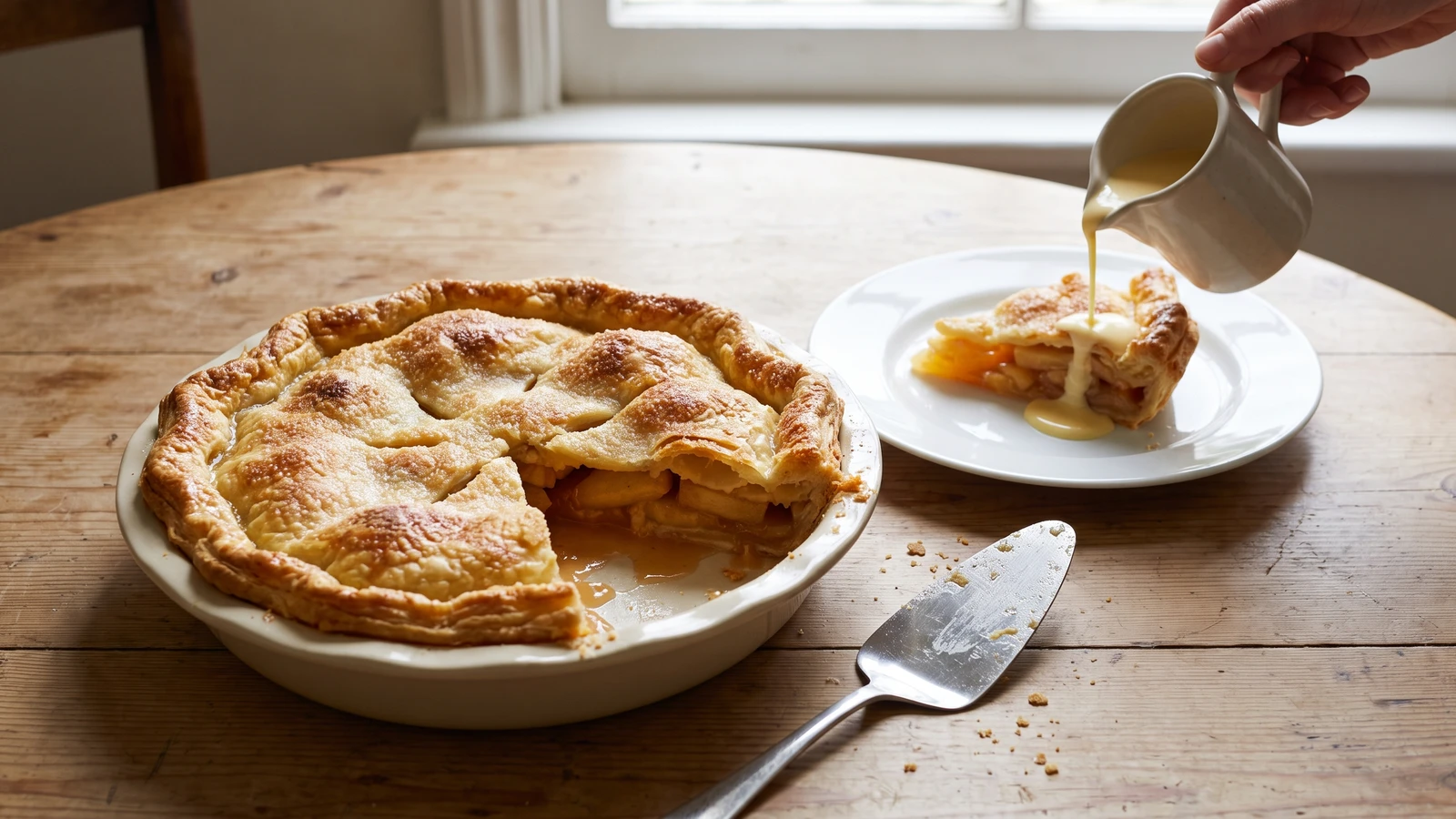
A deep-dish apple tart with no bottom crust, only a sturdy pâte brisée rim gripping a sugar-crusted puff-pastry lid, with cool custard passed at the table.
Tartes à l’Anglaise (English Tarts) teach a small but essential piece of pastry engineering. The pâte brisée (short paste) band around the rim is structural, not decorative: it gives the pâte feuilletée (puff paste) something firm to grip while the fruit settles and releases its juices. There is deliberately no bottom crust to turn sodden beneath the apples.
The source is a professional method rather than a set of household quantities. It assumes a pastry section with both doughs waiting, fruit prepared by the bowlful, and a moderate oven judged through practice. The brigade scaffolding goes: tonight there is one 9-inch dish, a small batch of pâte brisée, one purchased all-butter sheet of pâte feuilletée, and a measured oven. Because the original method embraces every fruit, this home-scale formula fixes it to the firm cooking apples the source specifically discusses, giving its water, sugar, and baking time honest measures. The two-paste construction stays. That is the dish. One cook, one stove, one evening.
Keep both pastries cold, but spend your attention on the seal. Dampen the pâte brisée lightly, lower the puff paste without stretching it, and press the two together with quiet firmness. That seal is the one step that matters most.
Tartes à l’anglaise belong first to the English domestic table, where orchard fruit is baked in a deep pie dish beneath a pastry cover and cream or custard is passed separately. The French classical repertoire retained the English identity in the term à l’anglaise, carrying the household pie into grand-kitchen pastry practice without turning it into a French open tart. The useful correction is structural: despite the word tarte, the dish has no full bottom crust, only a pâte brisée band on the rim anchoring its puff-paste lid.
Quantity
⅔ cup (160 ml / 80 g)
Quantity
⅛ teaspoon (0.6 ml / 0.75 g)
Quantity
3 tablespoons (45 ml / 42 g)
cubed
Quantity
1½ to 2 tablespoons (22 to 30 ml / 22 to 30 g)
Quantity
2 tablespoons (30 ml / 16 g)
Quantity
1 sheet (about 10 ounces / 285 g)
thawed but cold
Quantity
6 medium (about 2 pounds / 900 g before peeling)
peeled, cored, and sliced ½ inch thick
Quantity
½ cup (120 ml / 100 g)
Quantity
3 tablespoons (45 ml / 45 g)
Quantity
2 tablespoons (30 ml / 30 g)
Quantity
2 tablespoons (30 ml / 25 g)
| Ingredient | Quantity |
|---|---|
| all-purpose flour | ⅔ cup (160 ml / 80 g) |
| fine sea salt | ⅛ teaspoon (0.6 ml / 0.75 g) |
| cold unsalted buttercubed | 3 tablespoons (45 ml / 42 g) |
| ice water | 1½ to 2 tablespoons (22 to 30 ml / 22 to 30 g) |
| all-purpose flour for rolling | 2 tablespoons (30 ml / 16 g) |
| all-butter pâte feuilletée (puff pastry)thawed but cold | 1 sheet (about 10 ounces / 285 g) |
| firm, tart cooking applespeeled, cored, and sliced ½ inch thick | 6 medium (about 2 pounds / 900 g before peeling) |
| granulated sugar for the fruit | ½ cup (120 ml / 100 g) |
| water for the apples | 3 tablespoons (45 ml / 45 g) |
| water for sealing and brushing | 2 tablespoons (30 ml / 30 g) |
| granulated sugar for the lid | 2 tablespoons (30 ml / 25 g) |
| English Saucechilled or cool, for serving | 1½ cups (360 ml / 375 g) English Sauce (No. 2406) |
Mix the ⅔ cup flour with the salt. Cut in the cold butter with your fingertips or a pastry blender until the mixture resembles coarse crumbs with a few pea-sized pieces remaining. Add 1½ tablespoons ice water and gather the dough without kneading; add the final ½ tablespoon only if dry flour remains. Flatten into a disc, wrap, and chill for 30 minutes. If the dough crumbles when pressed, ça se rattrape: work in cold water a teaspoon at a time. If it turns soft or greasy, stop and chill it rather than burying it in more flour.
Heat the oven to 375°F (190°C), or 350°F (175°C) convection, with a rack in the lower-middle position. Arrange the apple slices snugly in a 9-inch (23 cm) deep pie dish, filling it to within ½ inch (1.25 cm) of the brim. Sprinkle the ½ cup sugar evenly over the fruit, then add the 3 tablespoons water. Do not line the bottom with pastry. The apples need room to settle, and the absence of a bottom crust is part of the method.
On a surface dusted with some of the rolling flour, roll the chilled pâte brisée about ⅛ inch (3 mm) thick. Cut strips 1 inch (2.5 cm) wide, joining them if necessary with a lightly dampened overlap. Brush the bare rim of the dish with a thin film of water, lay the strips over it, and press them into place. Brush the top of the strip very lightly with water. This strap is the dish's engineering, so keep it even and unbroken. If it slides, the rim is too wet; lift the strip, blot the dish, and set it down again.
Roll the cold pâte feuilletée on the lightly floured surface into a round about 1½ inches (4 cm) wider than the dish. Lift it over the fruit with the rolling pin and lower it without stretching. Press the pastry firmly onto the dampened pâte brisée band, then trim to leave a neat ½-inch (1.25 cm) overhang and crimp the edge. If the puff paste tears, brush the torn edges with the smallest touch of water and place a cold scrap beneath them as a patch. Press once and chill for 10 minutes. Ça se rattrape.
Brush the lid lightly with the remaining water and scatter the 2 tablespoons sugar evenly over it. Set the dish on a rimmed baking sheet and bake for 45 to 55 minutes, until the pâte feuilletée is fully risen and deep golden, the sugar has formed a crisp granular crust, and apple juices bubble at one or two edges. A thin skewer pushed through the center should meet tender fruit. If the pastry darkens before the apples soften, cover it loosely with foil and continue baking. A bronze lid over firm apples is unfinished, not ruined.
Rest the tart in its dish for 20 minutes so the fruit juices settle and each spoonful holds together. Bring the whole dish to the table and serve generous portions with the chilled or cool English Sauce (No. 2406) passed separately in a sauceboat. The warm apples, crisp sugared lid, and cool custard need no further decoration. À table!
1 serving (about 255g)
Culinary guides, cultural storytelling, and the editorial depth that makes cooking meaningful.
Discover Culinary ExplorerChef Juliette
A pale short-paste shell holds silken, lightly sweet carrot purée beneath neat glazed half-discs, their butter syrup catching the light: a classical tart poised between vegetable course and sweet.
Chef Juliette
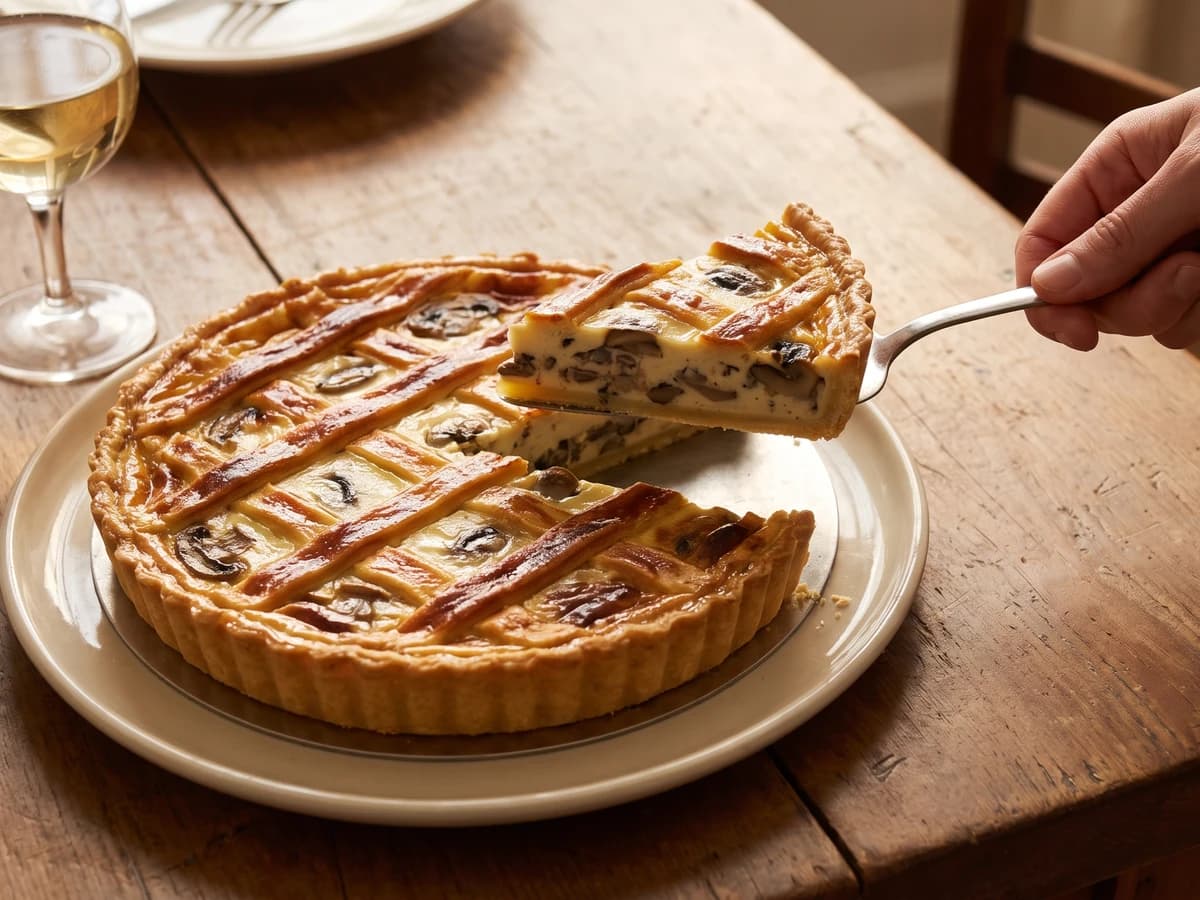
A hot mushroom flan under a butter-gold lattice, with cream reduced close around barely opened caps and a crisp short-paste base protected by one discipline: cool the filling completely.

Chef Juliette
Four little mushroom flans, latticed and gilded, baked hard and fast until butter-gold: a classical garnish scaled to the meat it accompanies and served before its crispness has time to fade.
Chef Juliette
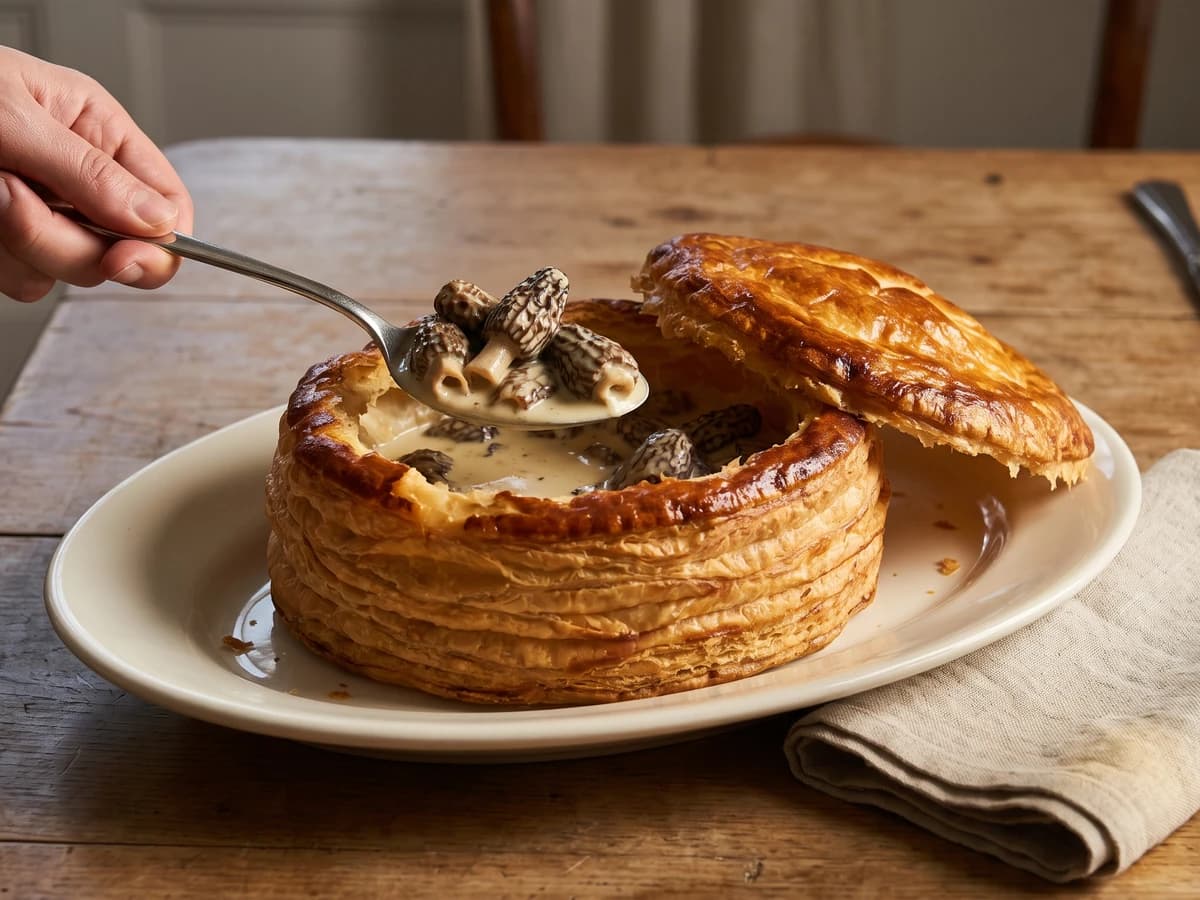
Morels surrender their liquor, then take it back as a glossy cream-and-butter sauce inside burnished puff pastry. The lesson is simple and absolute: reduce with patience, then heat gently and never boil.