
Chef Juliette
Apricots (Abricots)
Apricots peeled clean and poached just to tenderness, their golden halves held in clear syrup for tarts and cold sweets: a small lesson in texture, restraint, and knowing when fruit is ready.
A cooking platform built around craft, culture, and the stories behind what we eat.
Created by Chef Juliette
Based on No. 2593, Pommes à la Châtelaine, from Le Guide Culinaire (1907) by Auguste Escoffier
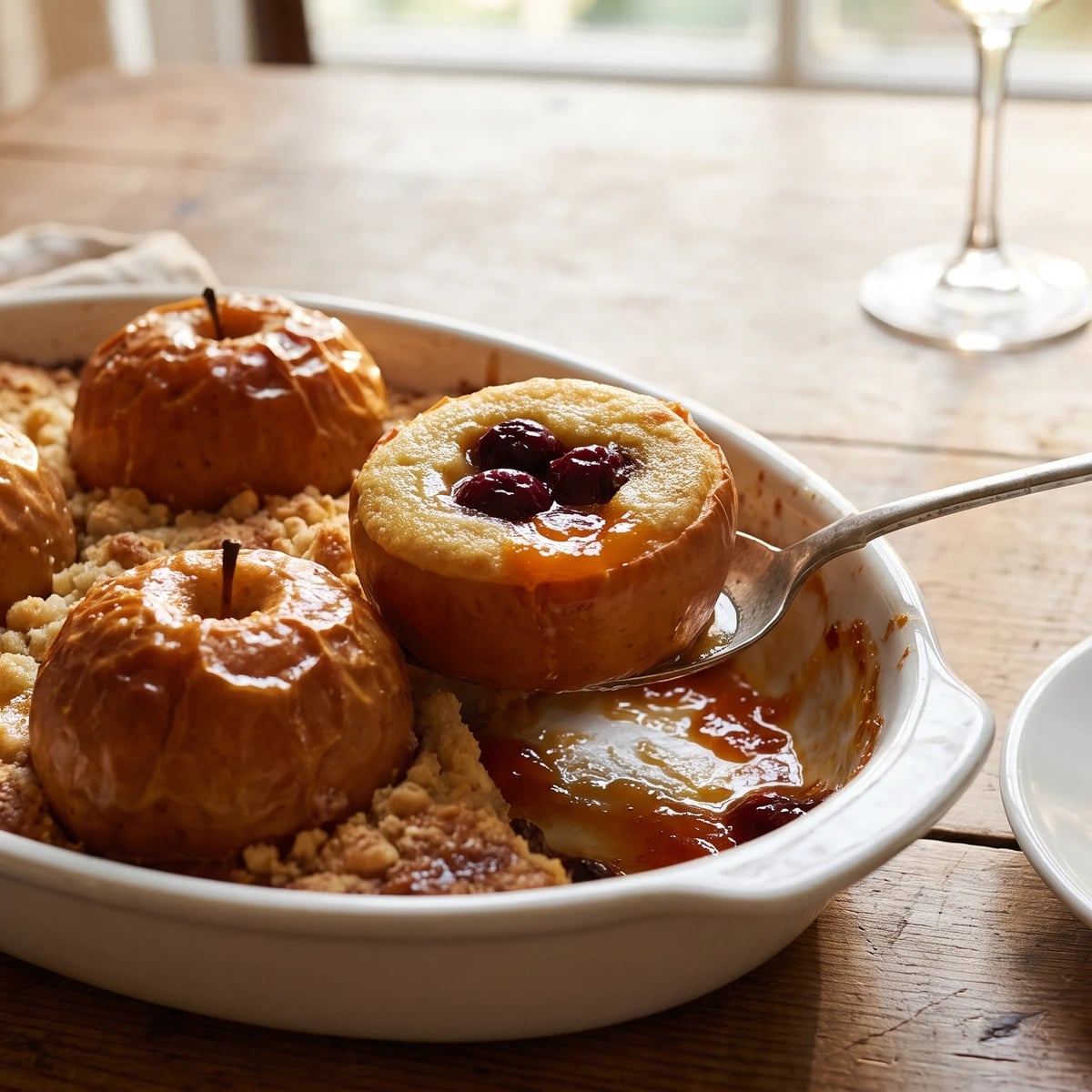
Tender baked apples hold a sharp cherry and apricot salpicon beneath a thin frangipane veil, then meet fierce heat until biscuit and macaroon crumbs bronze into the crisp crown that makes the dish.
Pommes à la Châtelaine (baked apples filled with cherry and apricot, veiled in almond cream and browned beneath biscuit and macaroon crumbs) teaches the difference between cooking and finishing. The apples must be tender before the topping ever meets fierce heat. That final heat is there to form the gratin, not to finish a raw apple.
The original formula assumed a pastry station with Pommes à la Bonne-Femme (No. 2590), apricot purée, and crème frangipane (almond-enriched pastry cream) waiting in separate bowls, plus a salamander for instant top heat. At home, four prepared apples, one small saucepan, and the upper heat of a well-preheated oven do the same work. The separate tubs were brigade scaffolding; the two-stage cooking and last-minute gratin are the dish and must stay. One cook, one stove, one evening.
The cherry filling is a salpicon (small neat dice bound with sauce), so the fruit should cling together in the apricot purée rather than swim in it. Once the apples are filled and veiled, watch the browning without wandering away. Make the apples fully tender first; everything after that is finish.
Pommes à la Châtelaine belongs to the Parisian grand-kitchen repertoire of named apple entremets, where a familiar baked fruit changed character through its filling, cream, and final gratin. Châtelaine means the lady who governed a château household, so the title signals a polished house dessert rather than a regional apple specialty. Its structure passed readily to bourgeois dining rooms because the apples and creams could wait, while the bronzed finish was formed only when the table was ready.
Quantity
4 Pommes à la Bonne-Femme (No. 2590)
made with medium russet apples and held warm when just tender
Quantity
¾ cup (180 ml / 140 g)
drained and cut into small dice
Quantity
⅓ cup (80 ml / 85 g)
Quantity
½ cup (120 ml / 123 g)
Quantity
3 tablespoons (45 ml / 38 g)
Quantity
1
Quantity
1 tablespoon (15 ml / 8 g)
Quantity
¼ cup (60 ml / 25 g)
Quantity
1 tablespoon (15 ml / 14 g)
softened
Quantity
1 batch for Gratins (No. 268): ¼ cup (60 ml / 25 g) finely crushed plain dry biscuits, ¼ cup (60 ml / 30 g) finely crushed dry almond macaroons, and 1 tablespoon (15 ml / 14 g) melted unsalted butter
| Ingredient | Quantity |
|---|---|
| prepared baked applesmade with medium russet apples and held warm when just tender | 4 Pommes à la Bonne-Femme (No. 2590) |
| pitted sour cherries in light syrupdrained and cut into small dice | ¾ cup (180 ml / 140 g) |
| smooth apricot purée | ⅓ cup (80 ml / 85 g) |
| whole milk | ½ cup (120 ml / 123 g) |
| fine sugar | 3 tablespoons (45 ml / 38 g) |
| large egg yolk | 1 |
| cornstarch | 1 tablespoon (15 ml / 8 g) |
| finely ground almond flour | ¼ cup (60 ml / 25 g) |
| unsalted buttersoftened | 1 tablespoon (15 ml / 14 g) |
| rapid gratin finish | 1 batch for Gratins (No. 268): ¼ cup (60 ml / 25 g) finely crushed plain dry biscuits, ¼ cup (60 ml / 30 g) finely crushed dry almond macaroons, and 1 tablespoon (15 ml / 14 g) melted unsalted butter |
Set an oven rack in the upper third and heat the oven to 475°F (245°C). Prepare the Pommes à la Bonne-Femme (No. 2590) according to their own entry, stopping when a thin knife enters the flesh easily but each apple still holds its walls. Keep them in their buttered ovenproof dish. This first gentle bake cooks the fruit; the fierce heat later cannot do that without burning the crumbs. If an apple begins to split, nestle it against the side of the dish so it remains upright.
Drain the cherries for ten minutes, then cut them into neat pieces about ¼ inch (6 mm) across. Fold them into the apricot purée until every piece is coated and the mixture holds on a spoon. If the purée runs like juice, simmer it alone for a few minutes until a spoon drawn across the pan leaves a brief trail, then cool it before adding the cherries. The salpicon should bind the filling, not flood the dish.
Reserve 1 tablespoon of the measured milk. Warm the remainder in a small saucepan until small bubbles gather at the edge. Whisk the sugar, yolk, and cornstarch in a bowl until smooth, then pour in the hot milk gradually while whisking. Return everything to the saucepan and cook over medium-low heat, whisking, until the cream thickens and gives one gentle bubble; continue for one minute to cook the starch. If lumps appear, take the pan off the heat and pass the cream through a fine sieve. Ça se rattrape. Whisk in the almond flour and softened butter, then use the reserved milk as needed to make a soft cream that falls from the spoon in a thick ribbon.
Spoon the cherry salpicon into the hollow of each warm apple, pressing gently so the filling reaches the bottom without crushing the fruit. Cover each apple with a thin veil of frangipane, about 2 tablespoons per apple, letting it spread over the crown and just onto the shoulders. Thin matters here: a heavy cap insulates the fruit and turns pasty before the crumbs can bronze.
Apply Gratins (No. 268) as the rapid gratin this dish calls for. Mix the crushed plain biscuits and almond macaroons, scatter them evenly over the frangipane, and spoon the melted butter across the crumbs. Bake for 5 to 8 minutes, until the cream is hot and the topping begins to color, then switch to the broiler for 30 to 90 seconds to form a deep butter-gold crust. Watch every second. If one patch darkens too quickly, rotate the dish and shield that spot with a small piece of foil. Ça se rattrape, but only while the crumbs are bronze, not black.
Let the apples settle for 8 minutes. The frangipane will firm slightly, the apricot will stop racing from the hollow, and the fruit will remain properly warm. Spoon one apple onto each plate with a little of the buttery apricot-cherry glaze from the dish. Serve without further decoration. À table!
1 serving (about 250g)
Culinary guides, cultural storytelling, and the editorial depth that makes cooking meaningful.
Discover Culinary Explorer
Chef Juliette
Apricots peeled clean and poached just to tenderness, their golden halves held in clear syrup for tarts and cold sweets: a small lesson in texture, restraint, and knowing when fruit is ready.

Chef Juliette
Abricots à la Bourdaloue teaches the discipline of colour: an ivory flawn crust, macaroon-rich frangipane, and vanilla-poached fruit, finished with one fierce flash of buttered gratin.

Chef Juliette
Firm-poached apricots, sweet entremets rice, and a fine panure à l’anglaise meet the fryer for one golden minute, then arrive crisp with warm Kirsch apricot sauce alongside.

Chef Juliette
Apricots à la Condé sets tender poached fruit on a border of distinct vanilla rice grains, then coats the whole with glossy kirsch-scented apricot syrup and bright candied fruit.