Culinary Explorer

A cooking platform built around craft, culture, and the stories behind what we eat.
Discover Culinary Explorer
Pêches à la Bourdaloue

Pêches à la Bourdaloue

Created by Chef Juliette

Based on No. 2573, Pêches à la Bourdaloue, from Le Guide Culinaire (1907) by Auguste Escoffier

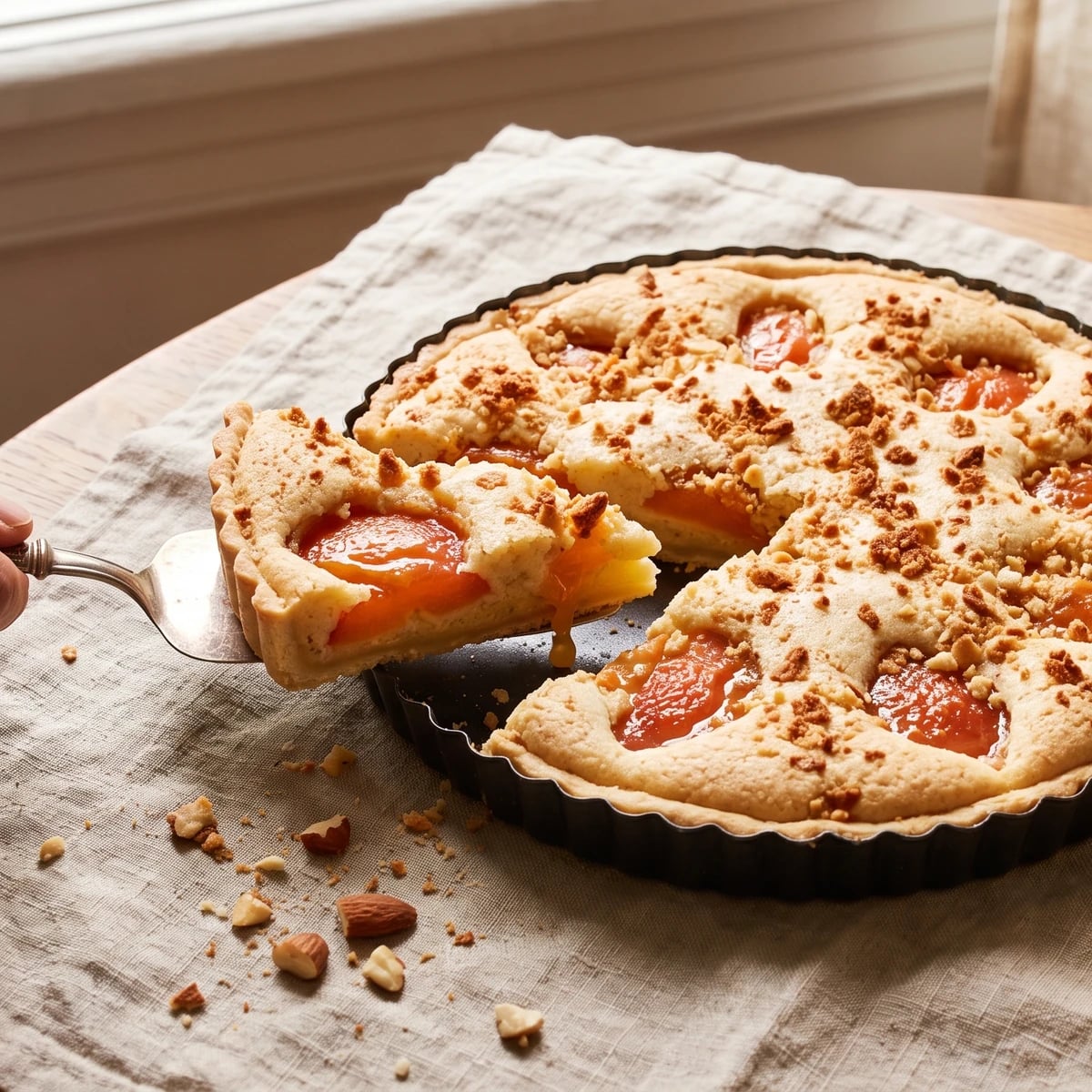
Pêches à la Bourdaloue hides vanilla-poached peach halves between macaroon-rich frangipane, then takes a swift buttered glaze: pale crust, tender fruit, and almond cream in one generous Parisian tart.

Pastries & Cookies
French
Dinner Party
Special Occasion
Comfort Food
45 min
Active Time
50 min cook3 hr 5 min total
YieldOne 9-inch (23 cm) tart, 6 servings

Pêches à la Bourdaloue (peaches enclosed in a frangipane tart) teaches a pastry lesson more valuable than decoration: poached fruit must be tender, cool, and thoroughly drained before it meets a cream expected to hold it. Leave syrup clinging to the peaches and even excellent frangipane loosens around them.

The original entry assumed a pastry station already holding the complete Apricots à la Bourdaloue (No. 2549) formula, trays of poached fruit, and a salamander waiting for the final flash of color. At home, one 9-inch flawn-crust, three peaches in a snug saucepan, and an ordinary oven broiler do the work. The brigade scale and specialized equipment are scaffolding, so they go. The pale pre-baked crust, crushed macaroons folded through the cream, fruit enclosed between two layers, and buttered macaroon finish stay, because they are the dish. One cook, one stove, one evening.

Cut into it and you find coral-gold peaches held inside almond cream, with a tender crust beneath and toasted macaroon crumbs above. Poach gently, peel while warm, then drain the halves longer than impatience finds reasonable. That is the step that decides the tart.

Bourdaloue belongs to Parisian pâtisserie and takes its name from the Paris street where pastry cooks made the almond-and-fruit preparation famous. Pear is now its best-known fruit, but the classical Bourdaloue family was never limited to pears; repertories also carried apricot and peach versions, as well as molded preparations built with rice, semolina, or Génoise. This peach form preserves the defining Parisian method: vanilla-poached fruit enclosed in frangipane and finished with a swiftly colored gratin.

The technique, the tradition, and the story behind every dish.

Discover Culinary Explorer

Ingredients

Apricots à la Bourdaloue

Quantity

1 home-scale formula for Apricots à la Bourdaloue (No. 2549), scaled to one 9-inch (23 cm) tart

apricot halves withheld; all other components prepared as its entry directs

ripe-firm freestone peaches

Quantity

3 medium (about 1 1/3 pounds / 600 g)

cold water

Quantity

2 cups (480 ml / 480 g)

granulated sugar

Quantity

1 cup (240 ml / 200 g)

vanilla bean

Quantity

1

split lengthwise

Equipment Needed

  • 9-inch (23 cm) fluted tart pan with removable base
  • 2-quart (2-liter) wide saucepan
  • Parchment paper for a poaching cartouche
  • Broad slotted spoon
  • Small offset spatula
  • Wire cooling rack

Instructions

  1. 1

    Ready the tart formula

    Prepare the nonfruit elements of Apricots à la Bourdaloue (No. 2549) exactly as its own entry directs, scaled to one 9-inch (23 cm) tart. Have its flawn-crust baked without coloration, its macaroon-enriched frangipane ready, and its finishing macaroons and melted butter measured. Withhold the apricots. That separate formula is the foundation, so keep it whole rather than rebuilding it here.

  2. 2

    Halve the peaches

    Run a small knife around each unpeeled peach from stem to tip, following the natural seam. Twist the halves apart and remove the stones. Leave the skins on for poaching: they protect the tender flesh, lend the syrup a delicate blush, and slip away far more cleanly afterward.

  3. 3

    Make vanilla syrup

    Combine the water and sugar in a snug, wide saucepan. Scrape in the vanilla seeds, add the pod, and bring the syrup gently to a simmer, stirring only until the sugar dissolves. Let it simmer for 2 minutes so the vanilla opens into the syrup, then lower the heat before the fruit goes in.

  4. 4

    Poach at a tremble

    Set the peach halves in the syrup in one layer and cover them with a parchment circle to keep their surfaces wet. Hold the syrup at the barest tremble for 6 to 12 minutes, turning the fruit once, until a small knife enters with slight resistance. Never let it boil hard. If a peach softens too quickly, ça se rattrape: lift it onto a tray with a broad spoon and chill it before handling; any small crack will disappear beneath the upper frangipane.

    Ripeness decides the clock. Begin testing at 6 minutes and remove each half as it becomes tender rather than waiting for the whole batch.
  5. 5

    Peel and drain

    Let the peaches cool in the syrup just until you can handle them. Pinch each skin near the cut edge and draw it away; it should slip off nearly whole. If a patch clings, return that half to the warm syrup for 1 minute instead of scraping the flesh. Drain the peeled halves cut-side down for at least 15 minutes, then blot them gently. This matters most: syrup carried into the tart loosens the cream.

  6. 6

    Build the Bourdaloue

    Complete the assembly prescribed for Apricots à la Bourdaloue (No. 2549), substituting the six poached peach halves for its apricots and changing nothing else. Spread its thin lower layer of macaroon-enriched frangipane in the pale flawn-crust, settle the peaches rounded-side up without crowding, then cover them with the same cream. The fruit belongs between the two layers, not displayed on top.

  7. 7

    Glaze under broiler

    Finish with the crushed macaroons and melted butter specified by the referenced preparation. Set the tart about 6 inches (15 cm) below a fully heated broiler and glaze it quickly, turning the pan as needed, until the top is butter-gold with darker toasted flecks. Watch without leaving the oven. If one patch catches first, ça se rattrape: shield it with a scrap of foil and let the paler side color.

  8. 8

    Rest and serve

    Set the tart on a rack and leave it for at least 45 minutes. The frangipane settles around the fruit as it cools, giving you clean slices instead of a soft spill. Unmold and serve slightly warm or at room temperature, generous wedges rather than timid slivers. À table!

Chef Tips

  • Choose fragrant peaches that yield slightly at the shoulder but remain firm around the seam. A hard peach stays wooden in the syrup, while a fully soft one collapses before you can peel it.
  • The macaroons in this preparation are dry almond macaroons, not filled Parisian macarons. Their crumbs absorb fruit moisture, strengthen the almond flavor, and toast handsomely beneath the butter.
  • Out of season, use good peach halves canned in light syrup rather than a sad fresh peach. Warm their drained syrup with the vanilla, steep the fruit off the heat, then drain it thoroughly; double-poaching would turn it to pulp.
  • Strain and chill the leftover vanilla syrup. It keeps for several days and is splendid over other poached fruit, but don't pour it over this tart, which has already found its proper balance.
  • Serve with coffee or a small glass of Barsac. The tart needs no cream, sauce, or decorative distraction.

Advance Preparation

  • Poach and peel the peaches up to one day ahead. Chill them in the cooled vanilla syrup, then drain cut-side down and blot thoroughly before assembly.
  • The components supplied by Apricots à la Bourdaloue (No. 2549) may be prepared ahead only as that entry permits. Keep the pale shell dry and the cream cold until assembly.
  • The finished tart can rest at cool room temperature for 2 to 3 hours before serving. Refrigerate leftovers, then let slices lose their chill before they return to the table.

Frequently Asked Questions

Nutrition Information

1 serving (about 180g)

Calories
590 calories
Total Fat
32 g
Saturated Fat
15 g
Trans Fat
1 g
Unsaturated Fat
15 g
Cholesterol
130 mg
Sodium
130 mg
Total Carbohydrates
67 g
Dietary Fiber
4 g
Sugars
43 g
Protein
9 g

Note: Chef personas and recipes are created with AI assistance. Cook with care: follow safe food-handling practices, check doneness with a thermometer when needed, and adapt for allergies and your kitchen.

Where cooking meets culture.

Culinary guides, cultural storytelling, and the editorial depth that makes cooking meaningful.

Discover Culinary Explorer

More from Entremets (Sweets) - Hot Fruit Entremets

Browse the full collection