
Chef Juliette
Flan aux Carottes
A pale short-paste shell holds silken, lightly sweet carrot purée beneath neat glazed half-discs, their butter syrup catching the light: a classical tart poised between vegetable course and sweet.
A cooking platform built around craft, culture, and the stories behind what we eat.
Created by Chef Juliette
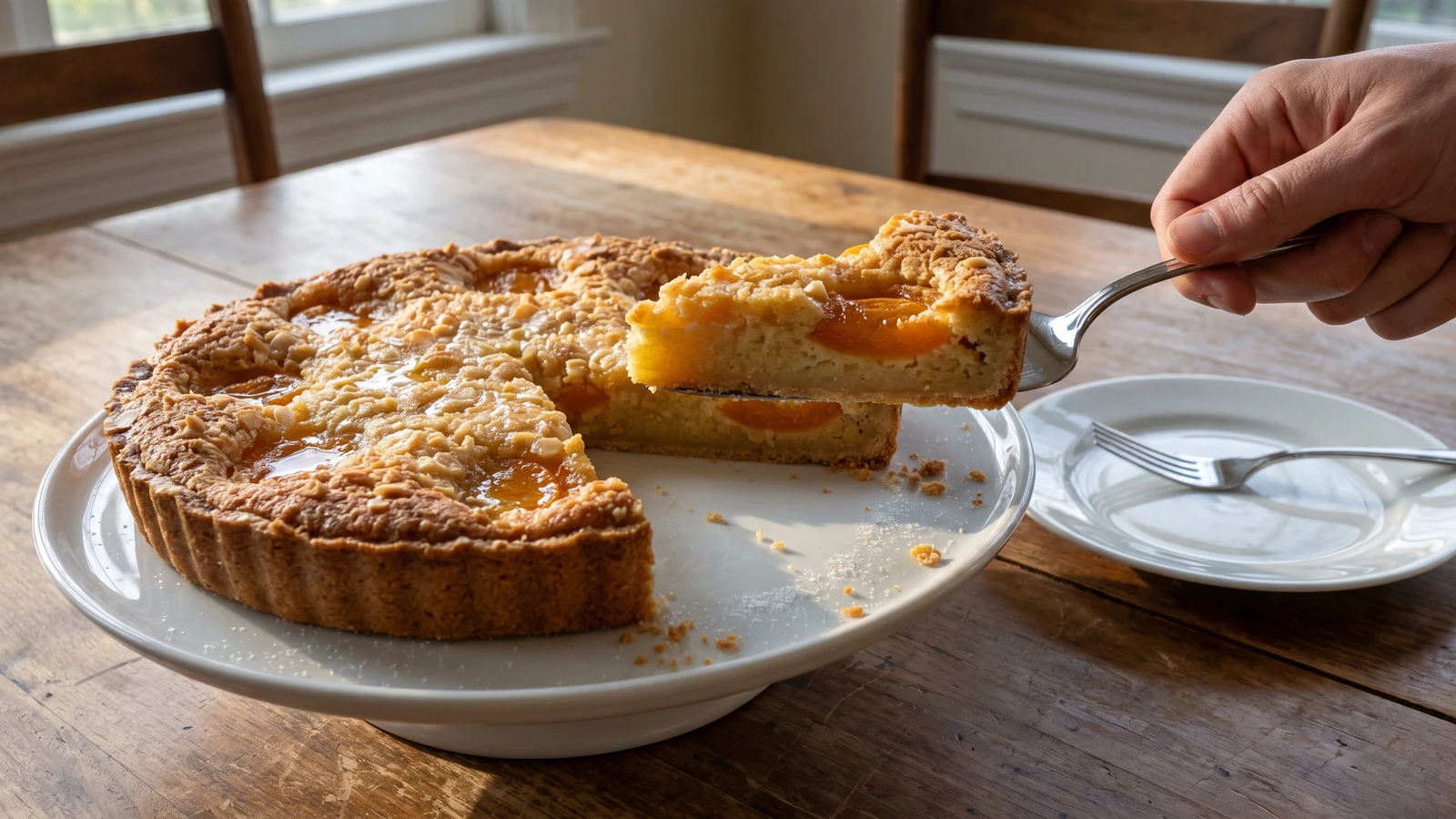
Based on No. 2549, Apricots à la Bourdaloue, from Le Guide Culinaire (1907) by Auguste Escoffier
Abricots à la Bourdaloue teaches the discipline of colour: an ivory flawn crust, macaroon-rich frangipane, and vanilla-poached fruit, finished with one fierce flash of buttered gratin.
Abricots à la Bourdaloue (apricots in the Bourdaloue manner) teaches control of colour. The shell must bake through yet remain pale; only the macaroon top may bronze in the final gratin, the quick browning that seals the surface. That contrast is the dish: tender vanilla-poached fruit between thin layers of almond-rich frangipane, an ivory crust beneath, and a buttered surface caught just as it turns fragrant and gold.
The original assumed a pastry station with poached fruit, cooked cream, and several service moulds ready, followed by a salamander for the last fierce glaze. At home, a 20 cm loose-bottomed tin, one saucepan, baking weights, and a domestic broiler do the same work. Only the scale and heat source change; the flawn crust, macaroon-enriched frangipane, vanilla syrup, and rapid Gratins (No. 268) remain. The timbale, cereal borders, and Pâte à Génoise Fine (No. 2376) border are brigade service scaffolding. For one cook, one stove, one evening, the tart is the clearest form.
The moment that decides it comes at the end. A salamander coloured the surface in seconds, and your broiler will too. Have the tart cold, the pale rim shielded, and your eyes on the macaroon gratin before the heat is switched on.
Bourdaloue belongs to Parisian pâtisserie and takes its name from rue Bourdaloue, where the arrangement of poached fruit, frangipane, and a finished tart became a house signature. Pears are now the best-known fruit, but the classical canon treats à la Bourdaloue as a method rather than a pear-only title, applying it to apricots in a pale flawn crust or in moulded service forms. The apricot version traveled from pâtisserie into grand-kitchen service, where timbales and rice, semolina, or Génoise borders allowed the same fruit-and-cream grammar to answer different occasions.
Quantity
1½ cups (360 ml / 180 g)
Quantity
2 tablespoons (30 ml / 25 g)
Quantity
¼ teaspoon (1.25 ml / 1.5 g)
Quantity
Scant ½ cup (110 ml / 90 g)
diced
Quantity
1
Quantity
1 tablespoon (15 ml / 15 g)
use only if the pastry remains dry
Quantity
6 medium
halved and pitted
Quantity
2 cups (500 ml / 500 g)
Quantity
1 cup (250 ml / 200 g)
Quantity
1
split lengthwise and scraped
Quantity
¾ cup plus 1 tablespoon (200 ml / 200 g)
Quantity
3
Quantity
¼ cup (60 ml / 50 g)
Quantity
2 tablespoons (30 ml / 16 g)
Quantity
½ cup (125 ml / 50 g)
Quantity
2 tablespoons (30 ml / 28 g)
Quantity
1 cup (250 ml / 75 g)
two-thirds finely crushed and one-third coarsely crushed
Quantity
2 tablespoons (30 ml / 28 g)
Quantity
1 second application Gratins (No. 268)
for the timbale or rice or semolina-border service
Quantity
1 thin 20 cm layer Pâte à Génoise Fine (No. 2376)
for the apricot-combined Génoise border
| Ingredient | Quantity |
|---|---|
| all-purpose flour for the flawn crust | 1½ cups (360 ml / 180 g) |
| superfine sugar | 2 tablespoons (30 ml / 25 g) |
| fine sea salt | ¼ teaspoon (1.25 ml / 1.5 g) |
| cold unsalted butterdiced | Scant ½ cup (110 ml / 90 g) |
| large egg | 1 |
| ice water (optional)use only if the pastry remains dry | 1 tablespoon (15 ml / 15 g) |
| firm-ripe apricotshalved and pitted | 6 medium |
| water for the poaching syrup | 2 cups (500 ml / 500 g) |
| granulated sugar for the poaching syrup | 1 cup (250 ml / 200 g) |
| vanilla beansplit lengthwise and scraped | 1 |
| whole milk | ¾ cup plus 1 tablespoon (200 ml / 200 g) |
| large egg yolks | 3 |
| granulated sugar for the frangipane | ¼ cup (60 ml / 50 g) |
| all-purpose flour for the frangipane | 2 tablespoons (30 ml / 16 g) |
| finely ground blanched almonds | ½ cup (125 ml / 50 g) |
| softened unsalted butter | 2 tablespoons (30 ml / 28 g) |
| dry unfilled almond macaroonstwo-thirds finely crushed and one-third coarsely crushed | 1 cup (250 ml / 75 g) |
| melted unsalted butter | 2 tablespoons (30 ml / 28 g) |
| Gratinsfor the usual flawn-crust tart | 1 rapid final glazing application Gratins (No. 268) |
| Gratins (optional)for the timbale or rice or semolina-border service | 1 second application Gratins (No. 268) |
| Pâte à Génoise Fine (optional)for the apricot-combined Génoise border | 1 thin 20 cm layer Pâte à Génoise Fine (No. 2376) |
Mix the flour, superfine sugar, and salt, then rub in the cold butter until the mixture resembles coarse sand with a few thin flakes remaining. Work the pâte à foncer, the lining paste, by adding the egg and gathering everything with a fork just until a dough forms. If dry flour remains, add the ice water a teaspoon at a time; if the dough feels sticky, don't bury it in more flour. Ça se rattrape: flatten it into a disc and chill it for 45 minutes, and the butter will firm enough to make rolling orderly. Never knead this pastry.
Bring the water, sugar, vanilla seeds, and vanilla pod to a gentle simmer, stirring only until the sugar dissolves. Slip in the apricot halves and poach them at the barest tremble for 2 to 5 minutes, turning once, until a small knife enters with slight resistance. They must remain whole because they cook no further inside the tart. If the flesh begins to soften or fray, lift the fruit out immediately and cool it on a tray; imperfect halves can sit beneath the cream without disgrace. Drain the apricots cut-side down, reserve 2 tablespoons of syrup, and let everything cool completely.
Warm the milk until small bubbles gather at the edge. Whisk the yolks with the sugar until smooth, then whisk in the flour. Pour in half the warm milk gradually, whisking without pause, return everything to the saucepan, and cook over medium-low heat until the cream bubbles thickly. Keep it bubbling gently for one full minute so the flour cooks. If lumps appear, remove the pan from the heat and push the cream through a fine sieve before continuing. Ça se rattrape. Whisk in the ground almonds and softened butter, spread the frangipane in a shallow bowl, cover its surface directly, and chill until cold.
Heat the oven to 165°C (325°F). Roll the pastry to about 3 mm thick and line a 20 cm loose-bottomed tart tin, pressing it into the corners without stretching. Trim the rim and chill the lined tin for 15 minutes. Line it with parchment, fill it to the top with baking weights, and bake for 20 minutes. Remove the parchment and weights, then bake for another 8 to 12 minutes, only until the base feels dry and the shell remains ivory rather than golden. Colour in the crust is a fault here. If the rim begins to darken before the base dries, shield it with foil and lower the heat to 150°C (300°F). Cool the shell in its tin.
Fold the finely crushed two-thirds of the almond macaroons into the cold frangipane. If the cream has tightened beyond spreading, loosen it with reserved apricot syrup one teaspoon at a time; it should hold a soft ridge, not flow. Spread one-third of the cream in a thin, even layer over the pale shell. Arrange the drained apricot halves closely over it, cut-side down, then cover them completely with the remaining frangipane. Smooth the surface gently so the fruit stays in place.
Chill the assembled tart for 20 minutes. The cold firms the frangipane and protects the pale shell while the surface faces fierce heat. Meanwhile, melt the finishing butter and heat the broiler fully, with a rack about 15 cm beneath it. Make a loose foil collar around the pastry rim before the tart goes under.
Sprinkle the coarsely crushed macaroons evenly over the frangipane and drizzle them with the melted butter. Apply Gratins (No. 268) in its rapid glazing form under the broiler, watching without looking away, until the crumbs turn mottled amber and the butter gleams between them, usually 30 to 90 seconds. The crust beneath must remain pale. If one patch blackens, remove the tart immediately and lift away only that scorched patch with the tip of a spoon; the properly bronzed remainder needs no second broiling. Ça se rattrape.
The flawn-crust tart is the usual form and is complete. The source also permits a shallow timbale and a rice or semolina border, each holding the fruit between two cream layers and receiving a separate application of Gratins (No. 268). Its third service form reaches for a finished Pâte à Génoise Fine (No. 2376) combined with apricots as the border. These are alternate service structures, not extra work required for this tart, and their referenced preparations remain whole.
Let the tart rest for 20 minutes so the buttered gratin settles and the layers hold when cut. Release the tin and transfer the Bourdaloue to a flat serving plate. Serve cool or at room temperature, when each slice shows pale crust, almond cream, and a full orange apricot half beneath the bronzed macaroon top. It needs no ornamental flourish. À table!
1 serving (about 165g)
Culinary guides, cultural storytelling, and the editorial depth that makes cooking meaningful.
Discover Culinary ExplorerChef Juliette
A pale short-paste shell holds silken, lightly sweet carrot purée beneath neat glazed half-discs, their butter syrup catching the light: a classical tart poised between vegetable course and sweet.
Chef Juliette
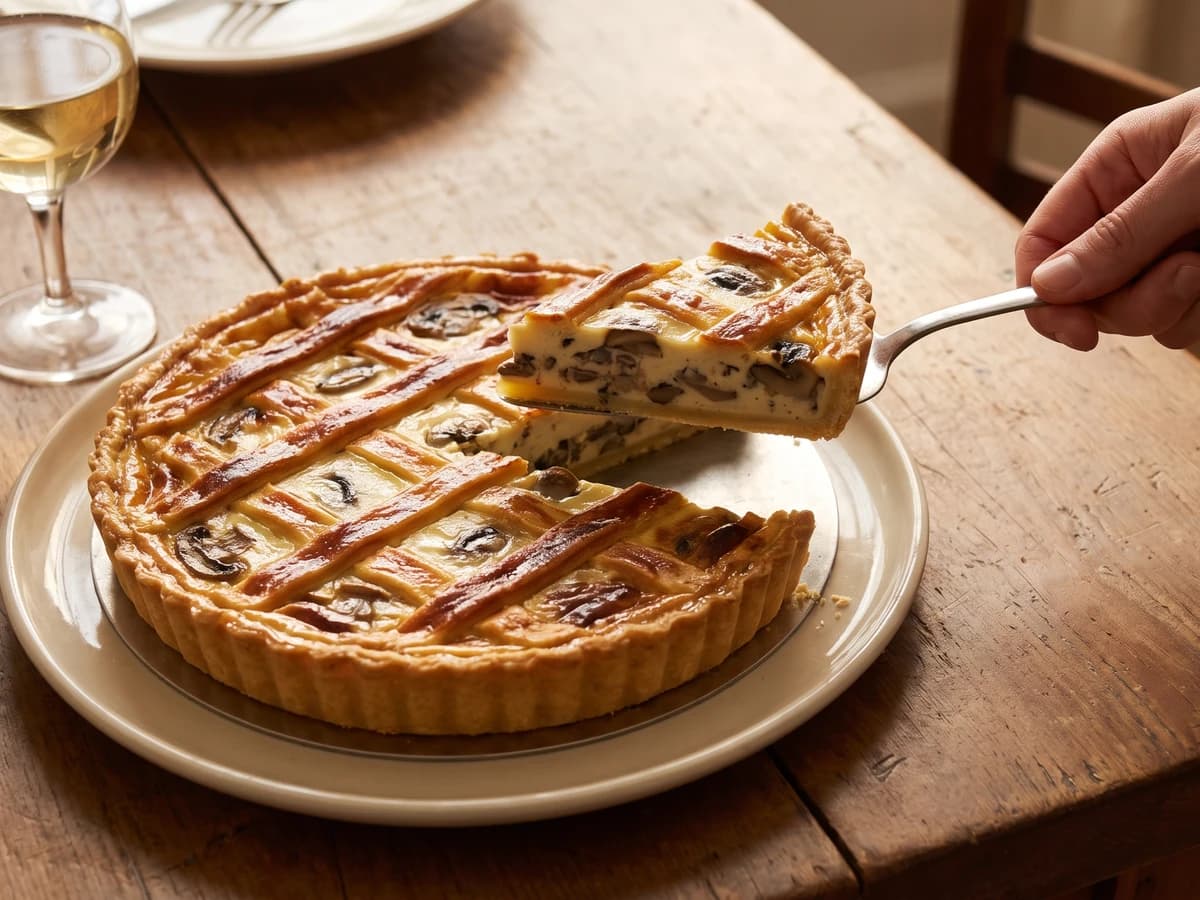
A hot mushroom flan under a butter-gold lattice, with cream reduced close around barely opened caps and a crisp short-paste base protected by one discipline: cool the filling completely.

Chef Juliette
Four little mushroom flans, latticed and gilded, baked hard and fast until butter-gold: a classical garnish scaled to the meat it accompanies and served before its crispness has time to fade.
Chef Juliette
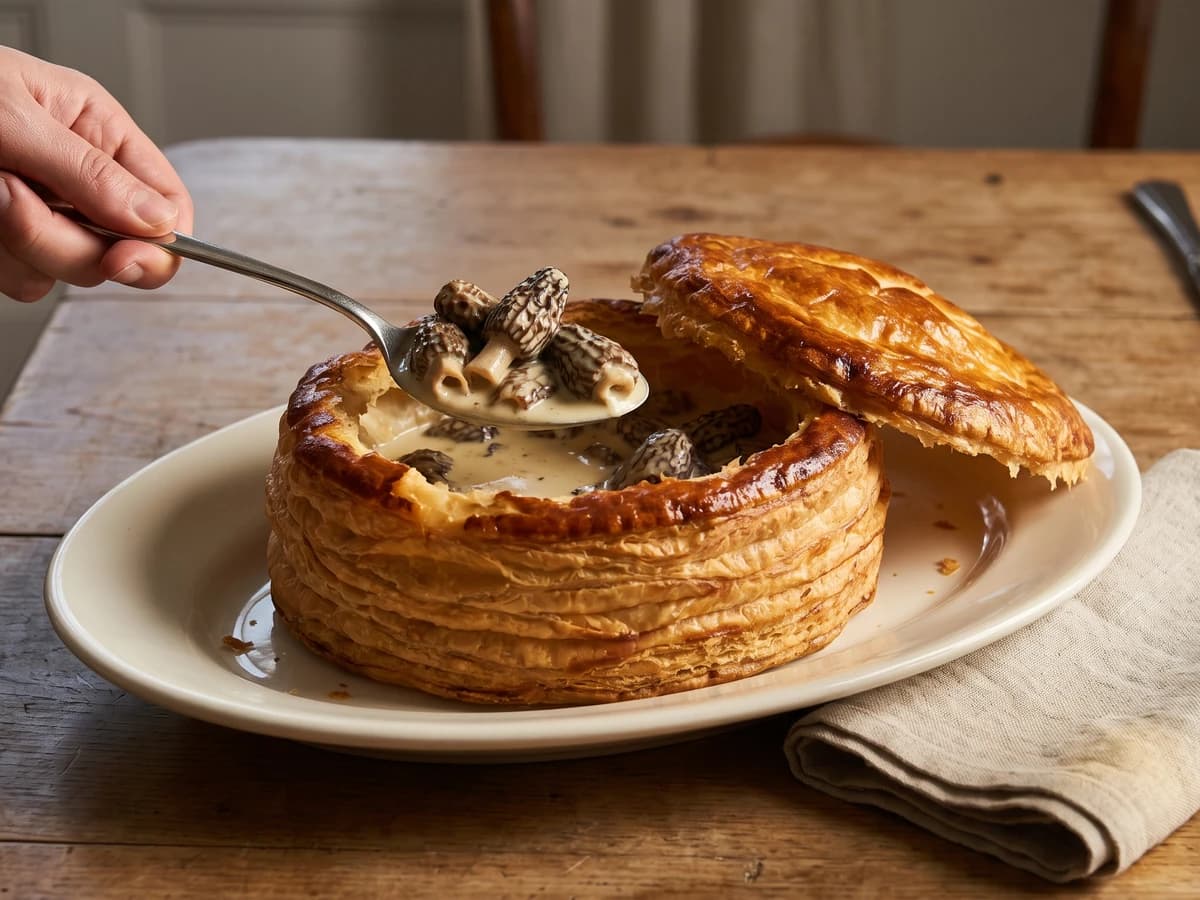
Morels surrender their liquor, then take it back as a glossy cream-and-butter sauce inside burnished puff pastry. The lesson is simple and absolute: reduce with patience, then heat gently and never boil.