
Chef Juliette
Various Almond Preparations
Five almond preparations, one discipline: remove the skins cleanly, dry every kernel through, then cut, toast, or cloak it in pale caramel without letting its fragrant oils escape.
A cooking platform built around craft, culture, and the stories behind what we eat.
Created by Chef Juliette
Based on No. 2554, Abricots Gratinés, from Le Guide Culinaire (1907) by Auguste Escoffier
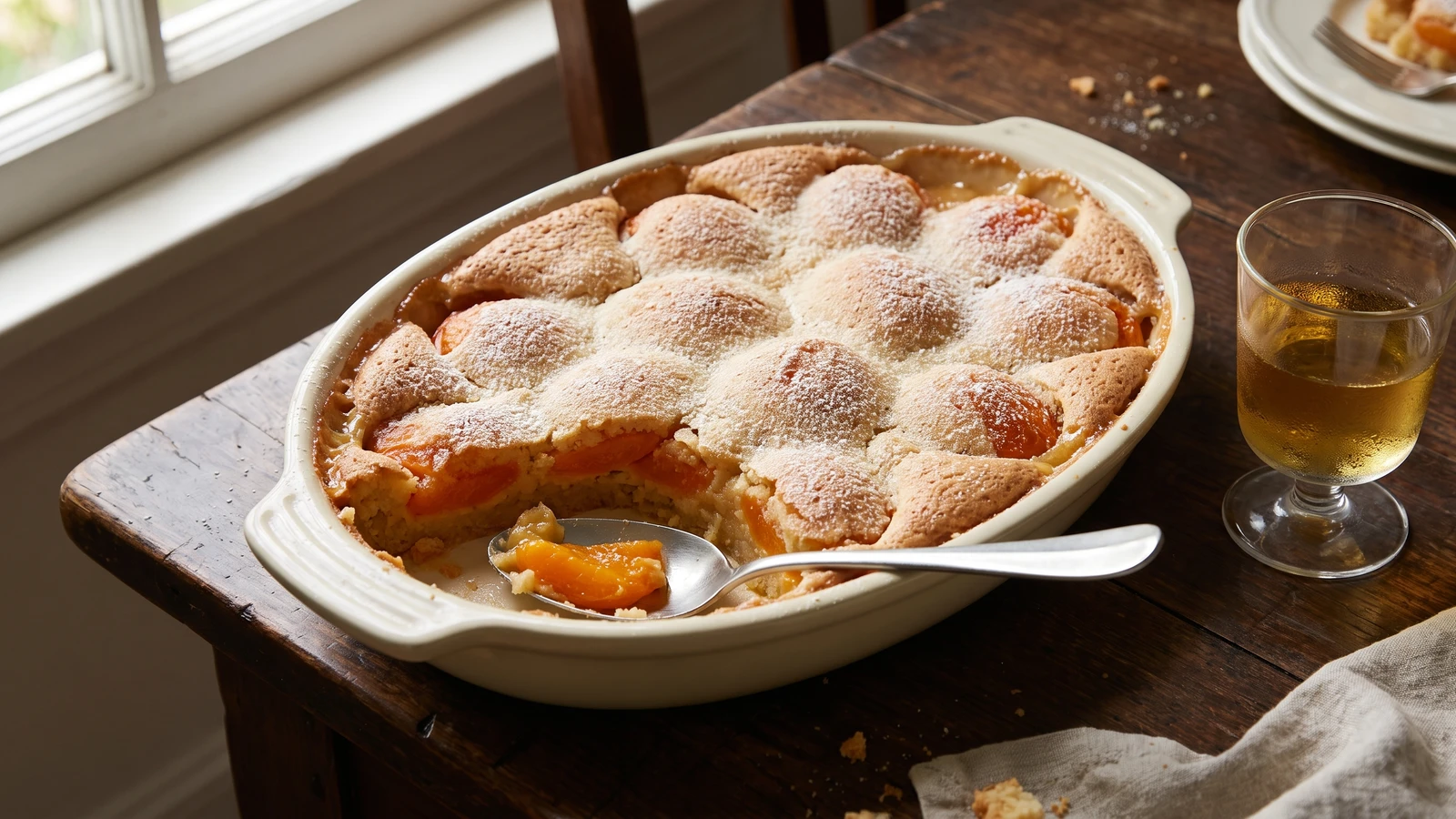
Abricots gratinés turns poached apricot halves, a firm apple bed, and a thin almond covering into a burnished fruit dessert. The base must stand stiff, or the whole handsome top begins to slide.
Abricots gratinés (apricots beneath a lightly browned almond crust) teaches the architecture of a fruit gratin: the base must carry the fruit before the topping ever meets heat. Stew the apple until it stands on the spoon, firmer than you would serve as compote, because the apricots surrender syrup in the oven. A loose base weeps, and the handsome almond covering slides with it.
The original entry assumes a pâtissier’s mise en place already contains stiff stewed apple or semolina, syrup-poached apricot halves, and Pralin (No. 2352) ready at spreading consistency. Those prepared brigade quantities are scaffolding. At home, we cook one small batch, poach ten halves, and use an 8-inch gratin dish. The upper rack of a hot oven, with a few seconds under the broiler only if needed, supplies the close overhead heat of a pastry station. What remains unchanged is the dish itself: an inch-deep base, well-drained fruit, complete coverage, icing sugar, and only enough heat to colour the top.
When it is right, the apricots remain bright and tender beneath a pale hazelnut-coloured lid, while the tart apple keeps the sweetness lively. Before you assemble, draw a spoon through the cooled base. The trench must stay open; if it closes, return the base to the pan and evaporate a little more water.
Abricots gratinés belong to the Parisian classical entremets table, where pastry kitchens assembled prepared fruit, cooked cereal or fruit bases, and almond coverings for service. Despite their kinship with a cobbler, they are not a regional farmhouse bake: the stiff foundation and separate Pralin covering reflect the organized grammar of the grand kitchen. The method passed naturally to bourgeois tables because stewed fruit and syrup-poached apricots could be brought back to life beneath a fresh almond crust.
Quantity
6 large (about 2½ lb / 1.1 kg)
peeled, cored, and thinly sliced
Quantity
2 tablespoons (30 ml / 30 g)
Quantity
3¼ cups (780 ml / 800 g)
use in place of the apples and their water
Quantity
5 apricots, 10 halves (about 12 oz / 340 g)
halved and pitted
Quantity
1 cup (240 ml / 240 g)
Quantity
½ cup (120 ml / 100 g)
Quantity
1¼ cups (300 ml / 240 g) Pralin (No. 2352)
prepared somewhat thin for spreading à Condé
Quantity
2 tablespoons (30 ml / 16 g)
| Ingredient | Quantity |
|---|---|
| tart cooking applespeeled, cored, and thinly sliced | 6 large (about 2½ lb / 1.1 kg) |
| water for stewing the apples | 2 tablespoons (30 ml / 30 g) |
| very stiff stewed semolina prepared like rice for entremets (optional)use in place of the apples and their water | 3¼ cups (780 ml / 800 g) |
| ripe but firm apricotshalved and pitted | 5 apricots, 10 halves (about 12 oz / 340 g) |
| water for the poaching syrup | 1 cup (240 ml / 240 g) |
| granulated sugar for the poaching syrup | ½ cup (120 ml / 100 g) |
| Pralinprepared somewhat thin for spreading à Condé | 1¼ cups (300 ml / 240 g) Pralin (No. 2352) |
| icing sugar | 2 tablespoons (30 ml / 16 g) |
Put the sliced apples and 2 tablespoons of water in a wide, heavy saucepan. Cover and cook over medium-low heat for 8 minutes, until the fruit releases its juice, then uncover and continue cooking for 15 to 20 minutes. Stir and crush the apples into a coarse purée while their moisture evaporates. The base is ready when it gathers around the spoon, holds a mound, and leaves the pan floor briefly bare after each stroke. Cool it and test again. If it slumps or releases liquid, ça se rattrape: return it to low heat and stir until the excess water is gone. If using stewed semolina, apply the same test and reduce it gently if necessary.
Combine the cup of water and granulated sugar in a shallow saucepan. Bring to a gentle simmer, stirring only until the sugar dissolves. Lower in the apricot halves and hold the syrup at the barest tremble for 2 to 4 minutes, turning once, until a knife enters with slight resistance. Lift them out with a slotted spoon and drain cut-side down for at least 15 minutes. If a very ripe half begins to fray, remove it immediately and reserve it for the centre of the gratin, where the covering will hold it together.
Heat the oven to 425°F (220°C) with a rack in the upper third. Spread the cooled apple or semolina base evenly in an 8-inch (20 cm) shallow gratin dish, keeping the layer about 1 inch (2.5 cm) thick. Set the drained apricot halves over it, cut-side down, close enough to make a generous layer without pressing them into the base. Blot away any syrup collecting around the fruit before continuing.
Spoon the somewhat thin Pralin (No. 2352) over the apricots and spread it lightly from edge to edge, covering every half without dragging them out of place. A small offset spatula dampened with cold water will glide more cleanly. If a patch bares the fruit, dab on another spoonful rather than sweeping back and forth. Sift the icing sugar evenly over the entire surface.
Bake for 10 to 14 minutes, until the almond covering is set and only lightly coloured, with small hazelnut-brown freckles across the top and a glossy bubbling edge around the dish. Do not chase a dark crust; the source asks for slight colour. If the centre remains pale, place the dish under the broiler for 20 to 40 seconds, watching without looking away. If an edge darkens first, shield that portion with a strip of foil. Rest the gratin for 10 minutes so the layers settle, then serve it warm from its dish. À table!
1 serving (about 340g)
Culinary guides, cultural storytelling, and the editorial depth that makes cooking meaningful.
Discover Culinary ExplorerChef Juliette
Five almond preparations, one discipline: remove the skins cleanly, dry every kernel through, then cut, toast, or cloak it in pale caramel without letting its fragrant oils escape.

Chef Juliette
A pastry pantry lesson in one tray: filberts warmed only until their red skins release, rubbed clean, cooled, and chopped into a fragrant mise-en-place for cakes, creams, pralines, and petits fours.

Chef Juliette
The smallest pâtisserie discipline decides whether a cake leaves its mould intact: clarified butter in every corner, followed by the lightest veil of dry flour or fécule.

Chef Juliette
Four whites, one spotless bowl, and a patient change of speed: whisk gently until loosened, then briskly to glossy stiffness, with powdered sugar waiting if the foam begins to granulate.