Chef Juliette
Ordinary or White Consommé
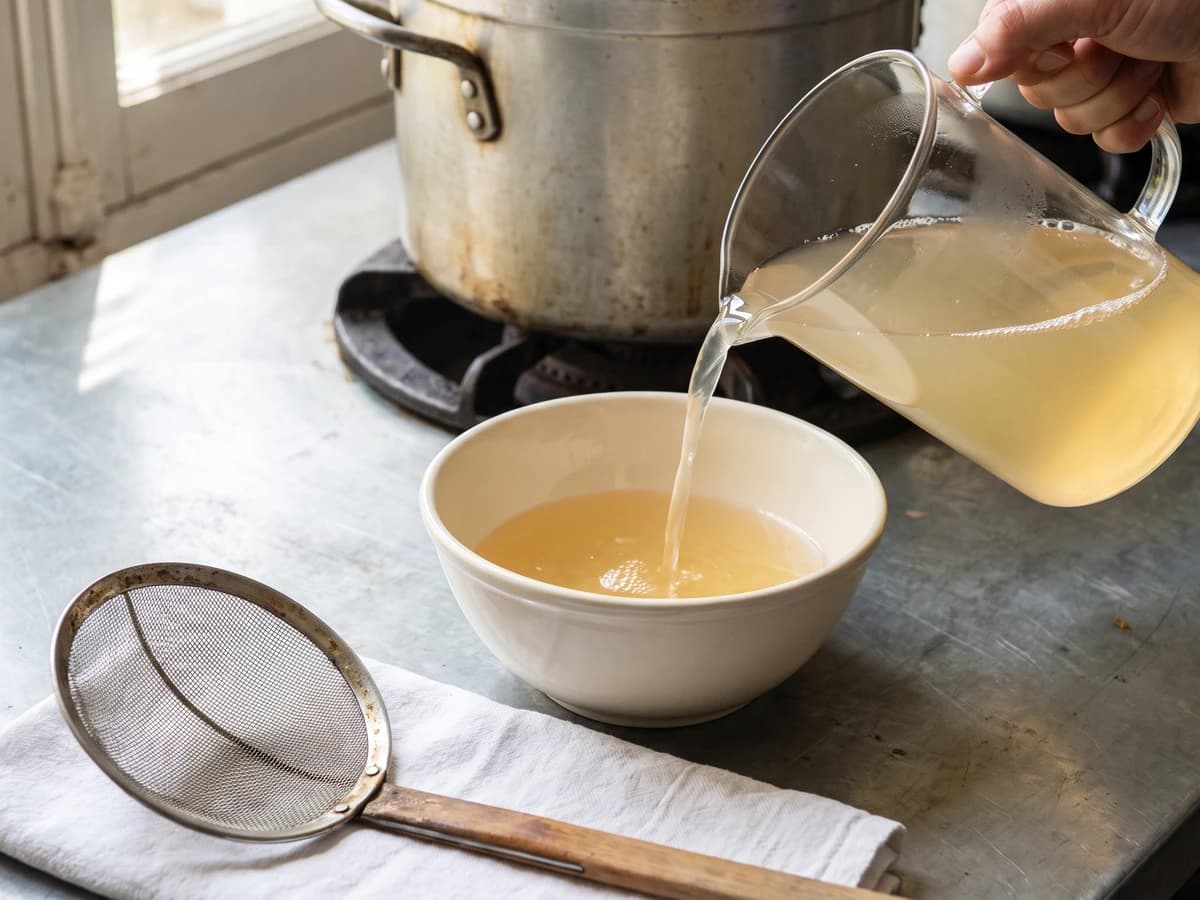
Beef shin, lean beef, and fowl begin in cold water and rise slowly toward a tremble. Skim before the boil, and you learn the quiet discipline that gives every clear French broth its backbone.
A cooking platform built around craft, culture, and the stories behind what we eat.

Created by Chef Juliette
Based on No. 2548, Apricots (Abricots), from Le Guide Culinaire (1907) by Auguste Escoffier
Apricots peeled clean and poached just to tenderness, their golden halves held in clear syrup for tarts and cold sweets: a small lesson in texture, restraint, and knowing when fruit is ready.
Abricots (apricots) teach a quiet pastry-kitchen rule: every apricot bound for a sweet must be peeled. Monder (blanching briefly to slip away the skin) is not fuss for its own sake. Apricot skin tightens in syrup and interrupts the soft, generous flesh underneath, so the peeling stays.
The book's short direction assumed a pastry brigade with boiling water and syrup ready, enough hands to peel fruit by the tray, and preserved apricots waiting in the pantry. There are no brigade proportions in the entry, so this version sets an honest two-jar batch in a sirop léger (light syrup). The bulk setup is scaffolding and can go. The peeling and the second cooking of firm preserved fruit are the dish, and both remain. One cook, one stove, one evening.
The finished halves should be golden and bare-skinned, tender enough for a spoon but still able to sit proudly on a tart. Watch the poach rather than trusting the clock: the point of a small knife should enter with only faint resistance. That moment decides everything.
The French apricot pantry is anchored in the Rhône valley and Roussillon, where generations of growers have preserved ripe fruit as whole halves in syrup as well as cooking it down into jam. From household preserving jars, peeled halves passed naturally into pâtisserie, where they filled tarts, garnished molded sweets, and became compotes without tough skin interrupting the flesh. This classical entry corrects a useful misconception: preserved does not always mean ready, and a firm jarred apricot should be cooked again in its syrup before it joins the sweet.
Quantity
8 cups (1.9 L / 1.2 kg), about 24 to 30
washed
Quantity
2 cups (475 ml / 400 g)
Quantity
4 cups (950 ml / 950 g)
Quantity
8 cups (1.9 L / 1.2 kg) fruit plus 4 cups (950 ml / about 1 kg) syrup
use in place of the fresh apricots, sugar, and water
| Ingredient | Quantity |
|---|---|
| ripe but firm fresh apricotswashed | 8 cups (1.9 L / 1.2 kg), about 24 to 30 |
| granulated sugar | 2 cups (475 ml / 400 g) |
| water | 4 cups (950 ml / 950 g) |
| peeled preserved apricot halves with their packing syrup (optional)use in place of the fresh apricots, sugar, and water | 8 cups (1.9 L / 1.2 kg) fruit plus 4 cups (950 ml / about 1 kg) syrup |
For fresh apricots, bring a large saucepan of water to a boil and set a deep bowl of iced water beside it. Cut a very shallow cross through the skin at the blossom end of each fruit, taking care not to score the flesh. For preserved apricots, drain the halves over the saucepan, reserving 4 cups (950 ml / about 1 kg) of their packing syrup; remove any remaining skin gently with your fingers, then continue at step 4.
Lower four to six apricots into the boiling water and blanch them for 20 seconds, then transfer them immediately to the iced water. Test one: the skin should slip away under the edge of a paring knife. If it clings, return that batch to the boiling water for another 10 seconds. Ça se rattrape. Peel the fruit, halve it along its natural seam, and remove the pits. Work in small batches so the apricots cool quickly and do not begin cooking before the syrup is ready.
Empty the blanching saucepan and add the sugar and water. Warm them over medium heat, stirring only until the sugar dissolves, then bring the syrup to a gentle boil for 2 minutes. It should remain clear and fluid, not reduce toward caramel. Skim away any foam so the finished jars show the fruit cleanly.
Lower the fresh apricot halves into the syrup and reduce the heat until the surface barely trembles. Poach in a single layer, working in batches if necessary, for 3 to 6 minutes. Turn each half once and begin testing early at the shoulder, where the flesh is thickest. For preserved apricots, bring their reserved packing syrup to the same bare tremble, add the peeled halves, and cook them again for 2 to 4 minutes. A knife should enter with faint resistance while the fruit still holds its outline.
Lift the tender halves into two clean, heatproof 1-quart jars with a slotted spoon, arranging them without pressing. Pour over enough hot syrup to cover the fruit completely, leaving about 1 inch of space at the top. Tap each jar gently against a folded towel to release trapped air, then set the lids on loosely. Cool for 30 minutes, tighten the lids, and refrigerate promptly.
Chill the abricots in their syrup for at least 4 hours, and preferably overnight, so the sweetness settles evenly through the flesh. For a tart or molded sweet, drain the halves well and blot them gently before arranging. For a compote, spoon in enough of the clear syrup to give the fruit a generous gloss. Keep refrigerated and use within 10 days.
1 serving (about 125g)
Culinary guides, cultural storytelling, and the editorial depth that makes cooking meaningful.
Discover Culinary ExplorerChef Juliette
Beef shin, lean beef, and fowl begin in cold water and rise slowly toward a tremble. Skim before the boil, and you learn the quiet discipline that gives every clear French broth its backbone.
Chef Juliette
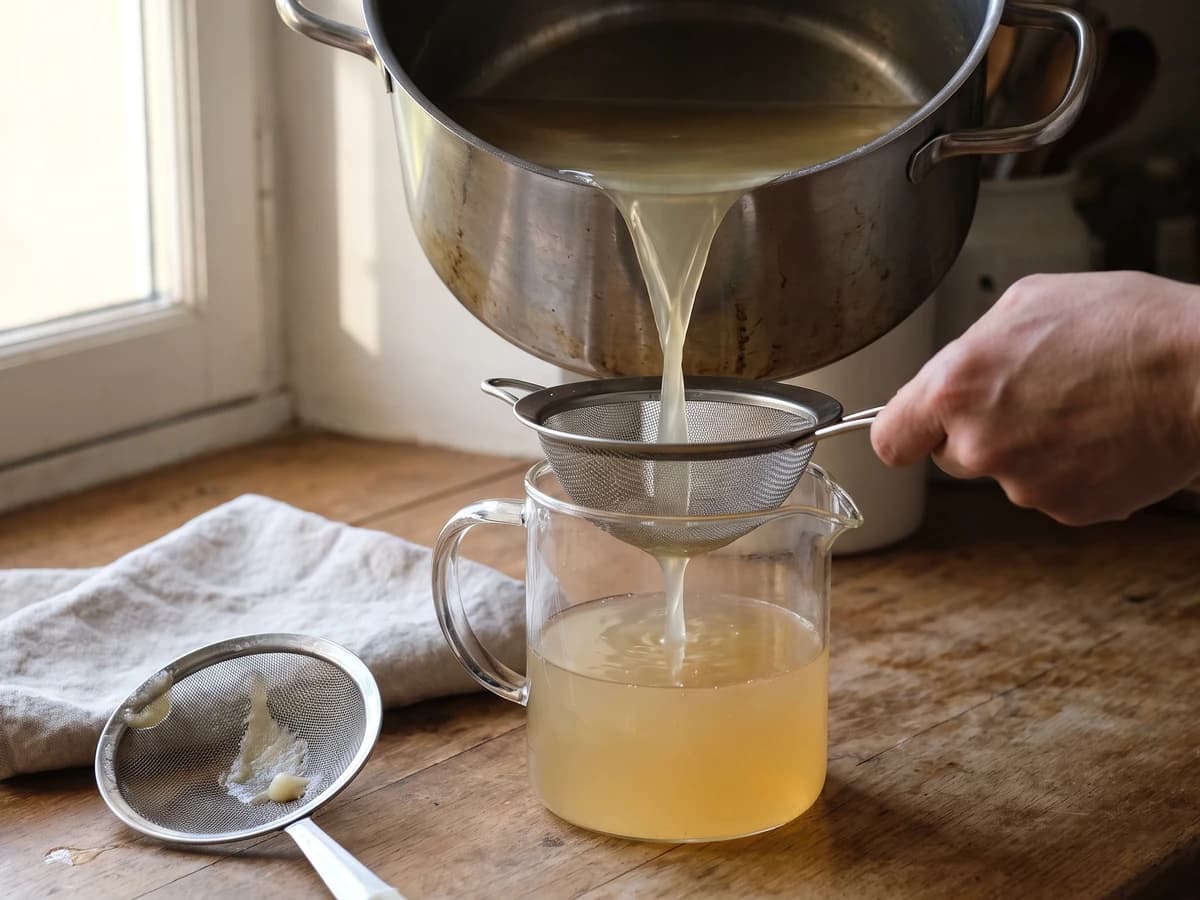
Break the veal bones small, then give them eight hours at a bare tremble. This pale, gelatinous fond becomes the quiet foundation beneath velouté, blanquette, and every sauce that must stay light.
Chef Juliette
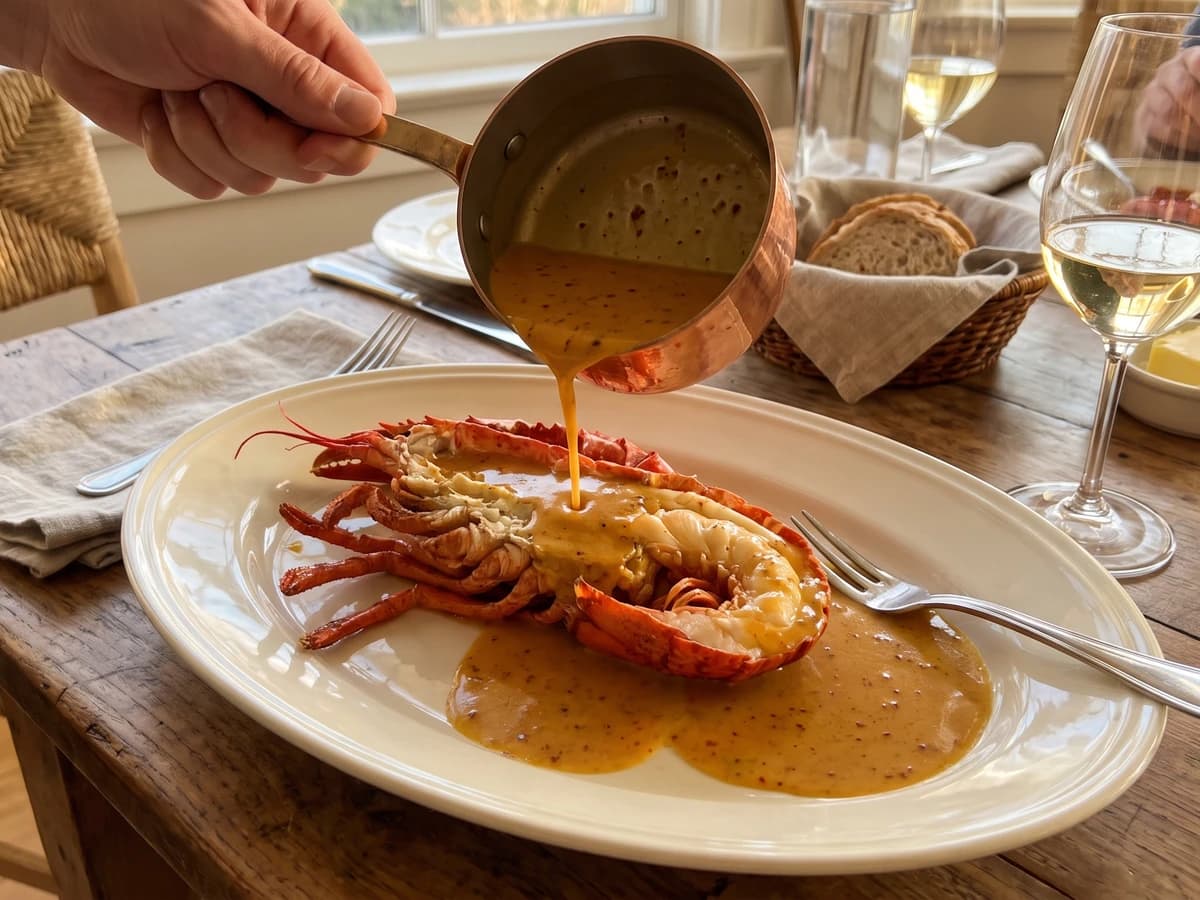
Sauce Orientale concentrates lobster-rich American Sauce with curry, then folds in cream away from the fire: a glossy, gently spiced derivative made for lobster, crayfish, and firm fish.
Chef Juliette
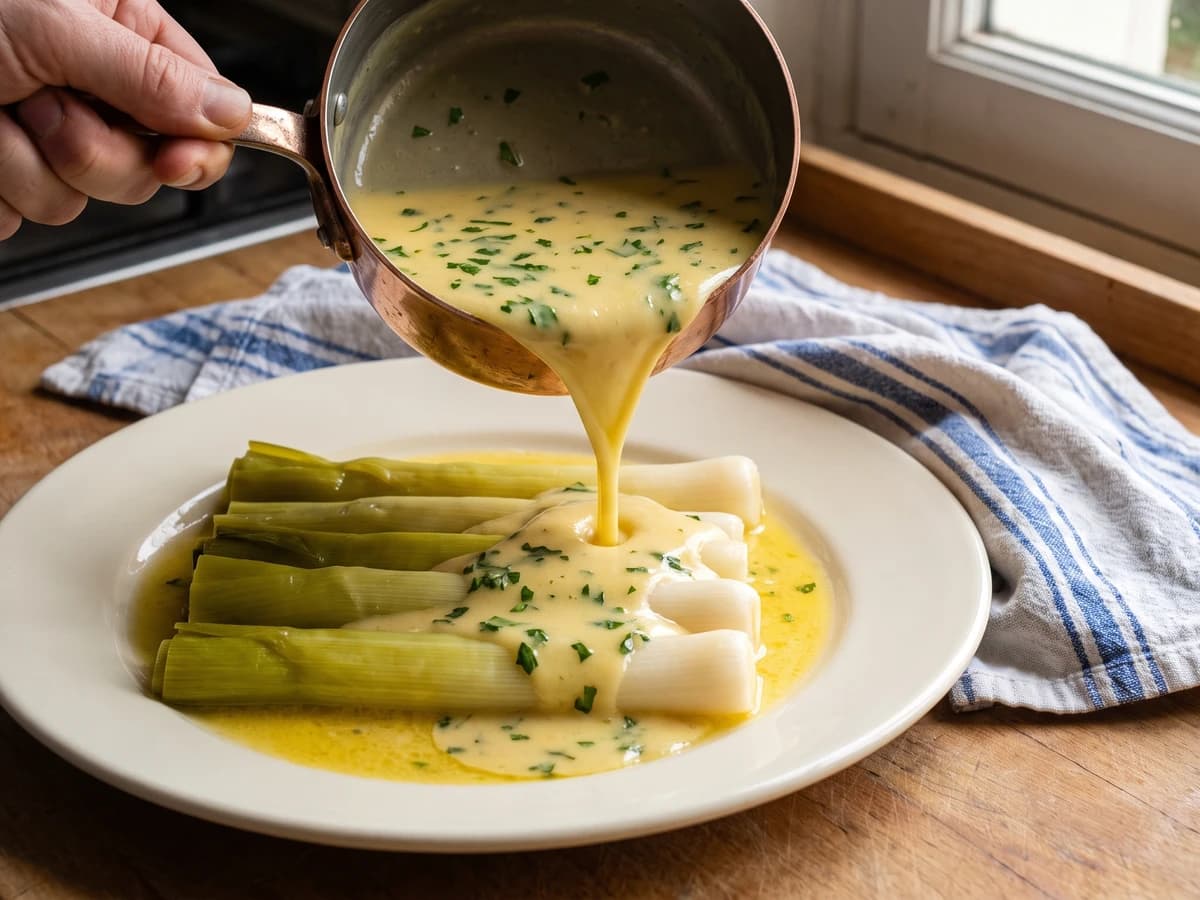
An old lesson in sauce families: Sauce Allemande takes mushroom liquor, then butter, lemon, and parsley, becoming a glossy Poulette for sheep's trotters, leeks, cauliflower, and anything needing gentle richness with a bright edge.