Chef Juliette
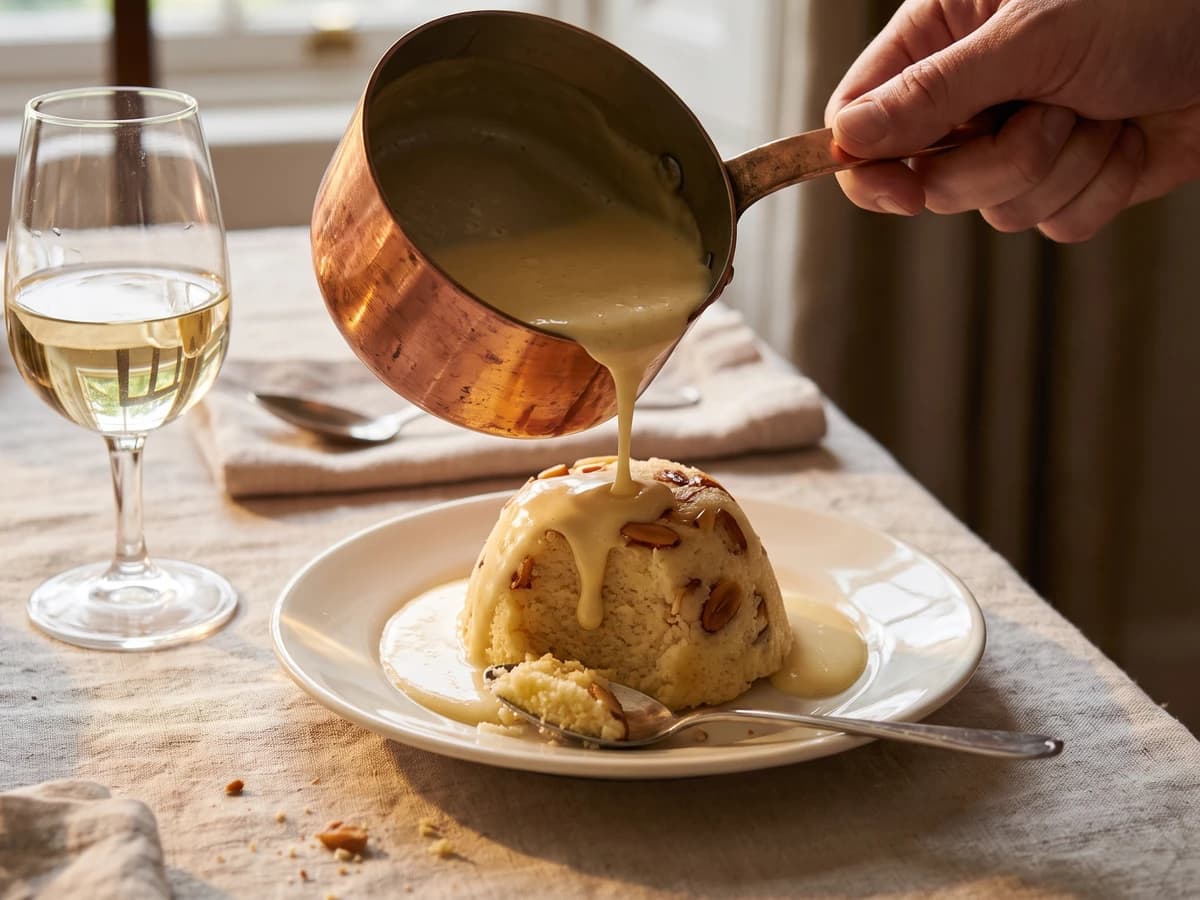
Almond Pudding
Six almond-lined moulds, gently poached until softly risen, with white-wine sabayon scented by orgeat. The lesson is simple and exact: the bain-marie must tremble, never boil.
A cooking platform built around craft, culture, and the stories behind what we eat.
Created by Chef Juliette
Based on No. 2542, Timbale à la d’Aremberg, from Le Guide Culinaire (1907) by Auguste Escoffier
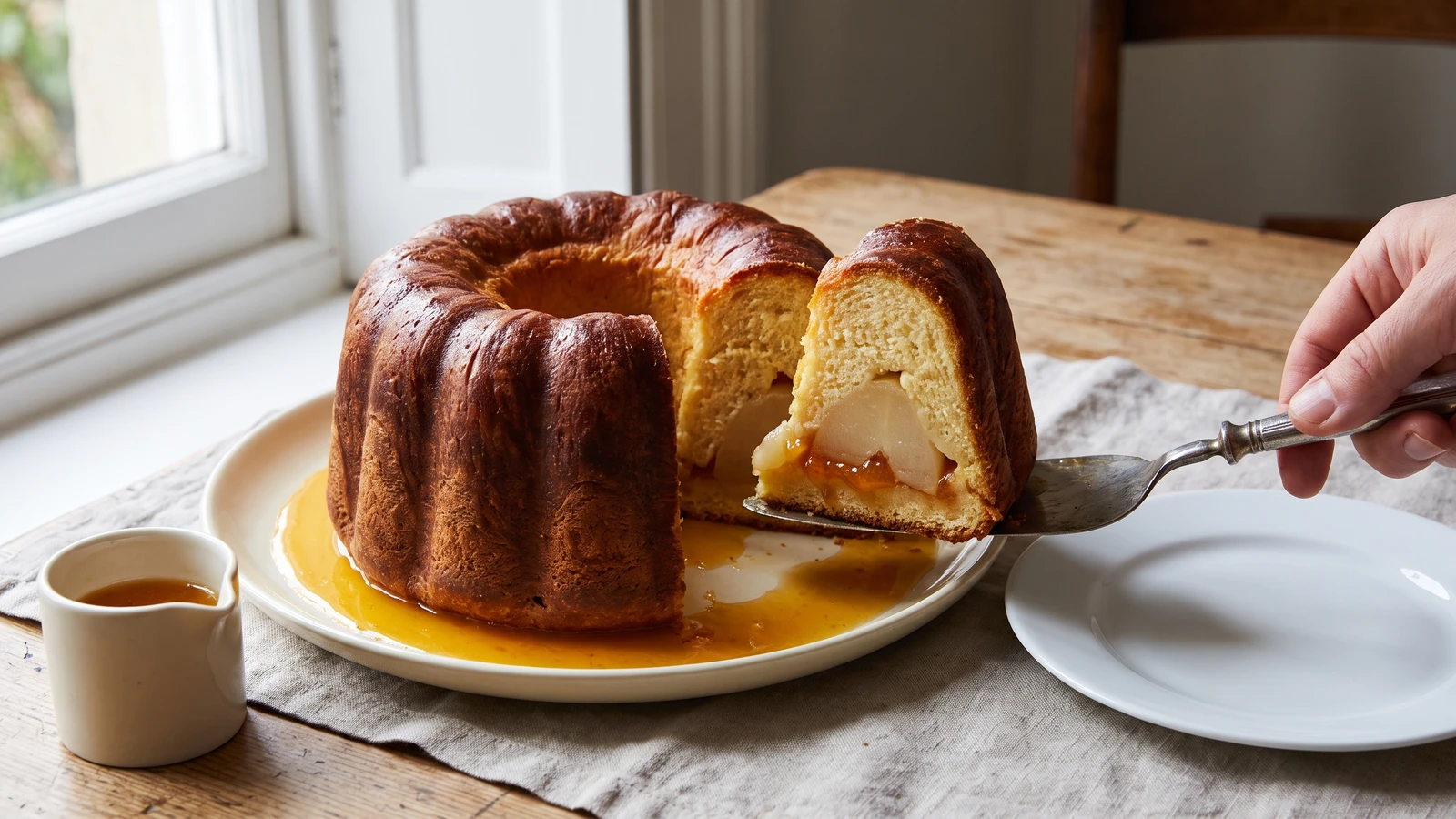
Firm brioche, vanilla-poached pears, apricot jam, and a warm maraschino apricot sauce meet in a tall golden timbale whose sealed seam and clean vent make the whole splendid construction possible.
Timbale à la d’Aremberg (a pear-filled brioche timbale) teaches the discipline of enclosure. Its firm pâte à brioche (brioche dough) must rise around the fruit without surrendering its shape. The one true thing to know before touching a pan is this: the pears must remain firm, then become completely cold and dry before they meet the dough. Warm syrup makes gummy brioche, and soft pears collapse under the knife.
The classical entry assumed a pastry station with mature brioche paste, pears already poached, apricot sauce within reach, and a tall metal Charlotte mould ready for service. At home, we make one modest batch of same-day brioche, poach five pears, and use some of their vanilla syrup to loosen the sauce. A deep metal cake pan can stand in for the Charlotte mould. Separate syrups and waiting components were brigade scaffolding, so they can go; the brioche lining, firm pears, apricot layers, sealed lid, central slit, and maraschino finish are the dish itself and all remain. One cook, one stove, one evening.
When it comes out, the shell should be butter-gold and high-sided, with pale pear quarters and amber apricot held inside like masonry. The seam is the step that decides everything: moisten it lightly, press it without gaps, and cut one clean vent in the centre before baking.
Timbale à la d’Aremberg belongs to the named repertory of Parisian grande cuisine, where aristocratic titles commonly identified formal presentations rather than regional larders. The word timbale describes both the drum-shaped mould and the food formed inside it, which is why the French canon contains savory timbales as well as sweet ones. This version joins the pastry bench to the sauce kitchen through brioche, vanilla-poached pears, apricot, and maraschino; it is a formal dining-room construction, not the traditional specialty of any single French province.
Quantity
¼ cup (60 ml / 60 g)
lukewarm
Quantity
1½ teaspoons (7.5 ml / 5 g)
Quantity
2 tablespoons (30 ml / 25 g)
Quantity
2½ cups (600 ml / 300 g)
Quantity
1 teaspoon (5 ml / 6 g)
Quantity
2 large eggs (about 100 g without shells)
at room temperature
Quantity
7 tablespoons (105 ml / 100 g)
very soft but not greasy
Quantity
2 tablespoons (30 ml / 15 g)
Quantity
1 tablespoon (15 ml / 14 g)
softened
Quantity
5 medium (about 2 lb / 900 g)
peeled, cored, and quartered
Quantity
2½ cups (600 ml / 600 g)
Quantity
1½ cups (360 ml / 300 g)
Quantity
1
split lengthwise and scraped
Quantity
¾ cup (180 ml / 240 g)
Quantity
1 teaspoon (5 ml / 5 g)
Quantity
½ cup (120 ml / 160 g)
Quantity
½ cup (120 ml / 120 g)
Quantity
2 tablespoons (30 ml / 29 g)
| Ingredient | Quantity |
|---|---|
| whole milklukewarm | ¼ cup (60 ml / 60 g) |
| instant yeast | 1½ teaspoons (7.5 ml / 5 g) |
| granulated sugar for the brioche | 2 tablespoons (30 ml / 25 g) |
| bread flour | 2½ cups (600 ml / 300 g) |
| fine sea salt | 1 teaspoon (5 ml / 6 g) |
| large eggsat room temperature | 2 large eggs (about 100 g without shells) |
| unsalted butter for the briochevery soft but not greasy | 7 tablespoons (105 ml / 100 g) |
| bread flour for rolling | 2 tablespoons (30 ml / 15 g) |
| unsalted butter for the mouldsoftened | 1 tablespoon (15 ml / 14 g) |
| firm-ripe Bosc or Conference pearspeeled, cored, and quartered | 5 medium (about 2 lb / 900 g) |
| water for the poaching syrup | 2½ cups (600 ml / 600 g) |
| granulated sugar for the poaching syrup | 1½ cups (360 ml / 300 g) |
| vanilla beansplit lengthwise and scraped | 1 |
| smooth apricot jam for filling | ¾ cup (180 ml / 240 g) |
| water for sealing | 1 teaspoon (5 ml / 5 g) |
| smooth apricot jam for the sauce | ½ cup (120 ml / 160 g) |
| reserved vanilla pear-poaching syrup | ½ cup (120 ml / 120 g) |
| maraschino liqueur | 2 tablespoons (30 ml / 29 g) |
Stir the lukewarm milk, yeast, and brioche sugar together in the mixer bowl. Add the eggs, 2½ cups bread flour, and salt, then mix with the dough hook on low until no dry flour remains. Knead on medium-low for 6 minutes, until the dough grows elastic. Add the soft butter one tablespoon at a time, waiting until each addition disappears before adding the next, then knead for another 6 to 8 minutes. The finished dough should be satin-smooth and tacky but strong enough to gather around the hook.
Shape the dough into a ball, cover it, and let it rise until about half again its original size, 60 to 75 minutes. It needn't double. Press out the gas gently, flatten the dough into a thick disc, cover, and chill for 30 minutes. Chilling firms the butter and gives you a dough that can line the tall mould without sliding down its sides.
While the dough rises, combine the 2½ cups water, poaching sugar, vanilla pod, and scraped seeds in a snug saucepan. Bring to a simmer and cook for 3 minutes. Add the pear quarters and cover them with a parchment round so they stay beneath the syrup. Poach at the gentlest simmer for 8 to 12 minutes, turning once, until a knife enters but still meets clear resistance. Lift the pears onto a rack, reserve the syrup, and let the fruit cool completely. Drain for at least 20 minutes and blot every surface dry.
Set a rack in the lower third of the oven and heat it to 350°F (180°C), or 340°F (170°C) with a fan. Butter the Charlotte mould generously, brushing upward along the sides. Divide the chilled dough into two-thirds for the lining and one-third for the lid. On a lightly floured surface, roll the larger piece into a 16-inch (40 cm) round about ⅛ inch (3 mm) thick. Lower it into the mould without stretching, press it into the bottom and sides, and leave about ¾ inch (2 cm) overhanging the rim. Patch any thin place with a scrap of dough, pressing until no seam remains.
Stir the filling jam until spreadable. Arrange a close layer of cold, dry pear quarters in the lined mould, keeping them about ½ inch (1 cm) below the eventual lid. Spoon thin ribbons of apricot jam between and over the pears, then repeat the pear and jam layers until the mould is filled to ½ inch (1 cm) below its rim. Pack the fruit neatly but don't crush it. Any syrup carried into the mould will soak the brioche, so blot again if the pears still shine with liquid.
Roll the reserved dough into an 8-inch (20 cm) round. Brush the overhanging edge in the mould very lightly with the sealing water, lay the lid over the filling, and press firmly around the entire rim. Trim the excess to about ½ inch (1 cm), fold it inward, and press again to make one continuous seal. Cut a clean 1-inch (2.5 cm) slit through the centre of the lid for the escape of steam. Let the assembled timbale stand for 20 to 25 minutes, just until the lid looks gently puffed.
Set the mould on a rimmed baking sheet and bake for 40 to 45 minutes. Rotate it once after 25 minutes. The exposed lid should become deep hazelnut-brown, and a thin skewer inserted into the brioche near the wall, avoiding the fruit, should emerge without raw dough. If the lid colours too quickly, cover it loosely with foil and continue baking; pale sides mean the timbale is not ready to leave its mould.
While the timbale bakes, combine the sauce jam with ½ cup reserved vanilla pear-poaching syrup. Simmer for 4 to 6 minutes, whisking, until smooth and loose enough to pour while still coating the back of a spoon. Pass it through a fine sieve, remove it from the heat, and stir in the maraschino liqueur. If it tightens too far, loosen it with another spoonful of syrup; if it runs like water, return it to the pan and reduce briefly.
Let the baked timbale settle for 5 minutes, no longer. Wearing oven mitts, loosen only the upper edge with a thin knife, place a warm rimmed serving plate over the mould, and invert both together. Lift the mould straight up. If it resists, wrap the outside in a hot damp towel for 30 seconds and try again. Rest the timbale for 10 minutes before cutting with a serrated knife. Bring the warm maraschino apricot sauce separately and spoon it generously around each slice. À table!
1 serving (about 310g)
Culinary guides, cultural storytelling, and the editorial depth that makes cooking meaningful.
Discover Culinary ExplorerChef Juliette
Six almond-lined moulds, gently poached until softly risen, with white-wine sabayon scented by orgeat. The lesson is simple and exact: the bain-marie must tremble, never boil.
Chef Juliette
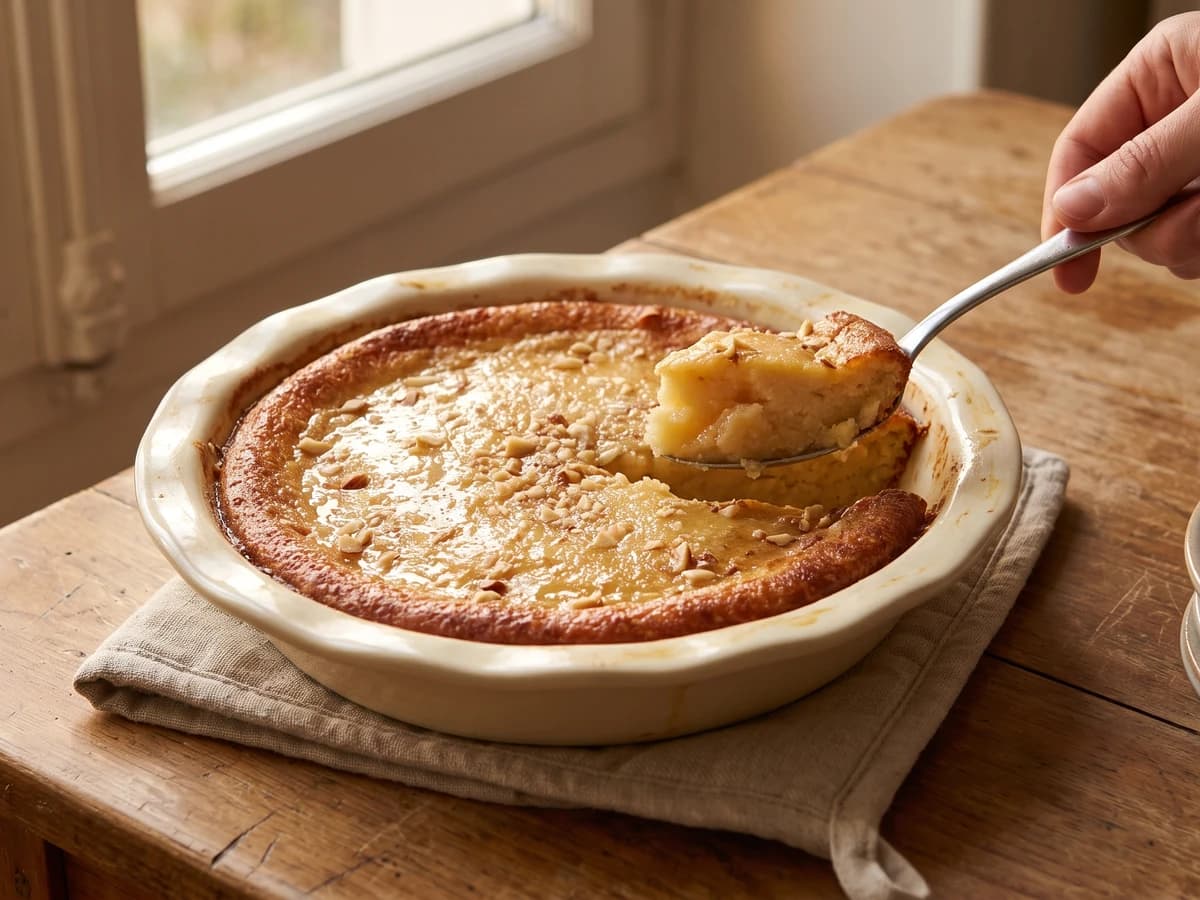
Butter worked to a true pommade carries almonds, eggs, orange-flower water, and cream into a tender pouding, gently set in a bain-marie and brought to the table in the very dish that baked it.
Chef Juliette
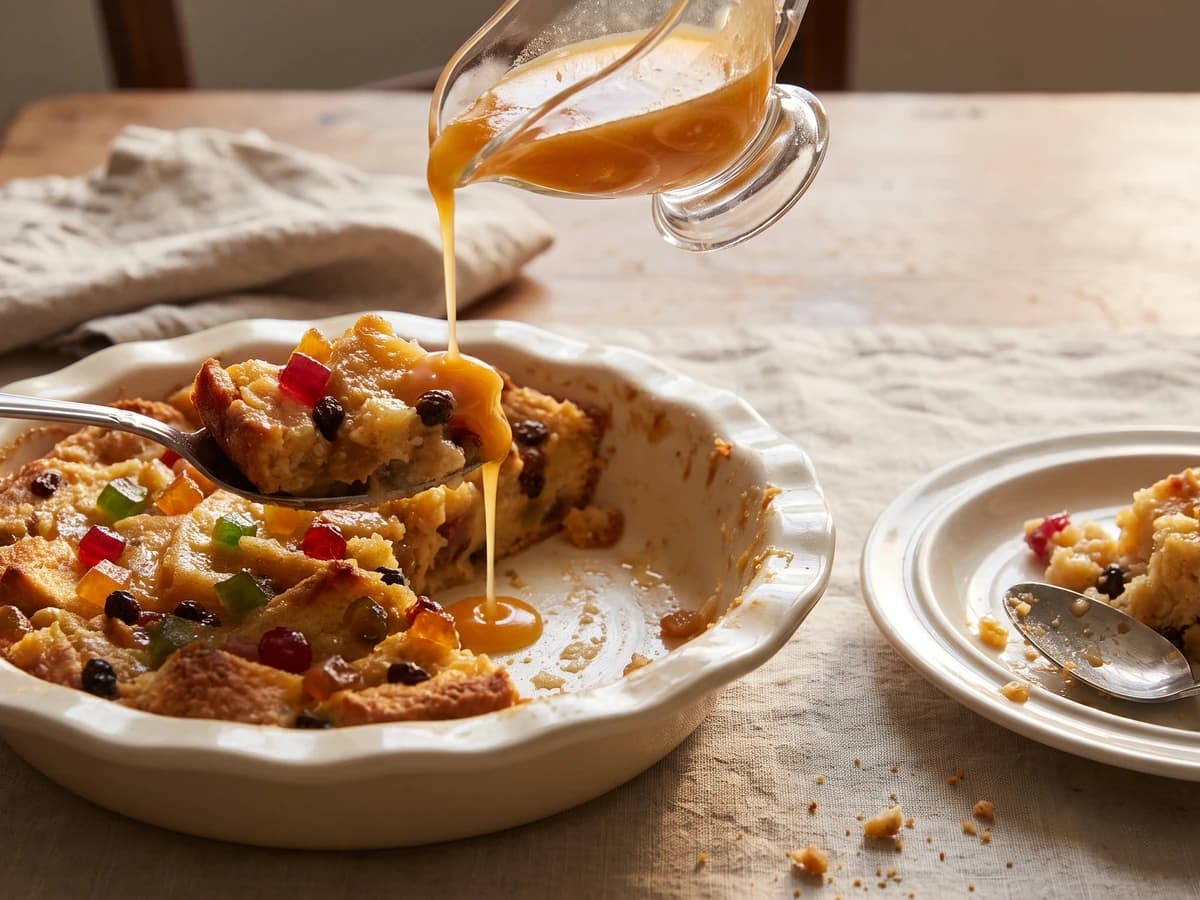
Pouding aux biscuits turns crushed ladyfingers, hot milk, kirsch-soaked fruit, butter, and yolks into a tender pudding, with five late-folded whites keeping every spoonful light beneath warm apricot sauce.
Chef Juliette
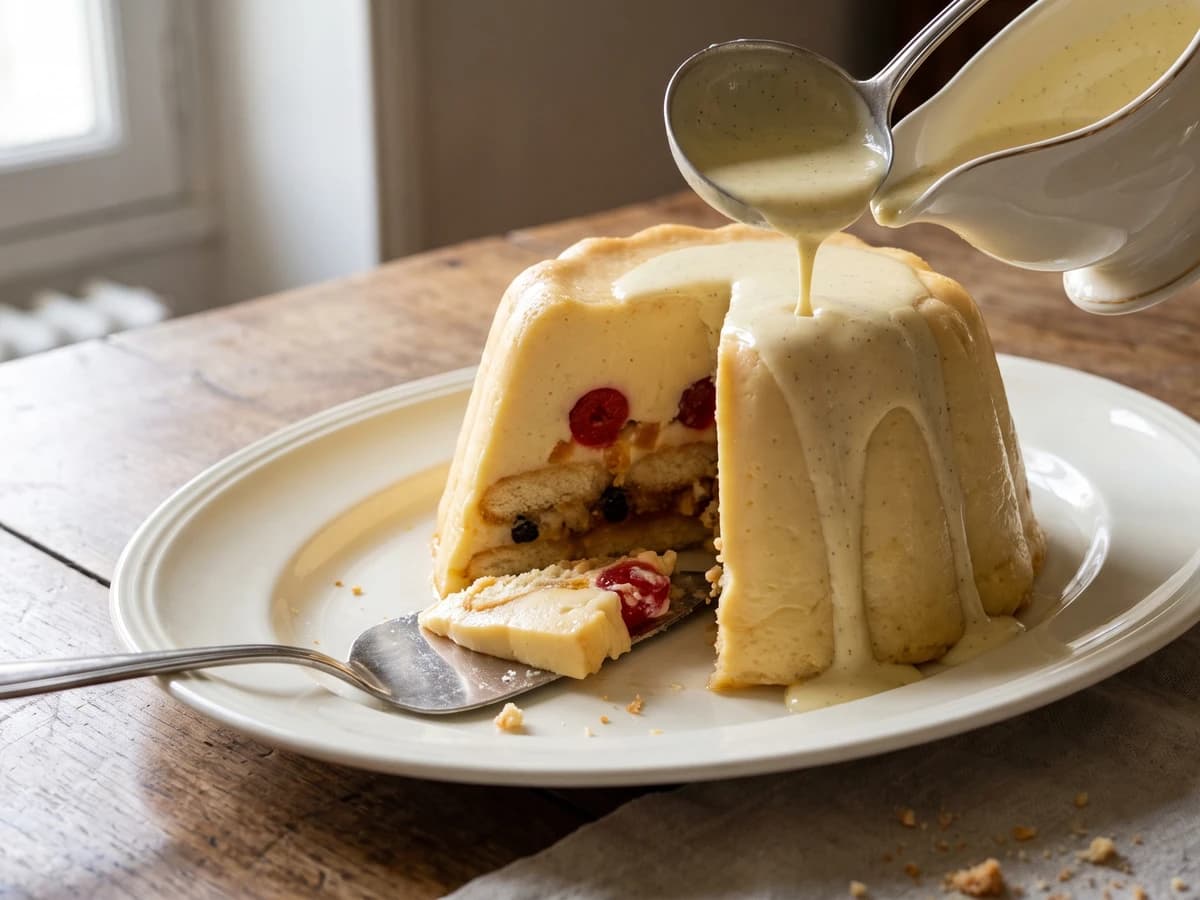
Liqueur-soaked biscuits, jewel-bright fruit, and vanilla custard are packed into one mould and poached without a bubble. Fill slowly, and every slice holds its cabinet of colours.