
Chef Juliette
Flan aux Carottes
A pale short-paste shell holds silken, lightly sweet carrot purée beneath neat glazed half-discs, their butter syrup catching the light: a classical tart poised between vegetable course and sweet.
A cooking platform built around craft, culture, and the stories behind what we eat.
Created by Chef Juliette
Based on No. 2541, Subrics, from Le Guide Culinaire (1907) by Auguste Escoffier
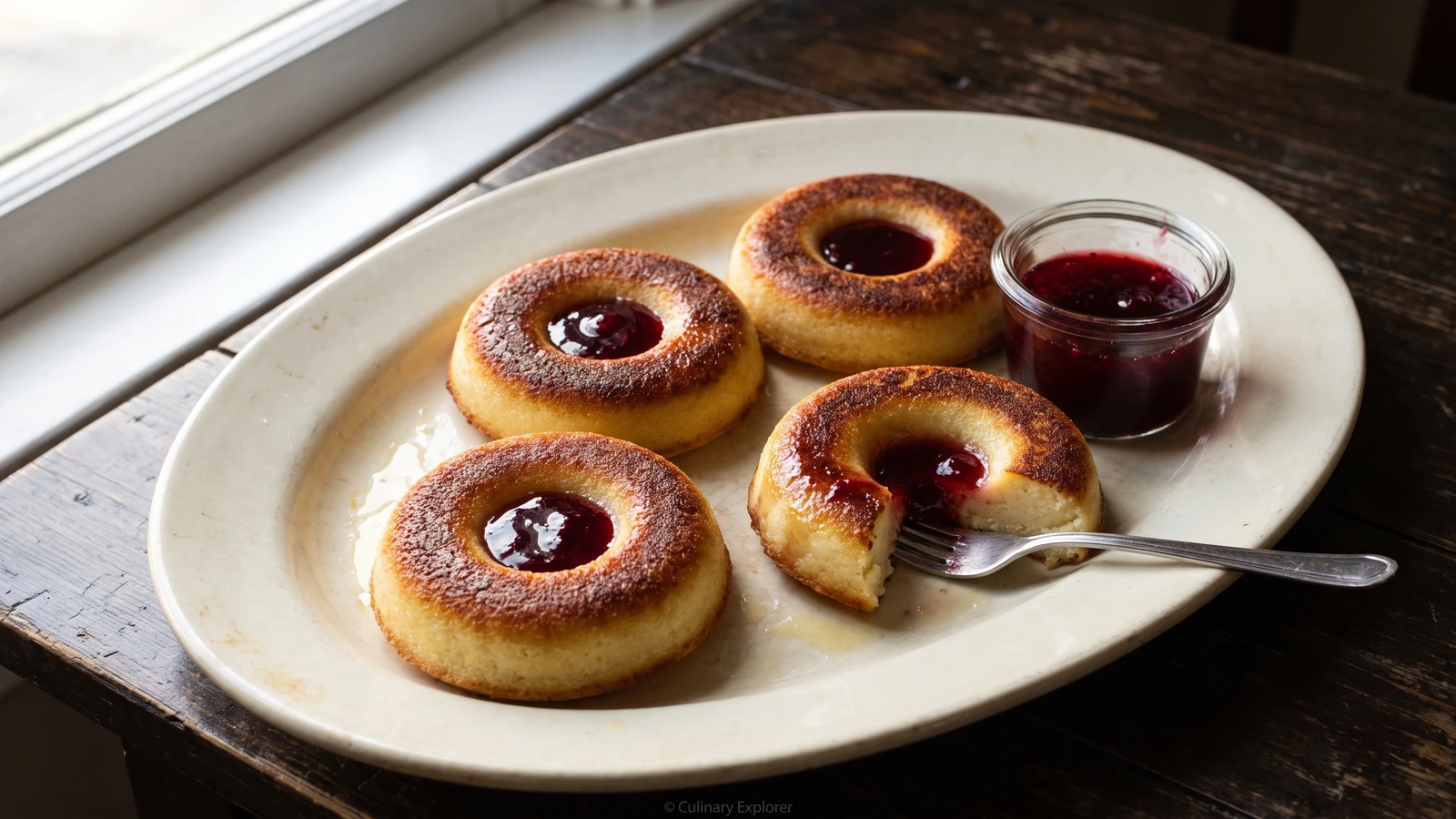
Subrics teach the discipline of setting before frying: vanilla semolina chilled firm, cut into neat rings, bronzed in clarified butter, and filled with sharp red-currant jelly while the crust is still glossy.
Subrics (butter-browned semolina rings) teach one discipline above all: set first, brown second. The paste may be perfectly smooth and the butter properly clarified, but if the semolina isn't cold through its center, the rings will bend before they bronze. Cold gives them their shape. Butter gives them their crust.
The original formula assumed six yolks, a covered oven holding a steady gentle heat, a broad buttered service tray, and enough diners to clear it. For four servings, I halve the measured semolina formula while preserving its proportions exactly. A lidded ovenproof saucepan and a buttered six-inch square pan replace the service equipment. One cook, one stove, one evening.
The covered oven cooking stays because it hydrates the semolina gently, and the full chilling stays because it is the dish. The broad service tray was brigade scaffolding; it can go. Before a ring meets the frying pan, press its center with one finger. It must feel as firm as its edge. That is the step that decides the dish.
Subrics belong to the French classical entremets course, where the name covered compact mixtures shaped or cut and then colored in butter, not yeast-raised doughnuts. The semolina version sits as comfortably on the bourgeois table as it did in grand-kitchen service, since its structure comes from pantry staples and careful chilling rather than pastry dough. The red-currant or quince center preserves the classical balance: mild, buttery grain against a tart, firm fruit jelly.
Quantity
1 cup plus 3 tablespoons (285 ml / 294 g)
Quantity
¼ cup (60 ml / 50 g)
Quantity
1 teaspoon (5 ml / 4 g)
Quantity
⅓ cup (80 ml / 57 g)
Quantity
1½ tablespoons (22 ml / 21 g)
Quantity
1 pinch (about 1/16 teaspoon / 0.4 g)
Quantity
3
Quantity
2 teaspoons (10 ml / 9 g)
for the pan and surface
Quantity
¼ cup (60 ml / 55 g)
for browning
Quantity
¼ cup (60 ml / 80 g)
| Ingredient | Quantity |
|---|---|
| whole milk | 1 cup plus 3 tablespoons (285 ml / 294 g) |
| granulated sugar | ¼ cup (60 ml / 50 g) |
| pure vanilla extract | 1 teaspoon (5 ml / 4 g) |
| fine semolina | ⅓ cup (80 ml / 57 g) |
| unsalted butter | 1½ tablespoons (22 ml / 21 g) |
| fine salt | 1 pinch (about 1/16 teaspoon / 0.4 g) |
| large egg yolks | 3 |
| softened unsalted butterfor the pan and surface | 2 teaspoons (10 ml / 9 g) |
| clarified butterfor browning | ¼ cup (60 ml / 55 g) |
| firm red-currant jelly, or very firm quince jelly | ¼ cup (60 ml / 80 g) |
Heat the oven to 325°F (165°C). Line the bottom of a six-inch square metal pan with parchment, then butter the parchment and sides with half the softened butter. This compact pan replaces the broad service tray and gives the half-batch its proper two-thirds-inch thickness.
Bring the milk and sugar to a full boil in a lidded ovenproof saucepan, stirring so the sugar dissolves without catching. Remove the pan from the heat and stir in the vanilla. Sprinkle in the semolina in a steady rain while whisking, then add the 1½ tablespoons butter and salt. If lumps appear, keep whisking while the mixture is still loose; stubborn ones can be pressed out against the side of the pan. Ça se rattrape. Cover and cook in the oven for 25 minutes, until the grains are tender and a spoon drawn through the paste leaves a furrow that closes slowly.
Whisk the egg yolks in a heatproof bowl. Beat in one large spoonful of the hot semolina, then another, before scraping the tempered yolks back into the saucepan off the heat. Whisk vigorously until the paste becomes smooth and glossy. Do not boil it once the yolks are in, since hard heat will turn them grainy. If only a few cooked threads appear, push the paste through a fine sieve while it is still hot.
Scrape the paste into the prepared pan and level it to an even two-thirds inch (1.7 cm), pressing it firmly into the corners so no air pockets remain. Pass the remaining softened butter over the surface in a thin film; this is the original protection against a dry skin, and it works better than fussing with the paste later. Cool for 20 minutes, then refrigerate for at least 2½ hours, until the center is completely cold and firm. If the middle still yields under a finger, give it more time. Warm semolina cannot be argued into holding a ring.
Turn the cold slab onto a board and peel away the parchment. With a three-inch round cutter, cut four discs in a tight two-by-two arrangement, pressing straight down without twisting. Cut a one-inch hole from the center of each disc, then transfer the rings to a cold plate with a thin spatula. Keep them refrigerated while the pan heats.
Heat the clarified butter in a wide heavy skillet over medium heat until it shimmers. Lower in the rings with a broad spatula and brown them for 3 to 4 minutes per side, turning each with two spatulas when the underside is evenly bronze. If a ring bends or cracks as you lift it, it was not cold enough: slide it onto a plate, press the crack closed while the paste is pliable, chill it for 20 minutes, and try again. Ça se rattrape. Lower the heat if the surface colors before a light crust forms.
Arrange the four hot subrics in a circle on a warm platter. Stir the jelly just enough to make it supple, without melting it, and spoon one tablespoon into the center of each ring. Serve at once, while the exteriors are crisp and butter-glossed and the vanilla centers remain tender. À table!
1 serving (about 145g)
Culinary guides, cultural storytelling, and the editorial depth that makes cooking meaningful.
Discover Culinary ExplorerChef Juliette
A pale short-paste shell holds silken, lightly sweet carrot purée beneath neat glazed half-discs, their butter syrup catching the light: a classical tart poised between vegetable course and sweet.
Chef Juliette
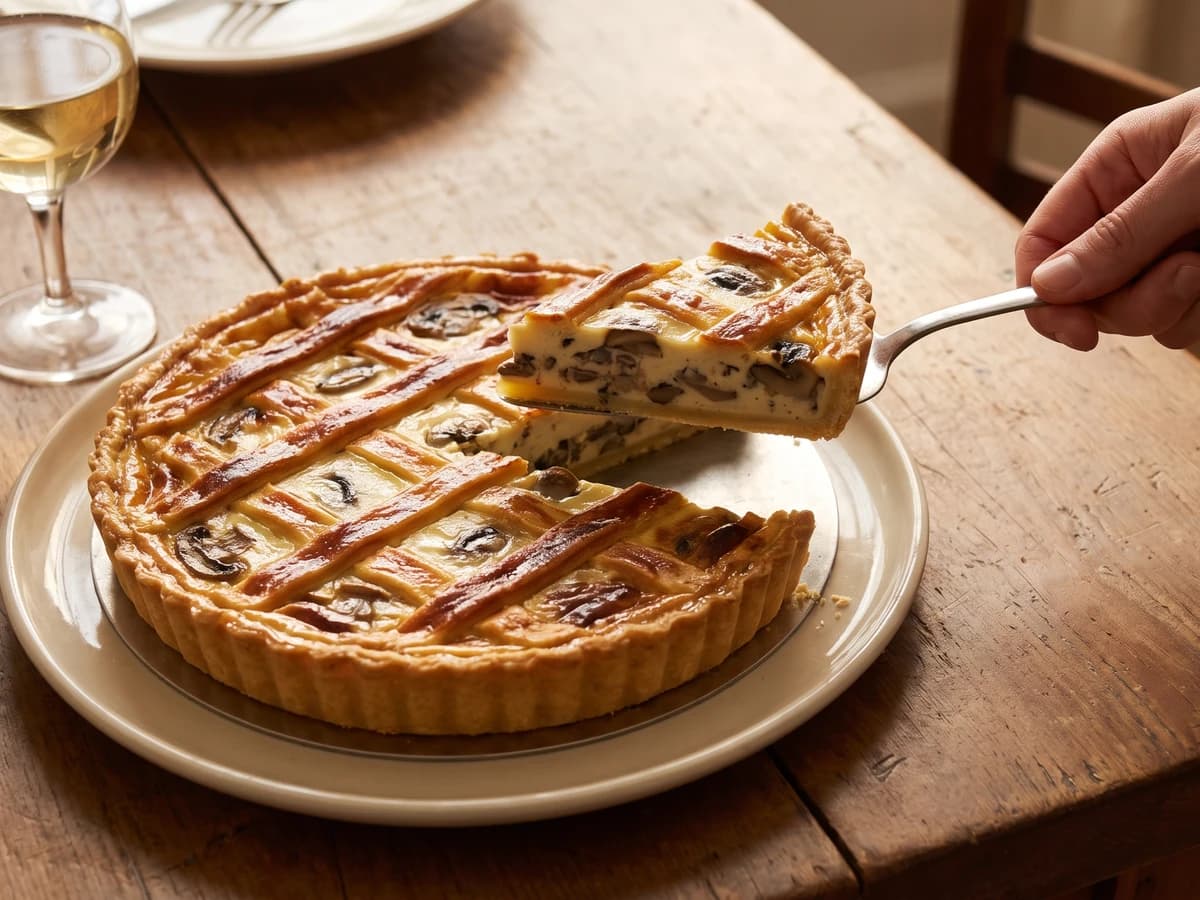
A hot mushroom flan under a butter-gold lattice, with cream reduced close around barely opened caps and a crisp short-paste base protected by one discipline: cool the filling completely.

Chef Juliette
Four little mushroom flans, latticed and gilded, baked hard and fast until butter-gold: a classical garnish scaled to the meat it accompanies and served before its crispness has time to fade.
Chef Juliette
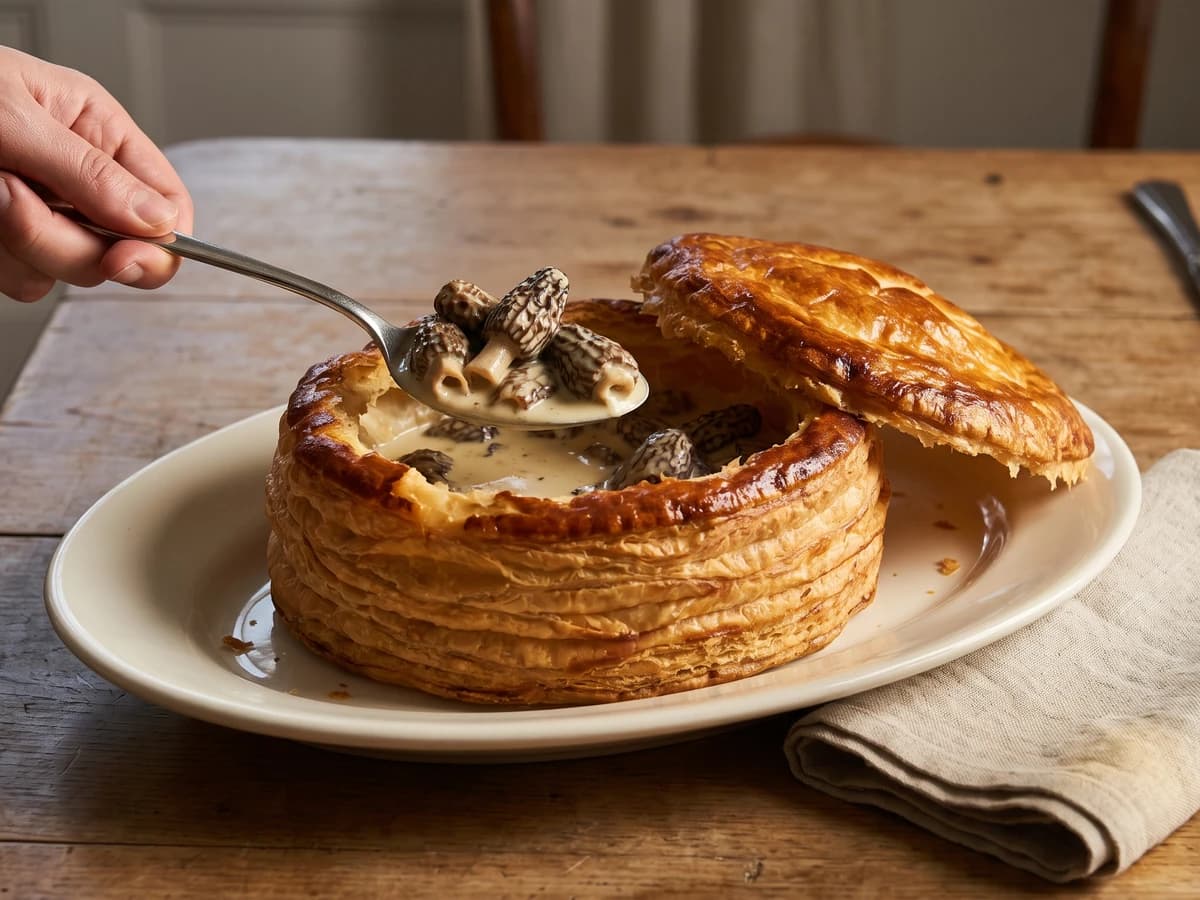
Morels surrender their liquor, then take it back as a glossy cream-and-butter sauce inside burnished puff pastry. The lesson is simple and absolute: reduce with patience, then heat gently and never boil.