
Chef Juliette
Various Almond Preparations
Five almond preparations, one discipline: remove the skins cleanly, dry every kernel through, then cut, toast, or cloak it in pale caramel without letting its fragrant oils escape.
A cooking platform built around craft, culture, and the stories behind what we eat.
Created by Chef Juliette
Based on No. 2539, Vanilla Soufflé, from Le Guide Culinaire (1907) by Auguste Escoffier
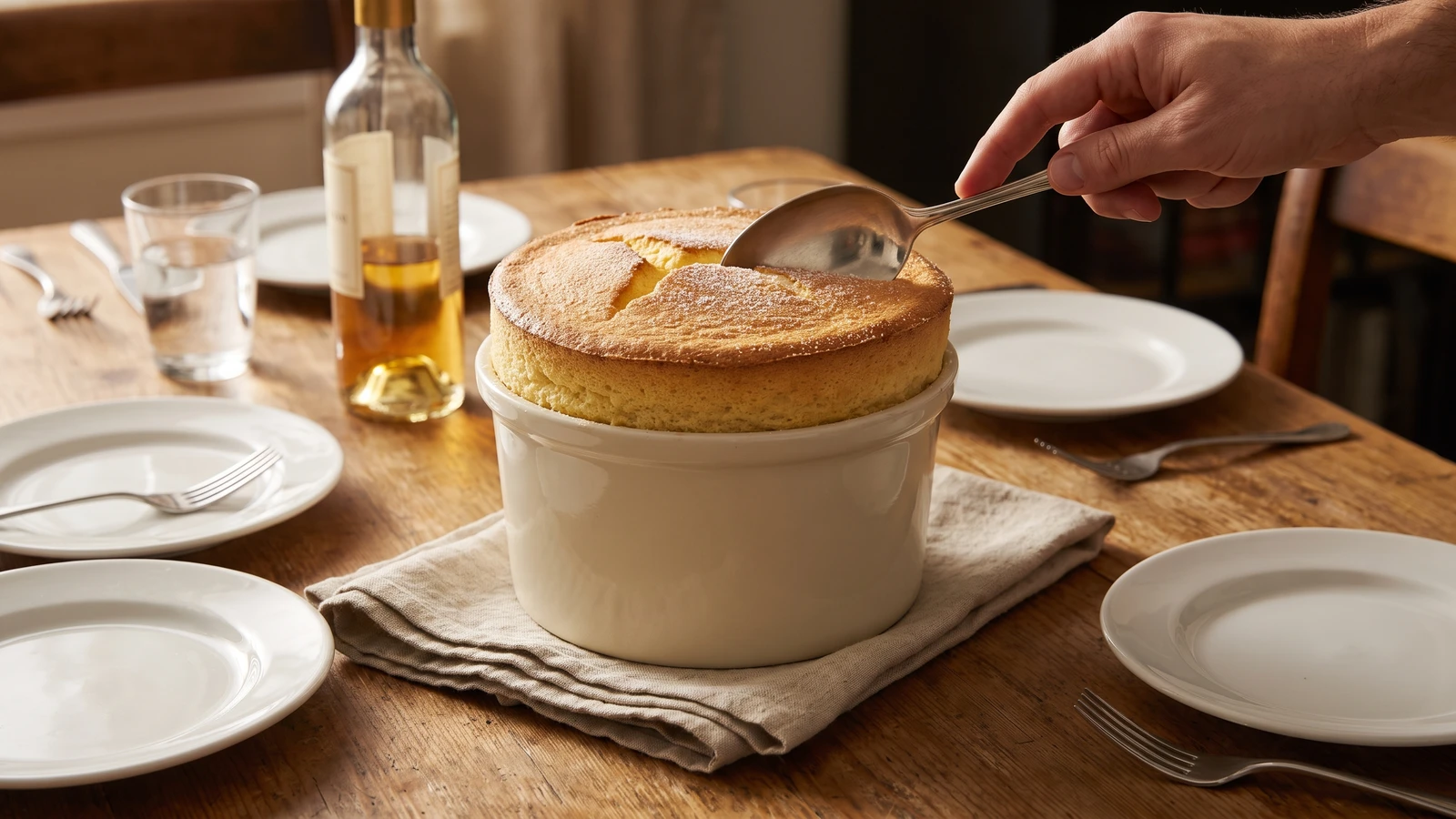
Soufflé à la vanille rises from vanilla-infused milk and properly whipped whites, plain enough to expose every choice and generous enough to make four people lean toward the oven.
Soufflé à la vanille (vanilla soufflé) teaches one true thing: the oven doesn't create the rise, it reveals the structure you built beforehand. A smooth cooked base holds the flavor, supple egg whites carry the air, and careful folding joins the two without knocking the life from either.
The original entry assumed that cream soufflé-preparation already waited at the pâtisserie station, its milk infused with vanilla and its quantity suited to a full service. At home, you make that same base in one small saucepan and bake it in a single four-serving dish. The separate batch preparation was brigade scaffolding, so it goes; the vanilla infusion, cooked milk base, whipped whites, moderate oven, and immediate service are the dish itself, so every one stays. One cook, one stove, one evening.
When it is right, the soufflé stands proudly above its sugared rim, butter-gold on top and tender at the center, with vanilla carrying through every spoonful. Watch the whites before anything else: they must form glossy peaks that stand and then bow at the tip. That supple peak is the step that decides the height.
Soufflé à la vanille belongs to the Parisian classical dessert table, where cooks used the verb souffler, meaning to puff, for preparations made light enough to rise. It traveled readily from grand kitchens into cuisine bourgeoise because its essential apparatus is modest: a flavored cream base, beaten whites, and a steady oven. The name also covers cold preparations, but this is the hot branch described in the canon, lifted by egg whites and served the instant it leaves the oven.
Quantity
1 tablespoon (15 ml / 14 g)
softened, for the dish
Quantity
2 tablespoons (30 ml / 25 g)
for coating the dish
Quantity
1 cup (240 ml / 245 g)
Quantity
1
Quantity
3
separated
Quantity
1
Quantity
1/4 cup (60 ml / 50 g)
for the base
Quantity
1/4 cup (60 ml / 30 g)
Quantity
2 tablespoons (30 ml / 25 g)
for the whites
| Ingredient | Quantity |
|---|---|
| unsalted buttersoftened, for the dish | 1 tablespoon (15 ml / 14 g) |
| granulated sugarfor coating the dish | 2 tablespoons (30 ml / 25 g) |
| whole milk | 1 cup (240 ml / 245 g) |
| vanilla bean | 1 |
| large eggsseparated | 3 |
| large egg white | 1 |
| granulated sugarfor the base | 1/4 cup (60 ml / 50 g) |
| plain flour | 1/4 cup (60 ml / 30 g) |
| granulated sugarfor the whites | 2 tablespoons (30 ml / 25 g) |
Set a rack in the lower-middle of the oven, place a rimmed baking sheet on it, and heat the oven to 375°F (190°C). Butter the bottom and straight sides of a 1-quart (950 ml) soufflé dish generously, then coat them with the sugar, turning the dish until every buttered patch is covered. Tap out the excess and wipe the rim clean. The sugared surface gives the rising mixture something to grip.
Split the vanilla bean lengthwise and scrape its seeds into the milk. Add the pod, warm the milk until small bubbles gather around the edge, then cover and take it off the heat for 15 minutes. This quiet infusion is the whole flavor of the dish, so don't hurry it. Remove the pod and return the milk to just below a simmer.
Whisk the three yolks with the sugar for the base until slightly pale, then whisk in the flour until perfectly smooth. Pour in one-third of the hot vanilla milk while whisking, add the rest gradually, and return everything to the saucepan. Cook over medium-low heat, whisking into the corners, until the mixture thickens and gives two or three slow bubbles. Continue for one minute to cook the flour. If lumps form, take the pan off the heat and push the base through a fine sieve into a clean saucepan, then cook it for another 30 seconds. Ça se rattrape. Transfer it to a wide bowl and whisk occasionally until warm rather than hot, about 10 minutes.
Put the four egg whites in a spotless, grease-free bowl. Whisk until they form soft peaks, then add the sugar for the whites a little at a time while continuing to whisk. Stop at glossy medium peaks: the foam should stand when the whisk lifts, then bend gently at the tip. Dry, clotted whites have gone too far and won't fold cleanly, so stop while they are still supple.
Whisk one-quarter of the whites firmly into the warm vanilla base to lighten it. Add half the remaining whites and fold with a broad spatula, cutting down through the center, sweeping across the bottom, and lifting the base over the top. Fold in the final whites just until no large white islands remain. A few fine streaks are better than a slack, overworked mixture. Spoon it into the prepared dish, smooth the top lightly, and run a clean thumb around the inside edge to make a shallow channel between the mixture and the rim.
Set the dish immediately on the hot baking sheet and bake for 25 to 30 minutes. Keep the oven door closed for the first 20 minutes, because a rush of cool air can collapse the structure before it sets. The soufflé is ready when it has risen well above the rim, the top is deeply butter-gold, and the center still trembles slightly rather than sloshing. If the center looks liquid, close the door gently and give it another 3 minutes. The internal temperature should reach about 160°F (71°C).
Carry the soufflé straight to the table and serve it with a broad spoon, giving each person some bronzed top and tender center. It will begin settling within minutes because that is what a hot soufflé does, not because you failed. Never apologize at your own table. À table!
1 serving (about 120g)
Culinary guides, cultural storytelling, and the editorial depth that makes cooking meaningful.
Discover Culinary ExplorerChef Juliette
Five almond preparations, one discipline: remove the skins cleanly, dry every kernel through, then cut, toast, or cloak it in pale caramel without letting its fragrant oils escape.

Chef Juliette
A pastry pantry lesson in one tray: filberts warmed only until their red skins release, rubbed clean, cooled, and chopped into a fragrant mise-en-place for cakes, creams, pralines, and petits fours.

Chef Juliette
The smallest pâtisserie discipline decides whether a cake leaves its mould intact: clarified butter in every corner, followed by the lightest veil of dry flour or fécule.

Chef Juliette
Four whites, one spotless bowl, and a patient change of speed: whisk gently until loosened, then briskly to glossy stiffness, with powdered sugar waiting if the foam begins to granulate.