
Chef Juliette
Various Almond Preparations
Five almond preparations, one discipline: remove the skins cleanly, dry every kernel through, then cut, toast, or cloak it in pale caramel without letting its fragrant oils escape.
A cooking platform built around craft, culture, and the stories behind what we eat.
Created by Chef Juliette
Based on No. 2519, Soufflés, from Le Guide Culinaire (1907) by Auguste Escoffier
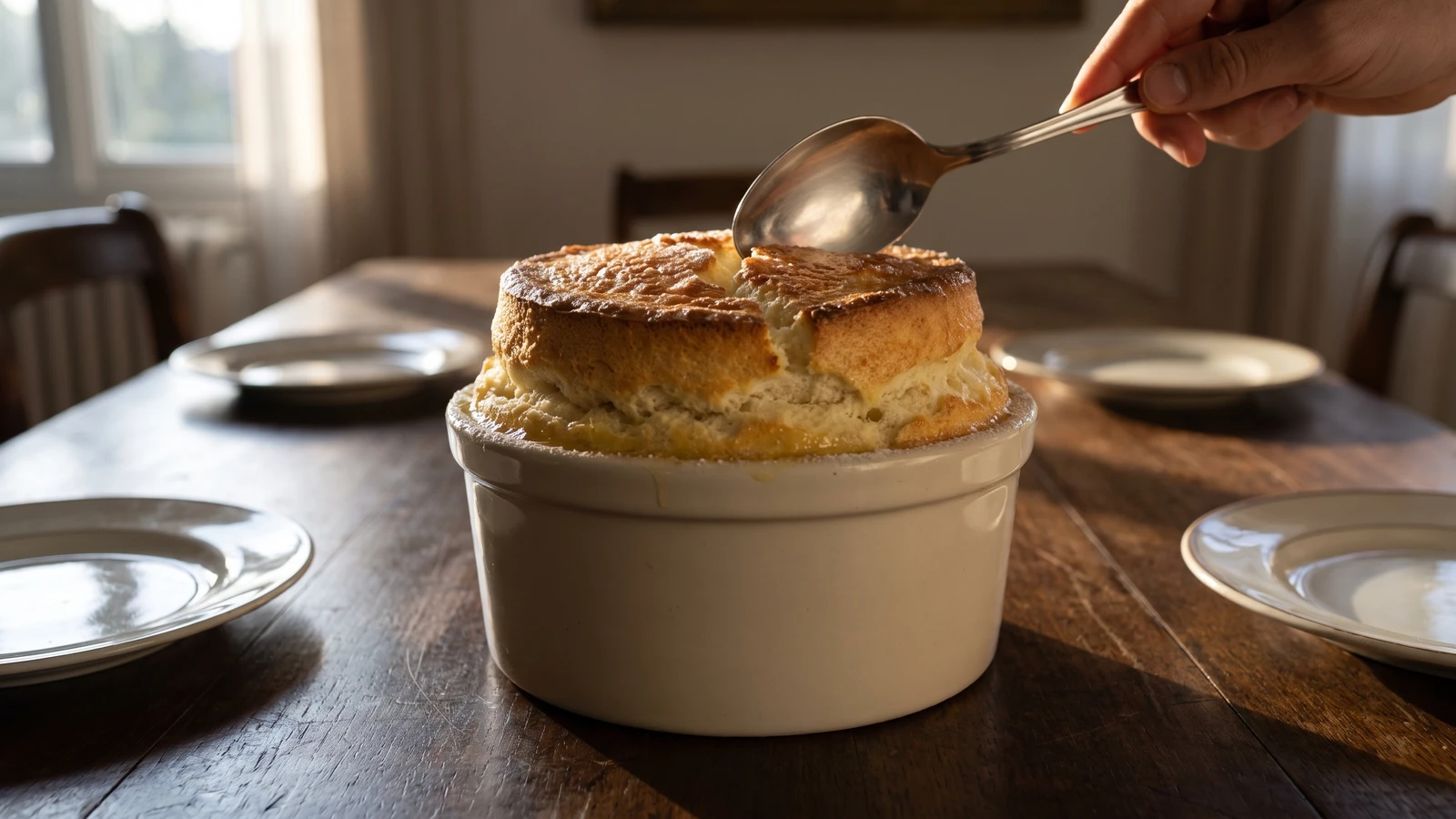
Soufflés rise on disciplined air, not magic: butter and sugar guide the climb, a moderate oven sets the center, and the caramelized crown goes straight to the table before its graceful fall begins.
Soufflés sucrés (hot sweet soufflés) teach timing. The one true thing to know before touching the pan is this: the oven, baking dish, table, and guests must be ready before the aerated mixture is finished. A soufflé begins losing lift while it waits, so the cook controls everything around that brief journey from bowl to oven.
The book sends us to Soufflé Preparations (No. 2405), where the foundation remains whole. Its four-person formula already suits the home table, while the separate big-party batch is brigade scaffolding and can go. The false-bottomed service dish can go as well; a straight-sided 1.5-liter ceramic soufflé dish gives the mixture the same honest climb. No saucier or stockpot has work here, and no salamander is needed, because the book glazes the crown with icing sugar in the same moderate oven that cooks the center. One cook, one stove, one evening.
Serve the soufflé alone. Only a fruit-based one welcomes stewed seasonal fruit or a macédoine, a mixture of diced fresh fruit, and even then the fruit waits beside it rather than weighing down the crown. The step that decides everything is the transfer: once the Soufflé Preparations (No. 2405) are ready, fill the prepared dish and bake without delay.
The soufflé belongs most precisely to the Parisian grand kitchen and the bourgeois dining room, where controlled oven heat turned the aeration of eggs into a dish served at the instant of its rise. The name describes a whole family rather than one dessert: hot soufflés are usually lifted with egg whites, while cold preparations rely on whipped cream, and the canon includes savory as well as sweet forms. What passed into home kitchens was not a piece of dining-room theater, but a practical grammar of foundation, aeration, gradual heat, and immediate service.
Quantity
1 batch Soufflé Preparations (No. 2405), 4-serving formula
Quantity
1 tablespoon (15 ml / 14 g)
softened, for the dish
Quantity
2 tablespoons (30 ml / 25 g)
for coating the dish
Quantity
1 tablespoon (15 ml / 8 g)
sifted, for glazing
Quantity
1½ cups (360 ml / 250 g)
for serving beside a fruit-based soufflé only
| Ingredient | Quantity |
|---|---|
| finished cream-based or fruit-purée-based mixture | 1 batch Soufflé Preparations (No. 2405), 4-serving formula |
| unsalted buttersoftened, for the dish | 1 tablespoon (15 ml / 14 g) |
| granulated sugarfor coating the dish | 2 tablespoons (30 ml / 25 g) |
| icing sugarsifted, for glazing | 1 tablespoon (15 ml / 8 g) |
| stewed seasonal fruit or macédoine of fresh fruit (optional)for serving beside a fruit-based soufflé only | 1½ cups (360 ml / 250 g) |
Set a rack in the lower-middle of the oven and heat it thoroughly to 350°F (180°C, or 160°C fan). Clear a direct path from oven to table and have the serving spoon and plates waiting. If you are making a fruit-based soufflé, prepare the stewed fruit or macédoine now and hold it separately; once the soufflé is baked, nobody should be searching for a bowl.
Brush the softened butter generously over the bottom and up the straight sides of a 1.5-liter soufflé dish, finishing with upward strokes. Add the granulated sugar, rotate the dish until the interior is evenly coated, then tap out the excess. Wipe the top rim clean. Butter and sugar are not decoration here: they prevent sticking, give the mixture purchase as it climbs, and form the delicate crust around the sides.
Bring the completed Soufflé Preparations (No. 2405) directly to the prepared dish. Spoon the mixture in gently until the dish is about three-quarters full, level the surface without pressing, then run the tip of your thumb around the inside edge to make a narrow channel between mixture and dish. Do not stir or rework the preparation. If it has waited and looks slightly slack, divide it among four buttered and sugared 250 ml ramekins instead; their shallower centers set faster and preserve the lift that remains. Ça se rattrape.
Place the dish directly on the oven rack and bake without opening the door for 24 minutes. The soufflé should climb above the rim, turn butter-gold at the edges, and remain gently mobile at the center. Gradual heat is the dish, not brigade ceremony. For individual ramekins, begin checking after 13 minutes.
When the soufflé is fully risen and its outer ring is set, usually after 24 to 28 minutes, open the oven briefly and sift the icing sugar evenly over the crown. Close the door at once and bake for 2 minutes more, until the sugar melts into a fine caramelized glaze. If the center still sloshes rather than trembles, leave it for another 3 to 5 minutes. It may settle a little after being checked, but the center will set and the texture will remain light. Ça se rattrape.
Carry the soufflé straight to the table in its baking dish and serve immediately with a large spoon. A cream-based soufflé needs nothing beside it. For a fruit-based soufflé, offer the stewed fruit or macédoine in a separate bowl and let each guest take a little alongside, never over the crown. A gentle fall after serving is the nature of a soufflé, not a failure. À table!
1 serving (about 175g)
Culinary guides, cultural storytelling, and the editorial depth that makes cooking meaningful.
Discover Culinary ExplorerChef Juliette
Five almond preparations, one discipline: remove the skins cleanly, dry every kernel through, then cut, toast, or cloak it in pale caramel without letting its fragrant oils escape.

Chef Juliette
A pastry pantry lesson in one tray: filberts warmed only until their red skins release, rubbed clean, cooled, and chopped into a fragrant mise-en-place for cakes, creams, pralines, and petits fours.

Chef Juliette
The smallest pâtisserie discipline decides whether a cake leaves its mould intact: clarified butter in every corner, followed by the lightest veil of dry flour or fécule.

Chef Juliette
Four whites, one spotless bowl, and a patient change of speed: whisk gently until loosened, then briskly to glossy stiffness, with powdered sugar waiting if the foam begins to granulate.