
Chef Juliette
Flan aux Carottes
A pale short-paste shell holds silken, lightly sweet carrot purée beneath neat glazed half-discs, their butter syrup catching the light: a classical tart poised between vegetable course and sweet.
A cooking platform built around craft, culture, and the stories behind what we eat.

Created by Chef Juliette
Based on No. 2518, Rissoles, from Le Guide Culinaire (1907) by Auguste Escoffier
Thin puff pastry folded around tart jam, sealed with care and fried until butter-gold: twelve little rissoles that teach the grand pastry lesson that a crisp shell begins with cold dough and a clean, exact seam.
Rissoles aux confitures (sweet jam-filled fried turnovers) teach one severe little pastry lesson: the seal is the dish. The filling must be cold and thick, the paste thin, and the seam spotless, because one loose edge in the frying oil turns a plump half-moon into an empty shell. Get that seam right and the reward is immediate, crisp fine layers, a warm fruit centre, and sugar caught on every ridge.
The classical pastry kitchen assumed a bowl of puff-paste trimmings left from larger work and a frying kettle held ready. At home, one cold all-butter sheet, rolled firmly to temper its lift, gives the honest equivalent; twelve half-moons replace a brigade's display of purses, rounds, and ovals. The parade of shapes is service scaffolding and can go. Thin paste, modest filling, and a complete seal are the dish and must stay. One cook, one stove, one evening.
Keep the pastry cold, use no more than a teaspoon of filling, and press each rim from the fruit outward so trapped air escapes before you crimp. That complete seal is the one step that matters most before the pan comes near you.
Sweet rissoles belong to the French classical entremets course, where pastry cooks carried the enclosed, fried form of the savoury hors-d'œuvre into dessert and filled it with marmalade, jam, stewed fruit, a Salpicon, or cream. Because the name describes a method rather than one fixed silhouette, half-moons, purses, rounds, and ovals all sit correctly under it; the common idea that a rissole must be savoury misses half the canon. When ordinary brioche paste replaces the preferred puff-paste trimmings, the preparation becomes the Viennese-fritter cousin listed à la Dauphine, while plain and Pralined creams remain among the classical fillings.
Quantity
14 ounces (400 g)
kept refrigerator-cold but pliable
Quantity
¼ cup (60 ml / 80 g)
large fruit pieces finely chopped
Quantity
2 tablespoons (30 ml / 16 g)
for rolling
Quantity
1
beaten
Quantity
1 tablespoon (15 ml / 15 g)
Quantity
6 cups (1.4 liters / 1.3 kilograms), or enough for a 2-inch (5 cm) depth
for frying
Quantity
¼ cup (60 ml / 30 g)
sifted
| Ingredient | Quantity |
|---|---|
| all-butter puff pastrykept refrigerator-cold but pliable | 14 ounces (400 g) |
| thick apricot jam or raspberry preserveslarge fruit pieces finely chopped | ¼ cup (60 ml / 80 g) |
| all-purpose flourfor rolling | 2 tablespoons (30 ml / 16 g) |
| large eggbeaten | 1 |
| cold water | 1 tablespoon (15 ml / 15 g) |
| refined sunflower or peanut oilfor frying | 6 cups (1.4 liters / 1.3 kilograms), or enough for a 2-inch (5 cm) depth |
| confectioners' sugarsifted | ¼ cup (60 ml / 30 g) |
Set twelve level teaspoonfuls of jam on a parchment-lined plate and chill them while you roll the pastry. The jam must hold a mound rather than spread into a puddle. If yours runs, stir it in a small saucepan over medium-low heat for 2 to 4 minutes, until a spoon drawn across the pan leaves a brief clear path, then cool it completely before proceeding. Warm or loose jam will find the seam no matter how carefully you press it.
Whisk the beaten egg with the cold water and set it aside. Flour the work surface sparingly, divide the pastry in half, and return one half to the refrigerator. Roll the first piece firmly to about ⅛ inch (2 to 3 mm) thick, large enough to cut six 4-inch (10 cm) rounds. This firm second rolling gives a fresh sheet the subdued lift of the puff-paste trimmings preferred by the classical kitchen. Cut cleanly, stack any scraps flat rather than kneading them into a ball, and reroll them once if needed. Repeat with the remaining pastry.
Work with a few rounds at a time and keep the rest cold. Brush a ½-inch (1 cm) border lightly with the egg mixture, then place one chilled teaspoonful of jam just off-centre. Fold the pastry over without stretching it. Press closely around the filling first to expel trapped air, then seal the rim firmly and crimp it with a fork. If jam or flour reaches the seam, open that section, wipe it clean, brush again with egg, and reseal. Ça se rattrape. Do not add extra filling; what looks ungenerous now becomes exactly enough once hot.
Arrange the sealed rissoles on a parchment-lined tray and chill them uncovered for 20 minutes. The cold firms the butter and sets the seam so the pastries keep their shape in the oil. Meanwhile, place a wire rack over a tray. Pour the frying oil into a heavy 4 to 5-quart pot, keeping the pot no more than half full, and heat it to 350°F (175°C). Keep the thermometer in place and a lid within reach, and never move a pot of hot oil.
Brush away any loose flour and lower three rissoles into the oil, moving them away from you. Fry for 3 to 4 minutes, turning once or twice, until they are evenly puffed, crisp, and deep butter-gold. Hold the oil between 340°F and 350°F (170°C and 175°C): cooler oil makes the pastry heavy, while hotter oil colours the outside before the inner layers cook. If one rissole opens, lift it out immediately and remove any escaped jam before it scorches; return the waiting pastries to the refrigerator and check every seam before continuing.
Transfer each batch to the wire rack and let the excess oil fall away for 2 minutes. Sift confectioners' sugar generously over the rissoles while they are still warm, then let them stand for 5 minutes before serving because the fruit centre holds its heat fiercely. Bring them to the table warm, with the shells still crisp and the jam thick at the centre. À table!
1 serving (about 150g)
Culinary guides, cultural storytelling, and the editorial depth that makes cooking meaningful.
Discover Culinary ExplorerChef Juliette
A pale short-paste shell holds silken, lightly sweet carrot purée beneath neat glazed half-discs, their butter syrup catching the light: a classical tart poised between vegetable course and sweet.
Chef Juliette
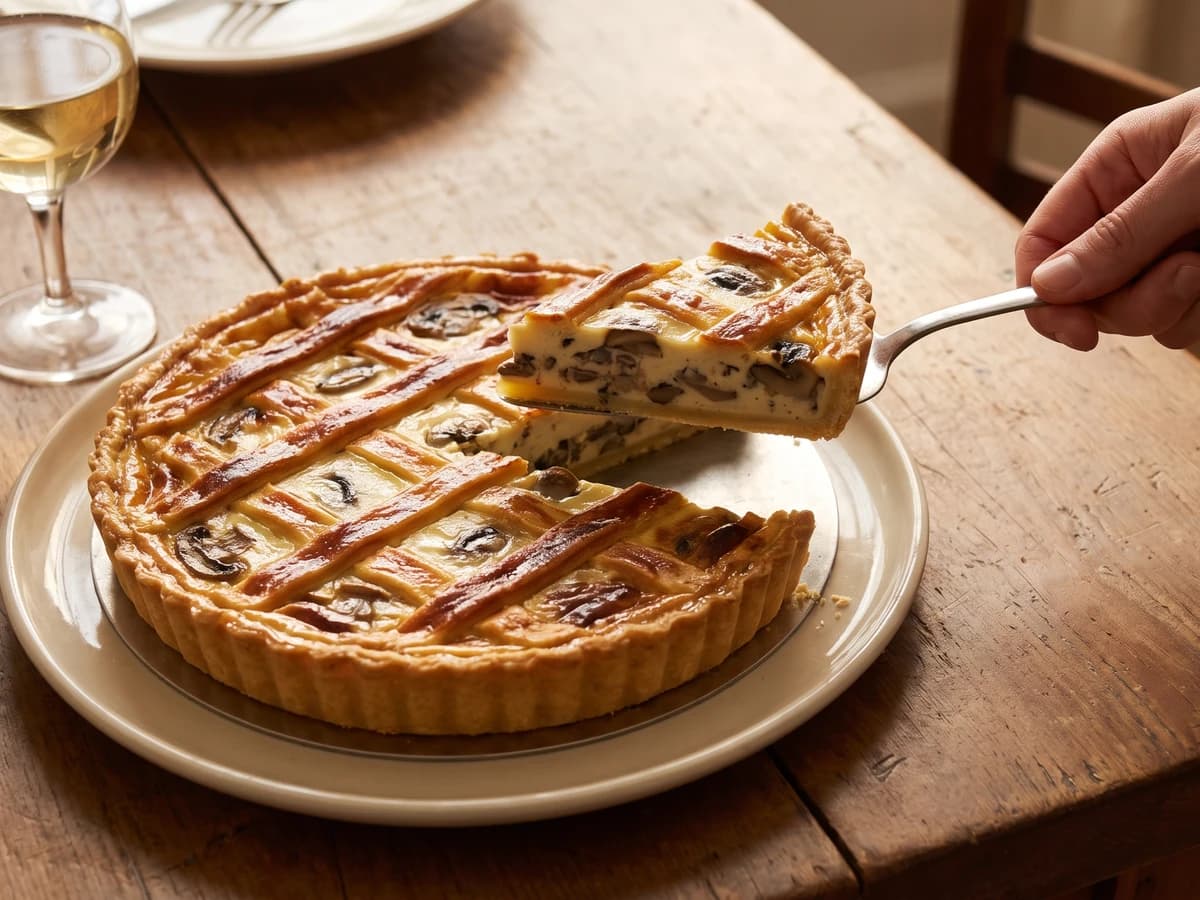
A hot mushroom flan under a butter-gold lattice, with cream reduced close around barely opened caps and a crisp short-paste base protected by one discipline: cool the filling completely.

Chef Juliette
Four little mushroom flans, latticed and gilded, baked hard and fast until butter-gold: a classical garnish scaled to the meat it accompanies and served before its crispness has time to fade.
Chef Juliette
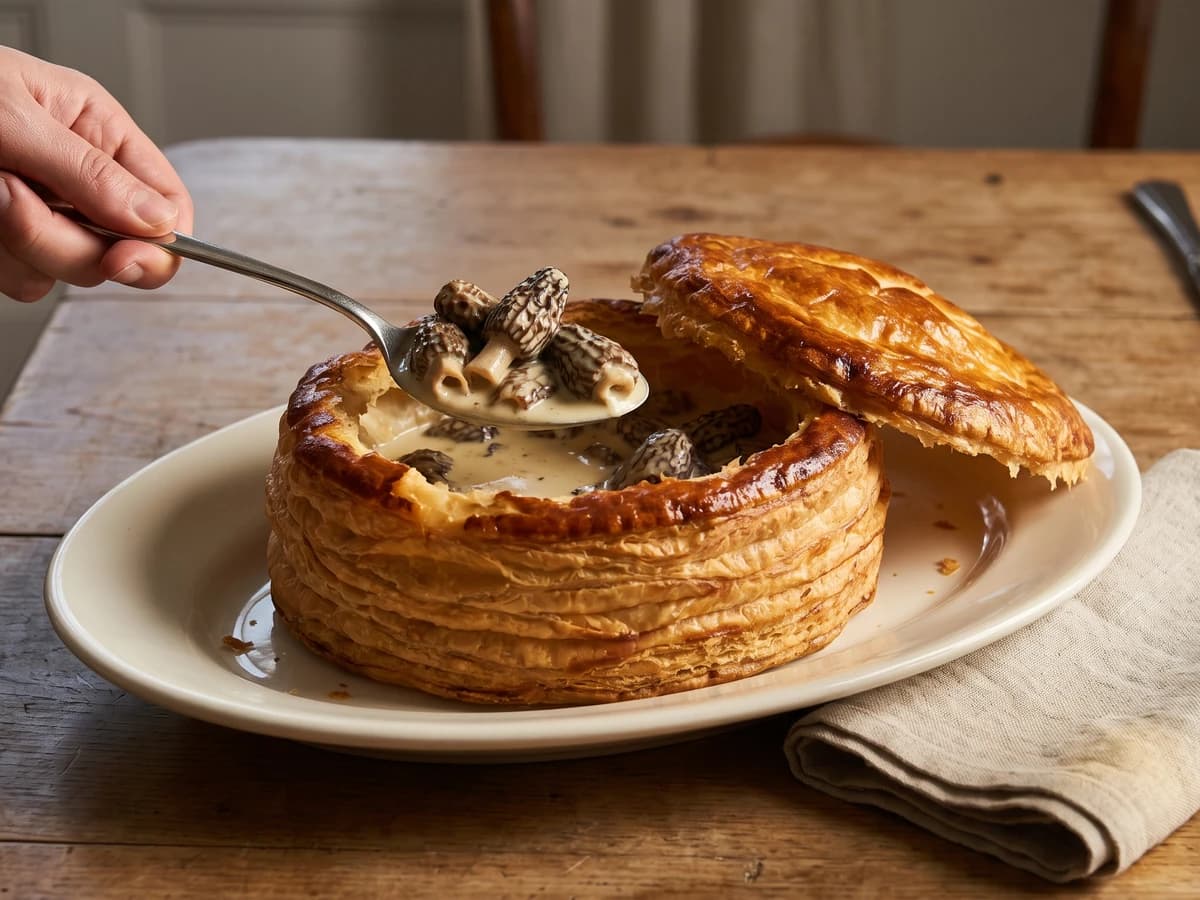
Morels surrender their liquor, then take it back as a glossy cream-and-butter sauce inside burnished puff pastry. The lesson is simple and absolute: reduce with patience, then heat gently and never boil.