
Chef Juliette
Various Almond Preparations
Five almond preparations, one discipline: remove the skins cleanly, dry every kernel through, then cut, toast, or cloak it in pale caramel without letting its fragrant oils escape.
A cooking platform built around craft, culture, and the stories behind what we eat.
Created by Chef Juliette
Based on No. 2488, Marrow Pudding, from Le Guide Culinaire (1907) by Auguste Escoffier
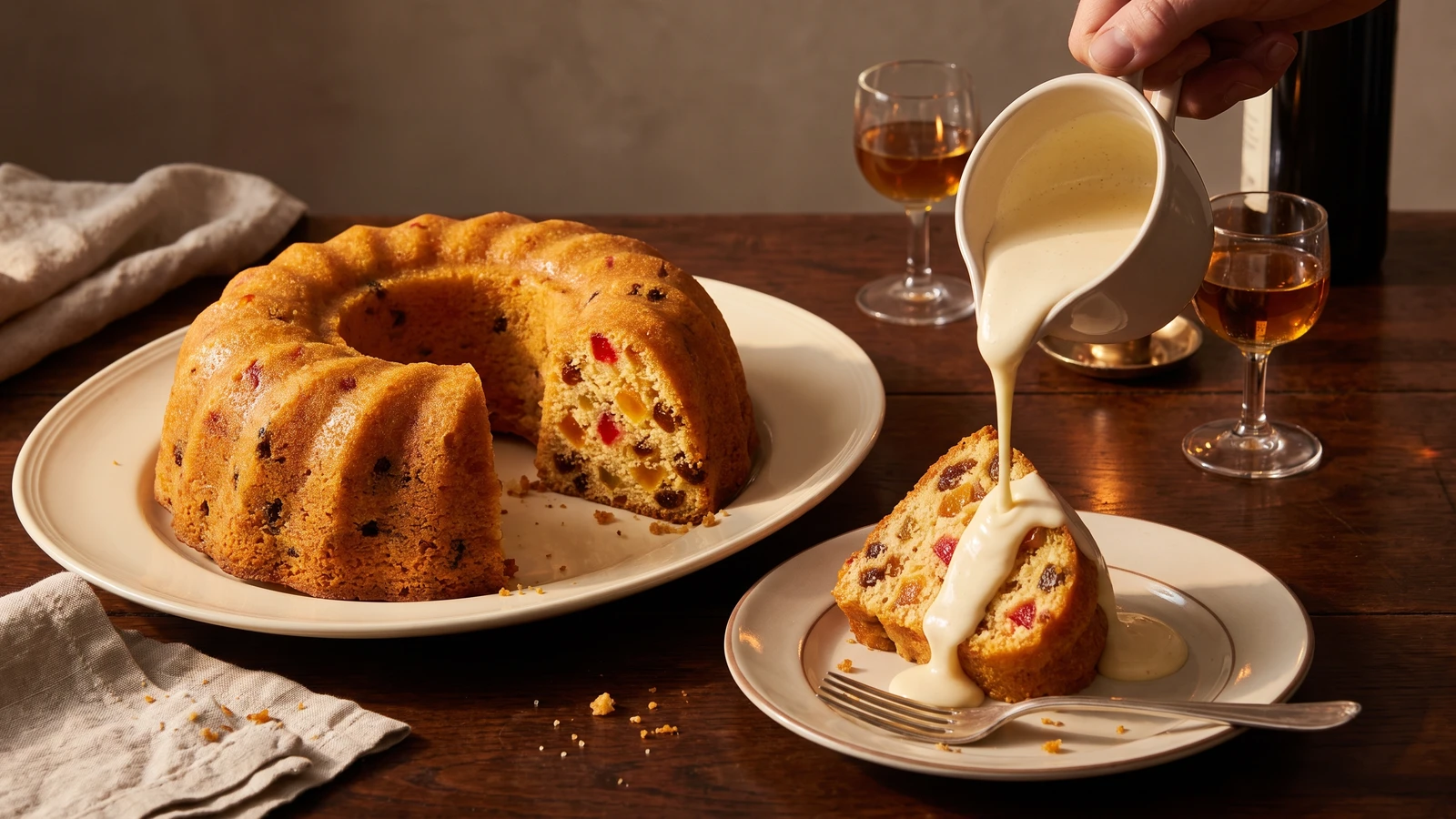
A fruit-studded Pouding à la Moelle, gently poached until tender, with beef marrow and suet melted invisibly into its crumb and warm rum sabayon spooned generously around each slice.
Pouding à la Moelle (beef marrow pudding) teaches a quiet pastry truth: properly handled fat can disappear into a sweet without leaving greasiness. Marrow and suet do not announce themselves as beef. Rendered gently, they give the crumb a soft, melting richness that carries candied fruit and raisins, while sabayon au rhum, a warm rum custard foam, keeps each slice lush rather than heavy.
The book's pudding assumed a deep border mould, a broad bain-marie, and enough diners to justify eleven eggs. For one cook, one stove, one evening, the core formula is halved exactly and poached in a 1-quart ring mould set inside an ordinary roasting pan. Brigade volume is scaffolding and can go. The marrow-to-suet ratio, milk-soaked pressed crumbs, egg-rich binding, candied fruit, and water-bath poach are the dish, so all of them stay.
Turned out warm, the Pouding à la Moelle should hold a clean ring while remaining tender inside, with jewel-like fruit through every cut face and pale rum sabayon pooling around the slice. The one step that decides it comes before the yolks: cool the rendered fat to tepid, between 95 and 100°F (35 and 38°C), fluid but no longer hot. Hot fat scrambles them on contact; cold fat beads through the batter.
Pouding à la moelle belongs to the grand kitchens of Paris, where French cooks absorbed the British family of boiled and steamed puddings and recast them in precise moulds with separate sauces. The marrow, suet, candied fruit, and raisins preserve that ancestry, while the even border mould and rum sabayon mark its passage into French service. Marrow is not a savory garnish here; once gently rendered, it becomes the fine, melting fat of the crumb, a use sweet cooks understood for generations.
Quantity
1 tablespoon (15 ml / 14 g)
softened, for the mould
Quantity
1 tablespoon (15 ml / 8 g)
for dredging the mould
Quantity
½ cup (120 ml / 113 g)
removed from the bones and membranes
Quantity
¼ cup loosely packed (60 ml / 28 g)
chilled and finely grated
Quantity
1 cup (240 ml / 113 g)
sifted
Quantity
1 cup loosely packed (240 ml / 43 g)
Quantity
¾ cup (180 ml / 180 g)
for soaking the breadcrumbs
Quantity
5 tablespoons (75 ml / 75 g; from about 1½ large eggs)
at room temperature
Quantity
4 (about ¼ cup / 60 ml / 72 g)
at room temperature
Quantity
¾ cup (180 ml / 113 g)
cut into ¼-inch dice
Quantity
¼ cup (60 ml / 43 g)
Quantity
3 tablespoons (45 ml / 28 g)
chopped if large
Quantity
4 (about ¼ cup / 60 ml / 72 g)
Quantity
¼ cup (60 ml / 50 g)
Quantity
¼ cup (60 ml / 60 g)
Quantity
3 tablespoons (45 ml / 43 g)
| Ingredient | Quantity |
|---|---|
| unsalted buttersoftened, for the mould | 1 tablespoon (15 ml / 14 g) |
| all-purpose flourfor dredging the mould | 1 tablespoon (15 ml / 8 g) |
| cleaned raw beef marrowremoved from the bones and membranes | ½ cup (120 ml / 113 g) |
| beef kidney suetchilled and finely grated | ¼ cup loosely packed (60 ml / 28 g) |
| powdered sugarsifted | 1 cup (240 ml / 113 g) |
| fine fresh white breadcrumbs | 1 cup loosely packed (240 ml / 43 g) |
| whole milkfor soaking the breadcrumbs | ¾ cup (180 ml / 180 g) |
| beaten whole eggat room temperature | 5 tablespoons (75 ml / 75 g; from about 1½ large eggs) |
| large egg yolks, for the puddingat room temperature | 4 (about ¼ cup / 60 ml / 72 g) |
| mixed candied fruitcut into ¼-inch dice | ¾ cup (180 ml / 113 g) |
| sultanas | ¼ cup (60 ml / 43 g) |
| seeded Malaga raisins, or dark muscat raisinschopped if large | 3 tablespoons (45 ml / 28 g) |
| large egg yolks, for the sabayon | 4 (about ¼ cup / 60 ml / 72 g) |
| superfine sugar, for the sabayon | ¼ cup (60 ml / 50 g) |
| water, for the sabayon | ¼ cup (60 ml / 60 g) |
| dark rum, for the sabayon | 3 tablespoons (45 ml / 43 g) |
Heat the oven to 325°F (160°C) with a rack in the center. Butter a 4-cup (1-quart / 1-liter) smooth metal ring mould generously, reaching every corner, then dredge it with the flour and tap out the excess. Set the mould inside a deep roasting pan and bring a kettle of water nearly to the boil.
Put the cleaned marrow and grated suet in a heatproof bowl over a saucepan containing 1 inch (2.5 cm) of barely simmering water. The bowl must not touch the water. Melt the fats gently, stirring occasionally, until clear and fluid, 8 to 12 minutes; browning would give this sweet pudding a roasted flavor it does not want. Strain through a fine-mesh sieve into a wide mixing bowl, then cool to between 95 and 100°F (35 and 38°C). If the fat remains hot, set the bowl briefly in cold water and whisk. If it turns cloudy or begins setting, return it to the bain-marie for five seconds. Ça se rattrape. Do not bring in the eggs until the fat is fluid and merely tepid.
While the fats cool, cover the breadcrumbs with the milk and leave them for 5 minutes. Press them firmly in a fine sieve with the back of a spoon until they are evenly damp but no longer release milk when squeezed. This pressing matters: wet crumbs dilute the egg structure, while dry crumbs leave the pudding coarse.
Work the tepid marrow and suet with the powdered sugar until smooth and creamy, then work in the pressed breadcrumbs. Whisk the measured whole egg with the four pudding yolks just until blended, without raising a foam. Add this egg mixture in four additions, stirring each one completely into the batter before the next. If the batter separates into greasy grains, the temperatures have drifted apart; hold the bowl over the still-warm bain-marie for five seconds while whisking, then remove it as soon as it smooths. Never leave it sitting over the heat.
Fold in the diced candied fruit, sultanas, and seeded raisins until they are evenly dispersed. Scrape the batter into the prepared mould, press it lightly into the bottom to exclude large air pockets, and smooth the top. Give the mould one firm tap on a folded towel, no more, so the fruit remains suspended rather than sinking.
Pour the near-boiling water into the roasting pan until it reaches halfway up the mould. Transfer the pan carefully to the oven and poach for 50 to 65 minutes. The water should barely quiver, never boil hard; if it becomes lively, lower the oven and add a little cool water. The pudding is ready when its surface springs softly, a thin skewer emerges without liquid egg, and the center reaches 170 to 175°F (77 to 79°C). Moist crumbs on the skewer are correct.
Lift the mould from the bain-marie and rest it for 12 minutes. Run a thin knife around both edges, set a serving platter over the mould, and invert them together with confidence. If the pudding refuses to release, return only the bottom of the mould to the warm water for 10 seconds, dry it, and try again. Do not pull at the pudding; the brief warmth loosens the fat cleanly.
While the pudding rests, whisk the four sabayon yolks with the superfine sugar and water in a clean heatproof bowl. Set it over barely simmering water and whisk constantly until the mixture becomes pale, triples in volume, holds a broad ribbon, and reaches 160°F (71°C), about 6 to 8 minutes. Lift it from the heat and whisk in the rum gradually. If the edges begin to grain, move the bowl immediately to the counter and whisk in 1 teaspoon of cold water until smooth.
Cut the warm Pouding à la Moelle into generous wedges. Spoon the sabayon around each slice rather than burying the fruit-studded cut face, and bring the remaining sauce to the table in a small sauceboat. The pudding should be warm, the sabayon freshly whisked, and nobody should be waiting. À table!
1 serving (about 165g)
Culinary guides, cultural storytelling, and the editorial depth that makes cooking meaningful.
Discover Culinary ExplorerChef Juliette
Five almond preparations, one discipline: remove the skins cleanly, dry every kernel through, then cut, toast, or cloak it in pale caramel without letting its fragrant oils escape.

Chef Juliette
A pastry pantry lesson in one tray: filberts warmed only until their red skins release, rubbed clean, cooled, and chopped into a fragrant mise-en-place for cakes, creams, pralines, and petits fours.

Chef Juliette
The smallest pâtisserie discipline decides whether a cake leaves its mould intact: clarified butter in every corner, followed by the lightest veil of dry flour or fécule.

Chef Juliette
Four whites, one spotless bowl, and a patient change of speed: whisk gently until loosened, then briskly to glossy stiffness, with powdered sugar waiting if the foam begins to granulate.