
Chef Juliette
Various Almond Preparations
Five almond preparations, one discipline: remove the skins cleanly, dry every kernel through, then cut, toast, or cloak it in pale caramel without letting its fragrant oils escape.
A cooking platform built around craft, culture, and the stories behind what we eat.
Created by Chef Juliette
Based on No. 2487, American Pudding, from Le Guide Culinaire (1907) by Auguste Escoffier
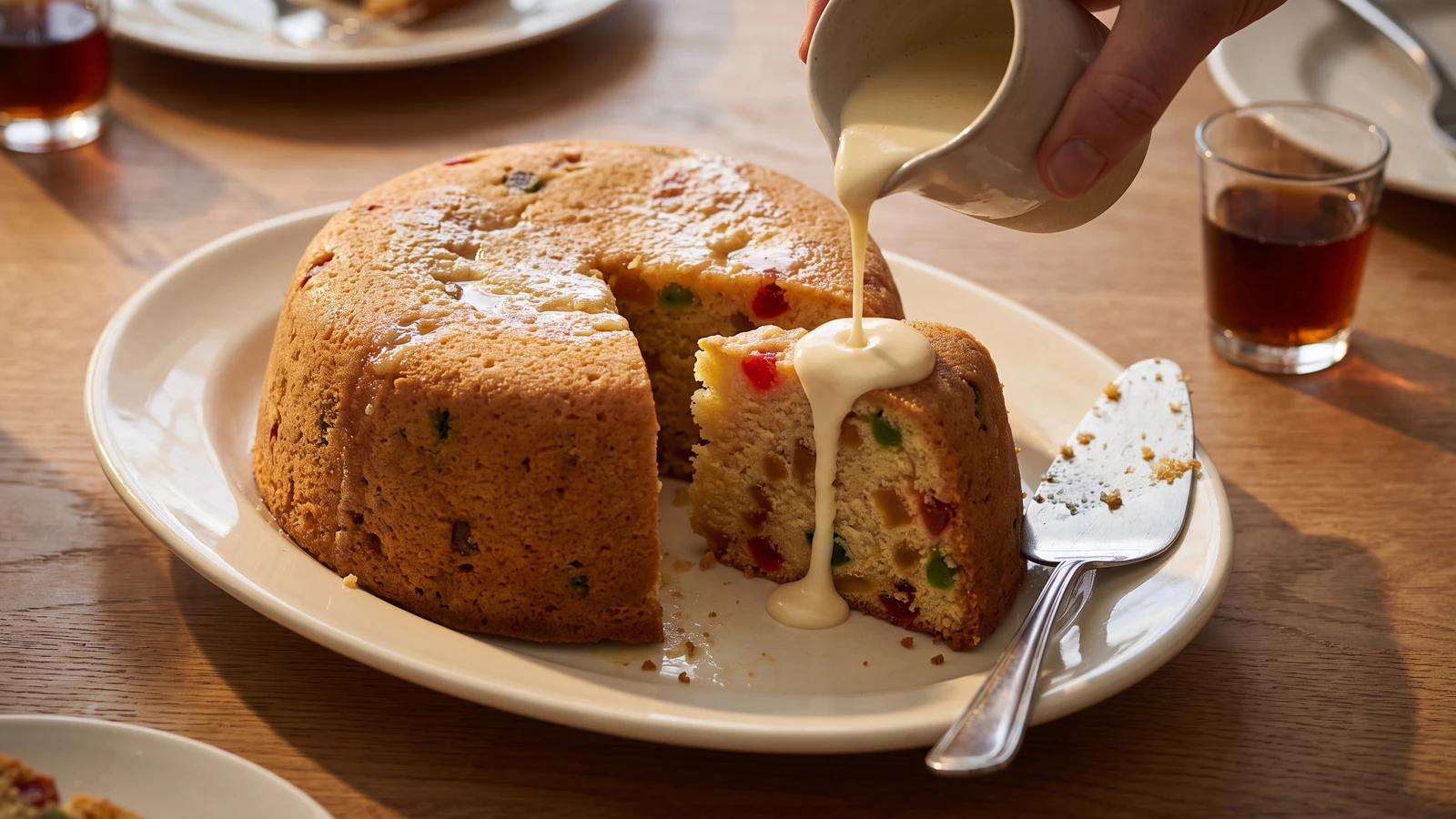
A French moulded pudding where beef marrow and suet melt invisibly into breadcrumb, candied fruit, citrus zest, and spice, gently poached in a bain-marie and served beneath a cloud of sabayon au rhum.
Pouding à l’Américaine (American pudding) teaches one plain principle: cold fat, divided finely, melts through a crumb instead of sitting on it. Beef marrow is not a curiosity tucked into this recipe. It is the point, equal in weight to the suet and responsible for the remarkably tender interior. The bain-marie (hot-water bath) then cooks the eggs and flour gently without driving that melted fat out of the pudding.
The source formula assumed a dedicated mould held in a bath already at temperature, followed by another pair of hands whisking the sabayon au rhum (rum sabayon) for service. A 1-quart heatproof basin inside a lidded pot is the honest home equivalent, and the pudding’s brief rest gives you time to make its sauce. The extra hands and rows of moulds were service scaffolding, so they go. The exact proportions, the gentle bath, and the freshly whisked sabayon are the dish, so they stay. One cook, one stove, one evening.
The finished pudding is warm and softly set, its fine crumb scented with citrus zest, spice, candied fruit, and liquor, while the pale sabayon pools around each slice. Before you touch the eggs, chop the marrow and suet cold and fine. That is the step that decides the pudding.
Pouding à l’Américaine belongs to the French grand-kitchen repertoire rather than to any one French region, and its title is a repertory name, not proof that it was an everyday American custard. The French word pouding and the mixture of suet, crumbs, candied fruit, and liquor show its kinship with British-style boiled puddings, while the bain-marie and freshly whisked sabayon place it squarely at the French table. Its beef marrow is the surprising distinction: equal in weight to the suet, it melts through the crumb instead of appearing as a separate filling.
Quantity
1 tablespoon (15 ml / 14 g)
softened
Quantity
1 tablespoon (15 ml / 8 g)
Quantity
1 cup, lightly packed (240 ml / 71 g)
Quantity
Scant ¾ cup (170 ml / 85 g)
Quantity
⅔ cup (160 ml / 85 g)
Quantity
⅓ cup (80 ml / 71 g)
finely chopped
Quantity
½ cup, loosely packed (120 ml / 71 g)
membranes removed and finely chopped
Quantity
½ cup (120 ml / 85 g)
cut into small dice
Quantity
1
Quantity
3
Quantity
¼ teaspoon (1.25 ml / 0.5 g)
colored outer peel only, very finely chopped
Quantity
⅛ teaspoon (0.6 ml / 0.25 g)
Quantity
⅛ teaspoon (0.6 ml / 0.3 g)
Quantity
2 tablespoons (30 ml / 28 g)
Quantity
3
Quantity
3 tablespoons (45 ml / 38 g)
Quantity
2 tablespoons (30 ml / 30 g)
Quantity
2 tablespoons (30 ml / 28 g)
| Ingredient | Quantity |
|---|---|
| unsalted butter, for the basinsoftened | 1 tablespoon (15 ml / 14 g) |
| all-purpose flour, for dredging the basin | 1 tablespoon (15 ml / 8 g) |
| fine fresh bread crumbs | 1 cup, lightly packed (240 ml / 71 g) |
| powdered sugar | Scant ¾ cup (170 ml / 85 g) |
| all-purpose flour | ⅔ cup (160 ml / 85 g) |
| cold beef marrowfinely chopped | ⅓ cup (80 ml / 71 g) |
| cold beef kidney suetmembranes removed and finely chopped | ½ cup, loosely packed (120 ml / 71 g) |
| mixed candied fruitcut into small dice | ½ cup (120 ml / 85 g) |
| large egg | 1 |
| large egg yolks | 3 |
| orange or lemon zestcolored outer peel only, very finely chopped | ¼ teaspoon (1.25 ml / 0.5 g) |
| freshly grated nutmeg | ⅛ teaspoon (0.6 ml / 0.25 g) |
| ground cinnamon | ⅛ teaspoon (0.6 ml / 0.3 g) |
| brandy or dark rum | 2 tablespoons (30 ml / 28 g) |
| large egg yolks, for the sabayon au rhum | 3 |
| caster sugar, for the sabayon au rhum | 3 tablespoons (45 ml / 38 g) |
| cold water, for the sabayon au rhum | 2 tablespoons (30 ml / 30 g) |
| dark rum, for the sabayon au rhum | 2 tablespoons (30 ml / 28 g) |
Heat the oven to 325°F (160°C) and bring a kettle of water to the boil. Butter a 1-quart (950 ml) heatproof pudding basin generously, dust it with the measured tablespoon of flour, and tap out the excess. Set a small rack or folded kitchen towel in the bottom of a heavy pot deep enough to hold the basin. This bain-marie gives the pudding slow, even heat; direct oven heat would set the outside before the marrow has melted through the crumb.
Keep the marrow and suet cold enough to cut cleanly, then chop each into pieces no larger than coarse bread crumbs. Remove every papery membrane from the suet. If either fat softens and begins smearing across the board, stop and chill it for ten minutes before continuing. Tiny separate pieces melt throughout the pudding; a greasy paste gathers in pockets.
Combine the bread crumbs, powdered sugar, flour, candied fruit, zest, nutmeg, and cinnamon in a large bowl. Zest means only the colored, glossy outer peel, with none of the bitter white pith. Toss in the chopped marrow and suet until every piece is coated and evenly dispersed. Whisk the whole egg, three yolks, and brandy or rum together, pour them over the dry mixture, and fold until no flour remains. The preparation will be thick and heavy rather than fluid. Do not loosen it with milk; the melting marrow and suet provide the tenderness.
Pour and scrape the preparation into the basin, pressing lightly into the curve so no large air pockets remain, then level the top. Cover with a pleated sheet of baking parchment and foil, securing it beneath the basin’s rim with kitchen string. The pleat leaves room for the pudding to swell, while the cover keeps water from dripping into the crumb.
Set the basin on the rack in the pot and pour in enough boiling water to reach halfway up its sides. Cover the pot and bake for 1 hour 15 minutes, keeping the water at a quiet tremble and adding more boiling water if its level drops. Test through the center with a fine skewer: it should emerge with moist crumbs and a light sheen of melted fat, but no wet flour. The center should reach about 200°F (93°C). If wet batter clings to the skewer, reseal the basin and cook for another 10 to 15 minutes. More time at gentle heat will mend it; a hotter oven will only toughen the outside.
While the pudding rests in its basin, reuse the bain-marie water on the stove at the barest simmer. In a heatproof bowl, whisk the three sauce yolks with the caster sugar and all but 1 teaspoon of the cold water. Set the bowl over the water without letting its base touch, then whisk continuously until the mixture becomes pale, triples in volume, and falls from the whisk in a ribbon. Drizzle in the dark rum while whisking and continue until the sabayon reaches about 158°F (70°C) and holds a soft ribbon. If it turns grainy, lift the bowl from the heat at once and whisk in the reserved cold water. Ça se rattrape. Strain out any stubborn flecks and serve immediately.
Let the pudding rest for 10 to 12 minutes before removing its cover. Run a thin knife around the rim, invert a warm platter over the basin, and turn both together. If the pudding clings, wrap the basin in a hot, damp towel for 30 seconds and try again. Bring it to the table whole, cut it into generous wedges, and pass the warm sabayon au rhum separately in a small jug, exactly as the source directs. À table!
1 serving (about 115g)
Culinary guides, cultural storytelling, and the editorial depth that makes cooking meaningful.
Discover Culinary ExplorerChef Juliette
Five almond preparations, one discipline: remove the skins cleanly, dry every kernel through, then cut, toast, or cloak it in pale caramel without letting its fragrant oils escape.

Chef Juliette
A pastry pantry lesson in one tray: filberts warmed only until their red skins release, rubbed clean, cooled, and chopped into a fragrant mise-en-place for cakes, creams, pralines, and petits fours.

Chef Juliette
The smallest pâtisserie discipline decides whether a cake leaves its mould intact: clarified butter in every corner, followed by the lightest veil of dry flour or fécule.

Chef Juliette
Four whites, one spotless bowl, and a patient change of speed: whisk gently until loosened, then briskly to glossy stiffness, with powdered sugar waiting if the foam begins to granulate.