
Chef Juliette
Various Almond Preparations
Five almond preparations, one discipline: remove the skins cleanly, dry every kernel through, then cut, toast, or cloak it in pale caramel without letting its fragrant oils escape.
A cooking platform built around craft, culture, and the stories behind what we eat.
Created by Chef Juliette
Based on No. 2486, Plum Pudding, from Le Guide Culinaire (1907) by Auguste Escoffier
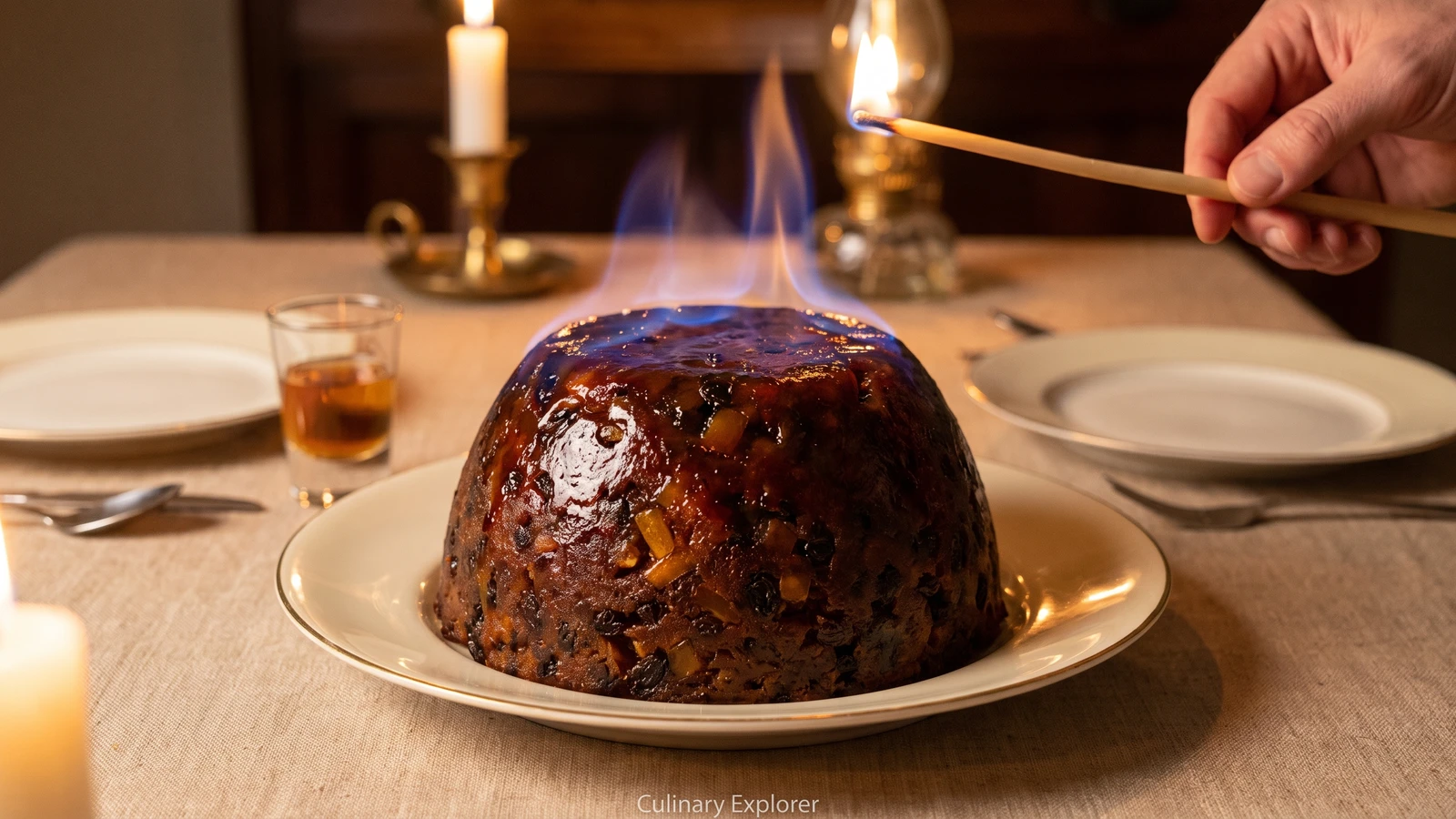
A dark, fruit-laden Pouding de Noël à l’anglaise, steeped in rum, bound with suet and stout, then steamed four hours until close-textured, fragrant, and ready for its blue crown of flame.
Pouding de Noël à l’anglaise teaches the patient half of pudding-making: flavor is built before heat. Before you touch a pan, know the one true thing about it. The long maceration of raisins, currants, sultanas, candied peel, and ginger in rum or brandy isn't preliminary housekeeping. It is the flavor, carried deep into every dark, close-textured spoonful.
The book's basinful assumed a pastry station making several puddings, rimmed earthenware molds, flour-dusted cloths, and a range where a pot could boil for four hours under someone's eye. This version reduces every proportion to one-third, enough for one 1.2-liter basin. A pleated cap of buttered parchment and foil replaces the cloth because it seals a modern basin more reliably. The cloth was brigade scaffolding. The maceration and four-hour cooking remain, because they are the dish. Once the fruit has waited, one cook, one stove, one long evening does the rest.
The finished pouding should be mahogany-dark and fragrant with citrus, cinnamon, stout, and warm spirit, its crumb dense but moist rather than sodden. Give the fruit its long drink before you begin. That maceration is the step that decides the pudding.
Plum pudding belongs to Britain's Christmas table, not to any French region, and French classical kitchens adopted it under its English identity as a festive preparation à l’anglaise. The word plum does not promise fresh plums: in British pudding language it came to mean the abundance of raisins, currants, and other dried fruit that darken the crumb. Its passage into the French grand repertoire kept the long fruit maceration, suet binding, four-hour cooking, and flaming spirit intact, because those practices are the pudding rather than decoration.
Quantity
½ cup (120 ml / 75 g)
seeded if necessary
Quantity
½ cup (120 ml / 75 g)
Quantity
½ cup (120 ml / 75 g)
Quantity
2 tablespoons (30 ml / 19 g)
finely diced
Quantity
2 tablespoons (30 ml / 19 g)
finely diced
Quantity
2 tablespoons (30 ml / 19 g)
finely diced
Quantity
2 tablespoons (30 ml / 19 g)
finely diced
Quantity
3 tablespoons plus ½ teaspoon (47 ml / 44 g)
Quantity
½ teaspoon (2.5 ml / 1 g)
finely grated
Quantity
2 teaspoons (10 ml / 10 g)
Quantity
½ teaspoon (2.5 ml / 1 g)
finely grated
Quantity
1½ teaspoons (7.5 ml / 8 g)
Quantity
1¼ cups (300 ml / 150 g)
very cold and finely chopped or grated
Quantity
3 cups (720 ml / 150 g)
Quantity
½ cup plus 2 tablespoons (150 ml / 75 g)
Quantity
½ cup (120 ml / 75 g)
peeled, cored, and finely chopped
Quantity
⅓ cup (80 ml / 38 g)
finely chopped
Quantity
⅓ cup plus 2 teaspoons (90 ml / 75 g)
Quantity
1½ teaspoons (7.5 ml / 3 g)
Quantity
1
Quantity
¼ cup plus ½ teaspoon (63 ml / 63 g)
Quantity
2 teaspoons (10 ml / 9 g)
softened, for the basin and parchment
Quantity
2 tablespoons (30 ml / 28 g)
for flaming
| Ingredient | Quantity |
|---|---|
| Malaga raisinsseeded if necessary | ½ cup (120 ml / 75 g) |
| dried currants | ½ cup (120 ml / 75 g) |
| sultanas | ½ cup (120 ml / 75 g) |
| candied orange peelfinely diced | 2 tablespoons (30 ml / 19 g) |
| candied lemon peelfinely diced | 2 tablespoons (30 ml / 19 g) |
| candied citron peelfinely diced | 2 tablespoons (30 ml / 19 g) |
| candied gingerfinely diced | 2 tablespoons (30 ml / 19 g) |
| dark rum or brandy | 3 tablespoons plus ½ teaspoon (47 ml / 44 g) |
| orange zestfinely grated | ½ teaspoon (2.5 ml / 1 g) |
| fresh orange juice | 2 teaspoons (10 ml / 10 g) |
| lemon zestfinely grated | ½ teaspoon (2.5 ml / 1 g) |
| fresh lemon juice | 1½ teaspoons (7.5 ml / 8 g) |
| beef kidney suetvery cold and finely chopped or grated | 1¼ cups (300 ml / 150 g) |
| fine fresh white breadcrumbs | 3 cups (720 ml / 150 g) |
| all-purpose flour | ½ cup plus 2 tablespoons (150 ml / 75 g) |
| applepeeled, cored, and finely chopped | ½ cup (120 ml / 75 g) |
| blanched almondsfinely chopped | ⅓ cup (80 ml / 38 g) |
| superfine sugar | ⅓ cup plus 2 teaspoons (90 ml / 75 g) |
| cinnamon-forward mixed baking spice | 1½ teaspoons (7.5 ml / 3 g) |
| large egg | 1 |
| dry stout | ¼ cup plus ½ teaspoon (63 ml / 63 g) |
| unsalted buttersoftened, for the basin and parchment | 2 teaspoons (10 ml / 9 g) |
| additional dark rum or brandy (optional)for flaming | 2 tablespoons (30 ml / 28 g) |
Combine the raisins, currants, sultanas, candied orange, lemon, and citron peels, candied ginger, orange zest and juice, lemon zest and juice, and the 47 ml of rum or brandy. Cover and refrigerate for at least 24 hours, preferably three days, stirring once or twice so every piece drinks. If the fruit has absorbed the spirit but remains leathery, press it beneath the liquid and give it another day. The steeping is the flavor, so don't rush past it.
Butter a 1.2-liter rimmed pudding basin thoroughly. Cut a wide sheet each of baking parchment and foil, make a 2.5 cm pleat through their centers so the pudding can expand, and butter the parchment side. Set a trivet or folded heatproof cloth in a deep lidded stockpot, place the empty basin on it, and check that the lid closes with room above the rim.
Put the cold chopped suet, breadcrumbs, flour, apple, almonds, sugar, and mixed spice into a large bowl. Work through the mixture with your fingertips until the suet is evenly separated and every piece wears a light coat of flour. Break up any clumps now; a hidden lump of suet melts into a greasy pocket later.
Scrape in the macerated fruit with every drop of its liquor. Beat the egg with the stout, pour it over the bowl, and mix thoroughly from the bottom until no pale flour or dry breadcrumb remains. The mixture should be heavy, moist, and reluctant to fall from the spoon. If it looks alarmingly loose, let it stand for ten minutes before changing anything; the breadcrumbs will swell and draw it together. Ça se rattrape.
Pack the mixture firmly into the buttered basin, pressing it into the curve to remove air pockets, and leave about 2.5 cm of headroom. Lay the pleated parchment butter-side down over the basin, cover it with the foil, and tie both tightly beneath the projecting rim with kitchen twine. Make a second loop of twine across the top as a lifting handle. A tight cover keeps condensed water out; if the foil tears, replace it before the basin enters the pot.
Lower the covered basin onto the trivet and pour boiling water around it until the water reaches halfway up the basin. Cover the stockpot and maintain a steady simmer for four hours. Check every 30 to 40 minutes and replenish with boiling water from a kettle, pouring down the side so none reaches the pudding. Never let the pot run dry. If it nearly does, remove it from the heat, wait one minute, add boiling water slowly, and resume the simmer; the pudding survives, though the pan may hold a grudge.
Lift the basin out by its twine handle and carefully remove the cover. A skewer pushed to the center should emerge without raw paste; moist crumbs and sticky fruit are exactly right. If raw mixture clings to it, reseal the basin and cook for another 30 minutes. For serving today, rest it covered for 20 minutes. For later, cool it completely, replace the damp parchment and foil with fresh coverings, and refrigerate or freeze as directed below.
If the pudding was made ahead, bring it back to heat by steaming it in its covered basin for 1½ to 2 hours. Loosen the edge with a thin knife and turn it onto a warmed platter. For the book's flaming finish, stand the measured additional rum or brandy in a small heatproof jug set in hot water until warm. Put the pudding in its serving place, turn off every burner, pour over the spirit, and ignite it with a long taper. Never pour from the bottle near a flame and never carry the pudding while it burns. If it doesn't light, serve it with its handsome brandy gloss. Accompany it, if you prefer, with a sabayon with rum, Brandy Butter as directed under “Gil-Blas pancakes” but without sugar, or an English custard thickened with arrowroot. À table!
1 serving (about 130g)
Culinary guides, cultural storytelling, and the editorial depth that makes cooking meaningful.
Discover Culinary ExplorerChef Juliette
Five almond preparations, one discipline: remove the skins cleanly, dry every kernel through, then cut, toast, or cloak it in pale caramel without letting its fragrant oils escape.

Chef Juliette
A pastry pantry lesson in one tray: filberts warmed only until their red skins release, rubbed clean, cooled, and chopped into a fragrant mise-en-place for cakes, creams, pralines, and petits fours.

Chef Juliette
The smallest pâtisserie discipline decides whether a cake leaves its mould intact: clarified butter in every corner, followed by the lightest veil of dry flour or fécule.

Chef Juliette
Four whites, one spotless bowl, and a patient change of speed: whisk gently until loosened, then briskly to glossy stiffness, with powdered sugar waiting if the foam begins to granulate.