Culinary Explorer

A cooking platform built around craft, culture, and the stories behind what we eat.
Discover Culinary Explorer
English Almond Pudding

English Almond Pudding

Created by Chef Juliette

Based on No. 2481, English Almond Pudding, from Le Guide Culinaire (1907) by Auguste Escoffier

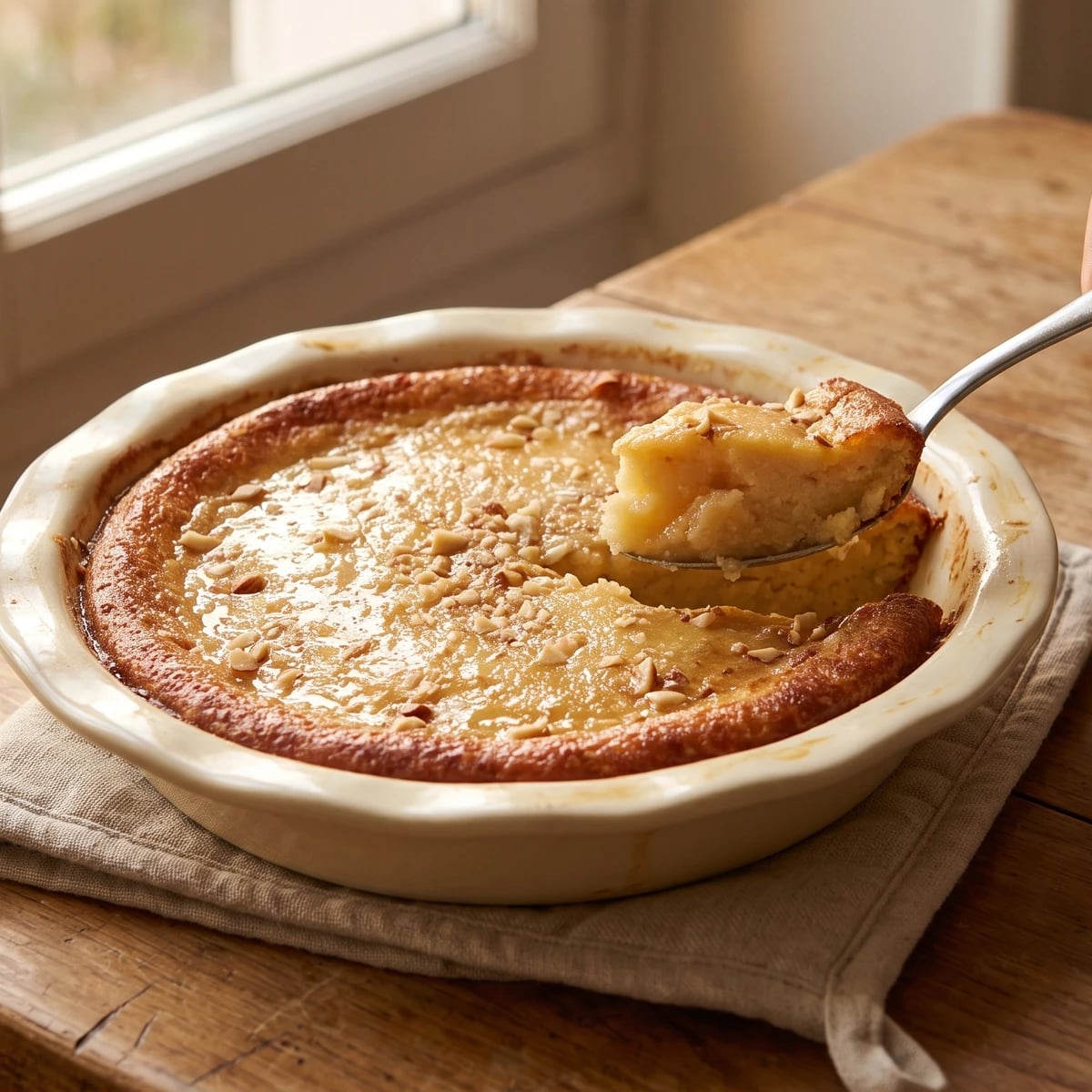
Butter worked to a true pommade carries almonds, eggs, orange-flower water, and cream into a tender pouding, gently set in a bain-marie and brought to the table in the very dish that baked it.

Desserts
French
Comfort Food
Weeknight
Budget Friendly
20 min
Active Time
50 min cook1 hr 20 min total
Yield4 servings

Pouding aux amandes à l’anglaise teaches one quiet but essential principle: butter can hold eggs and cream only when it is truly pommade, soft and spreadable but never melted. Get that foundation right and the almonds bake into a tender, close-set pudding with a butter-gold surface and the perfume of orange flowers.

Although modest by brigade standards, the source entry uses a four-ounce butter base and fills a generous pie dish. Here, every batter quantity is halved for four servings and baked in a 15 cm dish set inside an ordinary roasting pan. The service quantity is scaffolding and can go; the pommade and the bain-marie (hot-water bath) are the dish and must stay. No saucier, standing stockpot, or salamander is called for. One cook, one stove, one evening.

The finished pouding should hold at the edges and remain softly yielding at the centre, ready to be spooned directly from its dish. Before you touch the oven, get the butter genuinely smooth and pliable. That is the step that decides the texture.

The real home of this pouding is the French classical dessert table, among the entremets à l’anglaise, sweets prepared in the English manner. French cooks retained the British custom of serving a pudding in the dish or basin in which it cooked, while finely chopped almonds, orange-flower water, and a gentle bain-marie gave this formula its place in the French canon. Not every English pudding is steamed and unmoulded; this one is baked in water and served by the spoon.

The technique, the tradition, and the story behind every dish.

Discover Culinary Explorer

Ingredients

unsalted butter

Quantity

1 teaspoon (5 ml / 5 g)

for buttering the dish

unsalted butter

Quantity

4 tablespoons (60 ml / 57 g)

softened until pliable but not melted

powdered sugar

Quantity

½ cup plus 1½ tablespoons (143 ml / 71 g)

blanched almonds

Quantity

1 cup (240 ml / 113 g)

very finely chopped

fine salt

Quantity

1 small pinch (about 1/16 teaspoon / 0.3 ml / 0.4 g)

culinary orange-flower water

Quantity

¾ teaspoon (4 ml / 4 g)

large egg

Quantity

1

at room temperature

large egg yolk

Quantity

1

at room temperature

heavy cream

Quantity

3 tablespoons plus ½ teaspoon (48 ml / 48 g)

at room temperature

Equipment Needed

  • 15 cm / 6-inch shallow ceramic pie dish, about 600 to 750 ml / 2½ to 3 cups
  • Deep roasting pan large enough to hold the pie dish
  • Wooden spoon or flexible spatula
  • Kettle for the bain-marie

Instructions

  1. 1

    Prepare the bain-marie

    Set a rack in the middle of the oven and heat it to 160°C / 325°F. Butter the base and sides of a shallow 15 cm / 6-inch ceramic pie dish. Set the dish inside a deep roasting pan and bring a kettle of water just to the boil; the water goes in only after the filled dish is resting safely on the oven rack.

  2. 2

    Make the pommade

    Work the softened butter with a wooden spoon or flexible spatula until completely smooth. Add the powdered sugar in three additions, beating for 2 to 3 minutes until the mixture is pale, satiny, and the consistency of a thick ointment. You are making a pommade, not whipping in great clouds of air. If the mixture turns shiny and oily, chill it for 5 minutes and work it again; if it remains hard and lumpy, wrap the bowl briefly in a warm towel.

    The butter should accept a fingertip easily while still holding its shape. Melted butter cannot suspend the eggs and cream properly.
  3. 3

    Build the batter

    Stir the finely chopped almonds, salt, and orange-flower water into the pommade until evenly distributed. Beat the whole egg lightly, then add it a spoonful at a time, mixing each addition completely before the next. Work in the yolk the same way, followed by the cream in a thin stream. The batter should be thick, smooth, and slow to fall from the spoon. If it looks curdled after the egg goes in, stop adding liquid and set the bowl over barely warm water while stirring steadily until it closes again. Ça se rattrape.

  4. 4

    Bake it gently

    Scrape the batter into the buttered dish and smooth the surface without pressing it down. Place the roasting pan on the pulled-out oven rack, then pour in enough hot water to reach halfway up the pie dish. Bake for 40 to 50 minutes, until the edges are set, the top is pale butter-gold, and the centre answers a gentle nudge with one soft tremor rather than a liquid wave. If the water begins bubbling hard, lower the oven to 150°C / 300°F and add a small splash of cool water; a boiling bain-marie toughens the edge before the centre is ready. If the top colours too quickly, cover it loosely with foil.

  5. 5

    Rest and serve

    Lift the pudding dish carefully from the bain-marie and let it rest for 10 minutes. The centre will settle and finish setting without becoming firm. Bring the pouding to the table in its baking dish, exactly as the English register requires, and serve it warm by the generous spoonful. Never turn it out. À table!

Chef Tips

  • Chop the blanched almonds until they resemble coarse meal with a few tiny grains remaining. A processor is useful, but pulse briefly and stop before the nuts release their oil and become almond paste.
  • Use culinary orange-flower water, fresh enough to smell floral rather than dusty. The measured amount is deliberate; more quickly turns perfume into soap.
  • Room-temperature egg and cream protect the pommade. Cold liquid hardens the butter on contact and makes the batter appear curdled, while hot ingredients melt it.
  • Choose a shallow ceramic dish that can go directly from oven to table. This pouding belongs in its baking dish, with the first spoonful leaving an honest hollow at the edge.

Advance Preparation

  • The almonds can be chopped a day ahead and kept airtight at cool room temperature. The pie dish may also be buttered, covered, and refrigerated.
  • The finished pouding can be cooled, covered, and refrigerated for up to 2 days. To serve it warm, let the dish stand at room temperature for 20 minutes, then cover loosely and reheat in a shallow bain-marie at 150°C / 300°F for 10 to 15 minutes.

Frequently Asked Questions

Nutrition Information

1 serving (about 90g)

Calories
420 calories
Total Fat
34 g
Saturated Fat
13 g
Trans Fat
1 g
Unsaturated Fat
19 g
Cholesterol
140 mg
Sodium
65 mg
Total Carbohydrates
24 g
Dietary Fiber
3 g
Sugars
19 g
Protein
9 g

Note: Chef personas and recipes are created with AI assistance. Cook with care: follow safe food-handling practices, check doneness with a thermometer when needed, and adapt for allergies and your kitchen.

Where cooking meets culture.

Culinary guides, cultural storytelling, and the editorial depth that makes cooking meaningful.

Discover Culinary Explorer

More from Entremets (Sweets) - Puddings

Browse the full collection