Chef Juliette
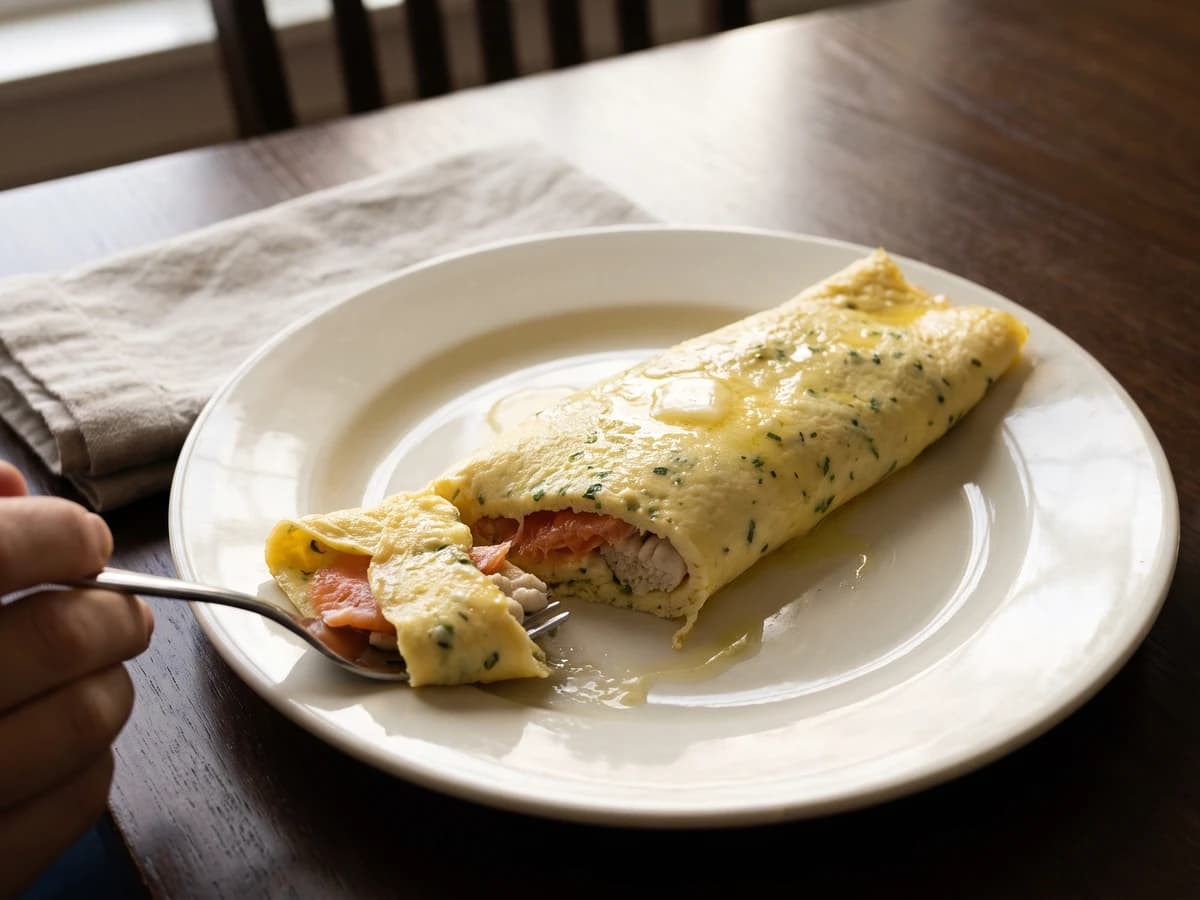
Omelette à l’Écossaise
A creamy omelette aux fines herbes closes around smoked-salmon-wrapped herring milts, gently poached in butter. Have the filling ready, then roll the eggs while they still shine.
A cooking platform built around craft, culture, and the stories behind what we eat.
Created by Chef Juliette
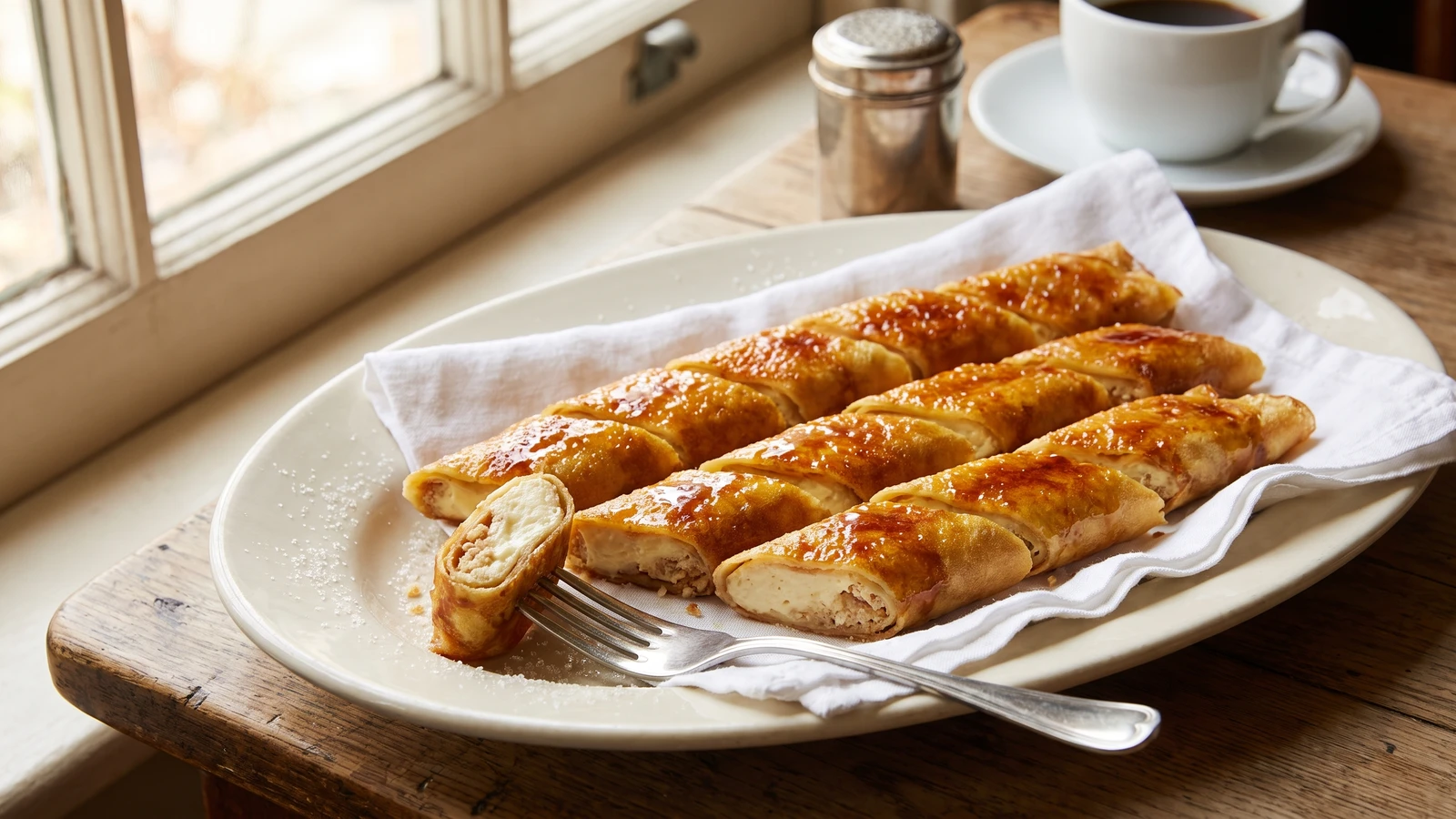
Based on No. 2477, Pannequets à la Crème, from Le Guide Culinaire (1907) by Auguste Escoffier
Pannequets teach the discipline of contrast: paper-thin crêpes, cold firm frangipane, crisp almond macaroon crumbs, and a last fierce glaze that bronzes the sugar without warming the filling into a spill.
Pannequets à la Crème (cream-filled crêpe lozenges) teach one exact lesson: the filling must be cold and firm before the pancake is rolled. Spread it warm and the crêpe slips, tears, and loses the clean diagonal shape the dish promises. Chill it fully and the pannequets cut neatly, their almond center soft beneath a glassy cap of sugar.
The original recipe assumed very thin pancakes ready from Pannequets with Jam (No. 2476), a pastry section with frangipane already cold, and a salamander fierce enough to glaze a tray in moments. Your honest equivalents are one home-scale batch of eight plain pancakes from that preparation, one saucepan of crème frangipane (almond pastry cream), and a fully heated broiler over a metal sheet. The brigade quantity and dedicated salamander are scaffolding and can go. The chilled cream, crushed macaroons, diagonal lozenges, and last fierce glaze are the dish, so they stay.
One cook, one stove, one evening. Cool the cream before you even think of rolling. That pause, not dexterity, decides whether the pannequets arrive generous and composed or slide apart on the tray.
Pannequets belong to the Parisian classical sweet course, where very thin pancakes became edible wrappers for creams, preserves, and savory salpicons. This is not the regional crêpe service of Brittany: the classical kitchen changed the form by rolling, trimming, cutting lozenges, and glazing them under strong top heat before arranging them on a napkin. The cream version keeps that grand-kitchen finish but fills it with frangipane and crushed almond macaroons, a pastry-larder pairing built for contrast.
Quantity
1 batch, yielding 8 pancakes, from Pannequets with Jam (No. 2476)
Quantity
¾ cup (180 ml / 184 g)
Quantity
¼ cup (60 ml / 60 g)
Quantity
3
Quantity
⅓ cup (80 ml / 65 g)
Quantity
3 tablespoons (45 ml / 24 g)
Quantity
½ cup (120 ml / 50 g)
Quantity
2 tablespoons (30 ml / 28 g)
cut into small pieces
Quantity
1 teaspoon (5 ml / 5 g)
Quantity
⅛ teaspoon (0.6 ml / 0.75 g)
Quantity
½ cup (120 ml / 50 g)
crushed into coarse crumbs
Quantity
⅓ cup (80 ml / 40 g)
sifted
| Ingredient | Quantity |
|---|---|
| very thin pancakes, prepared plain and left unfilled | 1 batch, yielding 8 pancakes, from Pannequets with Jam (No. 2476) |
| whole milk | ¾ cup (180 ml / 184 g) |
| heavy cream | ¼ cup (60 ml / 60 g) |
| large egg yolks | 3 |
| granulated sugar | ⅓ cup (80 ml / 65 g) |
| plain flour | 3 tablespoons (45 ml / 24 g) |
| finely ground almond flour | ½ cup (120 ml / 50 g) |
| unsalted buttercut into small pieces | 2 tablespoons (30 ml / 28 g) |
| pure vanilla extract | 1 teaspoon (5 ml / 5 g) |
| fine salt | ⅛ teaspoon (0.6 ml / 0.75 g) |
| crisp almond macaroonscrushed into coarse crumbs | ½ cup (120 ml / 50 g) |
| icing sugarsifted | ⅓ cup (80 ml / 40 g) |
Bring the milk, cream, and vanilla just to a simmer in a heavy saucepan. Whisk the yolks, granulated sugar, salt, and flour in a bowl until smooth and slightly pale, then pour in one-third of the hot dairy while whisking constantly. Whisk this mixture back into the saucepan and cook over medium-low heat, never stopping, until the cream thickens and the first slow bubbles break through. Continue for one minute so the flour cooks completely. If small lumps appear, take the pan off the heat, whisk hard, and pass the cream through a fine sieve before continuing.
Take the pan off the heat and whisk in the almond flour, followed by the butter one piece at a time, until the crème frangipane is smooth, glossy, and thick enough to hold the trail of the whisk. Scrape it into a shallow dish, press parchment directly against its surface, and refrigerate for at least one hour. It must be cold and firm before rolling. If the chilled cream still flows from a spoon, return it to the saucepan, whisk at a low simmer for another minute, and chill it again. Ça se rattrape.
Lay out the 8 very thin pancakes prepared according to Pannequets with Jam (No. 2476), stopping before the jam is added. Spread each with an even layer of cold frangipane, leaving a narrow bare border, then strew the cream with crushed almond macaroons. Roll each pancake into a close cylinder without squeezing the filling toward the ends. If a pancake has stiffened and threatens to crack, cover the stack with a barely damp towel for five minutes before rolling.
Trim both ends of every roll on the same diagonal, then cut through the center at a matching angle to make two lozenges from each roll. Use a sharp knife and wipe it clean between cuts so the almond cream stays inside rather than dragging across the crêpe. Arrange the 16 lozenges seam-side down on a parchment-lined metal sheet, leaving a little room between them. Chill for fifteen minutes if the kitchen is warm.
Heat the broiler fully for ten minutes and position a rack about 4 inches (10 cm) below it. Sift a thin, complete coat of icing sugar over the pannequets and broil for 45 to 90 seconds, watching without interruption, until the sugar melts to a clear gloss and freckles amber. Rotate the tray the moment one side colors faster. If the first coat melts into damp patches without glazing, pull out the tray, add one more light dusting, and return it for twenty seconds.
Let the glaze settle for one minute, then arrange the pannequets on a clean folded linen napkin set over an oval platter. Serve at once, while the crêpe edges are lightly crisp, the sugar is glossy, and the center remains cool enough to hold. À table!
1 serving (about 235g)
Culinary guides, cultural storytelling, and the editorial depth that makes cooking meaningful.
Discover Culinary ExplorerChef Juliette
A creamy omelette aux fines herbes closes around smoked-salmon-wrapped herring milts, gently poached in butter. Have the filling ready, then roll the eggs while they still shine.
Chef Juliette
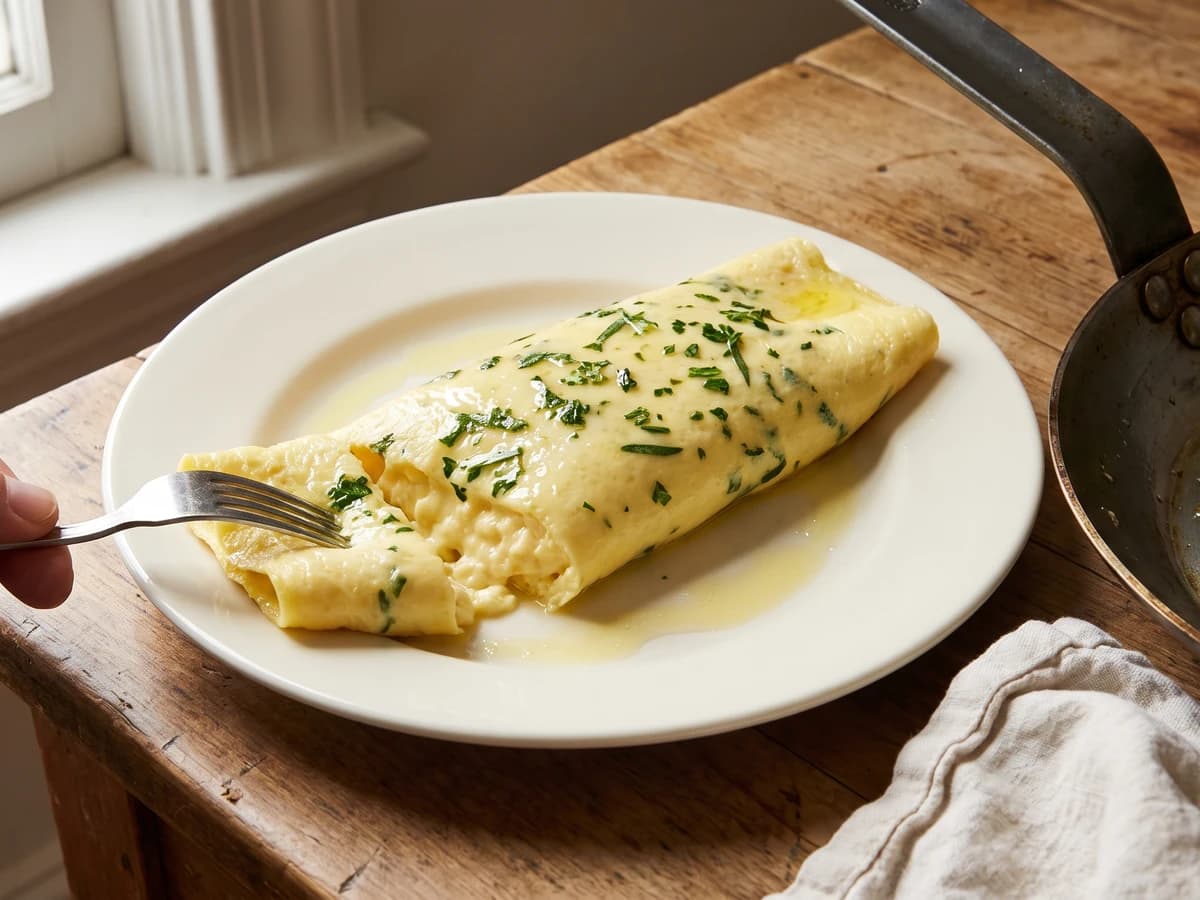
Four tender herbs, hot butter, and two eggs per pan: this rolled omelette teaches the quick hand and good judgment that keep the outside pale and the center creamy.
Chef Juliette
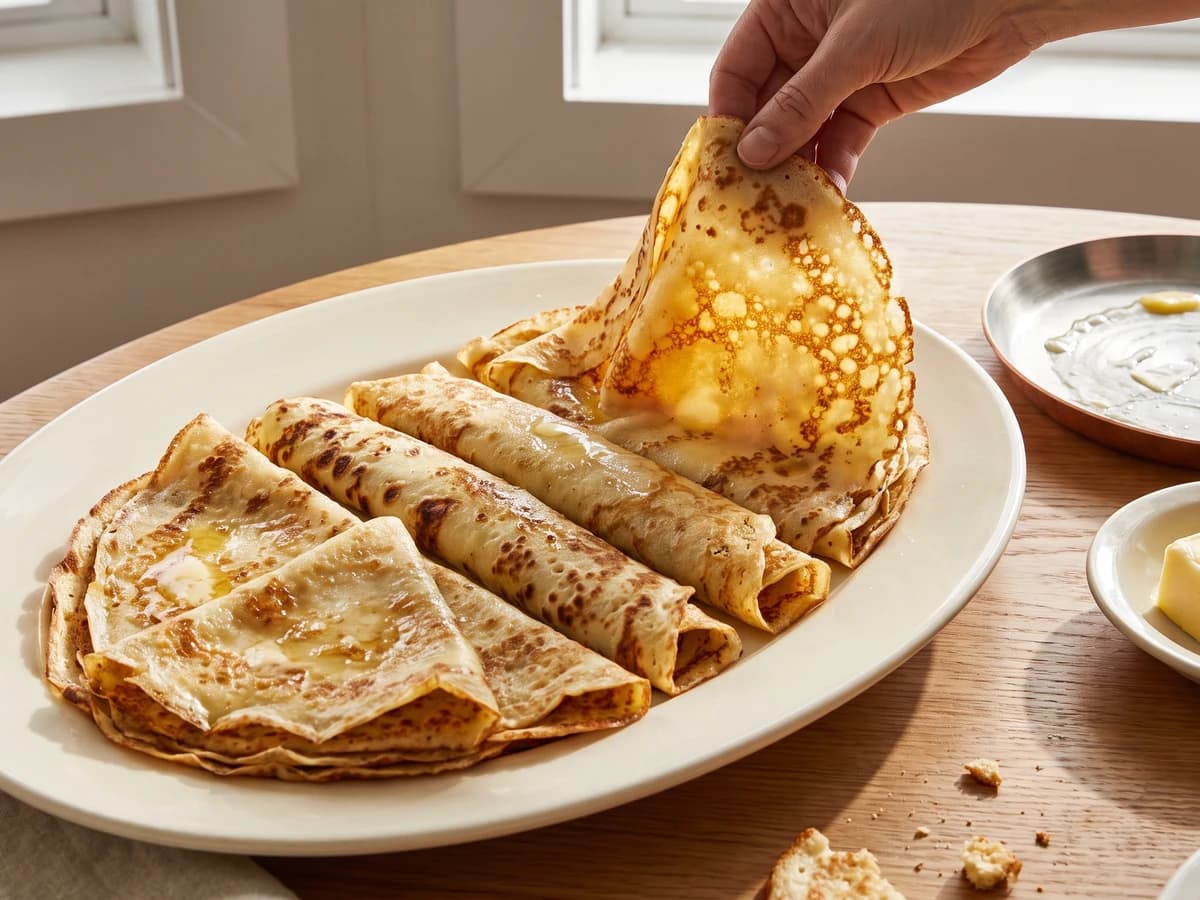
Four batters, one lesson: let the flour drink deeply before cooking, then spread the batter thinly in butter for crêpes and pannequets that bend without becoming tough.
Chef Juliette
Crêpes au Couvent trap ripe Williams pear dice between two thin pours of sweet batter, then turn in one clean toss and reach the table butter-gold, powdered, and burning hot.