Chef Juliette
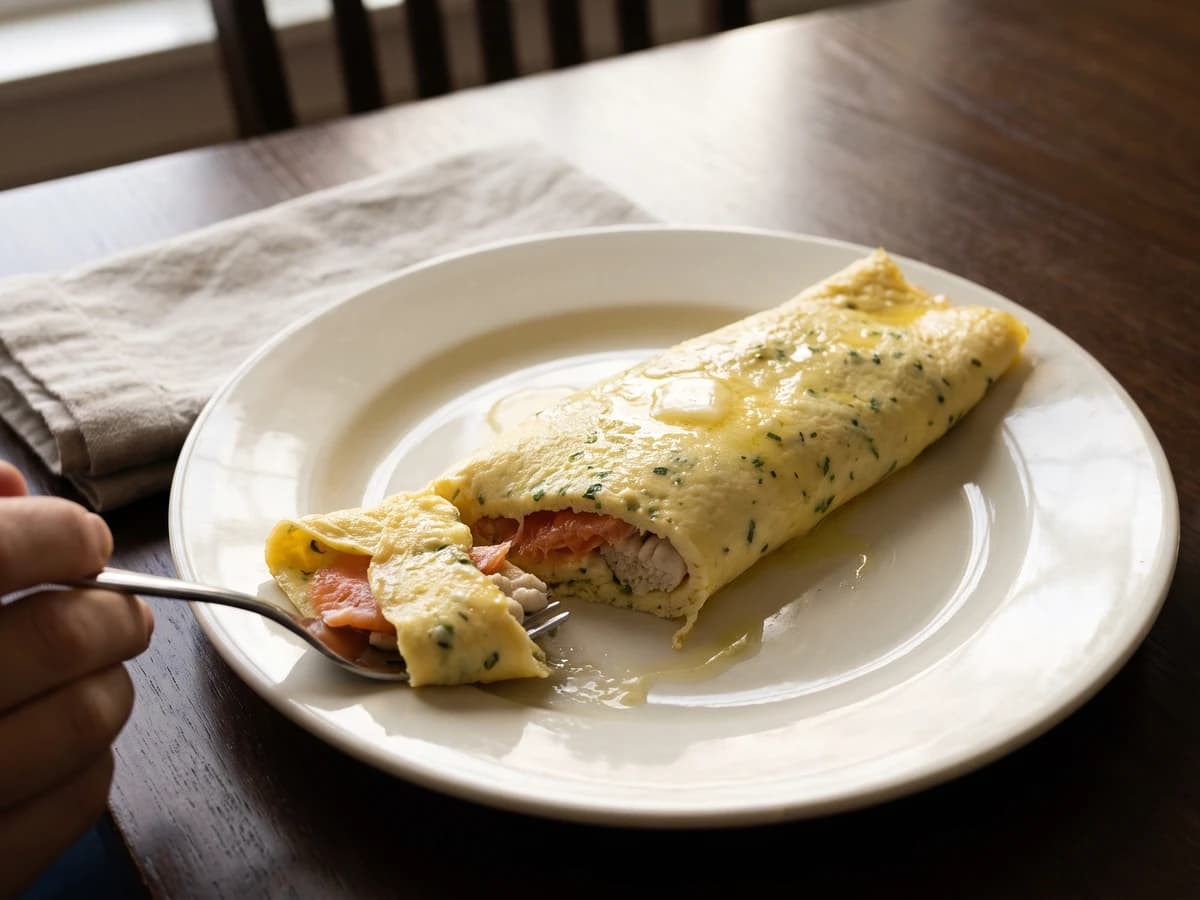
Omelette à l’Écossaise
A creamy omelette aux fines herbes closes around smoked-salmon-wrapped herring milts, gently poached in butter. Have the filling ready, then roll the eggs while they still shine.
A cooking platform built around craft, culture, and the stories behind what we eat.
Created by Chef Juliette
Based on No. 2476, Pannequets with Jam, from Le Guide Culinaire (1907) by Auguste Escoffier
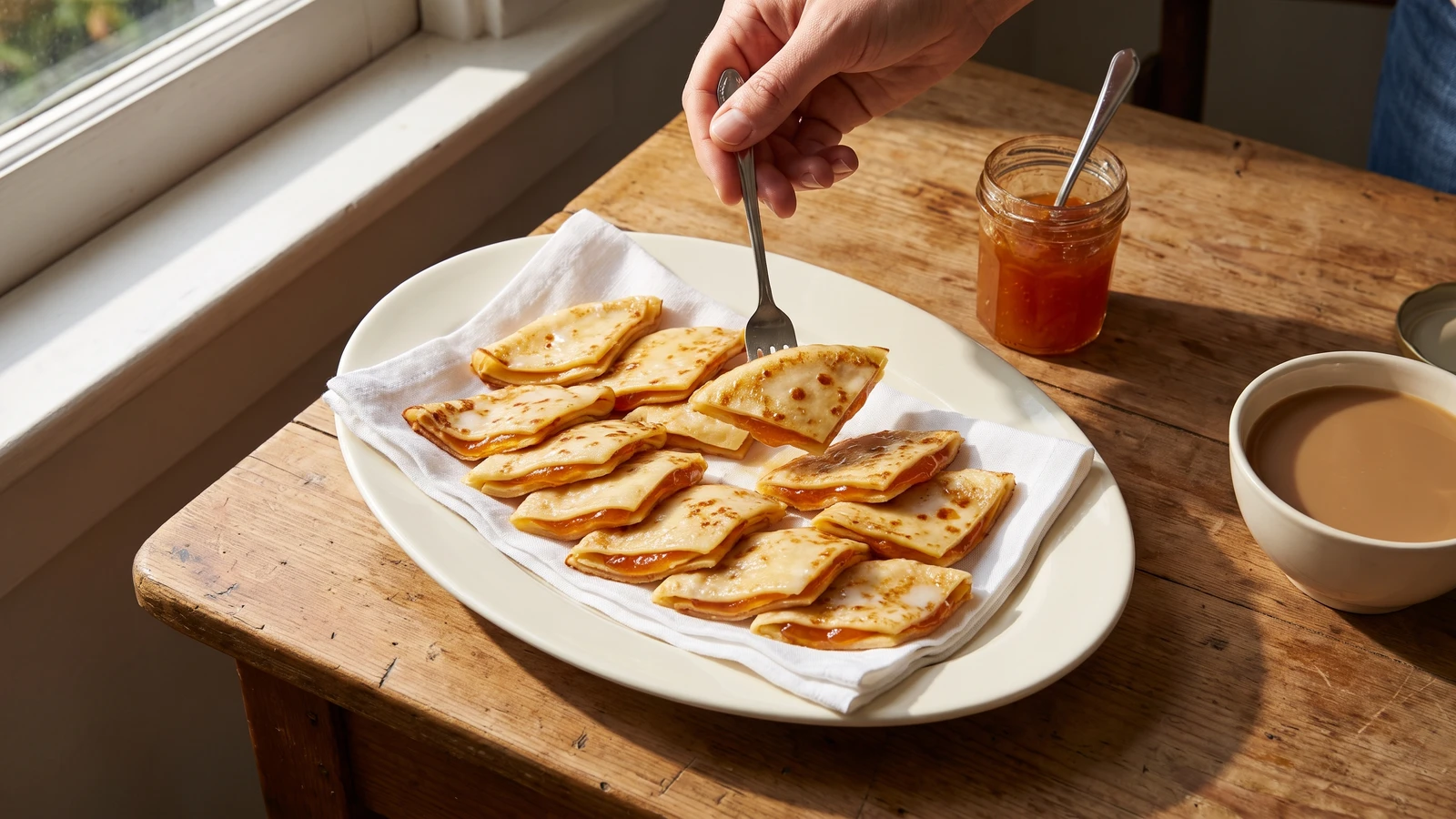
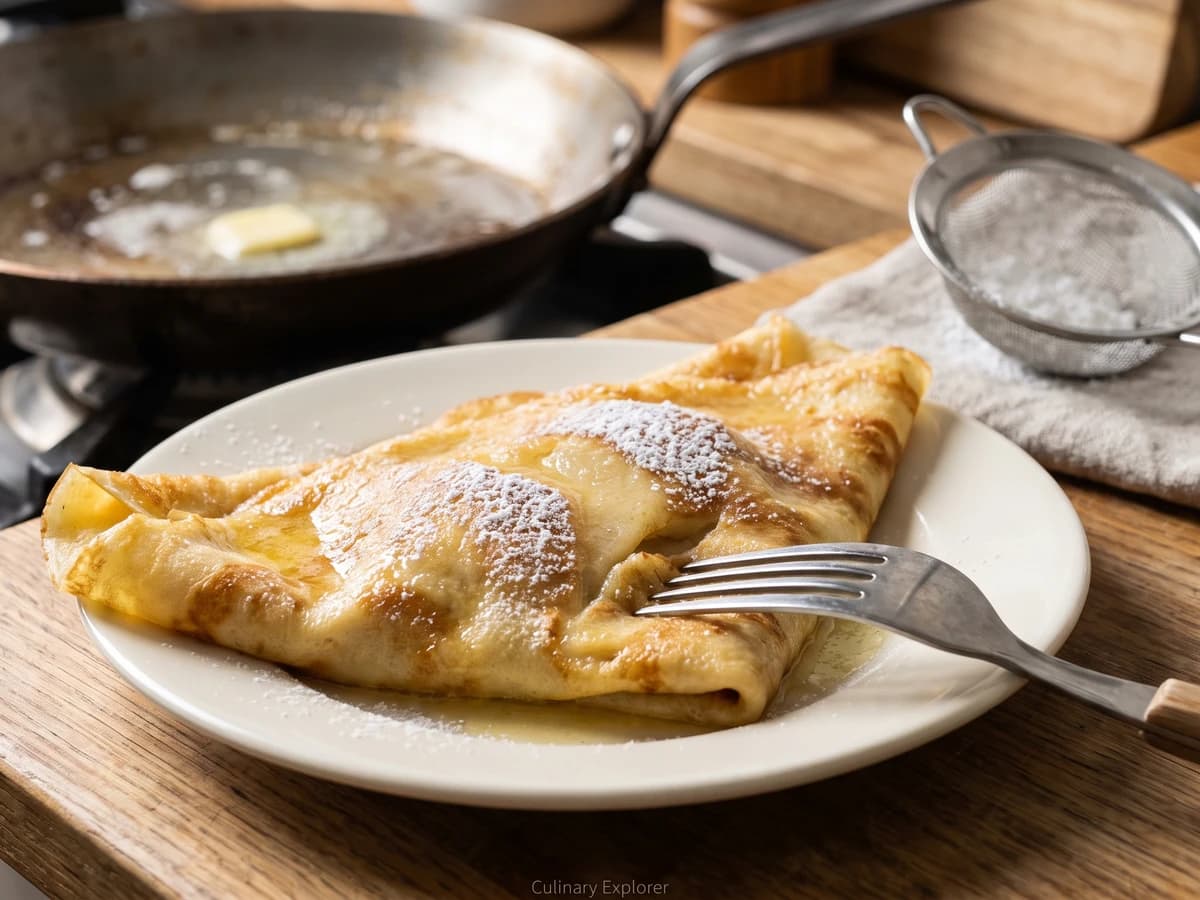
Paper-thin crêpes wear only a veil of jam, then are rolled, cut into neat lozenges, and glazed with icing sugar under fierce heat: restraint makes this modest sweet magnificent.
Pannequets à la confiture (jam-filled crêpe lozenges) teach restraint. The one true thing is this: the jam must be a veil, not a filling. Spread it lavishly and the fierce heat drives it out; spread it thinly and it perfumes each paper-fine layer while the icing sugar melts into a delicate glaze.
The classical entry assumed a pastry cook already fluent in very thin pancakes, trays of portions, and a fierce oven held ready. At home, eight crêpes from one small bowl, a 20 cm skillet, and the concentrated top heat of a broiler do the same work. The only changes are scale and heat source. Brigade batch production is scaffolding and can go; the thin crêpe, diagonal trimming, lozenge cut, folded napkin, and final glaze are the dish, so every one stays. One cook, one stove, one evening.
Before you touch the pan, remember the measure that decides the dish: two teaspoons of jam per crêpe, spread nearly transparent and kept clear of the edge. The broiler can only glaze what you have rolled with discipline.
Pannequets belong to the French classical entremets table rather than to one province: the name describes a thin pancake made into a parcel, sweet or savory, by filling and folding or rolling it. In bourgeois kitchens, the everyday crêpe moved into formal service through geometry and finish, with angled cuts creating lozenges and fierce heat turning icing sugar into a bright glaze. Without that shaping and glaze, this is simply a crêpe à la confiture, delicious but a different presentation.
Quantity
¾ cup (180 ml / 95 g)
Quantity
¼ teaspoon (1.25 ml / 1.5 g)
Quantity
2
Quantity
1 cup (240 ml / 245 g)
Quantity
2 tablespoons (30 ml / 28 g)
melted and cooled
Quantity
1 tablespoon (15 ml / 14 g)
softened, for the pan and tray
Quantity
Up to 1 tablespoon (15 ml / 15 g)
Quantity
⅓ cup (80 ml / 110 g)
Quantity
¼ cup (60 ml / 30 g)
sifted
| Ingredient | Quantity |
|---|---|
| all-purpose flour | ¾ cup (180 ml / 95 g) |
| fine salt | ¼ teaspoon (1.25 ml / 1.5 g) |
| large eggs | 2 |
| whole milk | 1 cup (240 ml / 245 g) |
| unsalted buttermelted and cooled | 2 tablespoons (30 ml / 28 g) |
| unsalted buttersoftened, for the pan and tray | 1 tablespoon (15 ml / 14 g) |
| cool water (optional) | Up to 1 tablespoon (15 ml / 15 g) |
| smooth, well-set jam, such as apricot or seedless raspberry | ⅓ cup (80 ml / 110 g) |
| icing sugarsifted | ¼ cup (60 ml / 30 g) |
Whisk the flour and salt together, make a well, and add the eggs with half the milk. Whisk from the centre outward until you have a smooth, thick batter, then gradually whisk in the remaining milk. Cover and rest for 30 minutes so the flour hydrates and the crêpes cook tender rather than rubbery. Stir in the melted butter. The finished batter should run like light cream; if it coats the spoon heavily, add the cool water a teaspoon at a time. If you find lumps, strain the batter and continue.
Heat a 20 cm (8-inch) nonstick skillet over medium heat. Wipe it with the thinnest film of softened butter, then pour in about 2½ tablespoons (38 ml) batter and turn the pan immediately so it runs into a nearly transparent layer. Cook for 35 to 45 seconds, until the surface loses its wet shine and the fine edge lifts, then turn and cook the second side for about 10 seconds. Stack the crêpes on a plate and make eight in all. If the first tears, let the pan heat a little longer and give the next crêpe another few seconds before turning; the first one is tuition, not a verdict.
Set an oven rack about 15 cm (6 inches) below the broiler and heat the broiler on high for five minutes. Cover a rimmed metal baking sheet with foil and wipe it with a barely visible film of softened butter. This concentrated top heat is the home equivalent of the fierce oven the original method kept ready.
Let the crêpes cool completely, since warmth loosens jam. Place one with its better-mottled side down and spread the upper surface with 2 teaspoons (10 ml / about 14 g) jam, leaving a 1.5 cm (½-inch) border. The coating should be thin enough to see the crêpe beneath it. Roll into a snug cylinder and set it seam-side down. If jam bulges from the edge, unroll, scrape away the excess, and roll again. With a sharp knife, trim both ends on the same 45-degree bias, then cut the roll at its midpoint on a matching parallel bias. Repeat to make 16 lozenges and arrange them seam-side down on the prepared tray.
Sift the icing sugar evenly over the pannequets, covering the tops with a fine white veil rather than burying them. Slide the tray beneath the broiler and watch without turning away. In 30 to 90 seconds the sugar will look damp, then melt into a glassy sheen with tiny amber freckles. Rotate the tray if one side colours first. If jam begins running from the cut ends, pull the tray immediately. Ça se rattrape: lift each pannequet free with a thin spatula and spoon any escaped drop back onto its cut face. Do not wait for an even brown crust, because icing sugar passes from glazed to bitter very quickly.
Let the pannequets stand for 30 seconds, then lift them from the tray while the sugar is still slightly supple. Arrange them on a clean folded napkin set over a warm oval platter, keeping their glazed sides uppermost and the angled cuts visible. Serve four lozenges per person at once, while the thin sugar finish is crisp and the jam is glossy. À table!
1 serving (about 140g)
Culinary guides, cultural storytelling, and the editorial depth that makes cooking meaningful.
Discover Culinary ExplorerChef Juliette
A creamy omelette aux fines herbes closes around smoked-salmon-wrapped herring milts, gently poached in butter. Have the filling ready, then roll the eggs while they still shine.
Chef Juliette
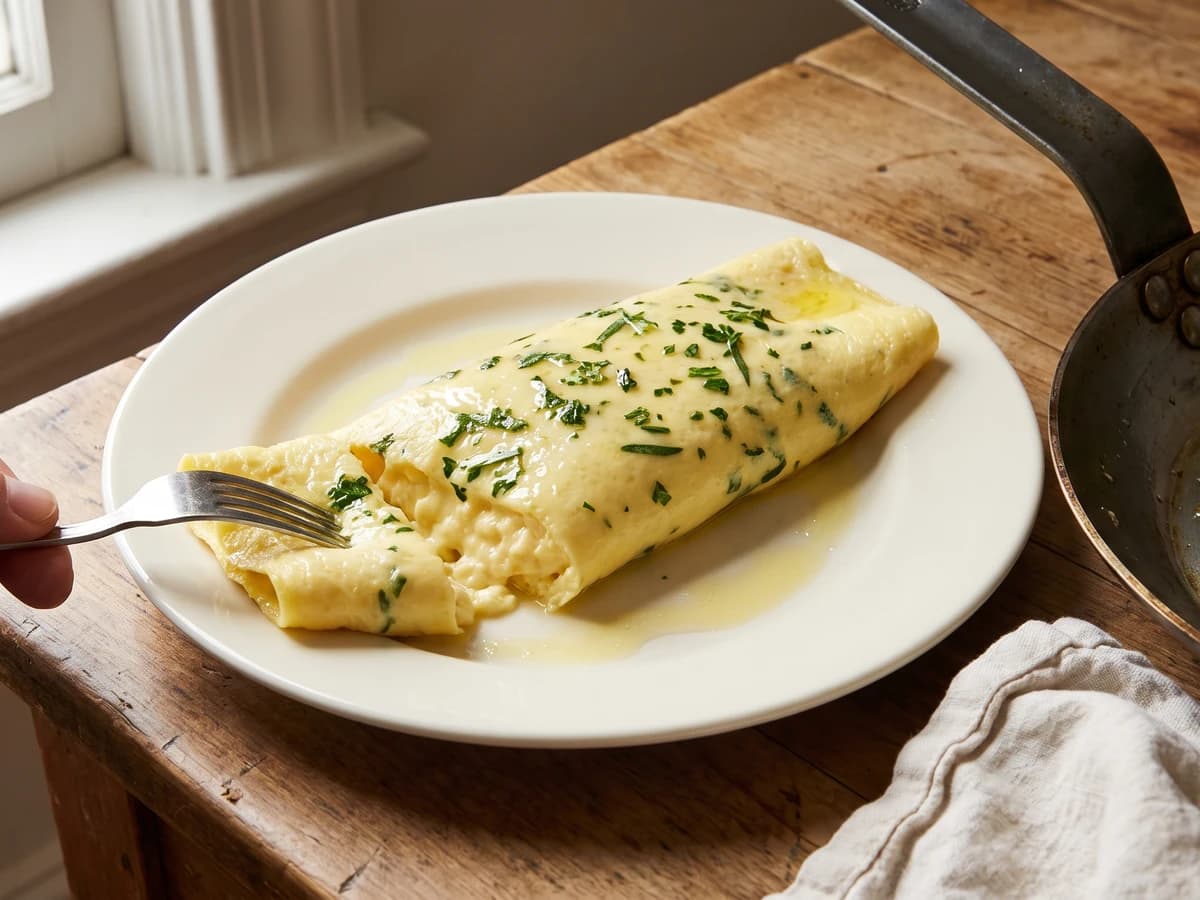
Four tender herbs, hot butter, and two eggs per pan: this rolled omelette teaches the quick hand and good judgment that keep the outside pale and the center creamy.
Chef Juliette
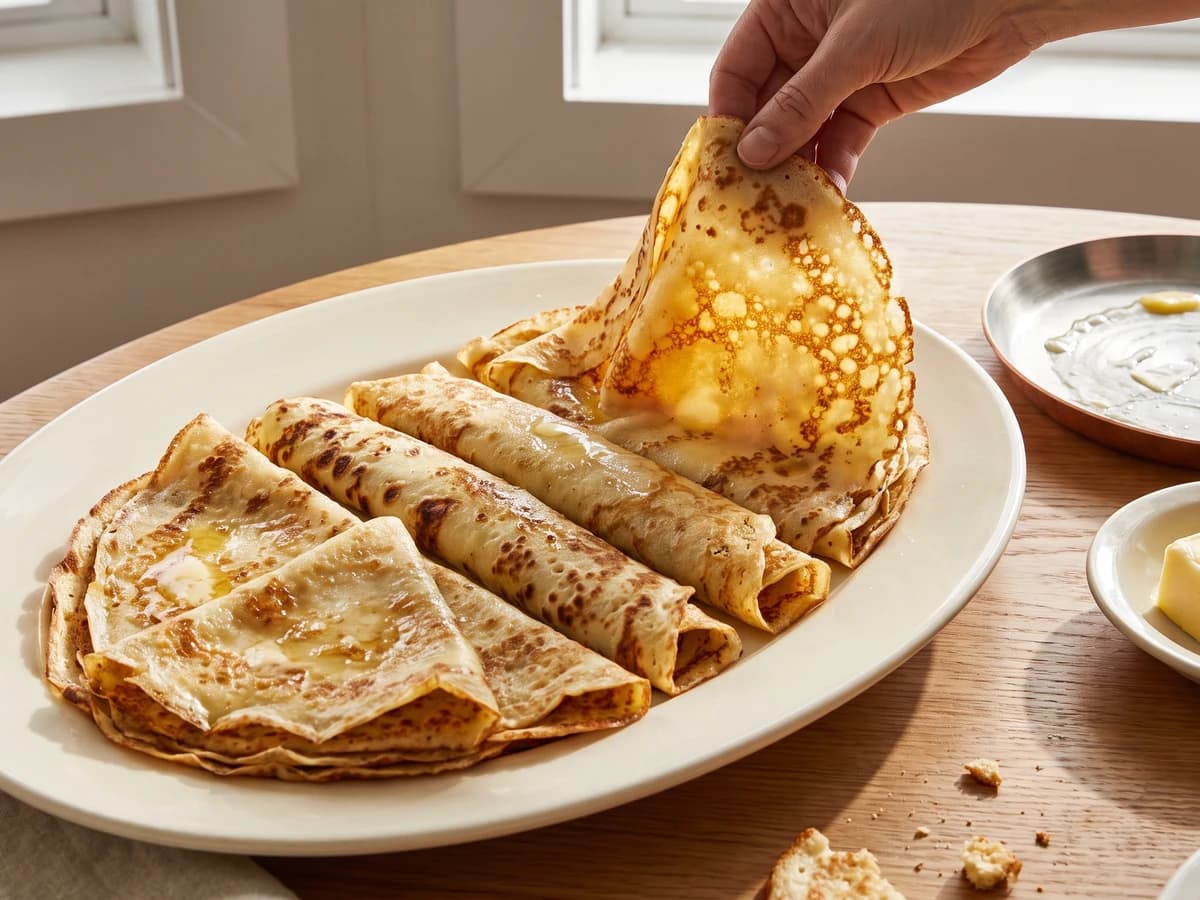
Four batters, one lesson: let the flour drink deeply before cooking, then spread the batter thinly in butter for crêpes and pannequets that bend without becoming tough.
Chef Juliette
Crêpes au Couvent trap ripe Williams pear dice between two thin pours of sweet batter, then turn in one clean toss and reach the table butter-gold, powdered, and burning hot.