
Chef Juliette
Various Almond Preparations
Five almond preparations, one discipline: remove the skins cleanly, dry every kernel through, then cut, toast, or cloak it in pale caramel without letting its fragrant oils escape.
A cooking platform built around craft, culture, and the stories behind what we eat.
Created by Chef Juliette
Based on No. 2462, Example: Omelet With Rum, from Le Guide Culinaire (1907) by Auguste Escoffier
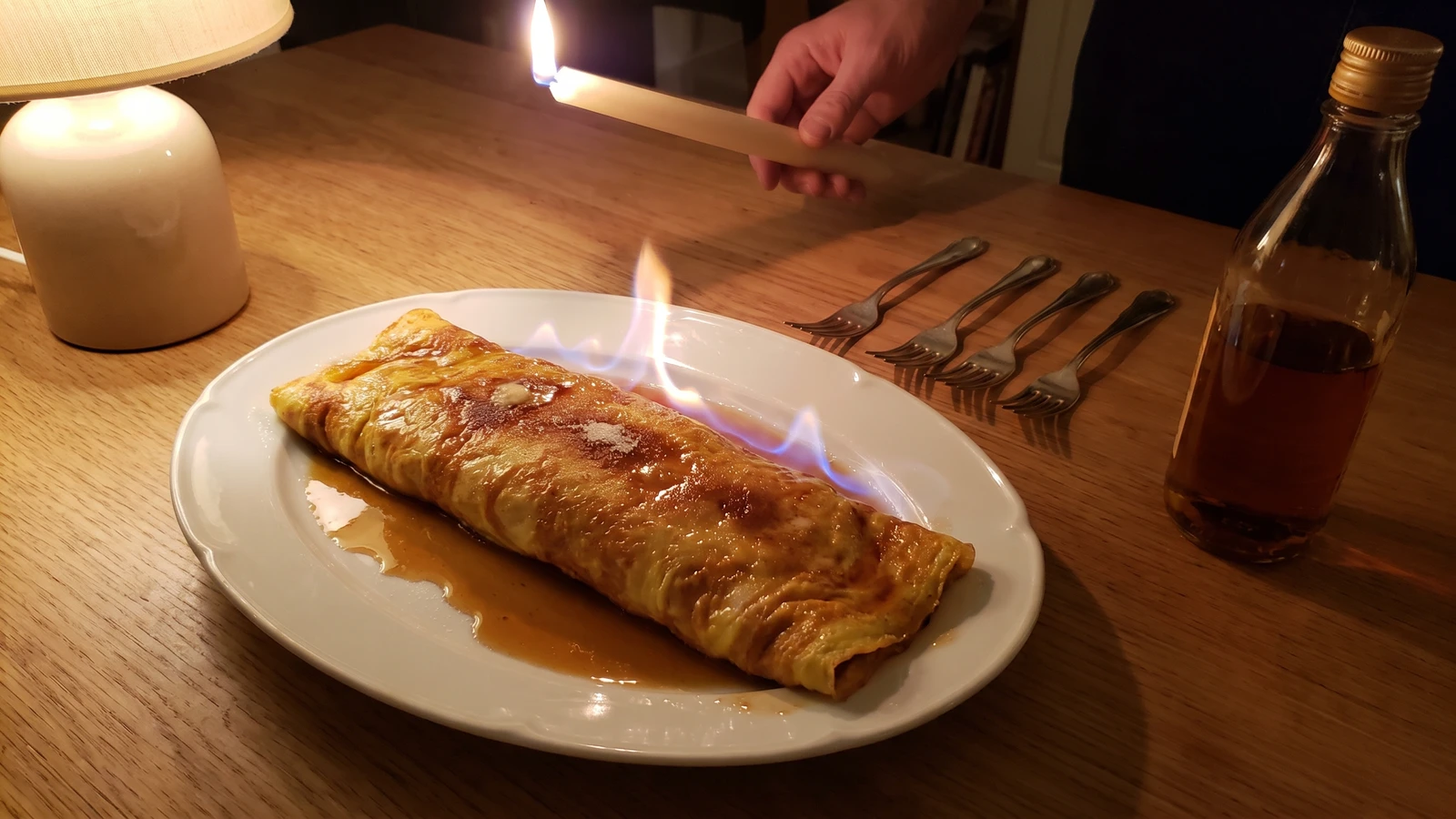
Omelette au rhum teaches two kinds of heat: set the sugared eggs softly, then warm the rum just enough to catch, bathing the butter-gold roll in a brief blue flame at the table.
Omelette au rhum (rum-flambéed sweet omelet) teaches that spectacle only works when the quiet cooking underneath is exact. Sugar makes eggs color quickly, so the one true thing is this: roll the omelette while its center remains tender and glossy. The finish should be butter-gold, softly folded, and lacquered with warm rum and sugar, not browned into a cake before the match appears.
The terse original says to cook the omelet "in the usual way" because it assumed an omelet cook who knew the pan by feel, a long heatproof dish waiting, and someone in the dining room ready for the flame. There is no saucier, stockpot, or salamander hidden in this dessert. The home equivalent is a 10-inch skillet, a warmed platter, and every ingredient measured before the eggs meet butter. Because the entry gives no quantities, this home-scale formula uses six eggs for four dessert portions, manageable for one cook, one stove, one evening.
Only the brigade's handoff can go. The soft set, rolled shape, sugar, heated rum, and flame are the dish and must stay. Set the platter down before igniting it, never carry open flame through the room; the ceremony loses nothing. The step that matters most is warming the measured rum gently enough to catch without ever bringing the bottle near the heat.
Omelette au rhum belongs to the French bourgeois table and the classical entremets repertoire rather than to one province; sweet omelets were served after savory courses, correcting the common notion that every omelet belongs at breakfast. From private dining rooms the preparation passed easily into grand kitchens and hotel dining rooms, where warmed spirits turned a quick pan dessert into tableside ceremony. The flame is the finish, not the foundation: the omelet must already be tender, and enough alcohol remains that the finished dish should still be treated as alcoholic.
Quantity
6
Quantity
2 tablespoons (30 ml / 25 g)
for seasoning the eggs
Quantity
⅛ teaspoon (0.6 ml / 0.8 g)
Quantity
2 tablespoons (30 ml / 28 g)
Quantity
1 tablespoon (15 ml / 12 g)
for finishing
Quantity
¼ cup (60 ml / 57 g)
| Ingredient | Quantity |
|---|---|
| large eggs | 6 |
| fine granulated sugarfor seasoning the eggs | 2 tablespoons (30 ml / 25 g) |
| fine sea salt | ⅛ teaspoon (0.6 ml / 0.8 g) |
| unsalted butter | 2 tablespoons (30 ml / 28 g) |
| fine granulated sugarfor finishing | 1 tablespoon (15 ml / 12 g) |
| rum, 40% ABV | ¼ cup (60 ml / 57 g) |
Clear a heatproof serving area of napkins, candles, greenery, and anything overhead. Set a rimmed sheet pan or large metal lid within reach so you can cover the platter if necessary. Warm the long platter with very hot water, then empty and dry it thoroughly. Measure the rum into a small saucepan away from the stove, cap the bottle, and put it well beyond the cooking area. Once the eggs enter the pan, this dish moves quickly.
Crack the eggs into a bowl and add the 2 tablespoons of sugar and the salt. Beat with a fork until the whites and yolks are completely united and the sugar begins to dissolve, but don't whip in a great head of foam. You want a close, tender omelette that can be rolled, not a swollen sponge.
Set a 10-inch (25 cm) nonstick or well-seasoned omelet pan over medium heat. Add the butter and swirl until it melts and its foam subsides, stopping before it browns. Pour in the eggs. Shake the pan while sweeping a heatproof spatula through the mixture, drawing the setting egg toward the center so liquid egg reaches the hot surface. After about 60 to 90 seconds, stop stirring when the curds are small and tender, the underside is pale gold, and the surface is moist but no longer freely liquid. Sugar accelerates browning. If the underside colors before the top thickens, lift the pan from the heat and keep folding gently while the residual heat finishes the eggs. Ça se rattrape.
Fold the far third of the omelette toward the center. Tip the pan over the warmed platter and use the spatula to turn the remaining third underneath, leaving the roll seam-side down. Nudge it into a long oval while it is still supple; it needn't stand to military attention. Sprinkle the finishing sugar evenly over the top.
Place the saucepan of measured rum over very low heat and warm it to 50 to 60°C (120 to 140°F), about 30 to 60 seconds, without letting it simmer. Remove the saucepan from the burner and turn the burner off. Pour the warm rum evenly over the sugared omelette, carry the platter to the cleared serving area, and set it down. Keeping faces and sleeves back, ignite the rum at the far edge with a long match or utility lighter. Let the low flame burn out naturally. If the rum refuses to catch, don't add more and never pour from the bottle. Ça se rattrape: serve the omelette with its warm rum-sugar juices, which are delicious even without the flame.
Wait until the flame has gone out completely, remembering that it can be difficult to see in bright light. Spoon the glossy rum and melted sugar from the platter over the omelette, cut it crosswise into four portions, and serve at once on warmed dessert plates. The center should remain tender beneath its butter-gold exterior. À table!
1 serving (about 95g)
Culinary guides, cultural storytelling, and the editorial depth that makes cooking meaningful.
Discover Culinary ExplorerChef Juliette
Five almond preparations, one discipline: remove the skins cleanly, dry every kernel through, then cut, toast, or cloak it in pale caramel without letting its fragrant oils escape.

Chef Juliette
A pastry pantry lesson in one tray: filberts warmed only until their red skins release, rubbed clean, cooled, and chopped into a fragrant mise-en-place for cakes, creams, pralines, and petits fours.

Chef Juliette
The smallest pâtisserie discipline decides whether a cake leaves its mould intact: clarified butter in every corner, followed by the lightest veil of dry flour or fécule.

Chef Juliette
Four whites, one spotless bowl, and a patient change of speed: whisk gently until loosened, then briskly to glossy stiffness, with powdered sugar waiting if the foam begins to granulate.