
Chef Juliette
Flan aux Carottes
A pale short-paste shell holds silken, lightly sweet carrot purée beneath neat glazed half-discs, their butter syrup catching the light: a classical tart poised between vegetable course and sweet.
A cooking platform built around craft, culture, and the stories behind what we eat.
Created by Chef Juliette
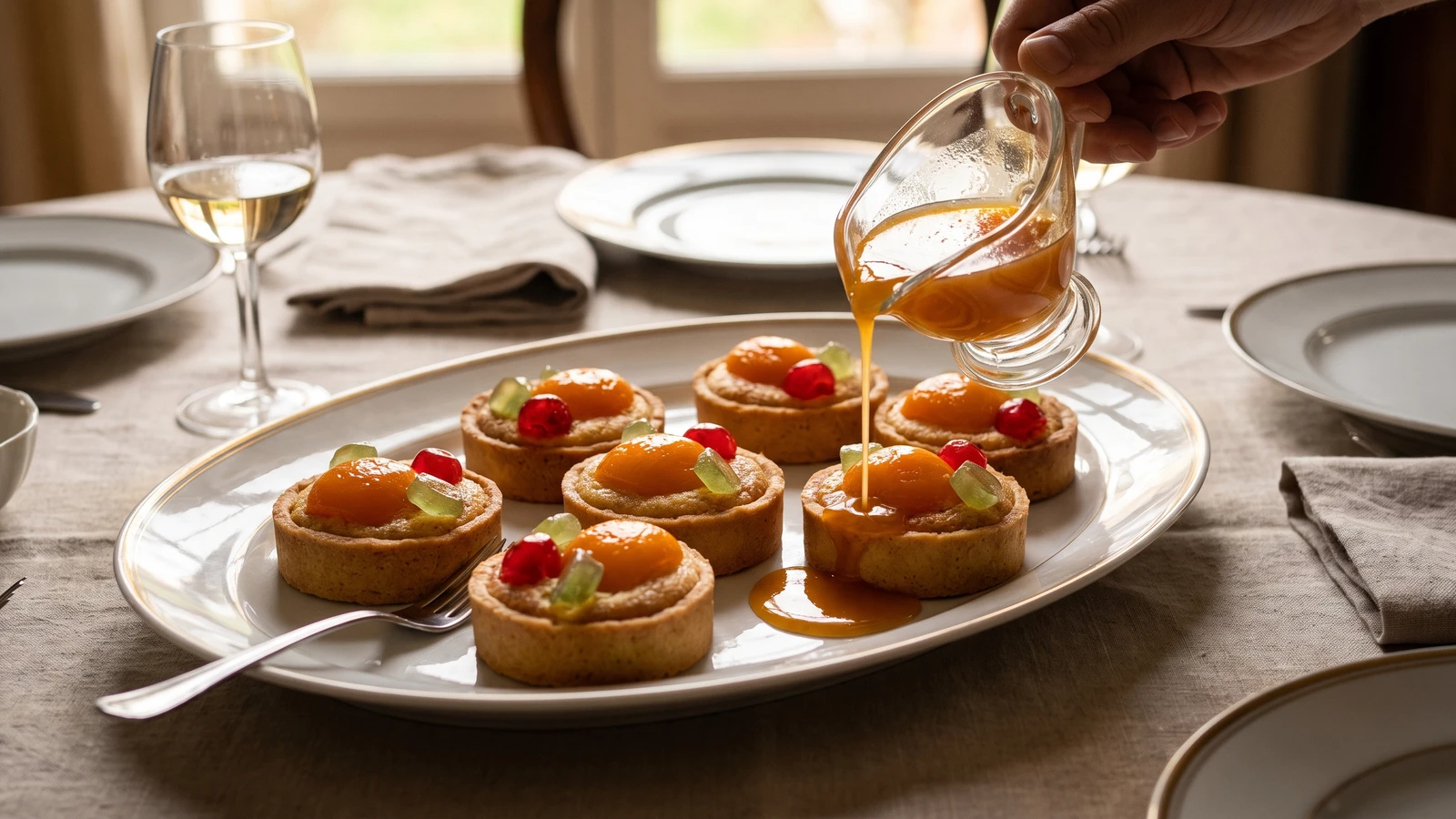
Based on No. 2460, Croûte aux Abricots au Marasquin, from Le Guide Culinaire (1907) by Auguste Escoffier
A tender Savarin-paste shell, dried beneath Pralin, filled with hazelnut frangipane, and crowned by a maraschino-poached apricot: one small pastry teaches how architecture makes abundance possible.
Croûte aux Abricots au Marasquin (Savarin tartlets with maraschino apricots) teaches structure before decoration. The one true thing to know before touching a pan is that the hollowed Savarin shell must keep a thick rim, nearly 1 cm all around; that border carries the cream, fruit, and jeweled garnish without sagging. Cut it thin and the pastry becomes a basket with no handle.
The original formula assumed a pastry brigade with pâte à savarin, Pralin (No. 2352), frangipane, and apricot sauce waiting in separate bowls, plus enough tartlet moulds for service. Your kitchen needs six moulds, one mixer bowl, and the same oven used first hot for baking, then moderate for drying. The brigade's large batches and holding bowls are scaffolding, so they go; the hollowed shell, Pralin lining, filbert-enriched frangipane, maraschino-poached apricot, candied fruit, and sauce passed separately are the dish, so every one stays.
Expect a tender, butter-gold shell with a dry almond-lined cavity, soft hazelnut cream, bright apricot, and the clean cherry perfume of maraschino. Build it in layers and it remains one cook, one stove, one evening. When you hollow the tartlets, leave the border proud and thick; that is the step that decides the whole sweet.
Croûte aux Abricots au Marasquin belongs to the Parisian grand-kitchen entremets table, where a croûte was an edible pastry case assembled from several specialist preparations rather than merely a tart crust. It joins the pâtissier's Savarin paste to the confiseur's apricots, candied cherries, angelica, and pralin, with apricot sauce passed separately according to formal French service. Marasquin means clear maraschino liqueur distilled from marasca cherries, not the syrup from bright cocktail cherries; the candied half-cherries are a distinct garnish.
Quantity
1 tablespoon (15 ml / 14 g)
softened
Quantity
1 cup (240 ml / 125 g)
Quantity
1 teaspoon (5 ml / 3 g)
Quantity
1 tablespoon (15 ml / 13 g)
Quantity
1/2 teaspoon (2.5 ml / 3 g)
Quantity
1/4 cup (60 ml / 62 g)
lukewarm
Quantity
2 large eggs (about 100 g without shells)
at room temperature
Quantity
1/4 cup (60 ml / 57 g)
very soft
Quantity
1/3 cup (80 ml / 90 g) Pralin (No. 2352)
Quantity
1/2 cup (120 ml / 123 g)
Quantity
2 large yolks (about 36 g)
Quantity
3 tablespoons (45 ml / 38 g)
Quantity
1 1/2 tablespoons (22 ml / 12 g)
Quantity
1/4 cup (60 ml / 25 g)
Quantity
1 tablespoon (15 ml / 14 g)
Quantity
3 tablespoons (45 ml / 30 g) Pralin (No. 2352)
Quantity
6 (about 360 g)
Quantity
1 1/2 cups (360 ml / 360 g)
Quantity
3/4 cup (180 ml / 150 g)
Quantity
1/3 cup (80 ml / 78 g)
divided
Quantity
1/2 cup (120 ml / 160 g)
Quantity
12 (about 60 g)
halved
Quantity
1/4 cup (60 ml / 40 g)
cut into 24 small lozenges
| Ingredient | Quantity |
|---|---|
| unsalted butter for the mouldssoftened | 1 tablespoon (15 ml / 14 g) |
| bread flour | 1 cup (240 ml / 125 g) |
| instant yeast | 1 teaspoon (5 ml / 3 g) |
| superfine sugar for the Savarin paste | 1 tablespoon (15 ml / 13 g) |
| fine sea salt | 1/2 teaspoon (2.5 ml / 3 g) |
| whole milk for the Savarin pastelukewarm | 1/4 cup (60 ml / 62 g) |
| large eggsat room temperature | 2 large eggs (about 100 g without shells) |
| unsalted butter for the Savarin pastevery soft | 1/4 cup (60 ml / 57 g) |
| prepared spreadable Pralin | 1/3 cup (80 ml / 90 g) Pralin (No. 2352) |
| whole milk for the frangipane | 1/2 cup (120 ml / 123 g) |
| large egg yolks | 2 large yolks (about 36 g) |
| superfine sugar for the frangipane | 3 tablespoons (45 ml / 38 g) |
| cornstarch | 1 1/2 tablespoons (22 ml / 12 g) |
| finely ground almonds | 1/4 cup (60 ml / 25 g) |
| unsalted butter for the frangipane | 1 tablespoon (15 ml / 14 g) |
| finely ground filbert Pralin | 3 tablespoons (45 ml / 30 g) Pralin (No. 2352) |
| small firm-ripe apricots | 6 (about 360 g) |
| water | 1 1/2 cups (360 ml / 360 g) |
| granulated sugar | 3/4 cup (180 ml / 150 g) |
| clear maraschino liqueurdivided | 1/3 cup (80 ml / 78 g) |
| smooth apricot preserves | 1/2 cup (120 ml / 160 g) |
| candied cherrieshalved | 12 (about 60 g) |
| candied angelicacut into 24 small lozenges | 1/4 cup (60 ml / 40 g) |
Cut each apricot along its seam only far enough to remove the stone, keeping the two halves attached, then close the fruit again. Bring the water and granulated sugar to a simmer in a snug saucepan, stirring until clear. Add 2 tablespoons (30 ml) of the maraschino and lower the apricots into the syrup. Hold them at the barest tremble for 2 to 5 minutes, turning once, until a fine skewer enters with slight resistance. Lift them into a shallow dish, add another 2 tablespoons (30 ml) maraschino, and pour over enough syrup to cover. Reserve at least 1/3 cup (80 ml) syrup for the sauce. If an apricot splits, place its halves together in the syrup and later set it seam-side down; it will still sit beautifully.
Combine the flour, yeast, superfine sugar, and salt in the mixer bowl. Add the lukewarm milk and eggs, then beat with the paddle at medium speed for 5 to 7 minutes, scraping once or twice, until the pâte à savarin, a soft yeast paste, turns glossy and pulls into elastic strands. Beat in the very soft butter a spoonful at a time, waiting until each addition disappears before adding the next. The paste should remain sticky and too soft to knead. If it looks greasy after the butter goes in, stop adding butter and continue beating until the paste gathers again; if the bowl has grown warm, chill it for 5 minutes and resume. Cover and let rise until nearly doubled, 45 to 60 minutes.
Butter six 8 to 9 cm tartlet moulds generously and set them on a sheet pan. Stir the risen paste just enough to deflate it, divide it evenly among the moulds, and smooth it with lightly buttered fingers; each mould should begin no more than half full. Cover loosely and let rise until the paste reaches about three-quarters of the way up the sides, 25 to 35 minutes. Bake at 190°C (375°F) for 15 to 18 minutes, until evenly butter-gold, springy at the centre, and pulling slightly from the sides. Unmould at once and cool completely on a rack.
Warm the milk in a small saucepan until it quivers at the edge. Whisk the yolks with the superfine sugar and cornstarch until smooth, then pour in half the warm milk while whisking. Return everything to the saucepan and cook over medium-low heat, whisking constantly, until the cream bubbles thickly; continue for 1 minute so the starch cooks through. Remove from the heat and whisk in the ground almonds and butter. If the cream catches or forms lumps, take it off the heat, whisk hard, and press it through a fine sieve before adding the almonds. Ça se rattrape. Press parchment directly against the surface and cool completely.
Lower the oven to 160°C (325°F). With a small serrated knife, cut a circle from the top of each cooled tartlet, keeping the cut nearly 1 cm inside the outer edge. Lift away the lid and tease out enough crumb with a teaspoon to form a cavity, leaving a base and border at least 1 cm thick. This border is the architecture of the dish, so resist one more scrape. If you pierce a base, press a little removed crumb into the hole with a dab of prepared spreadable Pralin (No. 2352); the drying step will seal it. Coat the cavities evenly with the remaining spreadable Pralin (No. 2352), then bake for 6 to 8 minutes, until the lining feels dry rather than sticky but has not darkened. Cool on the rack.
Fold the finely ground filbert Pralin (No. 2352) through the cooled frangipane until no streaks remain. The cream should hold a soft mound; if it has loosened while standing, chill it for 15 minutes rather than adding more starch. Spoon or pipe it into the dried shells, filling each cavity generously but leaving the thick Savarin rim clearly visible. Drain the apricots well and set one upright on each mound of cream, seam-side down.
Combine the apricot preserves with 1/3 cup (80 ml) reserved poaching syrup in a small saucepan. Simmer gently for 2 to 4 minutes, whisking, until the sauce is smooth and lightly coats a spoon. Press it through a fine sieve, then stir in the remaining maraschino away from the heat. If the sauce tightens too far, loosen it with another spoonful of poaching syrup; if it runs like juice, return it to the pan for another minute. Pour it into a small sauce boat and serve it separately, as the original directs.
Arrange four candied cherry halves and four angelica lozenges in an alternating ring around each apricot, pressing them lightly into the frangipane so they stay upright. Bring the croûtes to the table soon after assembling, while the Pralin-lined shells still hold their distinction from the cream, and pass the apricot sauce for each guest to spoon alongside. À table!
1 serving (about 230g)
Culinary guides, cultural storytelling, and the editorial depth that makes cooking meaningful.
Discover Culinary ExplorerChef Juliette
A pale short-paste shell holds silken, lightly sweet carrot purée beneath neat glazed half-discs, their butter syrup catching the light: a classical tart poised between vegetable course and sweet.
Chef Juliette
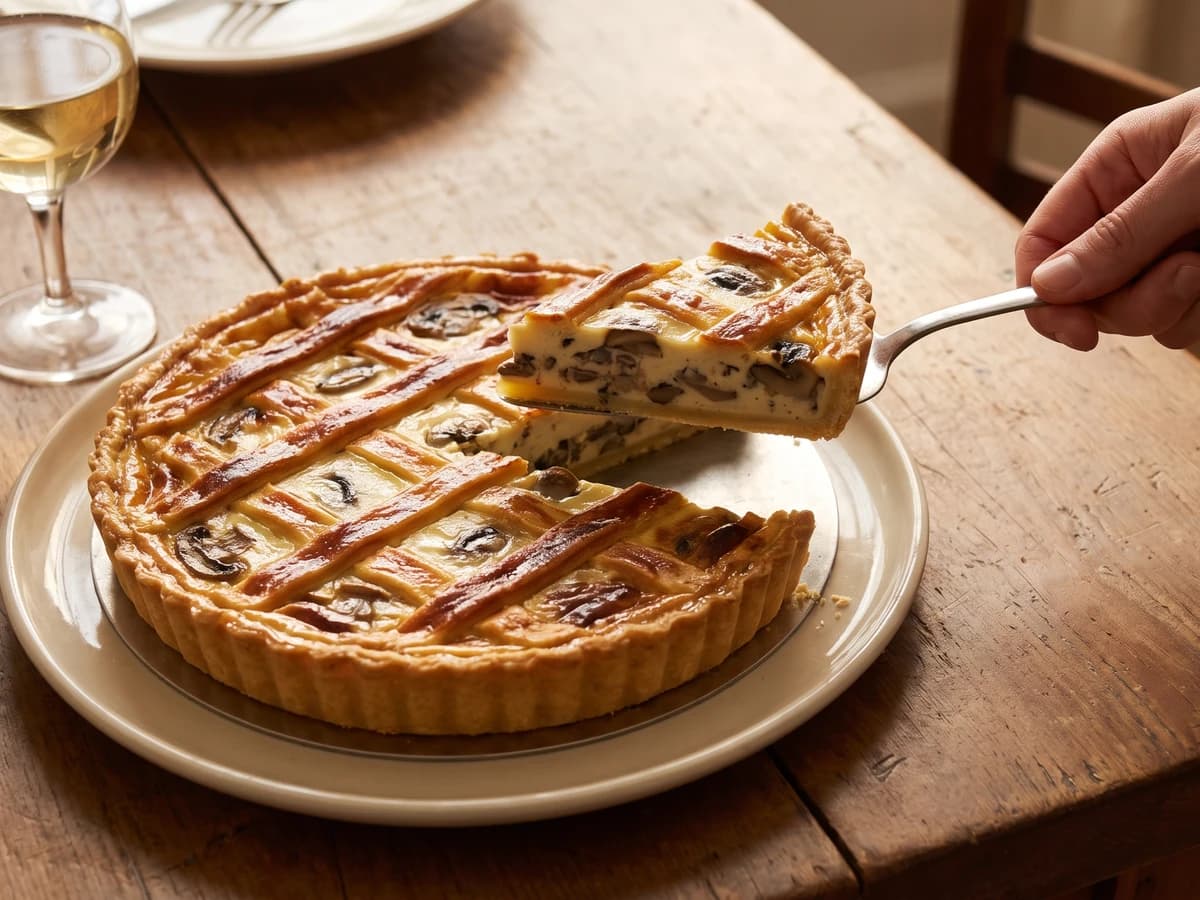
A hot mushroom flan under a butter-gold lattice, with cream reduced close around barely opened caps and a crisp short-paste base protected by one discipline: cool the filling completely.

Chef Juliette
Four little mushroom flans, latticed and gilded, baked hard and fast until butter-gold: a classical garnish scaled to the meat it accompanies and served before its crispness has time to fade.
Chef Juliette
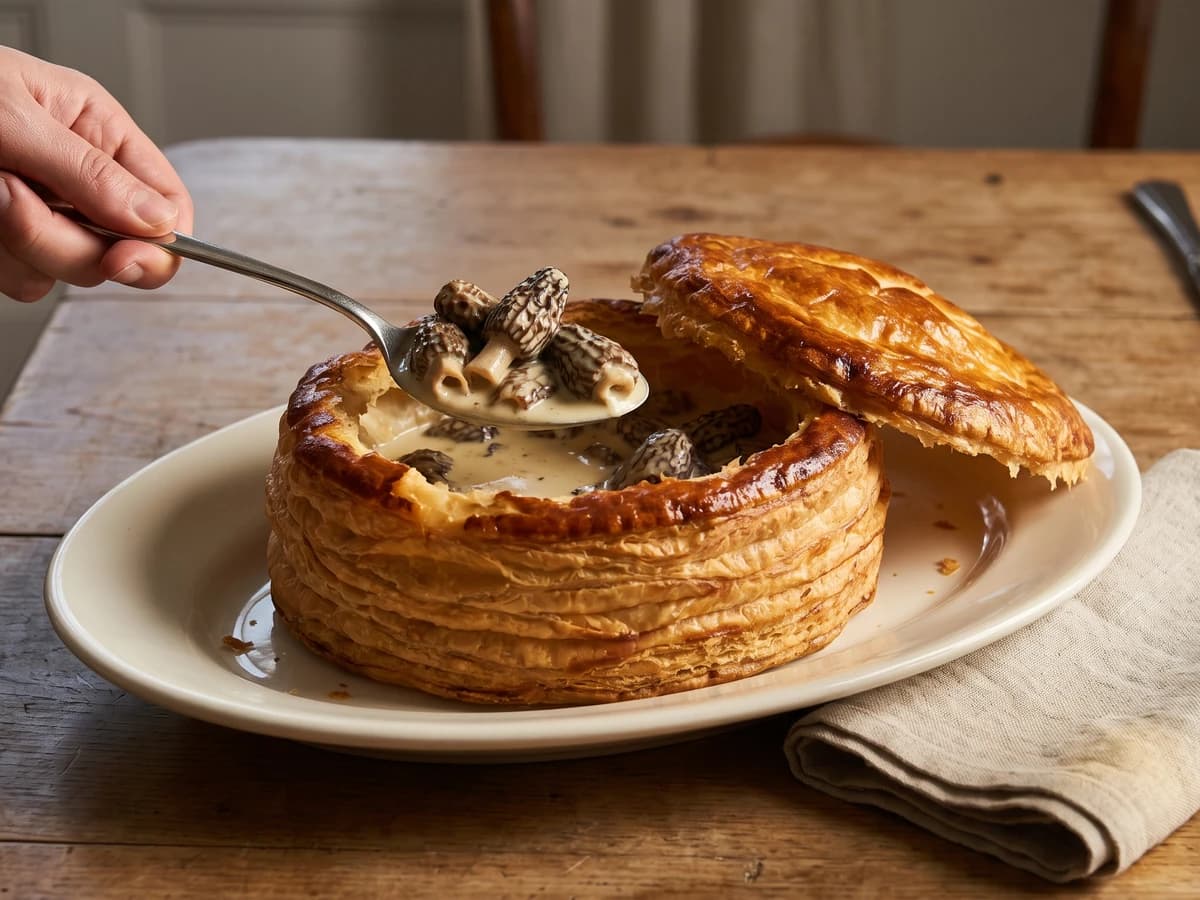
Morels surrender their liquor, then take it back as a glossy cream-and-butter sauce inside burnished puff pastry. The lesson is simple and absolute: reduce with patience, then heat gently and never boil.