Chef Juliette
Convent Pancakes
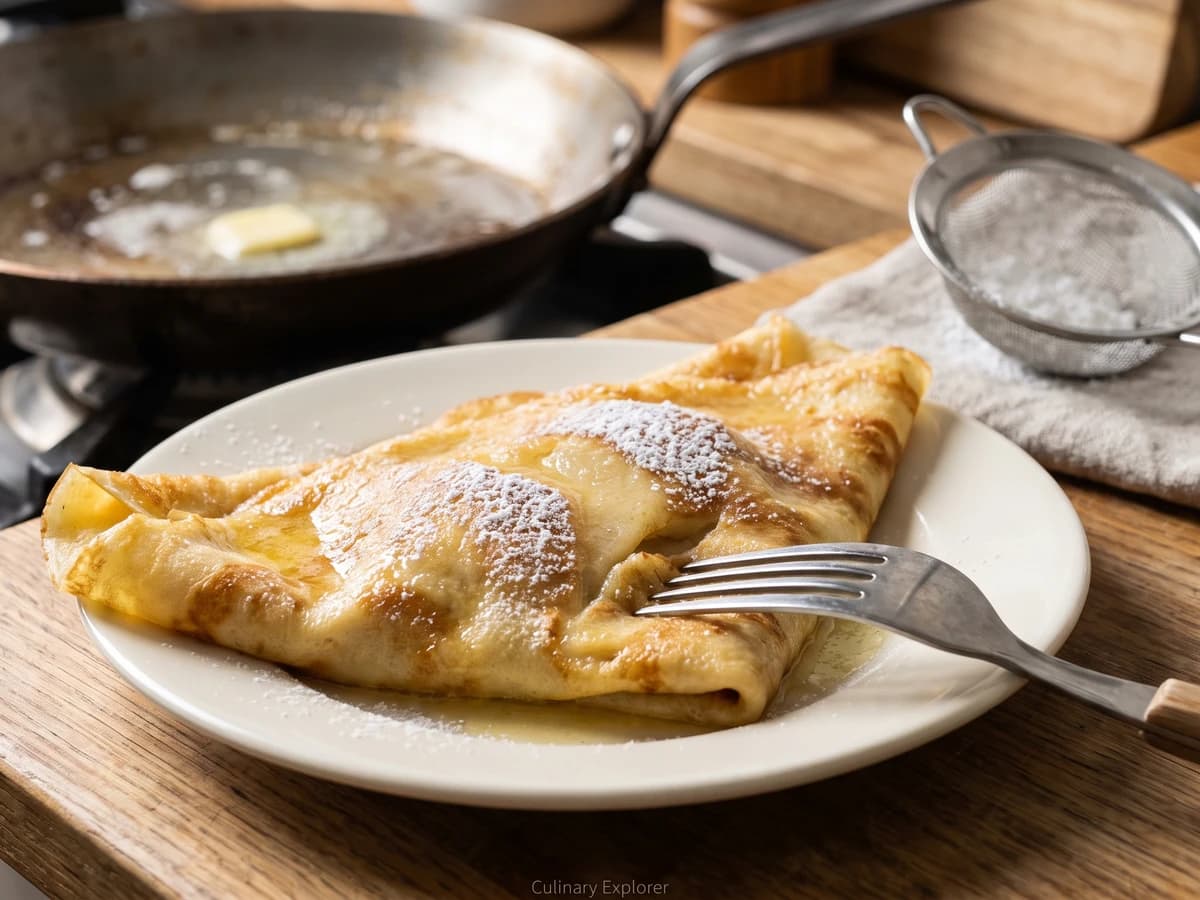
Crêpes au Couvent trap ripe Williams pear dice between two thin pours of sweet batter, then turn in one clean toss and reach the table butter-gold, powdered, and burning hot.
A cooking platform built around craft, culture, and the stories behind what we eat.
Created by Chef Juliette
Based on No. 2457, Croûte à la Maréchale, from Le Guide Culinaire (1907) by Auguste Escoffier
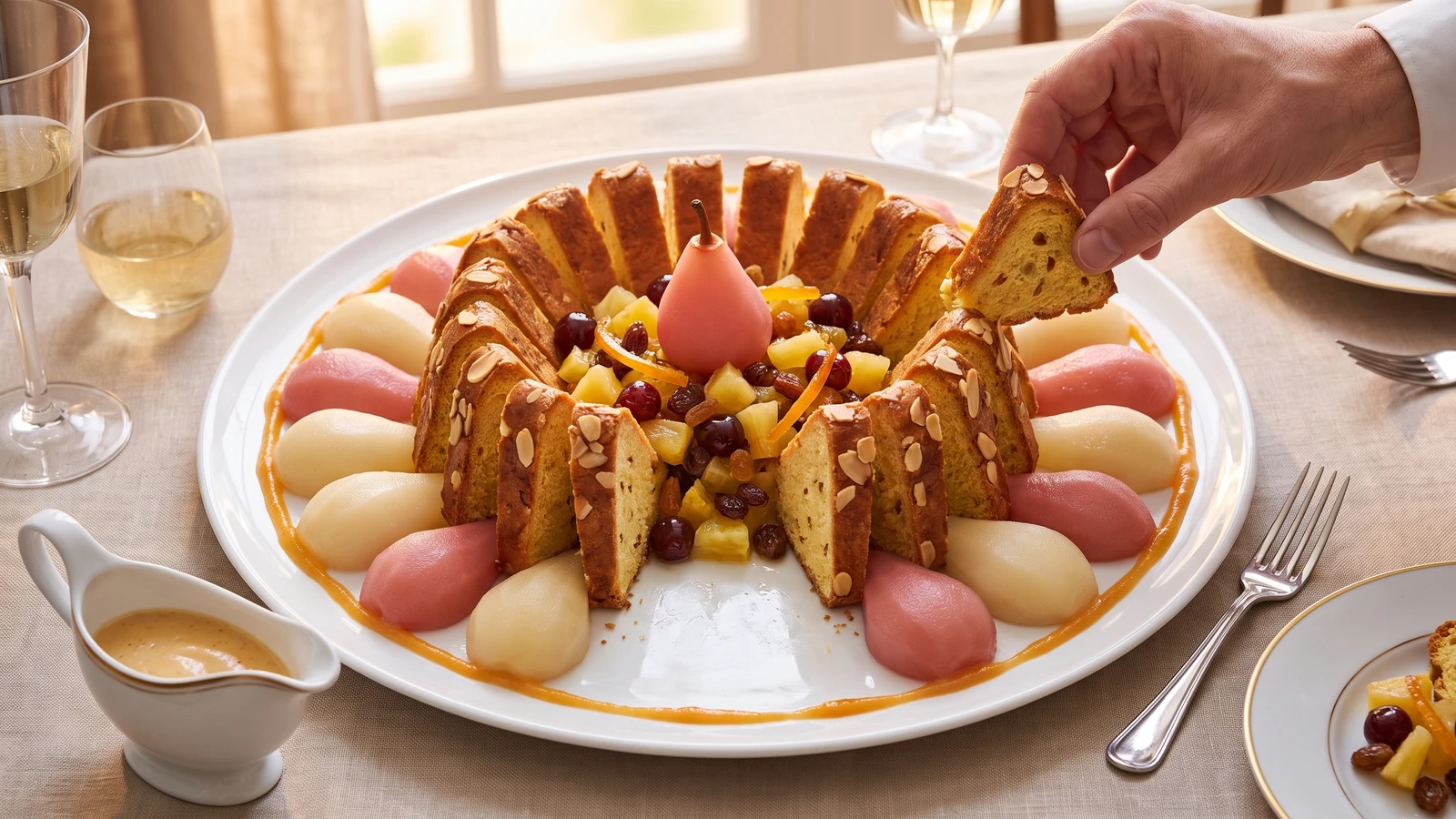
Pralin-coated brioche stands crisp around a jewel-bright fruit salpicon, with white and pink poached pears and vanilla-apricot purée: a grand French entremets brought honestly to one home table.
Croûte à la Maréchale (pralin-crusted brioche with poached fruit) teaches one true thing: a composed dessert succeeds or collapses on moisture control. Its salpicon, a small even dice of fruit held with stiff apple and apricot, must mound without leaking, while the brioche crusts must be dry enough to stand crisp beside it. The word croûte is literal here, not a promise of pie.
The original assumed a pastry brigade with Pralin (No. 2352) ready, several fruits held in syrup, a four-inch fried-bread cushion, and a hatelet, an ornamental skewer, waiting for the final construction. At home, the cushion becomes three butter-fried brioche rounds stacked into the same edible support, the hatelet becomes a short food-safe pick, and smooth apricot preserves become the ready purée once loosened, strained, and touched with vanilla. Those are service scaffolds translated for one cook, one stove, one evening; the equal white and pink pears, fruit salpicon, upright coated triangles, and separate sauceboat are the dish, and they stay.
The sight is splendid: old-gold almond crusts around jewel-bright fruit, alternating pale and pink pears, and a glossy apricot thread circling the platter. Dry the Pralin (No. 2352) completely in a moderate oven before you build anything. If it stays tacky, it will weep into the brioche; that is the one step that decides the whole centerpiece.
Croûte à la Maréchale belongs to the Parisian grand-kitchen repertoire of composed fruit entremets, where pastry cooks used bread crusts, poached fruit, and glossy purées to build edible centerpieces for the formal table. Despite the word croûte, it is neither a tart nor a crumble: the crusts are freestanding triangles of brioche coated in Pralin (No. 2352), set around a bound fruit salpicon. The title à la Maréchale belongs to the honorific vocabulary of the grand table rather than a regional larder, so the dish makes no Provençal, Norman, or Lyonnais claim.
Quantity
1 large loaf (about 1¼ lb / 560 g)
unsliced and 1 to 2 days old
Quantity
3 tablespoons (45 ml / 42 g)
Quantity
2 tablespoons (30 ml / 16 g)
sifted
Quantity
5 (about 1½ lb / 680 g)
Quantity
2½ cups (600 ml / 500 g)
Quantity
5 cups (1.2 L / 1.2 kg)
Quantity
1 cup (240 ml / 170 g drained), with ½ cup (120 ml / 120 g) syrup reserved
drained and chopped
Quantity
1½ cups (360 ml / 250 g)
cut into small dice and thoroughly drained
Quantity
⅓ cup (80 ml / 50 g)
Quantity
¼ cup (60 ml / 45 g)
cut into small dice
Quantity
3 medium (about 1¼ lb / 570 g)
peeled, cored, and diced
Quantity
¼ cup (60 ml / 60 g)
Quantity
2 tablespoons (30 ml / 25 g)
Quantity
1¼ cups (300 ml / 400 g)
Quantity
½ cup (120 ml / 120 g)
Quantity
½ bean
split lengthwise
| Ingredient | Quantity |
|---|---|
| stale mousseline brioche loafunsliced and 1 to 2 days old | 1 large loaf (about 1¼ lb / 560 g) |
| unsalted butter | 3 tablespoons (45 ml / 42 g) |
| Pralinprepared for coating | 1¼ cups (300 ml / 240 g) Pralin (No. 2352) |
| icing sugarsifted | 2 tablespoons (30 ml / 16 g) |
| small firm pears | 5 (about 1½ lb / 680 g) |
| granulated sugar for poaching | 2½ cups (600 ml / 500 g) |
| water for poaching | 5 cups (1.2 L / 1.2 kg) |
| preserved red cherries in light syrupdrained and chopped | 1 cup (240 ml / 170 g drained), with ½ cup (120 ml / 120 g) syrup reserved |
| pineapple fleshcut into small dice and thoroughly drained | 1½ cups (360 ml / 250 g) |
| raisins | ⅓ cup (80 ml / 50 g) |
| candied orange peelcut into small dice | ¼ cup (60 ml / 45 g) |
| tart applespeeled, cored, and diced | 3 medium (about 1¼ lb / 570 g) |
| water for the apples | ¼ cup (60 ml / 60 g) |
| granulated sugar for the apples | 2 tablespoons (30 ml / 25 g) |
| smooth apricot preserves | 1¼ cups (300 ml / 400 g) |
| water for the apricot purée | ½ cup (120 ml / 120 g) |
| vanilla beansplit lengthwise | ½ bean |
Combine the poaching sugar and water in a wide saucepan and heat gently, stirring only until the sugar dissolves. Pour half the clear syrup into a heatproof bowl. Peel two pears, halve and core them, then poach the four halves in the syrup remaining in the pan under a parchment cartouche. Hold the liquid at a bare tremble for 12 to 18 minutes, until a knife enters with slight resistance. Transfer the white pear halves and their syrup to another bowl. Return the reserved clear syrup to the pan, add the reserved cherry syrup, then poach four halves cut from two more pears along with the final pear, peeled but left whole with its stem. Remove the halves when tender and give the whole pear a few minutes longer if required. Cool the white and pink pears separately in their syrups, then drain them thoroughly.
Put the diced apples, their water, and sugar in a saucepan. Cover and cook gently for about 10 minutes, then uncover, mash, and stir until the apples form a stiff compote and the spoon leaves a clean trail across the pan floor. The apples are the binder, not a loose sauce. If they remain wet, cook them uncovered a little longer; if they catch, transfer the unburned portion to a clean pan without scraping the bottom and loosen it with a teaspoon of water. Cool completely and reserve ½ cup for assembling the support and correcting the salpicon. In a clean saucepan, combine the apricot preserves, water, and vanilla bean. Simmer gently for 4 minutes, remove the vanilla, then pass the purée through a fine sieve. It should pour in a smooth ribbon and lightly coat a spoon; reduce it if thin, or loosen it with a spoonful of water if stiff.
Heat the oven to 325°F (160°C). From the firmest part of the stale mousseline brioche, cut 12 even triangles about 4 inches (10 cm) high, 2½ inches (6 cm) across the base, and ⅜ inch (1 cm) thick. Cut three rounds about 3 inches (7.5 cm) across and 1¼ inches (3 cm) thick for the central cushion. Trim the rounds into a neat cylinder or slight cone, keeping their flat faces parallel so the finished support won't lean.
Set a wire rack over a parchment-lined tray. Spread the Pralin (No. 2352) in a thin, even coat over both broad faces and the long edges of each triangle, leaving the bottom edge bare so it can stand. Dust both faces lightly with the icing sugar and arrange the triangles on the rack. Dry them in the moderate oven for 18 to 25 minutes, turning the tray once, until the coating has lost every wet gleam and taken the colour of old gold. Cool them completely on the rack before judging. If the coating beads, feels tacky, or weeps as it cools, don't build the dish yet. Ça se rattrape: lower the oven to 275°F (135°C), dry the triangles for another 5 to 8 minutes, and cool again. This step is the dish.
Blot the pineapple and cherries once more, then combine them with the raisins and candied orange peel. Fold in the cooled apple compote, followed by ¼ cup (60 ml) of the apricot purée. This salpicon, a small even dice bound just firmly enough to hold together, must mound without releasing syrup. If it slumps, fold in some of the reserved stiff apple compote one spoonful at a time. If it feels heavy and pasty, add another spoonful of apricot purée. Keep the finished salpicon cool, but don't let it touch the crusts until service.
Melt the butter in a skillet over medium heat and fry the brioche rounds on both flat faces until evenly golden, adding the cut edges to the pan briefly so no pale bread remains. Cool them on a rack. Smear a little reserved apple compote in the center of a 12-inch (30 cm) platter, set down the first round, and stack the others with thin layers of compote between them. Press gently to form a stable cushion about 4 inches (10 cm) high. This edible stack replaces the pastry brigade's carved fried-bread support while keeping its height and purpose.
Mound the salpicon around the central cushion, hiding its lower edge. Stand the coated brioche triangles upright around the fruit, placing their bare edges firmly on the platter and letting the salpicon support them. Arrange the drained pear halves in an outer border, alternating white and pink. Set the whole pink pear on top of the cushion and secure it with a short food-safe pick, the home equivalent of the hatelet. Spoon a fine, continuous thread of vanilla-apricot purée around the pear border and pour the remainder into a sauceboat. If the triangles have softened before assembly, return them to the 275°F (135°C) oven for 5 minutes and cool them fully before continuing. Assemble no more than 20 minutes before serving, remove the pick before portioning, and bring the whole construction to the table. À table!
1 serving (about 490g)
Culinary guides, cultural storytelling, and the editorial depth that makes cooking meaningful.
Discover Culinary ExplorerChef Juliette
Crêpes au Couvent trap ripe Williams pear dice between two thin pours of sweet batter, then turn in one clean toss and reach the table butter-gold, powdered, and burning hot.
Chef Juliette
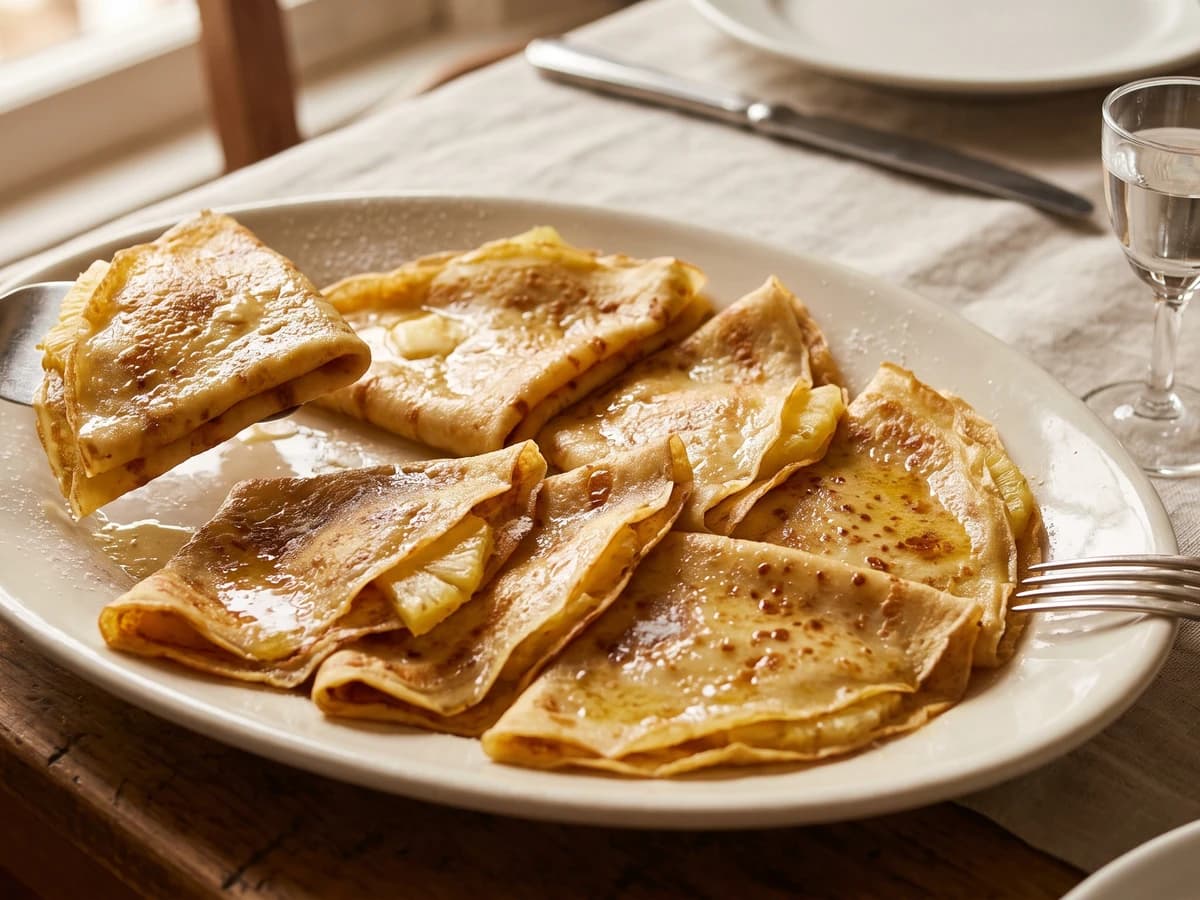
Paper-thin pineapple, maraschino, and supple buttered batter meet in a crêpe cooked golden at the edges and tender within, a composed French sweet built on moisture control, not ornament.
Chef Juliette
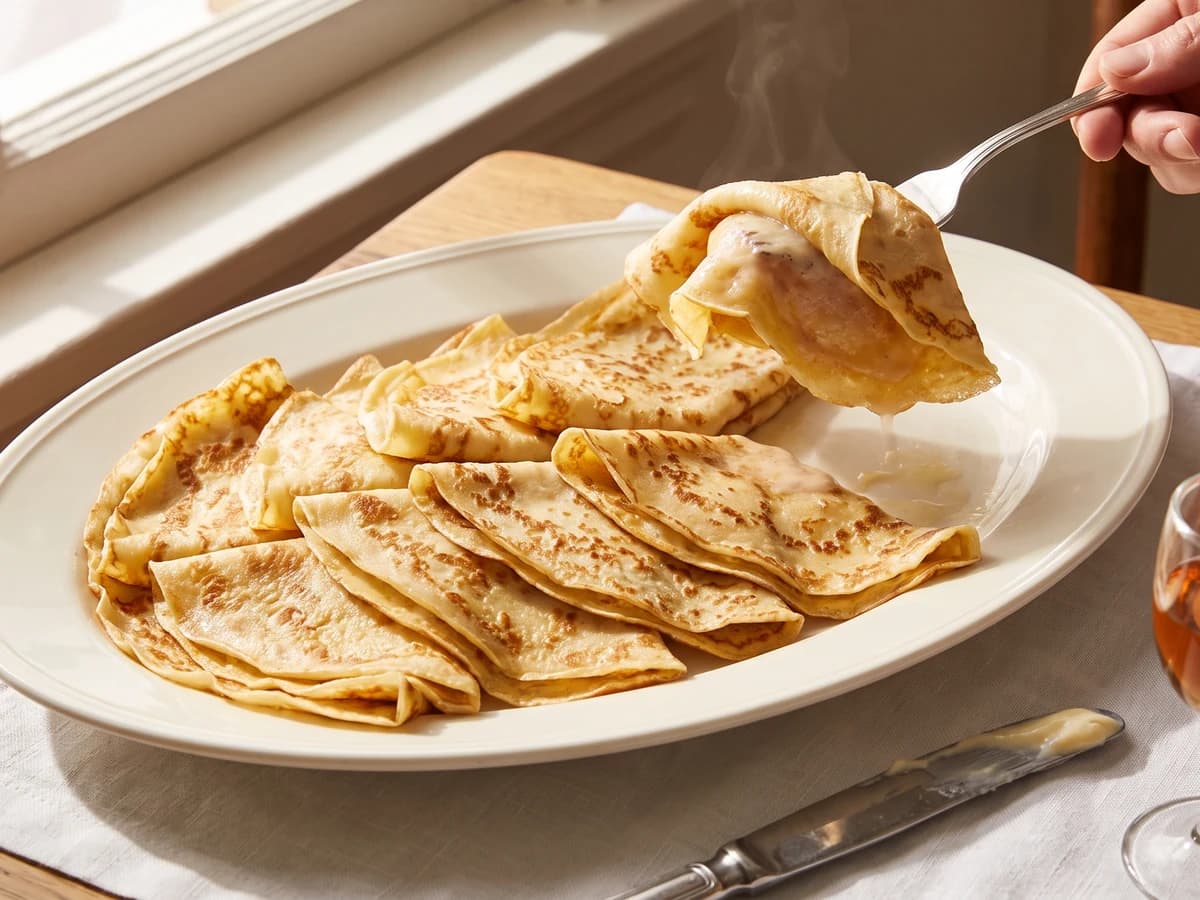
Crêpes Gil-Blas teach the discipline of beurre en pommade: cool butter, sugar, liqueur brandy, and lemon held in a creamy emulsion, spread over tender crêpes and folded twice.
Chef Juliette
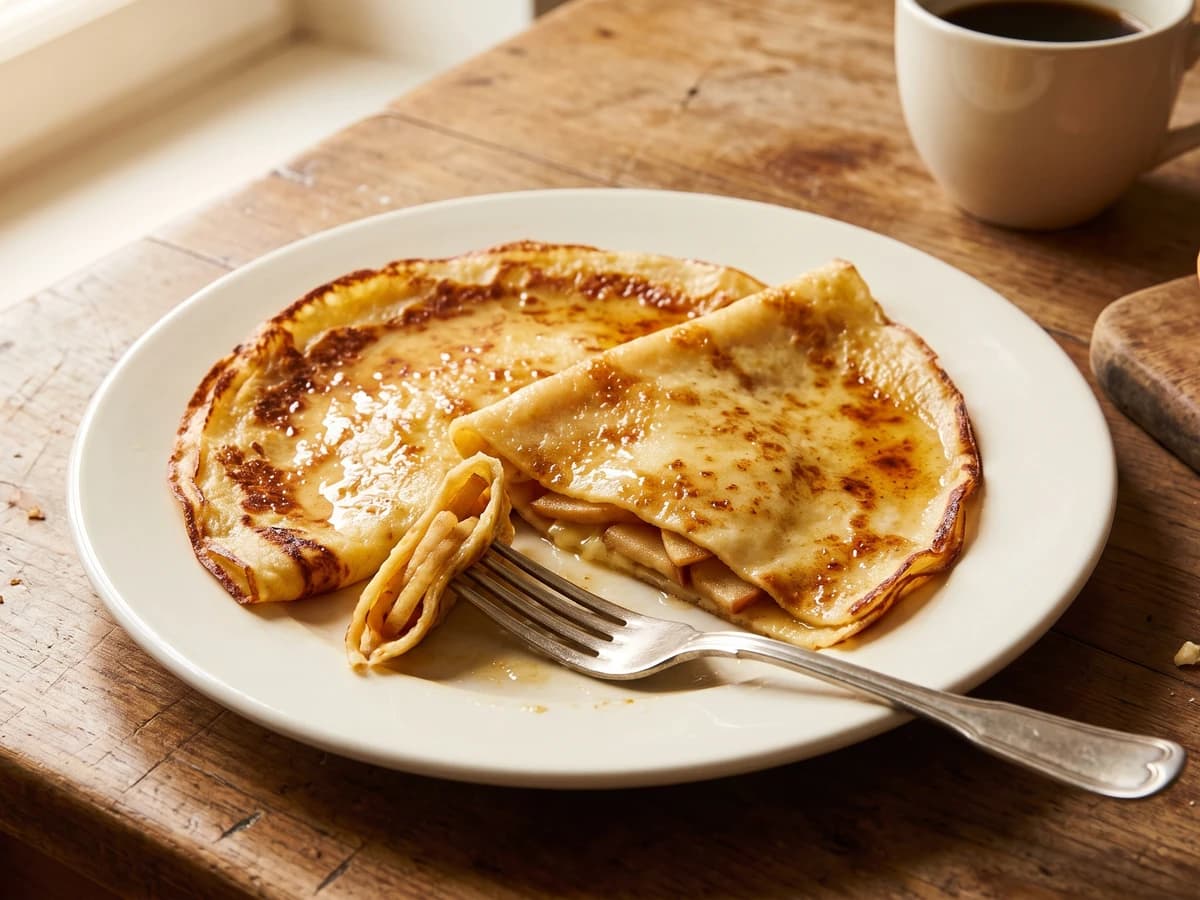
Fine apple slices browned in butter, sealed between two tender layers of crêpe batter, and glazed with sugar: a Norman lesson in driving off moisture before it can soften the pancake.